HUB 05 · Guides & Buying Advice
Is It Cheaper to Charge at Home or in Public?
Home wins almost every time — usually by a wide margin. Here is the arithmetic, plus the handful of cases where public charging is a fair deal.
We earn a commission when you buy through our Amazon links, at no extra cost to you. It never affects our rankings, and we say so when the cheaper product is the better buy. How this works.
Charging at home is almost always cheaper — frequently less than half the cost of public DC fast charging. Home electricity is billed per kWh at your utility rate, while public fast chargers add a premium for the hardware, the site and the speed. The gap is wide enough that home charging is the single biggest reason EVs are cheap to run.
The comparison comes down to the price per kWh you pay each way, so let us put real structure on it — without inventing your local numbers, which you can drop into the same formula.
The home number
At home you pay your residential electricity rate per kWh. Multiply that rate by your car's efficiency (miles per kWh) and you get cost per mile. Our cost to charge an EV at home guide walks the full formula with a table across a range of rates, and how to save money charging shows how a time-of-use plan and overnight charging push it lower still.
The public number
Public charging splits in two. Level 2 public stations are priced close to — sometimes above — home rates, and are fine for a top-up while you are parked anyway. DC fast chargers are the expensive option: you pay a premium per kWh (or per minute) for the speed and the infrastructure, which is why a road-trip fast-charge can cost several times a home charge. Our DC fast charging cost guide breaks the pricing down.
When public actually wins
- Free workplace or destination charging. If your employer or a store offers free Level 2, that beats even cheap home power. See charging your EV at work and free EV charging.
- No home charging at all.For renters and street-parkers, public is the whole game — see charging without a driveway.
- Road trips. On a long drive, fast charging is worth the premium for the time it saves.
For everyone with a driveway, the answer is simple: install a home charger and use public charging only when you are away from it. A value home charger or a portable pays for itself against public prices faster than most people expect.
The gear
Recommended gear for this guide
The products this guide refers to, with prices pulled live from Amazon and dated on each card.
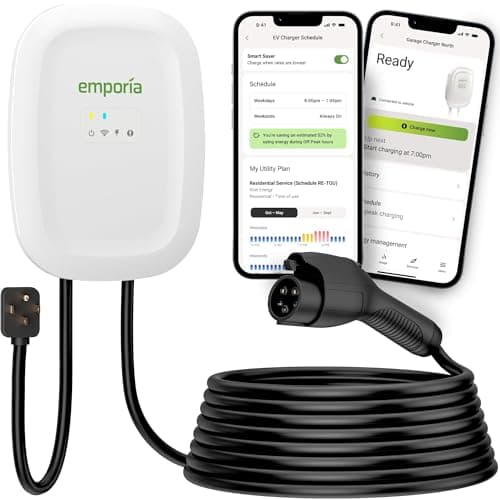
Most people who want the smart features too
Emporia Level 2 (48A)
The smart charger that does not charge a smart-charger premium — 48-amp capability and real energy monitoring for the price of a dumb one.
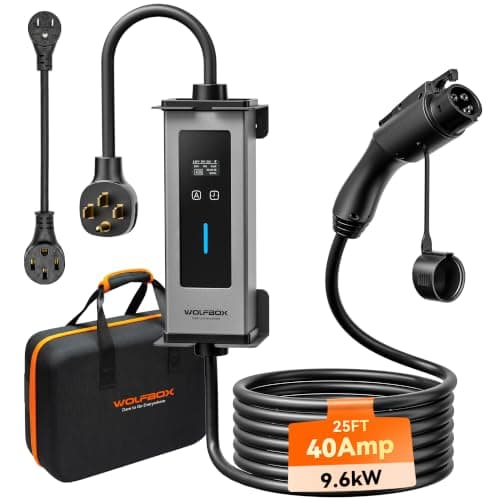
One charger for home and travel
WOLFBOX Portable (Level 1/2)
A dual-level portable that charges on both 120V and 240V, ships with both plug adapters, and adds a delay timer for off-peak charging — a genuine take-anywhere charger.
#ad · As an Amazon Associate we earn from qualifying purchases.
Questions
Frequently asked
How much cheaper is charging at home than in public?
Is public Level 2 charging expensive?
When is public charging worth it over home?
Keep reading
Related
- Cost to Charge an EV at HomeThe home formula with a rate table.
- How Much Does DC Fast Charging Cost?The public fast-charge pricing math.
- How to Save Money Charging an EVPush the home number lower still.
- Free EV ChargingThe one case that beats home power.
- Emporia Level 2 ReviewA value home charger that pays for itself.
Receipts
Sources
We do not run a testing lab, and we do not pretend to. Where a measured number came from someone else's lab, we name them and link them. Where we could not verify something, we say so on the page rather than quietly leaving it out. Read our full method.