HUB 05 · Guides & Buying Advice
Why Your EV Charging Amperage Keeps Dropping
Falling amps mid-charge is usually the system protecting itself from heat or a weak connection — here is how to tell a safety throttle from a real fault.
We earn a commission when you buy through our Amazon links, at no extra cost to you. It never affects our rankings, and we say so when the cheaper product is the better buy. How this works.
Charging amperage that falls during a sessionis usually the system protecting itself — from heat, a weak connection, or a battery that is nearly full — not a broken charger. A plug-in unit that throttles is often telling you the outlet is getting warm, which is a real safety signal worth acting on, not ignoring.
EV charging equipment is designed to back off current when something is not right, precisely so it does not start a fire or damage the battery. So a drop in amps is frequently the system working as intended. The job is to find which cause is yours.
The common causes
- A warm or loose outlet.The most important one. A NEMA 14-50 receptacle that is undersized, poorly wired, or worn heats up under a continuous 40-amp load, and a good portable charger throttles to protect it. Feel the plug — if it is hot, stop and have the outlet checked. The NEMA 14-50 outlet guide explains why a cheap receptacle is the usual culprit.
- High ambient temperature. On a very hot day, the charger or the connector can reduce current to stay within its thermal limits. This is normal and recovers as it cools.
- A nearly-full battery.As the pack approaches full, the car itself tapers the current — expected behavior, not a fault.
- Utility or app limits. A smart charger set to a demand-response program or a scheduled amperage cap will lower current on purpose. Check the app.
How to diagnose it safely
Note whenthe drop happens. Near full? That is the battery tapering — ignore it. Right after plugging into a specific outlet, with a warm plug? Treat the outlet as suspect and read why a charger trips the breaker, which shares the same wiring causes. Only on hot days? Thermal, and harmless. Randomly, on a cool day, with a cool plug? That points to the charger or car, and the troubleshooting guide covers the next steps.
When to call an electrician
A hot plug, scorch marks, a burning smell, or repeated throttling on a dedicated circuit are electrician territory — do not keep charging through them. A properly sized circuit and a quality receptacle fix most persistent throttling, as the wire size and breaker guide lays out.
The gear
Recommended gear for this guide
The products this guide refers to, with prices pulled live from Amazon and dated on each card.
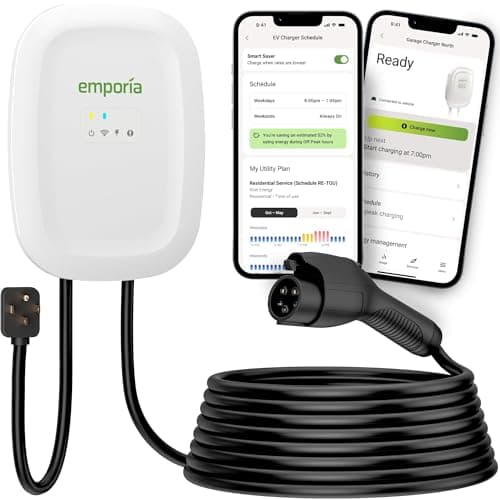
Most people who want the smart features too
Emporia Level 2 (48A)
The smart charger that does not charge a smart-charger premium — 48-amp capability and real energy monitoring for the price of a dumb one.
#ad · As an Amazon Associate we earn from qualifying purchases.
Questions
Frequently asked
Why does my EV charging amperage keep dropping?
Is it bad that my charger reduces amps mid-session?
How do I stop my EV charging from slowing down?
Keep reading
Related
- Why Is My EV Charging So Slow?The related question of low overall speed.
- EV Charger Tripping BreakerThe same wiring causes, different symptom.
- NEMA 14-50 OutletsWhy a cheap outlet throttles or overheats.
- Wire Size & BreakerThe circuit sizing that fixes throttling.
- EV Charger TroubleshootingThe wider diagnostic checklist.
Receipts
Sources
We do not run a testing lab, and we do not pretend to. Where a measured number came from someone else's lab, we name them and link them. Where we could not verify something, we say so on the page rather than quietly leaving it out. Read our full method.