HUB 05 · Guides & Buying Advice
EV Charger Not Working? A Troubleshooting Guide
Most home-charging faults are a handful of simple causes. Here is how to work through them safely — and the point where you stop and call a pro.
We earn a commission when you buy through our Amazon links, at no extra cost to you. It never affects our rankings, and we say so when the cheaper product is the better buy. How this works.
When a home charger stops charging, the cause is usually simple: a connector that is not fully seated, a tripped breaker, a car-side charge limit or schedule, or a Wi-Fi hiccup on a smart unit. Work through the safe checks in order and most problems resolve in a minute or two. The moment you smell burning, see scorching or melting, or a breaker keeps tripping, stop — that is an electrician's job, not a reset.
A charger that will not charge is alarming, but it is rarely the expensive part that failed. Far more often it is the connection, the circuit, or a setting. This guide walks the likely causes from most to least common, keeps every step on the safe side of the line, and is clear about when a fault stops being something you troubleshoot and becomes something you call a professional for. We are enthusiasts, not electricians — anything involving the wiring or panel is for a licensed pro.
Start here: the two-minute checks
Before anything else, rule out the simple stuff. In rough order of likelihood:
- Re-seat the connector. Unplug it from the car and plug it back in firmly until it clicks. A connector that is not fully home is the single most common reason charging never starts, and the car will not energize a loose plug.
- Check the car, not just the charger. Look at the car's screen or app. A charge limit already reached (say, an 80% cap), a scheduled chargeset for later, or a departure timer will all stop charging even though everything is working correctly. This is a genuinely frequent "fault" that is not a fault at all.
- Check the breaker.Find the charger's circuit in your electrical panel and see if the breaker has tripped (its switch sits between on and off). Switch it fully off, then on. If it trips again right away, do not keep resetting it — that is a sign of a real problem, covered below.
- Look at the charger's status light.Most chargers signal their state with a colored light or code. Check the manual for what the current color or blink pattern means — it often names the fault directly (no power, connector fault, over-temperature, ground fault).
If it is a smart charger: the app layer
Wi-Fi chargers add a second place for things to go wrong — and, usefully, a second place to read the fault. If the hardware seems fine but the app shows a problem or the charge will not start:
- Confirm it is a real fault, not a connection drop.A charger that lost Wi-Fi can still charge fine; the app just cannot see it. Do not assume "offline" means "not charging."
- Power-cycle the charger at the breaker (off, wait, on), which clears many transient software faults, then let it re-connect to Wi-Fi.
- Check the app for a stuck schedule or a paused session— smart chargers can hold a charge for an off-peak window you forgot you set.
Common faults and what they mean
If the quick checks did not fix it, match the symptom:
- Charging starts, then stops after a few minutes.Often a loose connector, an over-temperature cutback on a hot day, or a car-side limit being reached. Re-seat the plug and check the car's charge settings first.
- Nothing happens at all — no lights. No power reaching the charger. Check the breaker, and if it is a plug-in unit, check the outlet (an outlet on a tripped GFCI or a failed receptacle is a common culprit).
- Slower than expected.Usually not a fault. Real speed is the lowest of the charger, the car's onboard charger, and the circuit — and cold weather also slows charging. See our cold-weather charging guide.
- Ground-fault or GFCI error.The safety system detected a leakage-current problem. Try one reset; if it recurs, stop and get it inspected — this one protects against a genuine hazard.
The plug-in outlet: an underrated culprit
If you have a plug-in charger, the NEMA 14-50 outletis one of the most common failure points, precisely because a continuous 40-amp draw is hard on a receptacle. A cheap or worn outlet can develop a poor connection that shows up as intermittent charging, or — the warning sign — heat and discoloration at the outlet. If the receptacle is warm to the touch, scorched, or loose, stop using it immediately and have it replaced with an industrial-grade, listed unit by a licensed electrician. Our outlet guide explains why the cheap ones fail.
Stop and call a professional if:you smell burning or see melting, scorching, or discoloration at the outlet, connector, or charger; a breaker trips repeatedly; a ground-fault error keeps returning; or anything is hot to the touch. These are not reset-and-retry problems — they are signs of a real electrical fault, and continuing to use the equipment is the actual danger.
When the charger really has failed
If you have ruled out the connector, the car's settings, the breaker, the outlet, and the app, and the unit still will not charge, the charger itself may have failed — and this is where a manufacturer warranty earns its keep. Contact the maker's support with the status-light code or app error; many faults are covered and resolved with a replacement. It is also a reason we favor units from brands with a real support track record, and why a well-certified charger is worth the small premium over an unlisted one. If you are replacing it, the shortlist is our best home EV chargers roundup.
The gear
Recommended gear for this guide
The products this guide refers to, with prices pulled live from Amazon and dated on each card.
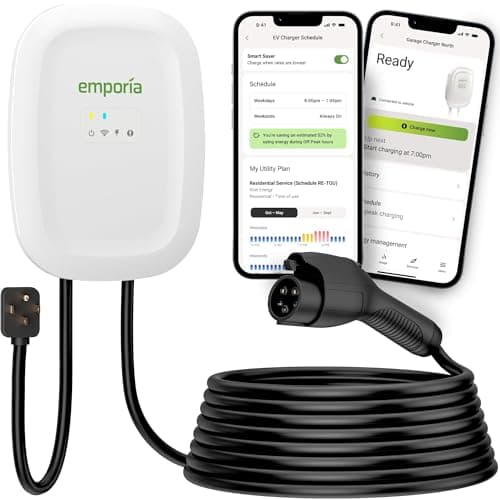
Most people who want the smart features too
Emporia Level 2 (48A)
The smart charger that does not charge a smart-charger premium — 48-amp capability and real energy monitoring for the price of a dumb one.
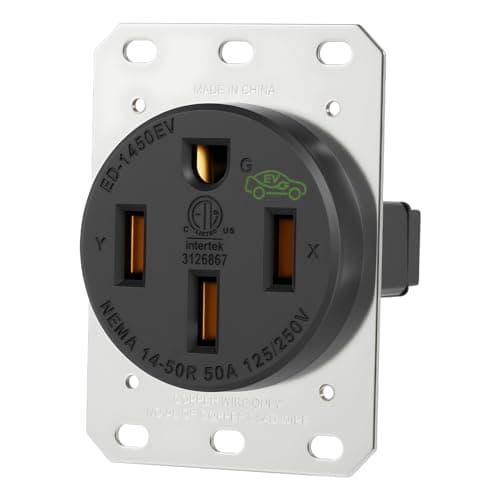
The outlet a plug-in charger needs
Industrial NEMA 14-50 Outlet
The receptacle a plug-in charger actually plugs into — buy the industrial-grade, listed version, because the cheap ones are the part that fails.
#ad · As an Amazon Associate we earn from qualifying purchases.
Questions
Frequently asked
Why did my EV charger stop charging?
My charger's breaker keeps tripping — what do I do?
Is it normal for the charger or outlet to get warm?
Why is my EV charging so slowly?
Should I try to fix an EV charger myself?
Keep reading
Related
- NEMA 14-50 Outlet GuideThe plug-in outlet that is a common failure point.
- Best Home EV ChargersWell-supported units to replace a failed charger.
- Wire Size & Breaker GuideWhy an undersized circuit can trip a breaker.
- Cold-Weather ChargingWhy charging slows when it is cold, and what is normal.
- Why Is My EV Charging So Slow?The eight usual causes of slow charging.
- Why a Charger Trips the BreakerThe circuit-side fault to rule out.
- Why Does My EV Stop Charging?The five reasons a charge quits early.
- Error Codes ExplainedWhat a blinking fault light is telling you.
- Charger Won't UnplugReleasing a connector that is stuck in the port.
- Amperage Keeps DroppingWhy current falls mid-session, and the fix.
Receipts
Sources
- US DOE / fueleconomy.gov — EV charging basics
- US DOE Alternative Fuels Data Center — charging at home
We do not run a testing lab, and we do not pretend to. Where a measured number came from someone else's lab, we name them and link them. Where we could not verify something, we say so on the page rather than quietly leaving it out. Read our full method.