HUB 05 · Guides & Buying Advice
How to Charge an EV in an Apartment or Rental
You cannot rewire a place you do not own — so the answer is a charger that plugs in and comes with you. Here is how renters actually charge.
We earn a commission when you buy through our Amazon links, at no extra cost to you. It never affects our rankings, and we say so when the cheaper product is the better buy. How this works.
If you rent or live in an apartment, the winning move is almost always a portableLevel 2 charger — it plugs into a 240-volt outlet instead of being wired to the wall, needs no permanent install, and unplugs to come with you when you move. Where you only have a standard 120-volt outlet, a Level 1 cord is the fallback. What you generally cannot do is hardwire a charger to a wall you do not own — so the whole game is finding an outlet you are allowed to use.
Home charging advice usually assumes a garage you own and can rewire. Plenty of EV owners have neither. The good news is that charging without those things is very doable; it just changes which equipment makes sense and adds a conversation with whoever controls the parking. This guide is for the renter, the condo-dweller, and anyone whose parking spot did not come with a charger.
Why portable, not hardwired
A hardwired charger is a permanent fixture bolted to the wall and wired into the panel — a change to the property, which usually is not yours to make. A portable Level 2 charger sidesteps all of that: it ends in a plug, draws the same 240 volts, adds the same ~25 miles of range per hour, and when your lease ends it goes in the trunk with you. For a renter it is not a compromise so much as the correct tool. Our portable charger roundup ranks the options, and portable vs hardwired covers the trade in full.
The real question: what can you plug into?
Everything hinges on the outlet you can reach and are permitted to use. Three common situations:
- You have a 240-volt outlet (a NEMA 14-50 or similar).Some garages, carports, and older buildings have one for a dryer, welder, or RV. This is the jackpot: a plug-in portable Level 2 charger turns it into a home charging station with no install at all. Confirm the outlet is on a properly rated circuit first — see the NEMA 14-50 outlet guide.
- You only have a standard 120-volt outlet.Then it is Level 1: slow (~3–5 miles of range per hour) but real. For a modest commute or a plug-in hybrid, an overnight Level 1 charge can keep up. A dual-level portable that carries both a 240-volt and a 120-volt plug is the flexible buy here.
- You have no reachable outlet.Then home charging is off the table for now, and you rely on workplace, public, or nearby Level 2 — or you make the case to your landlord for adding an outlet (below).
One safety line that matters:do not run a charger through a household extension cord. EV charging is a continuous high-current load, and a standard extension cord is exactly the wrong thing for it. Plug the charger directly into a properly rated outlet, and if the outlet is not close enough, that is a reason to add one — not to reach for a cord.
Working with a landlord or HOA
If the parking is controlled by a landlord or association, adding or using an outlet is a permission question before it is an electrical one. A few things help the conversation:
- Ask about an existing outlet first. Using a 240-volt outlet that is already there is a far smaller ask than installing one, and it may just need a metering or cost-sharing agreement.
- Offer to cover the electricity.A portable charger with a built-in usage readout, or a simple sub-meter, lets you pay for exactly what you use, which removes the landlord's main objection.
- Frame it as a tenant amenity.EV charging is increasingly a selling point for a rental, and some regions have "right to charge" rules that support a reasonable request — worth checking locally.
What to buy for apartment charging
The equipment follows straight from the outlet:
- Have a 240-volt outlet: a 40-amp portable Level 2 charger. Adjustable current is a plus if the circuit is older, and a built-in delay timer lets you charge on cheaper overnight rates without any app.
- Only 120-volt, or you want maximum flexibility: a dual-level portable that includes both a 240-volt and a 120-volt plug, so it charges fast where it can and still works at any standard outlet.
- Pure backup: a cheap Level 1 cord to keep in the trunk for wherever you land.
Whichever you choose, look for a real UL or ETL listing — that is non-negotiable on a device pulling current for hours — and keep the connector off the ground when it is not in use.
If you cannot charge where you live
Be honest with yourself about this before buying an EV or a charger. If there is no outlet you can use, your charging comes from public and workplace stations, and the economics change — public DC fast charging costs more per kWh than home electricity, as our cost to charge guide explains. Free or cheap workplace Level 2 charging can get you close to home-charging economics; a routine built on DC fast charging will not. Map out where your electrons will actually come from, then decide.
The gear
Recommended gear for this guide
The products this guide refers to, with prices pulled live from Amazon and dated on each card.
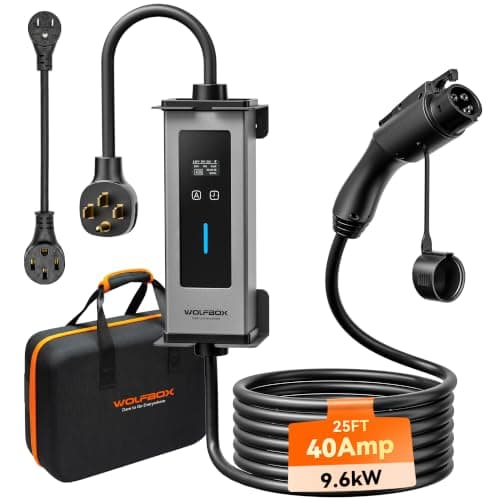
One charger for home and travel
WOLFBOX Portable (Level 1/2)
A dual-level portable that charges on both 120V and 240V, ships with both plug adapters, and adds a delay timer for off-peak charging — a genuine take-anywhere charger.
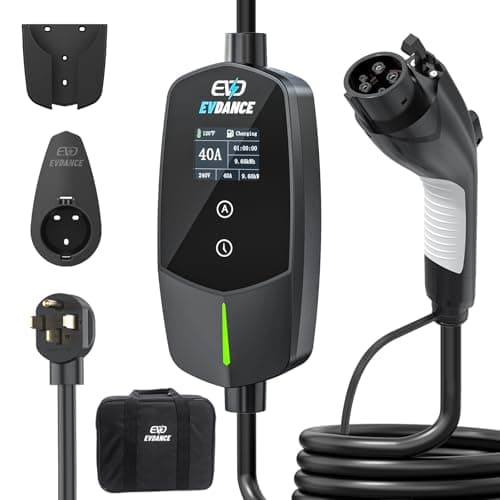
Off-peak charging without an app
EVDANCE 40A Portable
A 40-amp portable with adjustable current and a charge-delay timer, on a long 25-foot cable — flexible for off-peak charging.
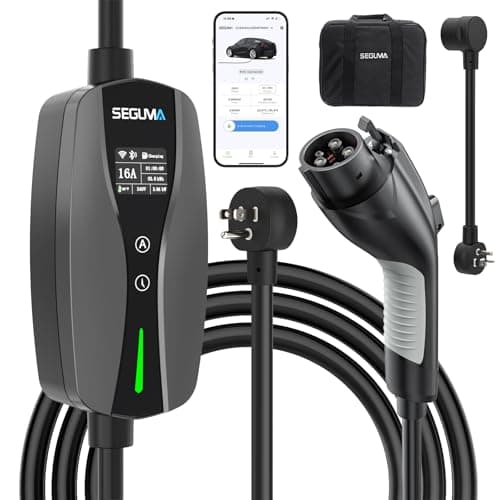
A 120V backup that is not dumb
SEGUMA Wi-Fi Level 1/2 (12A/16A)
A 120-volt cord that plugs into any household outlet and lives in the trunk — with app scheduling, a live display, and 16 amps on 240 volts if you have the outlet.
#ad · As an Amazon Associate we earn from qualifying purchases.
Questions
Frequently asked
Can I charge an EV in an apartment without a garage?
Do I need to hardwire a charger if I rent?
Can I use an extension cord to charge my EV?
Is Level 1 charging enough if I live in an apartment?
How do I get my landlord to allow EV charging?
Keep reading
Related
- Best Portable EV ChargersThe plug-in units that suit a rental, ranked.
- Portable vs HardwiredWhy a renter almost always wants portable.
- NEMA 14-50 Outlet GuideCheck the outlet you plan to use is properly rated.
- Cost to Charge at HomeHow the math shifts if you rely on public charging.
- Charging Without a DrivewayWhen there's no home outlet at all.
- Best EV Charger for RentersThe portable-first pick for a rental.
- EV Charging in a Condo or HOARight-to-charge laws and getting board approval.
- Living With Level 1 OnlyWhen a standard outlet is genuinely enough.
- Charging in a Parking GarageOptions for shared apartment and condo parking.
Receipts
Sources
- US DOE Alternative Fuels Data Center — charging at home
- US DOE / fueleconomy.gov — EV charging basics
We do not run a testing lab, and we do not pretend to. Where a measured number came from someone else's lab, we name them and link them. Where we could not verify something, we say so on the page rather than quietly leaving it out. Read our full method.