Skip to content
Volt & Cable

HUB 01 · Level 2 Home Chargers

The Best EV Chargers for a Solar Home

No charger you can buy on Amazon follows your solar surplus watt-for-watt. What the good ones give you is visibility and a schedule — which is most of the benefit, for a fraction of the price.

By Stephen V.Updated How we research
#ad

We earn a commission when you buy through our Amazon links, at no extra cost to you. It never affects our rankings, and we say so when the cheaper product is the better buy. How this works.

The short answer

Quick picks

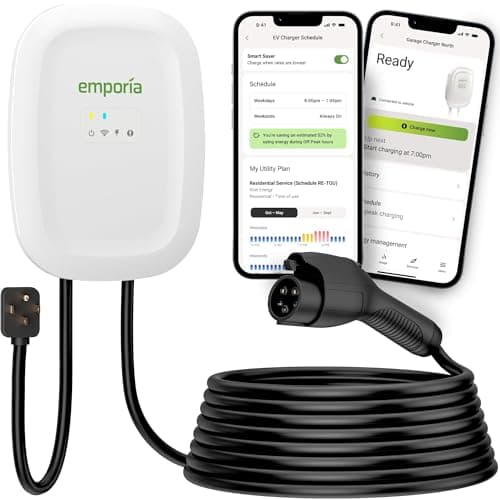
  • Emporia Emporia Level 2 (48A)
    01 Emporia Level 2 (48A)
    9.0

    The smart charger that does not charge a smart-charger premium — 48-amp capability and real energy monitoring for the price of a dumb one.

    Best for: Most people who want the smart features too

    Check priceAmazon
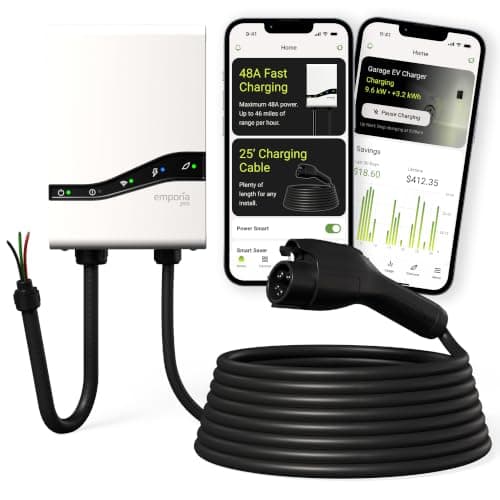
  • Emporia Emporia Pro (48A, PowerSmart)
    02 Emporia Pro (48A, PowerSmart)
    8.8

    The one charger that changes the electrical answer rather than working around it — it watches the whole panel and backs off instead of tripping the main.

    Best for: A 100-amp service you would rather not upgrade

    $599.00Amazon
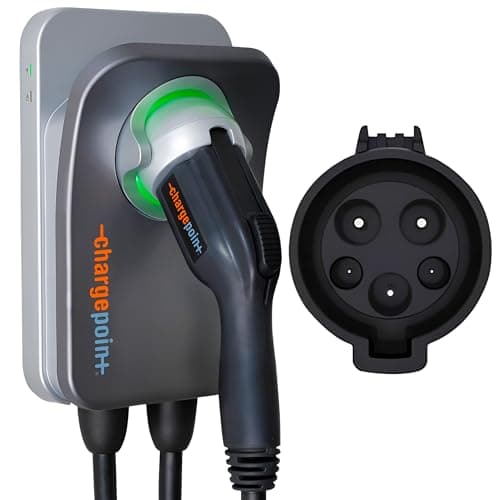
  • ChargePoint ChargePoint Home Flex
    03 ChargePoint Home Flex
    8.2

    The polished, well-supported option — adjustable up to 50 amps and tied into the largest public charging app in North America.

    Best for: Buyers who want the established brand and app

    $599.00Amazon
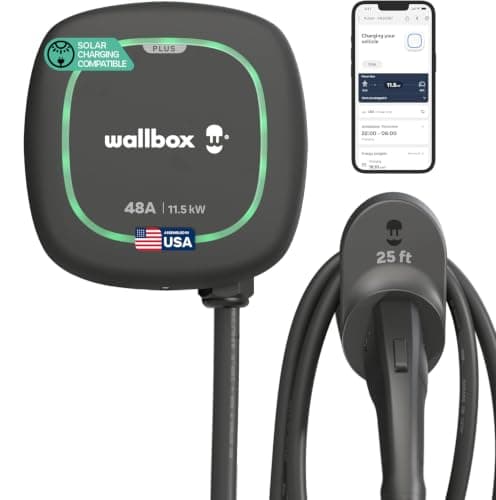
  • Wallbox Wallbox Pulsar Plus (48A)
    04 Wallbox Pulsar Plus (48A)
    8.4

    One of the smallest 48-amp units you can buy — a genuinely compact hardwired charger for a tidy wall.

    Best for: A compact, fast, hardwired install

    $699.00Amazon
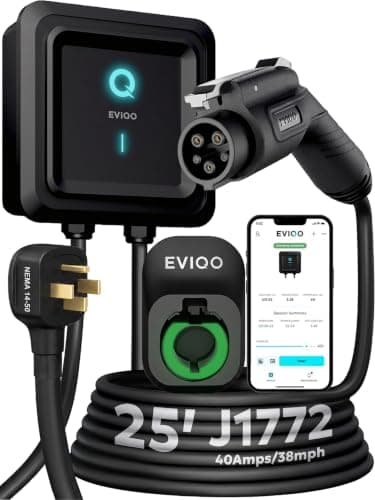
  • EVIQO EVIQO Level 2 (40A)
    05 EVIQO Level 2 (40A)
    8.6

    A weatherproof, UL-and-ETL-listed smart charger that regularly sits at the bottom of the price band — a lot of charger for the money.

    Best for: Budget-conscious buyers who still want smart features

    $449.99Amazon

#ad · Live prices from the Amazon Product API, as of October 16, 2026. Where we have no verified live price, we show none — we would rather leave a gap than print a number that has gone stale.

Buy the Emporia Level 2. For a solar home the useful features are energy monitoring and reliable scheduling, and Emporia's are the strongest per dollar in this category — the charger reports what it actually consumed, and it belongs to an ecosystem whose monitors read the whole panel rather than just the charger. If you want that panel-wide view bundled, the Emporia Proships the Vue monitor and mains sensors in the box. What you should not do is pay a premium for a charger marketed as "solar" without checking what the feature concretely is — most of the time it is a scheduling tab.

Let us be straight about the category, because the marketing is not. A charger that genuinely modulates its current to track whatever your array is exporting, second by second, is a real product type — and in North America it is a niche, expensive, installer-channel one. It is not what you find in a mainstream Amazon listing. Treat any inexpensive charger advertising "solar integration" with suspicion until the listing says what the integration does.

The short version

  • Emporia Level 2 (48A) — best for a solar home overall. For the owner who wants to see and schedule the car's consumption against generation. Genuine energy monitoring, scheduling, 48 amps hardwired, at a price well below the smart-charger average. Full review.
  • Emporia Pro (48A, PowerSmart) — best whole-panel visibility. For the solar household that also wants load management. Bundles the Vue monitor and two mains current sensors, so the system sees the whole service — generation, house and car in one picture. See the load-management roundup.
  • ChargePoint Home Flex — best scheduling. For the owner whose strategy is simply "charge in the middle of the day." Mature app, reliable schedules, selectable 16–50A so you can cap the draw to roughly match typical midday output. Full review.
  • Wallbox Pulsar Plus (48A) — best compact hardwired pick. For the solar install where the inverter gear already crowds the wall. Smallest 48-amp box here, Energy Star and UL. Full review.
  • EVIQO Level 2 (40A) — best value if you monitor elsewhere. For the household whose inverter app already shows generation and consumption. If the solar monitoring is handled, the charger does not need to repeat it — buy the well-certified cheap one. Full review.

What "charging on solar" actually means at home

There are three strategies, and only one of them needs special hardware.

  • Charge during the solar window. Set the charger (or the car) to run between late morning and mid-afternoon. Any charger with a working schedule does this, and for a car that sits at home during the day it captures most of the benefit. This is the strategy nearly everyone should use.
  • Cap the charger near your typical surplus. If your array commonly exports around 5 kW at midday, setting an adjustable charger to roughly that draw means the car mostly consumes generation rather than grid import. It is crude — clouds do not consult your setting — but it is free and it works.
  • Follow the surplus dynamically. The charger reads live export and modulates to match. This is the real feature, it requires current sensors at the service and a charger designed for it, and it is the one you will not find cheaply.

Which of those is worth effort depends almost entirely on your tariff. Under net metering that credits exports at retail, the difference between charging at noon and charging at midnight can be close to nothing — the grid is acting as your battery. Under a modern export tariff that pays well below retail, self-consumption is worth real money and the solar window matters. Our EV charging with solar panels guide works through both cases, and how to save money charging an EV covers the tariff side.

The claim we are not making. We have not measured any of these chargers against an array, and none of the picks above is being credited with solar-following behaviour it does not document. The ranking is on monitoring quality, scheduling reliability, whether the ecosystem can see the whole panel, and price — all of which are published specifications. Read how we research for what our scores are and are not.

Amperage, and why solar does not change it

A common mistake is to buy a small charger because the array is small. The charger's rating is a ceiling, not a consumption target: a 48-amp unit drawing 20 amps consumes exactly as much as a 20-amp unit drawing 20 amps. Size the charger to the car and the circuit, then use scheduling and the amperage setting to shape when and how fastit runs. Buying small to "match the solar" only limits you on the cloudy evening when you need the grid anyway.

How the picks compare on paper

Published figures from the live listings, with live prices. Read the monitoring and adjustability columns — those are the solar-relevant specs.

ChargerBest forPublished specsPrice
Emporia Level 2 (48A)Most people who want the smart features tooUp to 48A / 11.5kW · J1772 · 25ft cable · Wi-Fi + appNot verified today
Emporia Pro (48A, PowerSmart)A 100-amp service you would rather not upgradeUp to 48A hardwired · J1772 · PowerSmart + Vue monitor · UL · ENERGY STAR · NEMA 4$599.00
ChargePoint Home FlexBuyers who want the established brand and appAdjustable to 50A · J1772 · NEMA 14-50 plug · Energy Star$599.00
Wallbox Pulsar Plus (48A)A compact, fast, hardwired installHardwired 48A / 11.5kW · J1772 · 25ft cable · Energy Star + UL$699.00
EVIQO Level 2 (40A)Budget-conscious buyers who still want smart features40A / 9.6kW · J1772 · 25ft cable · UL & ETL, IP66/NEMA 4$449.99

#ad Prices read live from the Amazon Product API as of October 16, 2026, and they move. Specs are the manufacturer's published claims from the live listing — we have not bench-measured them. Where we have no verified price we print none rather than a number that has gone stale.

In detail

The picks, in full

01
Emporia Emporia Level 2 (48A)

Most people who want the smart features too

Emporia Level 2 (48A)

Up to 48A / 11.5kWJ177225ft cableWi-Fi + app
9.0/10

The smart charger that does not charge a smart-charger premium — 48-amp capability and real energy monitoring for the price of a dumb one.

Charge speed
10
Build & weather
8
Smart features
9
Cable & connector
8
Value
10

Pros

  • 48-amp capable when hardwired, which is faster than the 40-amp plug-in default
  • Genuine energy monitoring and scheduling in the app, at a price that undercuts most smart rivals
  • 25-foot cable is long enough to reach across a two-car garage

Cons

  • 48-amp operation requires hardwiring on a 60-amp circuit — the NEMA 14-50 plug version is capped at 40A
  • App and Wi-Fi are central to the experience, so setup is more involved than a plug-and-go unit

Don't buy this if…

…you never want to open an app. Much of what you pay for here is the software, and if you would rather have a box that just works with no app in the loop, the app-free picks in our dumb-charger roundup are the honest alternative — the old no-app favorite, the Grizzl-E Classic, is discontinued on Amazon.

Check price on Amazon →

No buyable offer at the last price check (October 16, 2026). We show nothing rather than a stale number.

#ad · we may earn a commission from this link to Emporia Level 2 (48A)

02
Emporia Emporia Pro (48A, PowerSmart)

A 100-amp service you would rather not upgrade

Emporia Pro (48A, PowerSmart)

Up to 48A hardwiredJ1772PowerSmart + Vue monitorUL · ENERGY STAR · NEMA 4
8.8/10

The one charger that changes the electrical answer rather than working around it — it watches the whole panel and backs off instead of tripping the main.

Charge speed
10
Build & weather
8
Smart features
10
Cable & connector
9
Value
7

Pros

  • PowerSmart reads the whole panel through the bundled Vue energy monitor and throttles the charger when the house draws hard, so a tight service is a setting rather than a rebuild
  • Full 48 amps — about 11.5 kW — when hardwired on a 60-amp circuit, so you are not trading speed for the load management
  • UL listed, ENERGY STAR certified and NEMA 4 rated, on a 25-foot cable, with the J1772 connector most non-Tesla EVs use

Cons

  • The most expensive charger in this group, and the premium buys panel headroom rather than charging speed
  • The Vue monitor has to go inside your electrical panel, so this is licensed-electrician work — there is no version of this you install yourself in an afternoon
  • Whether load management is accepted in place of a service upgrade is your local inspector's call, not the manufacturer's

Don't buy this if…

…your panel already has room for the circuit you want. If the load calculation passes without help, PowerSmart solves a problem you do not have — the standard Emporia Level 2 charges at exactly the same rate for meaningfully less.

$599.00View on Amazon

Price as of October 16, 2026. Prices change — Amazon's is the one that counts.

#ad · we may earn a commission from this link to Emporia Pro (48A, PowerSmart)

03
ChargePoint ChargePoint Home Flex

Buyers who want the established brand and app

ChargePoint Home Flex

Adjustable to 50AJ1772NEMA 14-50 plugEnergy Star
8.2/10

The polished, well-supported option — adjustable up to 50 amps and tied into the largest public charging app in North America.

Charge speed
9
Build & weather
8
Smart features
9
Cable & connector
8
Value
7

Pros

  • Amperage is adjustable in the app to match whatever breaker you install, up to 50A
  • Integrates with ChargePoint's large public-network app — one app for home and away
  • Long track record and responsive support, which budget brands cannot match

Cons

  • Costs more than equally capable chargers from newer brands
  • The experience leans hard on the ChargePoint account and app

Don't buy this if…

…price is your first priority. The Emporia matches most of what this does for meaningfully less — you are paying here for brand maturity and the unified app, which are real but not free.

$599.00View on Amazon

$657.999% off

Price as of October 16, 2026. Prices change — Amazon's is the one that counts.

#ad · we may earn a commission from this link to ChargePoint Home Flex

04
Wallbox Wallbox Pulsar Plus (48A)

A compact, fast, hardwired install

Wallbox Pulsar Plus (48A)

Hardwired 48A / 11.5kWJ177225ft cableEnergy Star + UL
8.4/10

One of the smallest 48-amp units you can buy — a genuinely compact hardwired charger for a tidy wall.

Charge speed
10
Build & weather
8
Smart features
8
Cable & connector
8
Value
8

Pros

  • Physically tiny for a 48-amp charger — the least obtrusive box in this roundup
  • Full 48-amp hardwired speed, matching the fastest home units
  • Energy Star and UL certified

Cons

  • Hardwired only at 48A — no plug-in convenience if you might move it
  • App has historically drawn more owner complaints than the hardware

Don't buy this if…

…you want to unplug and take the charger with you, or you rent. This is a hardwired fixture — a portable EVSE or a plug-in unit is the right call for anyone who might move.

$699.00View on Amazon

$799.9913% off

Price as of October 16, 2026. Prices change — Amazon's is the one that counts.

#ad · we may earn a commission from this link to Wallbox Pulsar Plus (48A)

05
EVIQO EVIQO Level 2 (40A)

Budget-conscious buyers who still want smart features

EVIQO Level 2 (40A)

40A / 9.6kWJ177225ft cableUL & ETL, IP66/NEMA 4
8.6/10

A weatherproof, UL-and-ETL-listed smart charger that regularly sits at the bottom of the price band — a lot of charger for the money.

Charge speed
8
Build & weather
9
Smart features
8
Cable & connector
8
Value
10

Pros

  • Carries both UL and ETL listings plus an IP66 / NEMA 4 weatherproof rating
  • Wi-Fi app with scheduling, at a price that undercuts the established brands
  • Long 25-foot cable and a plug-in NEMA 14-50 install

Cons

  • Newer brand with a shorter track record than ChargePoint or Wallbox
  • 40-amp ceiling, so not the fastest if your panel could do more

Don't buy this if…

…you want the reassurance of a long-established brand and support network. The hardware is well-certified, but if brand maturity matters to you, the ChargePoint is the safer pick.

$449.99View on Amazon

$510.9912% off

Price as of October 16, 2026. Prices change — Amazon's is the one that counts.

#ad · we may earn a commission from this link to EVIQO Level 2 (40A)

What to look for in a charger for a solar home

Energy reporting in kWh, not just "charging". You cannot reason about self-consumption from a status light. The charger should tell you how many kilowatt hours went into the car, by session and by month, so you can put it next to the inverter's generation figure.

Schedules that survive a power cut. A schedule that forgets itself when the Wi-Fi drops is worse than no schedule, because you will not notice for a month. Prefer chargers whose schedule is stored on the unit, and read our charger Wi-Fi troubleshooting guide before you depend on an app for anything.

An adjustable amperage setting. This is the cheap version of surplus-matching, and it is genuinely useful: cap the charger near your typical midday export and most of the energy is yours. The guide to setting the amps shows where that control lives on each brand.

Panel-wide sensing, if you want the real thing. Any system that claims to respond to generation must be measuring the service, which means current sensors in the panel — see what a CT clamp is. If the product does not mention sensors, it is not reading your array, whatever the listing implies.

Standard certification, standard install. Solar changes nothing about the electrical requirements: UL or ETL listing, a dedicated circuit at 125% of output per NEC 625.42, a permit. Having an array on the roof does not make the charger circuit optional — see do I need a permit for an EV charger.
How we picked

We do not run a testing lab

We compiled published specifications from manufacturer manuals and spec sheets, verified the safety listings (UL / ETL), computed the real running and installation costs, checked the wiring math against the NEC continuous-load rule, and read aggregated owner reviews — then scored each product against a published rubric. The scores are judgments from documented research — they are not bench measurements, because we do not have a test lab and we are not going to pretend we do. Every spec and cost figure is cited in Sources.

Questions

Frequently asked

Can I charge my EV directly from solar panels without the grid?
Not with a normal home setup. A Level 2 charger is fed by your household AC circuits, so the energy goes array to inverter to panel to charger — the grid stays connected and makes up any shortfall instantly. Running a car charger off-grid needs battery storage and an inverter sized for the load, which is a different and far more expensive project.
Is a solar-specific EV charger worth the money?
Only if it documents dynamic surplus-following and your export tariff pays well below retail. Under full net metering the financial gap between charging at noon and charging at midnight is small, so the premium buys you tidiness rather than savings. Under a low export rate it can pay back — but check the feature is real before you pay for it.
Should I buy a smaller charger because my array is small?
No. The charger's amperage rating is a maximum, not a draw — a 48-amp unit running at 16 amps consumes 16 amps. Size the charger to your car and your circuit, then use the schedule and the amperage setting to control when and how fast it runs. Buying small only hurts you on the day you need a fast grid charge.
Will charging my EV at midday void my solar warranty or export agreement?
No — consuming your own generation is what the system is for, and self-consumption is normal operation for every grid-tied array. What can change is the money: some export agreements and legacy net-metering arrangements have terms worth reading before you change your consumption pattern significantly. That is a question for your utility, not your charger.

Keep reading

Receipts

Sources

We do not run a testing lab, and we do not pretend to. Where a measured number came from someone else's lab, we name them and link them. Where we could not verify something, we say so on the page rather than quietly leaving it out. Read our full method.