HUB 05 · Guides & Buying Advice
Can You Live With Only Level 1 Charging?
A 120-volt outlet is slow, but slow-times-overnight adds up. For a lot of drivers, Level 1 is quietly enough.
We earn a commission when you buy through our Amazon links, at no extra cost to you. It never affects our rankings, and we say so when the cheaper product is the better buy. How this works.
Level 1 charging — a standard 120-volt household outlet — adds only about 3–5 miles of range per hour. That sounds hopeless until you multiply: plugged in for 12 overnight hours, that is 40–60 miles a night, which is more than the average American drives in a day. For many drivers, Level 1 is quietly enough.
This matters most for renters, apartment dwellers and anyone who cannot easily install a 240-volt circuit. Before you assume you need a Level 2 setup, run the honest numbers for your own driving.
The math that decides it
Add up your typical daily miles. If you drive 30–40 miles on a normal day and can plug in for 10–12 hours overnight, Level 1 replaces what you used with room to spare. If you regularly drive 60–plus miles, or can only plug in for a few hours, Level 1 falls behind and a Level 2 charger becomes worth it. Our how-long-to-charge guide shows the rate math in detail.
Where Level 1 shines
Level 1 is ideal for plug-in hybrids (small batteries it can easily fill — see PHEV charging), for low-mileage second cars, and for renters who can reach an outlet but not a 240-volt circuit. It needs no electrician and no special hardware beyond the Level 1 cord that likely came with the car. It is also gentle on the battery and the cheapest possible way to charge.
Where it struggles
Level 1 cannot keep up with big daily mileage, big batteries that arrive nearly empty, or cold climates where a chunk of the energy goes to warming the pack. If you routinely wake up needing more than Level 1 delivered overnight, that is your signal to step up. A dual-level portable is a smart hedge: use it on 120 volts now, and on a 240-volt outlet later without buying new gear.
Make Level 1 work harder
Plug in every time you park, not just when low — topping up daily keeps you ahead. Use a good, properly rated outlet on its own circuit and avoid extension cords (see the extension-cord guide). And lean on occasional workplace or free charging to cover the heavier days. Done consistently, Level 1 covers a surprising number of drivers.
The gear
Recommended gear for this guide
The products this guide refers to, with prices pulled live from Amazon and dated on each card.
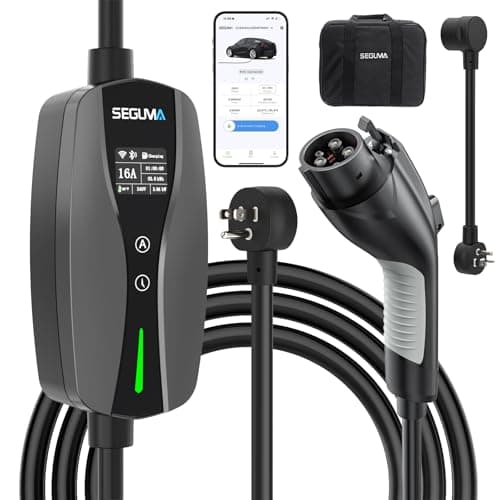
A 120V backup that is not dumb
SEGUMA Wi-Fi Level 1/2 (12A/16A)
A 120-volt cord that plugs into any household outlet and lives in the trunk — with app scheduling, a live display, and 16 amps on 240 volts if you have the outlet.
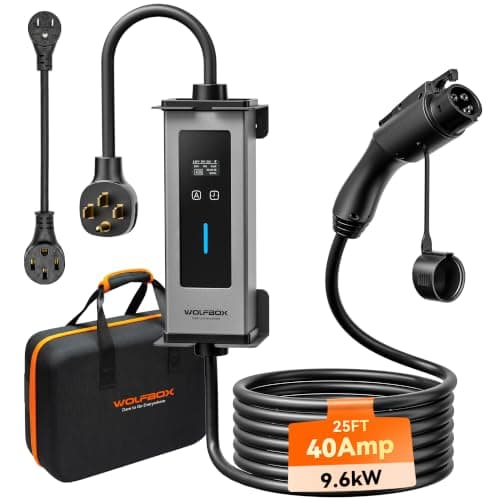
One charger for home and travel
WOLFBOX Portable (Level 1/2)
A dual-level portable that charges on both 120V and 240V, ships with both plug adapters, and adds a delay timer for off-peak charging — a genuine take-anywhere charger.
#ad · As an Amazon Associate we earn from qualifying purchases.
Questions
Frequently asked
Is Level 1 charging enough for daily driving?
How many miles does Level 1 add overnight?
When do I actually need Level 2?
Is Level 1 charging bad for the battery?
Keep reading
Related
- How Long to Charge an EVThe rate math behind the decision.
- Charging in an ApartmentWhere Level 1 often wins for renters.
- PHEV ChargingSmall batteries Level 1 fills easily.
- Best 110V EV ChargersThe Level 1 cords worth owning if this is your whole plan.
- SEGUMA Level 1 ReviewA simple 120-volt cord to rely on.
- Charging Your EV at WorkCover the heavier days away from home.
Receipts
Sources
We do not run a testing lab, and we do not pretend to. Where a measured number came from someone else's lab, we name them and link them. Where we could not verify something, we say so on the page rather than quietly leaving it out. Read our full method.