HUB 05 · Guides & Buying Advice
Your EV Charger Breaker Is Hot. Is That Normal?
Warm is engineered in: the standard a breaker is listed to permits a 50-degree Celsius rise at its terminals. What you are looking for is not heat — it is asymmetry, smell and discoloration.
We earn a commission when you buy through our Amazon links, at no extra cost to you. It never affects our rankings, and we say so when the cheaper product is the better buy. How this works.
A warm breaker on an EV charger circuit is normal and designed for. UL 489, the standard molded-case breakers are listed to, permits a temperature riseof 50°C at the wiring terminal on a standard-rated breaker — and with the typical 40°C ambient rating, that puts a conforming terminal as high as about 90°C while still meeting the standard. Your hand cannot distinguish 60°C from 85°C except as "too hot to hold," so heat alone is not the diagnostic. The things that are diagnostic: one breaker much hotter than its neighbours carrying similar loads, any smell of hot plastic, any discoloration or browning at the terminal or the panel cover, and a persistent buzz or crackle. Any of those four and you switch the circuit off and call an electrician the same day.
Why this question comes up so much with EV charging and almost never with anything else: your charger is the only load in the house that draws near its full rating continuously for hours. A clothes dryer cycles; an oven cycles; an air conditioner cycles. A car charging from 10% to 80% pulls a flat 32 or 40 amps for most of the night. Breakers, terminals and receptacles reach their steady-state temperature and stay there, which they rarely do otherwise.
The numbers behind "normal"
- UL 489, standard-rated breakers:the temperature rise at a wiring terminal, at the point the wire's insulation is brought up as in service, must not exceed 50°C (122°F).
- 100%-rated breakers: the permitted rise at the termination is 60°C.
- Ambient:most breakers are rated for a 40°C ambient. Add the permitted rise and the conductor at the terminal can run near 90°C and still conform — which is also why 90°C-rated conductor insulation is what you find there.
- An alternative test methodin UL 489 allows a rise up to 65°C when the breaker is tested in the smallest enclosure it is likely to be used in at 80% of rated current, with the rise then no more than 50°C.
The practical translation: a breaker on an EV circuit that is distinctly warm, even uncomfortably warm to a brief touch, is very probably doing exactly what it was listed to do. That is a design margin, not a problem.
The four signs that are not normal
- Asymmetry. The best home diagnostic you have is comparison. Your charger breaker should be the warmest in the panel because it carries the steadiest load — but a 40-amp breaker far hotter than another 40-amp breaker under similar load, or one pole of a two-pole breaker much hotter than the other, points at a connection rather than a current.
- Smell. Hot plastic, fish, or the sharp smell of overheated insulation. This is never acceptable and it is the one sign that justifies switching the circuit off immediately.
- Discoloration. Browning, bronzing or soot at the breaker terminal, on the conductor insulation near it, or on the panel cover. Heat damage is cumulative and visible, and it means the temperature has been above design for a while.
- Noise. A buzz, hum or crackle from the breaker or the receptacle under load. That is arcing or a loose mechanical joint, and both get worse.
The cause behind nearly all of it: the termination
When an EV circuit genuinely overheats, the fault is usually not the breaker and not the wire gauge. It is the connection. A conductor that is not torqued to the manufacturer's specification has a higher resistance at the joint, resistance generates heat in proportion to the square of the current, and a continuous 40-amp load is the ideal condition for turning a slightly loose lug into a charred one. Related causes, in rough order:
- Under-torqued or over-torqued terminals. Both are bad; the specification is printed on the breaker or in its instructions, and a torque screwdriver is the tool. This is the single most common root cause.
- A cheap receptacle. If your charger plugs into a 240-volt outlet, the receptacle is the most likely hot spot in the whole install — bargain NEMA 14-50 receptacles with thin contacts are a well-known failure point under continuous EV load. An industrial-grade, listed one is the fix, and it is cheap relative to the circuit.
- Aluminum conductors terminated as if they were copper, without the right lugs or antioxidant compound.
- Undersized conductors for the continuous load, or a long run derated for distance and temperature that was not actually derated. See the wire size and breaker guide.
- A charger set above what the circuit allows. NEC 625.42 requires the circuit to carry 125% of continuous output, so a charger dialled up past 80% of the breaker rating is operating outside the design. Check what yours is set to — how to set the amps covers where that setting lives.
What to do right now, in order. (1) Stop charging and let it cool. (2) Look and smell: discoloration, odor, noise. (3) With the charger running again, compare your breaker against its neighbours by touch — the panel cover on, not off. (4) If any of the four signs is present, switch the circuit off and book an electrician to check the terminations and torque. Do not remove the panel dead front to investigate; the bus behind it is live with the main on, and the inspection worth doing needs a torque screwdriver and a license anyway.
Heat and tripping are different symptoms
A breaker that is warm is managing. A breaker that tripsis a different investigation — ground fault, shared neutral, a thermally fatigued breaker, or a charger set too high — and we work it through separately in EV charger tripping the breaker. One note where they meet: a breaker that has been running hot for months can develop a weakened thermal element and start nuisance-tripping below its rating. Heat that is ignored becomes tripping that is confusing.
The components where this is decided
Published specs on the parts that determine whether your circuit runs hot, with live prices.
| Component | Best for | Published specs | Price |
|---|---|---|---|
| Industrial NEMA 14-50 Outlet | The outlet a plug-in charger needs | NEMA 14-50R · 50A · 125/250V · 3-pole 4-wire · ETL listed | $17.99 |
| Emporia Level 2 (48A) | Most people who want the smart features too | Up to 48A / 11.5kW · J1772 · 25ft cable · Wi-Fi + app | Not verified today |
| ChargePoint Home Flex | Buyers who want the established brand and app | Adjustable to 50A · J1772 · NEMA 14-50 plug · Energy Star | $599.00 |
#ad Prices read live from the Amazon Product API as of October 16, 2026, and they move. Specs are the manufacturer's published claims from the live listing — we have not bench-measured them. Where we have no verified price we print none rather than a number that has gone stale.
What to look for so the circuit does not run hot
An industrial-grade, listed receptacle if you are plugging in. This is the highest-value few dollars in a plug-in EV install. The contacts in a bargain 14-50 are the part that chars under a continuous 40-amp draw; an ETL- or UL-listed industrial receptacle is built for it.
Hardwiring, if you have the choice. It removes the plug and socket entirely — two fewer connections to loosen. That is a real reliability argument for hardwiring beyond the amperage one. See best hardwired Level 2 chargers.
Terminations torqued to specification, confirmed. Ask the electrician whether they used a torque screwdriver on the breaker and the charger lugs. It is a normal question, it takes them no extra time, and it is the single best predictor of whether your circuit runs hot in year three.
A charger set inside the circuit's limit. Eighty percent of the breaker rating, per the continuous-load rule — 32 amps on a 40-amp breaker, 40 on a 50, 48 on a 60. An adjustable charger makes this a setting you can verify rather than a number you hope about.
A weather-rated enclosure if the charger is outdoors. Sun load on a dark enclosure raises the ambient the electronics work in, and ambient is the base the permitted rise is added to. The outdoor roundup ranks on exactly this.
The gear
Recommended gear for this guide
The products this guide refers to, with prices pulled live from Amazon and dated on each card.
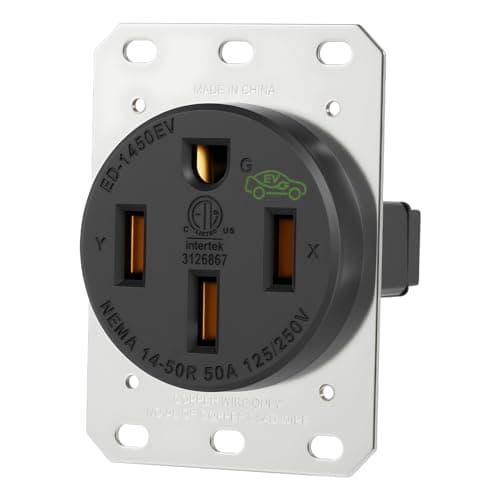
The outlet a plug-in charger needs
Industrial NEMA 14-50 Outlet
The receptacle a plug-in charger actually plugs into — buy the industrial-grade, listed version, because the cheap ones are the part that fails.
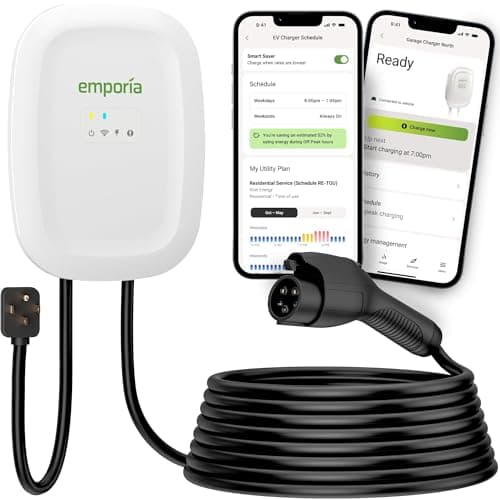
Most people who want the smart features too
Emporia Level 2 (48A)
The smart charger that does not charge a smart-charger premium — 48-amp capability and real energy monitoring for the price of a dumb one.
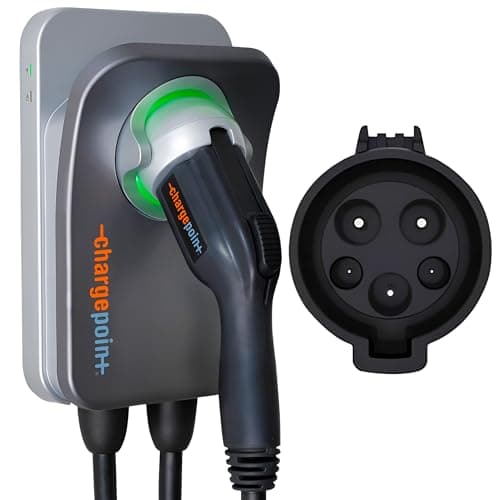
Buyers who want the established brand and app
ChargePoint Home Flex
The polished, well-supported option — adjustable up to 50 amps and tied into the largest public charging app in North America.
#ad · As an Amazon Associate we earn from qualifying purchases.
Questions
Frequently asked
How hot is too hot for an EV charger breaker?
Why is my EV charger breaker hotter than the others in the panel?
Can a hot breaker cause a fire?
Should I reduce my charger's amperage if the breaker feels hot?
Keep reading
Related
- EV Charger Tripping the BreakerThe other breaker symptom, and why its causes are different.
- Wire Size & Breaker GuideThe continuous-load math that sets the right breaker in the first place.
- NEMA 14-50 OutletsWhy the receptacle, not the breaker, is the usual hot spot on a plug-in install.
- Do I Need a GFCI Breaker?The other breaker question an EV circuit raises.
- How to Set the Amps on Your ChargerChecking the charger is inside the circuit's continuous limit.
Receipts
Sources
- VIOX — MCB/MCCB temperature rise limits under IEC 60947 and UL 489 (50C terminal rise)
- Mike Holt Forum — circuit breaker terminal temperature, UL 489 rise and ambient rating
- EC&M — NEC Article 625, Electric Vehicle Charging Systems
We do not run a testing lab, and we do not pretend to. Where a measured number came from someone else's lab, we name them and link them. Where we could not verify something, we say so on the page rather than quietly leaving it out. Read our full method.