Skip to content
Volt & Cable

HUB 01 · Level 2 Home Chargers

The Best EV Chargers With Load Management

Load management is the one charger feature that can change your electrician's answer from "you need a service upgrade" to "this will pass." Three mechanisms, ranked by what they actually solve.

By Stephen V.Updated How we research
#ad

We earn a commission when you buy through our Amazon links, at no extra cost to you. It never affects our rankings, and we say so when the cheaper product is the better buy. How this works.

The short answer

Quick picks

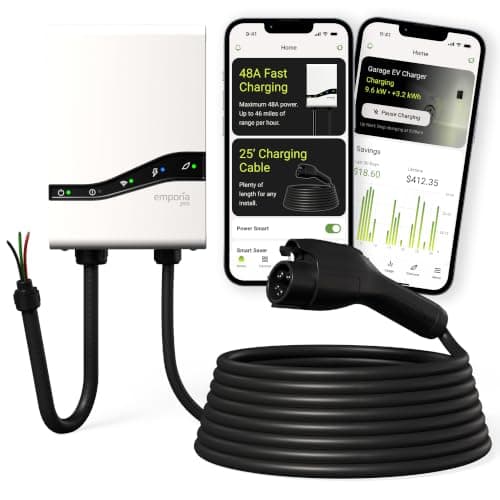
  • Emporia Emporia Pro (48A, PowerSmart)
    01 Emporia Pro (48A, PowerSmart)
    8.8

    The one charger that changes the electrical answer rather than working around it — it watches the whole panel and backs off instead of tripping the main.

    Best for: A 100-amp service you would rather not upgrade

    $599.00Amazon
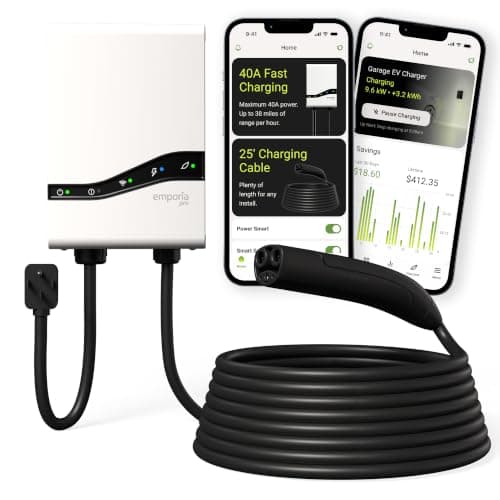
  • Emporia Emporia Pro NACS (48A, PowerSmart)
    02 Emporia Pro NACS (48A, PowerSmart)
    8.8

    The one to buy when the panel, not the budget, is the constraint — PowerSmart load management lets it back off instead of forcing a service upgrade.

    Best for: Homes with a tight electrical panel

    Check priceAmazon
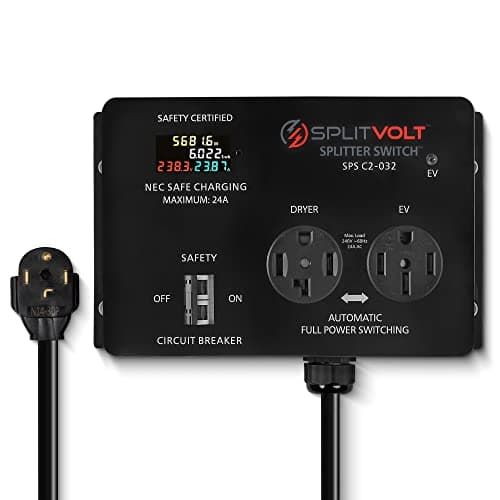
  • Splitvolt Splitvolt Splitter Switch (14-30/14-50)
    03 Splitvolt Splitter Switch (14-30/14-50)
    7.8

    Shares the dryer circuit you already have instead of adding one — the only pick here that needs no electrician and no spare breaker space.

    Best for: A full panel with a dryer outlet in it

    $410.00Amazon
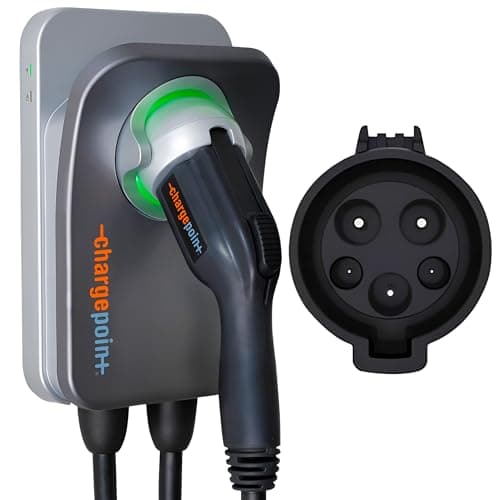
  • ChargePoint ChargePoint Home Flex
    04 ChargePoint Home Flex
    8.2

    The polished, well-supported option — adjustable up to 50 amps and tied into the largest public charging app in North America.

    Best for: Buyers who want the established brand and app

    $599.00Amazon
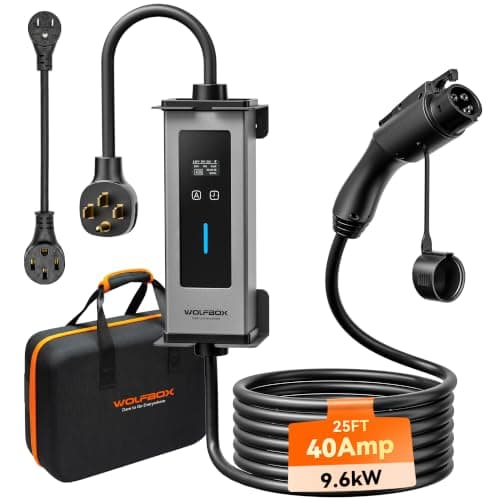
  • WOLFBOX WOLFBOX Portable (Level 1/2)
    05 WOLFBOX Portable (Level 1/2)
    8.6

    A dual-level portable that charges on both 120V and 240V, ships with both plug adapters, and adds a delay timer for off-peak charging — a genuine take-anywhere charger.

    Best for: One charger for home and travel

    $299.99Amazon

#ad · Live prices from the Amazon Product API, as of October 16, 2026. Where we have no verified live price, we show none — we would rather leave a gap than print a number that has gone stale.

If an electrician has told you your panel cannot take an EV charger, the pick that most often changes that answer is the Emporia Pro— it ships with the Vue energy monitor and two mains current sensors, watches the whole service, and throttles the charger when the house draws hard. That is a true energy management system, and under the 2023 NEC a load calculation is allowed to count its capped setpoint instead of the charger's nameplate. It is for the household whose panel is the constraint and whose alternative is a four-figure service upgrade. If your panel is genuinely full with no spare breaker space at all, the Splitvolt Splitter Switch solves a different version of the same problem by sharing the dryer circuit you already have — no electrician, no new breaker.

"Load management" gets used loosely on Amazon listings, so it is worth separating the three things it can mean, because they cost very different amounts and they fix very different problems. Only one of them is a system the code recognises by name.

The short version

  • Emporia Pro (48A, PowerSmart) — best true load management, J1772. For the non-Tesla household with a 100-amp service it would rather not upgrade. Reads the whole panel through the bundled Vue monitor and backs the charger off instead of tripping the main. Full review.
  • Emporia Pro NACS — best true load management for a NACS car. For the same tight panel when the car has a Tesla-style port. Identical PowerSmart hardware, native NACS head, no adapter in the loop. See it against the cheaper sibling in Emporia Pro NACS vs Emporia NACS.
  • Splitvolt Splitter Switch — best when there is no breaker space at all. For the renter or the full panel. Shares an existing NEMA 14-30 dryer circuit between the dryer and the car, automatically, with a 24-amp internal limit. No panel work and no electrician.
  • ChargePoint Home Flex — best manual derating. For the buyer whose load calculation passes at a lower amperage. Not dynamic — you set 16, 24, 32, 40, 48 or 50 amps once and it holds — but it is the cheapest way to make a charger fit a smaller circuit. Full review.
  • WOLFBOX Portable — best derating you can unplug. For the household that wants the smaller draw and the option to take the charger away. Adjustable 6–40A on the unit itself. Full review.

What load management actually does to the code math

An EV charger is a continuous load, so NEC 625.42makes the branch circuit carry 125% of the charger's output — the familiar rule that a 48-amp charger needs a 60-amp breaker. The problem that sinks installs is not the breaker, though. It is the service load calculation: add 48 amps of continuous load to an existing 100-amp service and the arithmetic often fails, and a failed calculation means a service upgrade.

An energy management system changes the arithmetic rather than the hardware. NEC 625.42(A) provides that where an EMS meeting Article 750.30provides load management of charging equipment, the maximum load on the service and feeder is the maximum load the EMS permits. The 2023 edition's 220.70says the same thing from the calculation side: a single value equal to the EMS's maximum ampere setpoint may be used in the service calculation, and that setpoint is treated as a continuous load. In plain terms:

  • Without an EMS the calculation must assume the charger draws its nameplate maximum forever, because nothing stops it.
  • With a compliant EMSthe calculation counts the setpoint, because the system physically prevents the service from exceeding it — 750.30(C)(2) requires it to cease current flow on failure or malfunction.
  • The resultis that a charger your service "cannot" support on paper frequently becomes a charger it can, with no new wire from the street.

The honest limit. Whether your inspector accepts an EMS in place of a service upgrade is a local call, not a manufacturer's promise. The code permits it; the authority having jurisdiction signs it off. Ask your electrician to confirm before you buy, because the premium over a standard charger buys exactly this one outcome and nothing else.

Dynamic, shared and manual — three different products

Dynamic load management measures the real draw of the whole house, several times a second, and modulates the charger in response. That is what the Emporia Pro does through the bundled Vue monitor and its mains current sensors. It is the only mechanism here that gives you the full 48 amps when the house is quiet and a reduced rate when the dryer, the oven and the air conditioning are all running.

Circuit sharingdoes not measure anything. The Splitvolt sits between an existing dryer receptacle and two outlets, and hands the circuit to whichever device wants it, one at a time. It cannot give you more than the 24 amps a 30-amp circuit allows continuously, which is roughly 5.8 kW — but it needs no panel work at all, which is why it is the answer when the obstacle is physical breaker space rather than service capacity. Our dryer outlet guide works through that install in full.

Manual deratingis simply buying an adjustable charger and setting it low. It costs nothing extra, and for a great many homes it is sufficient: if the load calculation passes at 32 amps, a ChargePoint Home Flex set to 32 amps passes, permanently, with no monitor in the panel. What it cannot do is use spare capacity when the house is idle — 32 amps is 32 amps at 3 a.m. and at dinner time. Our 32-amp roundup and the guide to setting the amps cover that route.

How the picks compare on paper

Published figures from the live listings, with the live price alongside. The column that decides this category is the mechanism, not the amperage.

Charger / deviceBest forPublished mechanism / specsPrice
Emporia Pro (48A, PowerSmart)A 100-amp service you would rather not upgradeUp to 48A hardwired · J1772 · PowerSmart + Vue monitor · UL · ENERGY STAR · NEMA 4$599.00
Emporia Pro NACS (48A, PowerSmart)Homes with a tight electrical panel48A / 11.5kW · NACS (J3400) · PowerSmart load mgmt · 25ft cableNot verified today
Splitvolt Splitter Switch (14-30/14-50)A full panel with a dryer outlet in itShares a 30A dryer circuit · 24A max for charging · 14-30 in · dryer + EV out · cETLus certified$410.00
ChargePoint Home FlexBuyers who want the established brand and appAdjustable to 50A · J1772 · NEMA 14-50 plug · Energy Star$599.00
WOLFBOX Portable (Level 1/2)One charger for home and travel6–40A · 9.6kW · J1772 · Level 1/2 · NEMA 14-50 + 5-15 · ETL · IP66 · 25ft$299.99

#ad Prices read live from the Amazon Product API as of October 16, 2026, and they move. Specs are the manufacturer's published claims from the live listing — we have not bench-measured them. Where we have no verified price we print none rather than a number that has gone stale.

In detail

The picks, in full

01
Emporia Emporia Pro (48A, PowerSmart)

A 100-amp service you would rather not upgrade

Emporia Pro (48A, PowerSmart)

Up to 48A hardwiredJ1772PowerSmart + Vue monitorUL · ENERGY STAR · NEMA 4
8.8/10

The one charger that changes the electrical answer rather than working around it — it watches the whole panel and backs off instead of tripping the main.

Charge speed
10
Build & weather
8
Smart features
10
Cable & connector
9
Value
7

Pros

  • PowerSmart reads the whole panel through the bundled Vue energy monitor and throttles the charger when the house draws hard, so a tight service is a setting rather than a rebuild
  • Full 48 amps — about 11.5 kW — when hardwired on a 60-amp circuit, so you are not trading speed for the load management
  • UL listed, ENERGY STAR certified and NEMA 4 rated, on a 25-foot cable, with the J1772 connector most non-Tesla EVs use

Cons

  • The most expensive charger in this group, and the premium buys panel headroom rather than charging speed
  • The Vue monitor has to go inside your electrical panel, so this is licensed-electrician work — there is no version of this you install yourself in an afternoon
  • Whether load management is accepted in place of a service upgrade is your local inspector's call, not the manufacturer's

Don't buy this if…

…your panel already has room for the circuit you want. If the load calculation passes without help, PowerSmart solves a problem you do not have — the standard Emporia Level 2 charges at exactly the same rate for meaningfully less.

$599.00View on Amazon

Price as of October 16, 2026. Prices change — Amazon's is the one that counts.

#ad · we may earn a commission from this link to Emporia Pro (48A, PowerSmart)

02
Emporia Emporia Pro NACS (48A, PowerSmart)

Homes with a tight electrical panel

Emporia Pro NACS (48A, PowerSmart)

48A / 11.5kWNACS (J3400)PowerSmart load mgmt25ft cable
8.8/10

The one to buy when the panel, not the budget, is the constraint — PowerSmart load management lets it back off instead of forcing a service upgrade.

Charge speed
10
Build & weather
8
Smart features
10
Cable & connector
9
Value
7

Pros

  • PowerSmart load management throttles the charger when the rest of the house is drawing hard, which can avoid a panel upgrade costing more than the charger
  • Full 48 amps — about 11.5 kW — when hardwired on a 60-amp circuit
  • 25-foot cable plus the Emporia app's energy monitoring

Cons

  • Costs meaningfully more than the standard Emporia NACS, and the premium buys load management rather than charging speed
  • The feature only earns its money if your panel is genuinely short of capacity

Don't buy this if…

…your panel has a spare 60-amp slot. You would be paying for load management you will never trigger — the standard Emporia NACS charges at exactly the same rate for less.

Check price on Amazon →

No buyable offer at the last price check (October 16, 2026). We show nothing rather than a stale number.

#ad · we may earn a commission from this link to Emporia Pro NACS (48A, PowerSmart)

03
Splitvolt Splitvolt Splitter Switch (14-30/14-50)

A full panel with a dryer outlet in it

Splitvolt Splitter Switch (14-30/14-50)

Shares a 30A dryer circuit24A max for charging14-30 in · dryer + EV outcETLus certified
7.8/10

Shares the dryer circuit you already have instead of adding one — the only pick here that needs no electrician and no spare breaker space.

Usefulness
9
Safety listing
9
Build quality
7
Value
6

Pros

  • Plugs into an existing NEMA 14-30 dryer receptacle and gives you a dryer outlet and an EV outlet, so no new circuit, no new breaker and no panel work
  • Switches the circuit between the two automatically, and an internal safety breaker holds EV charging to the 24-amp continuous limit a 30-amp circuit allows
  • cETLus certified with a live power display — a named safety listing, which most of the cheap dryer splitters on Amazon do not state

Cons

  • 24 amps is the ceiling — roughly 5.8 kW, well short of a 40- or 48-amp circuit, and your charger has to be set to 24 amps or less
  • Costs about as much as a decent charger, so the saving is against an electrician's bill, not against a cheaper charger
  • Only one device draws at a time, and it depends on your dryer outlet being in a place you can actually park near

Don't buy this if…

…you have room in the panel for a dedicated circuit. A properly installed 240-volt circuit is faster, permanent and not competing with the laundry — this is the answer when adding one is genuinely off the table.

$410.00View on Amazon

Price as of October 16, 2026. Prices change — Amazon's is the one that counts.

#ad · we may earn a commission from this link to Splitvolt Splitter Switch (14-30/14-50)

04
ChargePoint ChargePoint Home Flex

Buyers who want the established brand and app

ChargePoint Home Flex

Adjustable to 50AJ1772NEMA 14-50 plugEnergy Star
8.2/10

The polished, well-supported option — adjustable up to 50 amps and tied into the largest public charging app in North America.

Charge speed
9
Build & weather
8
Smart features
9
Cable & connector
8
Value
7

Pros

  • Amperage is adjustable in the app to match whatever breaker you install, up to 50A
  • Integrates with ChargePoint's large public-network app — one app for home and away
  • Long track record and responsive support, which budget brands cannot match

Cons

  • Costs more than equally capable chargers from newer brands
  • The experience leans hard on the ChargePoint account and app

Don't buy this if…

…price is your first priority. The Emporia matches most of what this does for meaningfully less — you are paying here for brand maturity and the unified app, which are real but not free.

$599.00View on Amazon

$657.999% off

Price as of October 16, 2026. Prices change — Amazon's is the one that counts.

#ad · we may earn a commission from this link to ChargePoint Home Flex

05
WOLFBOX WOLFBOX Portable (Level 1/2)

One charger for home and travel

WOLFBOX Portable (Level 1/2)

6–40A · 9.6kWJ1772 · Level 1/2NEMA 14-50 + 5-15ETL · IP66 · 25ft
8.6/10

A dual-level portable that charges on both 120V and 240V, ships with both plug adapters, and adds a delay timer for off-peak charging — a genuine take-anywhere charger.

Charge speed
8
Portability
10
Build & weather
8
Cable & connector
8
Value
9

Pros

  • Charges on both 120V (Level 1) and 240V (Level 2), and ships with both the NEMA 5-15 and NEMA 14-50 plug adapters — one charger for home and the road
  • Adjustable current (6–40A) plus a built-in delay timer, so you can dial it down for a weaker circuit and start on cheaper overnight rates without an app
  • ETL certified with an IP66 weather rating and a 25-foot cable — a genuine take-anywhere travel charger

Cons

  • A portable brick that lives on the floor or a hook, not a tidy mounted wall unit
  • 40-amp draw needs a properly rated 14-50 outlet — do not run it flat-out on a worn receptacle

Don't buy this if…

…you want a permanent, tidy wall installation with per-charge energy data in an app. A portable trades the mounted look and the app for the ability to come with you.

$299.99View on Amazon

Price as of October 16, 2026. Prices change — Amazon's is the one that counts.

#ad · we may earn a commission from this link to WOLFBOX Portable (Level 1/2)

What to look for in a load-managed charger

Whether it measures the service or just itself. This is the whole distinction. A charger that only knows its own draw cannot do load management, however smart the app is — it has no idea what the rest of the house is doing. Look for a product that ships current sensors for the mains, or that documents an accessory monitor you install in the panel. The Emporia Pro bundles a Vue 3 and two 200-amp mains sensors, which is why it is the pick here.

That the monitor install is licensed work. Mains current sensors clamp around the service conductors inside your panel. That is not a DIY afternoon and nobody should pretend otherwise — budget for the electrician who is already pulling the circuit to fit the monitor at the same time. See can I install an EV charger myself for where the line sits.

The failure behaviour. NEC 750.30(C)(2) requires a compliant system to stop current flow if it fails. Ask what happens when the Wi-Fi drops or the monitor loses the charger: a system that keeps charging at full rate after losing sight of the panel is not providing load management, it is providing a dashboard.

Whether you need it at all. Load management is a premium you should refuse if your panel has room. If an electrician can land a 60-amp breaker without a service upgrade, the standard Emporia Level 2charges at exactly the same rate for meaningfully less. Run the load calculation before you shop, not after — our 100-amp panel roundup and the wire size and breaker guide are the two pages to read first.

A named safety listing. UL or ETL on the charger, and a listing on the monitor too. A device that is allowed to decide how much current your service carries is not the place to save money on certification.
How we picked

We do not run a testing lab

We compiled published specifications from manufacturer manuals and spec sheets, verified the safety listings (UL / ETL), computed the real running and installation costs, checked the wiring math against the NEC continuous-load rule, and read aggregated owner reviews — then scored each product against a published rubric. The scores are judgments from documented research — they are not bench measurements, because we do not have a test lab and we are not going to pretend we do. Every spec and cost figure is cited in Sources.

Questions

Frequently asked

Does load management let me skip a service upgrade?
Often, yes — that is the entire point. NEC 625.42(A) allows the maximum load on the service to be the maximum the energy management system permits, and the 2023 NEC's 220.70 lets the service calculation use the EMS setpoint rather than the charger's nameplate. Whether your local inspector accepts that in your specific case is their call, so confirm with the electrician who will pull the permit before you buy the hardware.
Is a charger with an app the same as a charger with load management?
No, and this is the most common mix-up in the category. An app gives you scheduling, energy history and notifications — all of which concern the charger only. Load management requires the system to measure the rest of the house, which needs current sensors on the service conductors. Most smart chargers, including good ones, do not include them.
How slow does load management make charging?
Only while the house is busy, and usually not by much over a night. A dynamic system runs the charger at full rate whenever there is headroom, and the periods when a home is drawing near its service limit are short — cooking, laundry, peak air conditioning. Over a ten-hour overnight window the throttled hours are a small fraction of the total, which is why load management costs you far less range than the fixed derating of a manually set charger.
Can I add load management to a charger I already own?
Not in the sense the code recognises. Energy monitors you can retrofit will tell you what your panel is doing, but an EMS under Article 750.30 has to be able to acton the charger and to cease current flow when it fails — which means the charger and the management system have to be designed to talk to each other. If load management is what you need, it is a charger decision, not an accessory decision.

Keep reading

Receipts

Sources

We do not run a testing lab, and we do not pretend to. Where a measured number came from someone else's lab, we name them and link them. Where we could not verify something, we say so on the page rather than quietly leaving it out. Read our full method.