If you are hardwiring a Level 2 charger, the one to buy for most homes is the Emporia Level 2: hardwired on a 60-amp circuit it runs the full 48 amps, it has genuine energy monitoring, and it costs about what a plain plug-in charger does. Want the fastest, most polished install instead? The ChargePoint Home Flex is adjustable up to 50 amps and tied into the largest public-charging network in North America.
"Hardwired" is not a separate species of charger — it is an install method. Most quality Level 2 units can be either plugged into a NEMA 14-50 outlet or wired straight to the circuit, and a few, like the Wallbox here, are hardwired only. So this roundup is not really about which box is best in the abstract; it is about which chargers are best to hardwire, and why you would choose that install over the plug-in outlet in the first place. If your only question is raw speed, our 48-amp roundup answers that directly; this page is about the wiring decision underneath it.
As always, we have not bench-tested these chargers. What follows is compiled from published manufacturer specifications, verified safety listings, the NEC wiring math, and aggregated owner reviews, scored against our published rubric. Every spec traces to the live retail listing, and no dollar figure is written here — prices render live and date-stamped, and vanish rather than go stale.
The short version
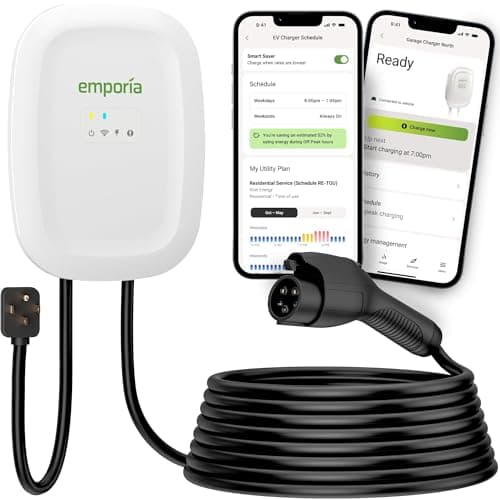
- Emporia Level 2 — best hardwired charger overall. Full 48 amps when hardwired, real energy monitoring, and a price that undercuts the established brands. Full Emporia review.
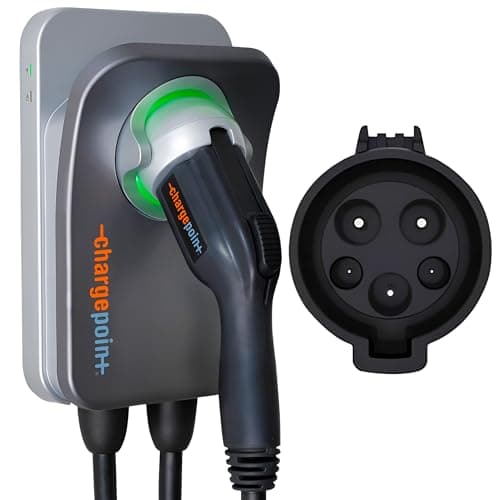
- ChargePoint Home Flex — the fastest, most polished install. Adjustable from 16 to 50 amps in the app, NEMA 3R outdoor-rated, one account for home and the public network. Full ChargePoint Home Flex review.
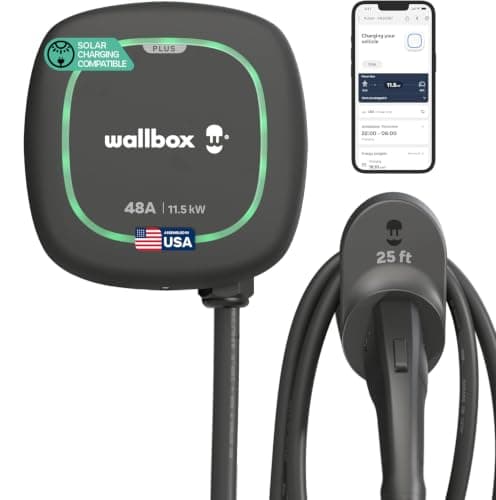
- Wallbox Pulsar Plus — the hardwired-only pick.Full 48 amps from one of the smallest enclosures made — the answer for a tight wall. Full Wallbox Pulsar Plus review.
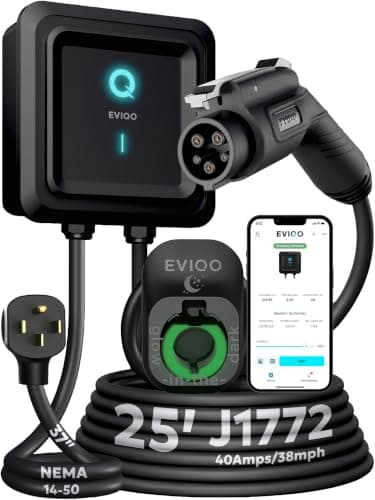
- EVIQO Level 2 — best budget hardwired. A UL-and-ETL-listed, IP66-weatherproof 40-amp unit you can wire in for a clean, outlet-free install without paying for the 48-amp tier. Full EVIQO review.
Why hardwire at all? Four honest reasons
Plugging a charger into a NEMA 14-50 outlet is the popular default, and for a lot of homes it is the right call — no permanent commitment, and you can take the unit with you. But there are four genuine reasons to spend the extra labor and hardwire instead, and it is worth being clear about which of them actually apply to you before you pay an electrician.
- It unlocks the full speed.A plug-in NEMA 14-50 sits on a 50-amp circuit, and the continuous-load rule caps that at 40 amps. The fastest home charging — 48 amps, about 11.5 kW — is only available hardwired on a 60-amp circuit. If you bought a 48-amp charger and plugged it in, you paid for headroom you cannot use.
- It removes the part most likely to fail.A cheap NEMA 14-50 receptacle is the single most common failure point in a home charging setup: under a continuous 40-amp load the flimsy ones heat up, discolor and, in the worst cases, melt. Hardwiring deletes the receptacle entirely — there is no plug-and-socket junction to loosen or overheat.
- It is cleaner and better outdoors. A hardwired unit is a fixed fixture with no exposed plug, which looks tidier on an interior wall and, outdoors, means no receptacle face for weather and corrosion to work on. Pair a hardwired unit with a real outdoor NEMA rating and the whole install is sealed.
- It can sidestep a GFCI nuisance-trip headache.Code requires the receptacle a plug-in charger uses to be GFCI-protected, and every modern EVSE already has its own ground-fault protection built in. Those two systems occasionally fight, and the result is a breaker that trips for no real fault. A hardwired charger relies on its own built-in protection and is generally not required to sit behind a separate GFCI breaker — one fewer thing to nuisance-trip. Local code has the final say, so confirm the specifics with your electrician.
Hardwiring at 40 amps is still a real choice.You do not have to be chasing 48 amps to hardwire. Plenty of people wire in a 40-amp unit purely for reasons two through four above — the cleaner fixture, the outdoor durability, and no failure-prone outlet — on a circuit their panel already has. That is exactly what the budget EVIQO pick is here for.
Do you actually have the circuit?
Because EV charging is a continuous load, the NEC sizes the circuit to 125% of the charger's current. That sets two hard prerequisites for a hardwired install:
- A 48-amp charger needs a 60-amp breaker and typically 6 AWG copper (heavier on a long run). A 40-amp hardwired unit needs a 50-amp breaker and usually 8 AWG.
- That circuit needs spare capacity in your panel. An older 100-amp service with little headroom may need a panel upgrade first — the line item that turns an affordable install expensive.
The full breaker-and-wire breakdown is in our wire size and breaker guide, and what the whole job costs — including a possible panel upgrade — is in the installation cost guide. Hardwiring is licensed work: this is a job for an electrician, not a weekend DIY. Where the plug-in route ends and a wired install begins is covered in can I install an EV charger myself?
When not to hardwire
Hardwiring is the wrong call for a big slice of buyers, and we would rather you skip this page than wire in a charger you will regret. Do nothardwire if you rent, if you might move before the charger has paid for itself, or if you want the option to unplug the unit and take it along — a hardwired box stays with the house. For any of those, a plug-in charger or a portable EVSE is the smarter buy, and the full case is in our portable vs hardwired comparison. If your car has a Tesla-style port rather than a J1772 one, start instead with the best NACS home chargers, several of which are hardwired units too.
The picks, in order
1. Emporia Level 2 — the one to hardwire
The Emporia is the charger we rate best for most homes, and it is at its best hardwired. On a 60-amp circuit it delivers the full 48 amps — the plug-in version of the same unit is capped at 40 — and it pairs that speed with genuine energy monitoring and scheduling in the app, all at a price that undercuts the established brands. The 25-foot cable reaches across a two-car garage. The honest trade-offs: the full 48 amps is only there when it is wired in, so a plug-in owner never sees it, and the app and Wi-Fi are central to setup, so it is more involved than a sealed plug-and-go box. If you want the fastest home charging without paying a brand premium, this is the unit to wire in. Full Emporia review, and it is compared head to head with our number-two pick in Emporia vs ChargePoint.
2. ChargePoint Home Flex — the fastest, most polished install
The Home Flex is the most complete unit here. Its amperage is set in the app anywhere from 16 to 50 amps, so one charger adapts to whatever breaker your panel can spare — and hardwired at up to 50 amps it is the fastest configuration in this roundup. It is NEMA 3R outdoor-rated, backed by a long track record and responsive support, and one ChargePoint account covers both your home unit and the largest public network in North America. The honest cons are price — it costs more than equally capable newer-brand units — and that the experience leans hard on the ChargePoint account and app. If you want the polished, adjustable, network-connected install and do not mind paying for it, this is the pick. Full ChargePoint Home Flex review.
3. Wallbox Pulsar Plus — the hardwired-only compact box
The Wallbox is the one unit here that gives you no choice: it is hardwired only, and it earns its place on size. It delivers the full 48 amps from one of the most compact enclosures you can buy — the pick when wall space is tight and every other fast unit looks like a small microwave bolted to the drywall. It is Energy Star and UL certified with a 25-foot cable. The honest weak point is the app, which has drawn more owner complaints than the hardware, and it sits in the upper price bracket for the speed. Because it cannot be plugged in, it is the wrong buy for anyone who might want to move it — but for a permanent, fast, space-constrained install, nothing else here is this small. Full Wallbox Pulsar Plus review, and it meets the Emporia in Wallbox vs Emporia.
4. EVIQO Level 2 — the budget way to a clean wired install
Not every hardwired install is chasing 48 amps. The EVIQO is the pick when you want the tidiness and durability of a wired-in charger — no failure-prone outlet, a sealed IP66 / NEMA 4 enclosure rated for the weather — without paying for the fastest tier. It carries both UL and ETL listings, runs a Wi-Fi app with scheduling, and regularly sits at the bottom of the price band. The honest cons: it is a 40-amp unit, so it is not the one to buy if your panel could carry 48 and you genuinely want the speed, and it is a newer brand with a shorter support track record than ChargePoint. It ships with a NEMA 14-50 plug, but the same hardware supports a hardwired install for the clean, outlet-free result. Full EVIQO review. If price is the whole story, our best budget EV chargers roundup collects the cheapest units that still carry a real safety listing.
Hardwired vs plug-in — the real decision
The choice is not which is "better" but which fits your house and your plans. Hardwire when you own the home, you want the fastest speed your panel can carry or the cleanest permanent fixture, and you are comfortable that the charger stays behind if you sell. Plug in when you rent, might move, want to unplug and travel with the unit, or simply do not need more than the 40 amps a 14-50 outlet delivers. Both routes are covered together in the flagship home charger roundup, and the 40-amp plug-in sweet spot has its own 40-amp roundup.
How to choose a charger to hardwire
Once your electrician has confirmed what circuit your panel can carry, the picks separate on four things.
The circuit you can run
This is the first gate, and it is set by your panel, not the box. A spare 60-amp circuit opens up the full 48 amps — the Emporia, ChargePoint or Wallbox. If you only have a 50-amp circuit to give, a 40-amp unit like the EVIQO is the honest ceiling, and hardwiring it still buys you the clean, outlet-free install even without the extra speed. Do the sizing before you pick a charger, not after: our wire size and breaker guide has the math.
App and network, or just charge
The ChargePoint bundles the most mature app plus one account that also covers the largest public network in North America; the Emporia gives you solid energy monitoring for less; the EVIQO covers the basics on a budget; the Wallbox's app is the weakest of the four. If you charge on the public network too, the ChargePoint account is genuinely useful. If you just want a fast, well-tracked home charge, the Emporia is the value route.
Footprint and mounting
All four end up as fixtures on the wall for good, so the enclosure size matters more than with a plug-in unit you might relocate. If space is tight, the Wallbox is by far the smallest. If you have room, the others' larger enclosures are no drawback.
Weather rating
For an outdoor wall, the weatherproofing is not optional. The EVIQO carries an IP66 / NEMA 4 rating and the ChargePoint is NEMA 3R outdoor-rated; all four are built to mount outside, but check the specific rating against where the box will actually live.
So, which one? The Emporia for the best all-round hardwired install at 48 amps; the ChargePoint Home Flex for the fastest, most polished, network-connected version; the Wallbox Pulsar Plus for a tight wall; and the EVIQO for a clean, weatherproof wired-in charger on a budget.