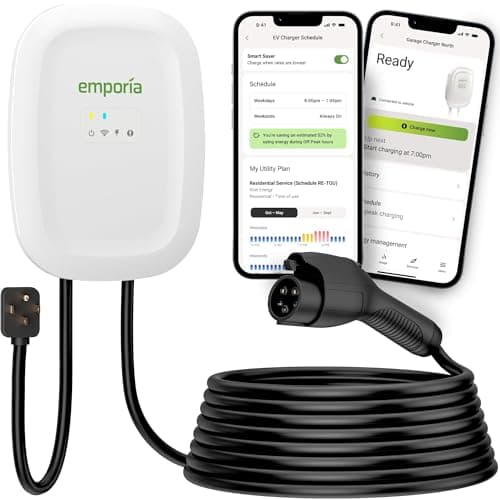
For a short-term rental our pick is the Emporia Level 2, because it is the cheapest charger here that answers a host's actual question — how much electricity did that guest use? Its energy monitoring turns charging from an unknown line on your utility bill into a number per stay. If you would rather have nothing to administer at all, the ETL-listed Lectron Level 2 has no app or account to onboard a guest into, and it is cheap enough to replace outright if a guest is careless with it.
"EV charger" is now something guests filter and sort by, which makes this one of the few amenities that changes who finds your listing rather than just how they rate it. But hosts get steered toward the same roundups homeowners read, and those rank on peak amperage — the spec that matters least here. A guest's car sits in your driveway overnight and leaves in the morning. Even a modest charger fills it twice over in that window. What actually decides a host's purchase is whether a stranger can use it without texting you, whether it survives weather and rough handling, and whether you can see what it cost.
As on every page here, these are not bench tests. The picks come from published manufacturer specifications on the live listings, the verified safety and enclosure ratings, the documented app and monitoring features, and the running-cost arithmetic below. Scores are judgments against our published rubric. No price is written into this page; every figure renders live and date-stamped.
The short version
- Emporia Level 2 — best for an Airbnb overall. For the host who wants to know what each stay cost. Real energy monitoring, 25-foot cable, up to 48A hardwired, at a price that does not sting if a guest is careless. Full review.
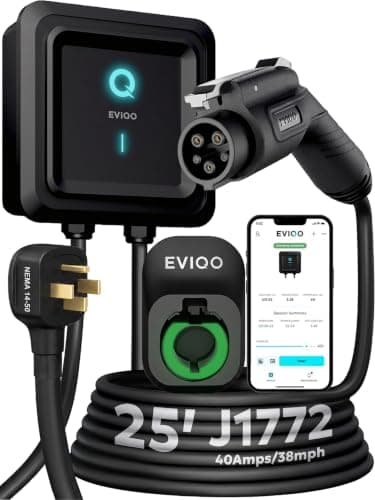
- EVIQO Level 2 — best for an outdoor parking spot. For the host whose driveway has no cover. IP66 / NEMA 4 rated, UL and ETL listed, and the least expensive of the smart picks here. Full review.
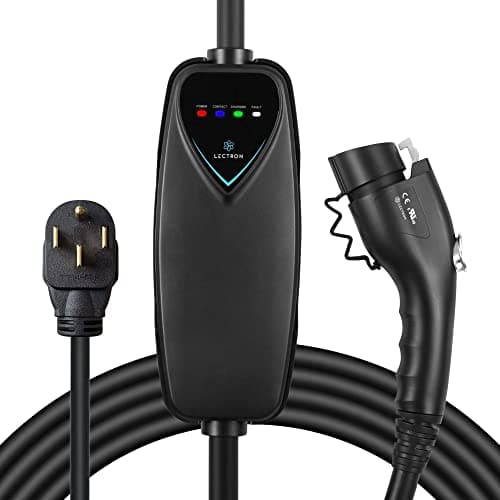
- Lectron Level 2 — best with nothing to administer. For the host who never wants to be part of the charging process. No app, no account and no Wi-Fi dependency, on a plug-in 40-amp unit that costs little enough to swap out. Where it ranks.
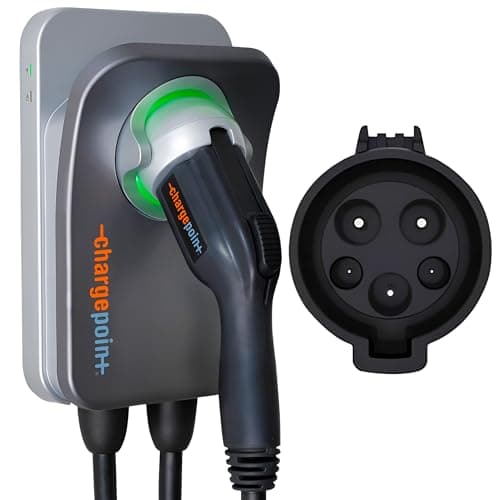
- ChargePoint Home Flex — best for a guest who already has the app. For the host near public charging whose guests likely run ChargePoint already. Amperage adjustable 16–50A to cap your exposure. Full review.
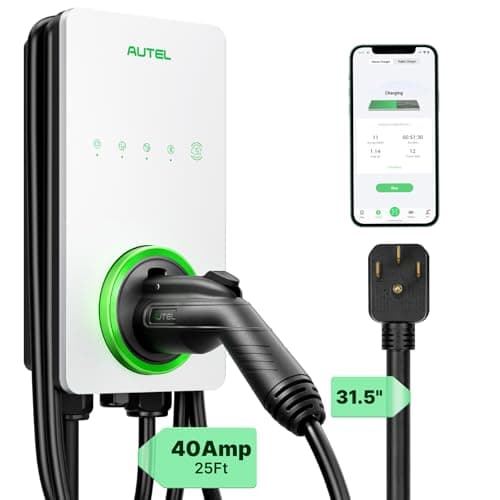
- Autel MaxiCharger — best for a tidy, guest-proof install. For the host who does not want a cable on the ground in guest photos. Holster included, 25-foot cable, adjustable 16–40A. Full review.
What a guest's charge actually costs you
Price this before you decide whether to absorb it, add it to your nightly rate, or bill it. The arithmetic is simple and it is the number most hosts have never run:
- A guest arrives at 30% and leaves full on a 75 kWh battery. That is roughly 52 kWh delivered.
- At the US residential average — the EIA puts it at about 18 cents per kWh for 2026 — that stay cost you roughly $9 in electricity.
- At a high-rate 32 cents per kWh, the same stay is about $17.
So one full charge is a single-digit-to-teens cost, not the runaway expense hosts fear. Where it stops being trivial is a long stay or a second car. Work a week of nightly top-ups of about 20 kWh each: that is roughly 140 kWh, or about $25 at the national average and closer to $45 at 32 cents — and a charger with no monitoring gives you no way to know it happened. Our cost to charge at home guide has the full method with the rate variables, and whether charging raises your electric bill covers how it lands on a utility statement.
Cap the amperage, not the hospitality. An adjustable charger set to 32 amps instead of 48 delivers about 7.7 kW rather than 11.5 — still more than enough to fill any guest's car overnight, while meaningfully flattening your peak draw and your exposure if someone leaves it plugged in all week. On a time-of-use tariff it also keeps the charging in cheaper hours. This is the single highest-leverage setting a host has, and it takes about a minute to change.
Guest-proofing is a real specification
A home charger is used by one or two people who learn its quirks. A rental charger is used once, at night, by someone who has never seen it, is tired, and will not read a laminated card. That changes what "good" means:
- No account, no onboarding. If the charger needs an app login to deliver electricity, you have created a support ticket. Prefer a unit that charges the moment the connector is seated and keeps any app for your monitoring, not the guest's access.
- It must work when the internet does not. Guest Wi-Fi drops, routers get rebooted. A charger that stops delivering power without a connection is a charger that will fail on the one night it matters.
- The enclosure takes abuse. Dropped connectors, cables run over by tires, weather. A metal body or a genuine IP66 / NEMA 4 rating is not overkill in a rental.
- The connector standard a guest will actually have. Most non-Tesla EVs charge at home through J1772, and a J1772 charger also serves a Tesla-style car through a cheap adapter the guest very likely carries. A NACS-only charger is the narrower bet for a stranger's car — if you want to cover both, see the NACS roundup and keep an adapter in the drawer.
How the picks compare on paper
Published specifications from the live listings, with live prices. For a rental the columns to read first are the enclosure rating and whether the unit needs an app to function at all.
| Charger | Best for | Key specs (manufacturer) | Price |
|---|
| Emporia Level 2 (48A) | Most people who want the smart features too | Up to 48A / 11.5kW · J1772 · 25ft cable · Wi-Fi + app | Not verified today |
| EVIQO Level 2 (40A) | Budget-conscious buyers who still want smart features | 40A / 9.6kW · J1772 · 25ft cable · UL & ETL, IP66/NEMA 4 | $449.99 |
| Lectron Level 2 (40A) | A simple, inexpensive plug-in charger | 40A / 9.6kW · J1772 · NEMA 14-50 plug · ETL · 16ft extension | $269.99 |
| ChargePoint Home Flex | Buyers who want the established brand and app | Adjustable to 50A · J1772 · NEMA 14-50 plug · Energy Star | $599.00 |
| Autel MaxiCharger (40A) | Feature-maximalists who want a tidy install | 40A / 9.6kW · J1772 · 25ft cable + holster · Wi-Fi + Bluetooth | $375.99 |
#ad Prices read live from the Amazon Product API as of October 16, 2026, and they move. Specs are the manufacturer's published claims from the live listing — we have not bench-measured them. Where we have no verified price we print none rather than a number that has gone stale.
What to look for in a short-term-rental charger
Energy monitoring you can read per stay. This is the host-specific feature and the reason the Emporia leads. Without it, a guest's charging is invisible inside your utility bill and you cannot price the amenity, let alone recover the cost.
An amperage setting you control. Adjustable output is how you cap exposure without refusing the service. It also lets one charger fit whatever circuit the property can actually spare — often a 40-amp breaker, which means 32 amps of charging.
A weather and abuse rating that matches the parking spot. Covered carport, indoor garage and open driveway are three different purchases. If the spot is uncovered, start from the outdoor roundup and treat NEMA 4 or IP66 as the floor, not a bonus.
A holster, and a cable that cannot be driven over. Guests will not coil anything. A holster and J-hook costs very little and is the difference between a cable that lasts years and one a tire kills in a season. It also photographs better, which matters for a listing.
Plug-in if you may ever move it. A plug-in unit on a NEMA 14-50 outlet can be unplugged and taken with you, or swapped in minutes if a guest damages it. Hardwiring is tidier and slightly faster at 48 amps; for a rental, replaceability is usually worth more.
A permit and an inspection. A charger installed at a property you rent to the public is exactly the installation you want signed off by the local authority — both for safety and because an unpermitted 240-volt circuit is the kind of thing an insurer asks about after an incident. See do I need a permit for an EV charger.