HUB 05 · Guides & Buying Advice
Charging a Chevy Blazer EV at Home
The Blazer EV charges at home on any J1772 Level 2 charger with no adapter — here is the setup, the speed, and where the NACS transition fits in.
We earn a commission when you buy through our Amazon links, at no extra cost to you. It never affects our rankings, and we say so when the cheaper product is the better buy. How this works.
The Chevrolet Blazer EV charges at home on any standard J1772 Level 2 charger with no adapter. Through the 2026 model year it uses a J1772 inlet (CCS1 for DC fast charging); the 2027 model moves to a native NACS port. For most owners the home setup is a straightforward 40–48A charger.
GM built the Blazer EV on its Ultium platform, and like most non-Tesla EVs on sale today it uses the connector the rest of the industry standardized on before the NACS switch. That keeps home charging simple.
What connector it uses
The 2026-and-earlier Blazer EV has a J1772 AC inlet and a CCS1 DC port — the same as the Bolt and Equinox EV. No adapter is needed to charge at home. For Tesla Superchargers today, GM sells an approved NACS DC adapter; the 2027 model year adopts a native NACS port. Our CCS vs NACS guidecovers what that transition means for you.
How fast it charges at home
The Blazer EV's onboard AC charger supports up to roughly 11.5 kW, so a 48-amp circuit adds around 30 miles of range per hour and a 40-amp unit around 25 — comfortably an overnight fill. See what amperage you need and the cost-to-charge calculator.
The best home setup
A 48-amp-capable smart unit like the Emporia or the ChargePoint Home Flex makes the most of the onboard charger; the ranked options are in the best 48-amp chargers roundup. Plug-in installs need a real NEMA 14-50 outlet.
On the road
With GM's NACS DC adapter the Blazer EV reaches Tesla Superchargers on top of CCS networks; our non-Tesla Supercharger guide and NACS-to-CCS adapter explainer cover the details.
The gear
Recommended gear for this guide
The products this guide refers to, with prices pulled live from Amazon and dated on each card.
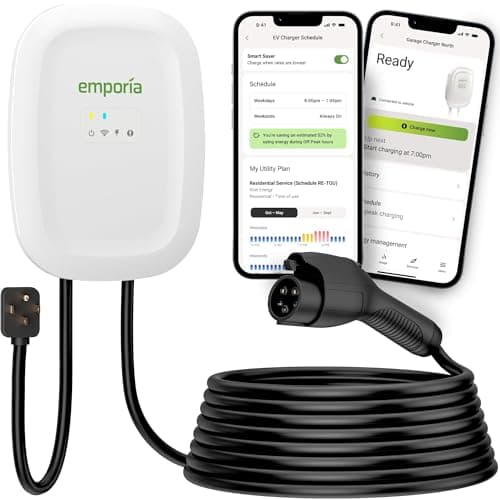
Most people who want the smart features too
Emporia Level 2 (48A)
The smart charger that does not charge a smart-charger premium — 48-amp capability and real energy monitoring for the price of a dumb one.
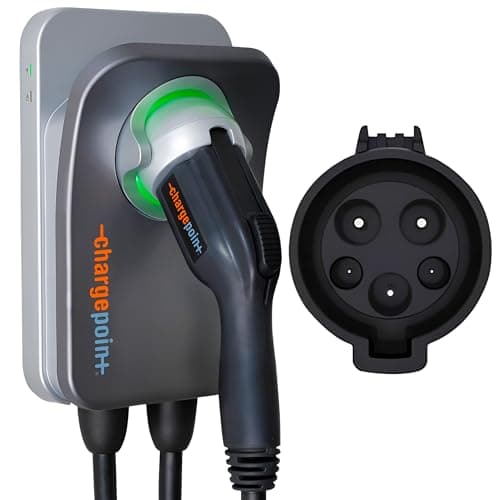
Buyers who want the established brand and app
ChargePoint Home Flex
The polished, well-supported option — adjustable up to 50 amps and tied into the largest public charging app in North America.
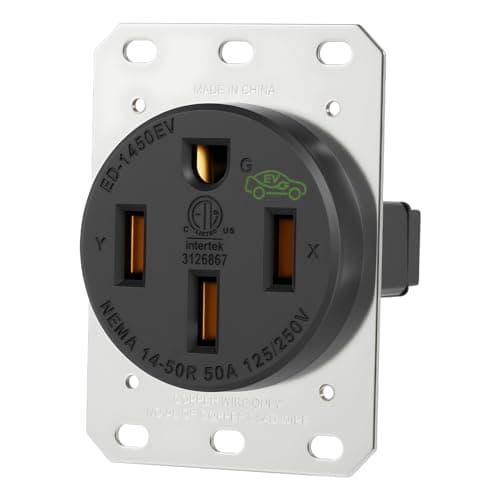
The outlet a plug-in charger needs
Industrial NEMA 14-50 Outlet
The receptacle a plug-in charger actually plugs into — buy the industrial-grade, listed version, because the cheap ones are the part that fails.
#ad · As an Amazon Associate we earn from qualifying purchases.
Questions
Frequently asked
Do I need an adapter to charge a Blazer EV at home?
How fast does the Blazer EV charge on Level 2?
Can the Blazer EV use Tesla Superchargers?
Keep reading
Related
- Charging a Chevy Equinox EV at HomeGM's other Ultium crossover.
- Best 48-Amp EV ChargersTo use the full onboard charger.
- CCS vs NACSWhat GM's connector switch means.
- NACS-to-CCS AdapterReaching Superchargers with a CCS1 car.
- NEMA 14-50 OutletsThe outlet a plug-in charger needs.
- Charging a Cadillac Lyriq at HomeAnother GM Ultium EV, through the same NACS switch.
Receipts
Sources
- GM — EV adapters and the path to charging standardization
- US DOE / fueleconomy.gov — EV charging basics
We do not run a testing lab, and we do not pretend to. Where a measured number came from someone else's lab, we name them and link them. Where we could not verify something, we say so on the page rather than quietly leaving it out. Read our full method.