Skip to content
Volt & Cable

HUB 02 · Portable & Travel Chargers

Lectron NACS Portable Review

A NACS (Tesla-style) charger that is not bolted to anything — 240-volt speed at home, a 120-volt plug for the road, and it moves when you do.

By Stephen V.Updated Published How we research
#ad

We earn a commission when you buy through our Amazon links, at no extra cost to you. It never affects our rankings, and we say so when the cheaper product is the better buy. How this works.

The short answer

Quick picks

#ad · Live prices from the Amazon Product API, as of Sep 9, 2026. Where we have no verified live price, we show none — we would rather leave a gap than print a number that has gone stale.

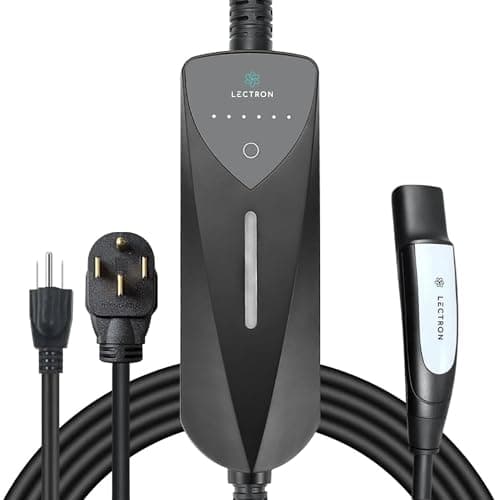
The Lectron NACS Portable is the charger for a Tesla or NACS-port owner who rents, travels, or just wants a charger in the trunk. It has a native Tesla-style plug, ships with both a 240-volt (NEMA 14-50) and a 120-volt (5-15) plug, runs at up to 40 amps on 240 volts with the current adjustable down to 8, and is bolted to nothing — it goes where you go. The honest catches are that it is a brick on a hook rather than a tidy wall box, the cable is 20 feet, and it has no app or energy monitoring.

A portable is often the smartest choice for a NACS-port renter, and this is the one that plugs a Tesla in without an adapter. In our portable charger roundupit is the take-it-with-you NACS pick. This is the closer look. We compile published specs and owner reports and do the math — we have not bench-tested it.

Who it is for

This is for the Tesla or NACS-port owner who cannot or does not want to hardwire: a renter, someone who moves often, or a driver who wants a road-trip charger that works from a host's outlet. If you want a permanent, tidy wall install with per-charge energy data, a mounted NACS unit like the Emporia NACS suits you better; the portable trades the mounted look and the app for the ability to come with you.

The specs that matter

Lectron rates the current as adjustable from 8 to 40 amps, with a native NACS (J3400) connector, both a NEMA 14-50 (240V) and a 5-15 (120V) plug, a 20-foot cable, and an ETL certification. Two things define it:

  • Dual-level, one charger. The 240-volt plug gives full Level 2 speed at home or a 14-50 outlet; the 120-volt plug turns any standard household outlet into a Level 1 trickle charge on the road. It is a home charger and a travel cord in one, and because the current adjusts from 8 amps up, you can dial it down for an outlet you do not know the history of instead of hoping.
  • Certified, and native NACS. The ETL certification is worth more than it sounds on a charger that gets dragged outdoors and plugged into outlets you did not install, and the native Tesla-style plug means no adapter for a Tesla or NACS-port car.

What is good

It solves the renter's and traveler's problem cleanly. Nothing is fixed to a wall, so it leaves with you when you move and rides in the trunk for trips; the dual plugs mean it works on both 240-volt and 120-volt outlets; the ETL certification is the kind of independent check that matters on a charger that lives in the trunk and gets used outside; and the native NACS plug removes the adapter a J1772 portable would need for a Tesla. For flexibility, it is exactly right.

Where it falls short

The trade-offs are the portable ones. It is a brick on a hook, not a tidy mounted box, so it looks less finished on a permanent wall. The cable is 20 feet, still shorter than the 25-foot portables it competes with, so it gets some say in where the car parks. It has no app or energy monitoring— you lose the per-charge data a smart wall unit gives you. And 40 amps is the ceiling, as with any plug-in unit. None of these hurts the charging; they are the cost of portability.

Using it safely

Plug it directly into a properly rated outlet — a listed NEMA 14-50for 240-volt charging — and never through a household extension cord, since EV charging is a continuous high-current load. On the 120-volt plug, expect Level 1 speeds (~3–5 miles of range per hour): fine as a road-trip backup, too slow as a daily driver.

Bottom line

The Lectron NACS Portable is the flexible answer for a Tesla-style port: dual-level, certified, adapter-free, and it comes with you. Give up the mounted look and the app, and you get a charger that fits a rental and a road trip equally. If you want a permanent smart install instead, buy a mounted NACS unit; for a portable, see how this ranks in the portable roundup.
In detail

The picks, in full

01
Lectron Lectron NACS Portable (8–40A)

Renters and anyone who travels

Lectron NACS Portable (8–40A)

8–40A adjustableNACS (J3400)NEMA 14-50 + 5-15ETL certified · 20ft
8.4/10

A NACS charger that is not bolted to anything — 240-volt speed at home, a 120-volt plug for the road, and it moves when you do.

Charge speed
8
Portability
10
Build & weather
7
Cable & connector
8
Value
9

Pros

  • Ships with both a 240-volt 14-50 plug and a 120-volt 5-15 plug, so it is a home charger and a road-trip cord in one
  • Current adjusts from 8 to 40 amps, which lets you dial it down for an unfamiliar outlet instead of hoping
  • ETL certified, with overvoltage, overcurrent and over-temperature protection built in — an independent safety listing, which not every portable on Amazon can show
  • Nothing is fixed to the wall — it goes in the trunk and leaves with you when you move, though a wall mount is in the box if you want one

Cons

  • A brick on a hook rather than a tidy mounted box
  • 20-foot cable — still shorter than the 25-foot portables here, so it has some say in where the car parks
  • No app or energy monitoring — charging status is LED indicators on the unit, not a phone screen

Don't buy this if…

you want a permanent, tidy wall install with per-charge energy data. A portable trades the mounted look and the app for the ability to come with you.

$359.99View on Amazon

Price as of Sep 9, 2026. Prices change — Amazon's is the one that counts.

#ad · we may earn a commission from this link to Lectron NACS Portable (8–40A)

How we picked

We do not run a testing lab

We compiled published specifications from manufacturer manuals and spec sheets, verified the safety listings (UL / ETL), computed the real running and installation costs, checked the wiring math against the NEC continuous-load rule, and read aggregated owner reviews — then scored each product against a published rubric. The scores are judgments from documented research — they are not bench measurements, because we do not have a test lab and we are not going to pretend we do. Every spec and cost figure is cited in Sources.

Questions

Frequently asked

Does the Lectron NACS Portable need an adapter for a Tesla?

No — it has a native NACS (Tesla-style) plug, so a Tesla or NACS-port EV plugs straight in. That is its main advantage over a J1772 portable, which would need a J1772-to-NACS adapter for a Tesla.

Can the Lectron NACS Portable charge on a normal wall outlet?

Yes — it ships with both a 240-volt (NEMA 14-50) and a 120-volt (5-15) plug. The 120-volt plug gives Level 1 speeds (~3–5 miles of range per hour), useful as a road-trip backup; the 240-volt plug gives full Level 2 speed at home.

How fast is the Lectron NACS Portable?

Up to 40 amps / 9.6 kW on a 240-volt outlet — the same ~25–30 miles of range per hour as a plug-in wall unit. The current is adjustable down to 8 amps, so on a 120-volt household outlet you set it to a Level 1 current (12 amps is the most a standard 15-amp receptacle should carry continuously) for roughly 3–5 miles of range per hour.

Is it good for a renter?

Yes — it plugs into an existing 240-volt outlet, needs no install, and unplugs to move with you, which is exactly what a renter or frequent mover wants. See our apartment charging guide for the full picture.

Keep reading

Receipts

Sources

We do not run a testing lab, and we do not pretend to. Where a measured number came from someone else's lab, we name them and link them. Where we could not verify something, we say so on the page rather than quietly leaving it out. Read our full method.