HUB 05 · Guides & Buying Advice
How to Charge an EV at Home: A Beginner's Guide
You plug it in at night and it is full by morning — here is everything behind that sentence, from the outlet you need to the first charge.
We earn a commission when you buy through our Amazon links, at no extra cost to you. It never affects our rankings, and we say so when the cheaper product is the better buy. How this works.
Home charging is genuinely simple: you plug the car in when you park and unplug it when you leave, and most nights it is full by morning. The only real decisions are how fast you want to charge (Level 1 from a normal outlet, or Level 2 from a 240-volt circuit) and whether your charger plugs in or is wired to the wall. Get those two right for how you drive and the rest is just plugging in a cable.
If you are new to EVs, charging can sound more complicated than it is — a wall of amperage numbers, connector acronyms, and app talk. Strip that away and home charging is closer to charging a phone than to visiting a gas station: you top up where you park, a little every night, and you almost never run the battery low. This guide walks the whole thing from zero, with links to the deeper pages when you want them.
What you need to charge at home
There are only three pieces, and you may already have two of them:
- The car's charge port. Every EV has one. Most non-Tesla cars use a J1772 AC port; Teslas and many 2025-and-later models use NACS(the former Tesla plug). Which one you have decides which charger or adapter fits — the full explainer is in our NACS vs J1772 guide.
- A charger (an "EVSE"). This is the cable-and-box between the outlet and the car. Every EV ships with a basic Level 1 cord; a Level 2 charger is the upgrade most owners buy.
- Somewhere to plug it in.A standard 120-volt outlet for Level 1, or a 240-volt circuit for Level 2 — the same kind of supply a dryer or range uses.
Level 1 or Level 2: how fast do you need to be?
This is the first real choice, and it comes down to how far you drive.
Level 1uses the ordinary 120-volt outlet you already have. The cord came free with the car, so it costs nothing, but it is slow — about 5 miles of range per hour, or roughly 40 to 50 miles over a full night. That is plenty for a plug-in hybrid or a short daily commute, and hopeless if you drive a lot.
Level 2runs on a 240-volt circuit and adds around 25 miles of range per hour — about five times faster — so a car that gets home near empty is full by morning. For most full-EV owners this is the correct answer and the only upgrade worth making. If you are still deciding, the types of EV chargers guide lays out the levels in full, and the shortlist of units is our best home EV chargers roundup.
The quick test:add up a normal day's driving. Under about 40 miles with a plug every night, Level 1 can keep up. More than that, or an unpredictable schedule, and Level 2 removes the question entirely.
Plug-in or hardwired?
If you go Level 2, there is one more fork. A plug-incharger ends in a plug (usually a NEMA 14-50) and connects to a 240-volt outlet — if a suitable outlet already exists, you can essentially just plug in, and you can unplug and take the unit with you if you move. A hardwired charger is wired straight into the circuit by an electrician: tidier and permanent, and required for the fastest 48-amp units. Renters and movers usually want plug-in; a clean, fast, permanent install wants hardwired. The trade-offs are covered in portable vs hardwired.
Either way, adding a 240-volt circuit (or a NEMA 14-50 outlet) is licensed-electrician work, and it is the real cost of getting set up — the charger itself is often the cheaper half. We break down what an install runs in the installation cost guide, and the outlet a plug-in charger needs has its own buyer's guide, because a cheap receptacle is the part that overheats.
How a charge actually works, step by step
Once the equipment is in place, the routine is short:
- Park and plug in. Open the charge port, insert the connector until it clicks, and the car and charger handshake automatically. A light on the car or charger confirms it is charging.
- Let it run.The car draws power at whatever rate the charger, the car's onboard charger, and the circuit allow — the lowest of the three sets the speed. You do not need to watch it.
- Set a limit or a schedule if you like. Many smart chargers and cars let you cap the charge at, say, 80% for daily use, or start charging during cheaper overnight hours. This is optional; the car will simply charge to full otherwise.
- Unplug and go. In the morning, press the release, unplug, and stow the cable on a holster or hook so it is not on the floor.
What it costs, and a habit worth building
Charging at home is cheap — the cost of a charge is just your battery's energy times your electricity rate, and it is generally well below what a comparable gas car costs to fuel. The full arithmetic, with a worked example, is in our cost to charge an EV at home guide. The one habit worth forming from day one: plug in every night rather than waiting for the battery to get low. EVs like shallow, frequent top-ups, and you will essentially always leave with a full — or however full you set — battery.
Your first-charger decision in three questions
You do not need to understand the whole category to get started — just answer these.
1. How far do you drive on a normal day?
Under ~40 miles with a nightly plug, and the free Level 1 cord may be all you need for now. More than that, and a Level 2 charger is the upgrade that keeps up. There is no harm in starting on Level 1 to see how it fits your life before committing.
2. Do you own or rent?
Own your home and want it permanent and tidy? A hardwired or plug-in wall unit — start with the best home EV chargers. Rent, or expect to move? A portable Level 2 charger plugs into a 240-volt outlet and comes with you.
3. What outlet do you have where you park?
A standard outlet means Level 1 today and a possible 240-volt install later. An existing NEMA 14-50 (common in garages built for a dryer, welder, or RV) means a plug-in Level 2 charger can be nearly install-free. If you need the circuit added, price it with the installation cost guide before buying.
Short version: plug in every night, buy Level 2 if you drive enough to need it, go plug-in if you rent, and have any new 240-volt circuit installed by a licensed electrician. That is home charging.
The gear
Recommended gear for this guide
The products this guide refers to, with prices pulled live from Amazon and dated on each card.
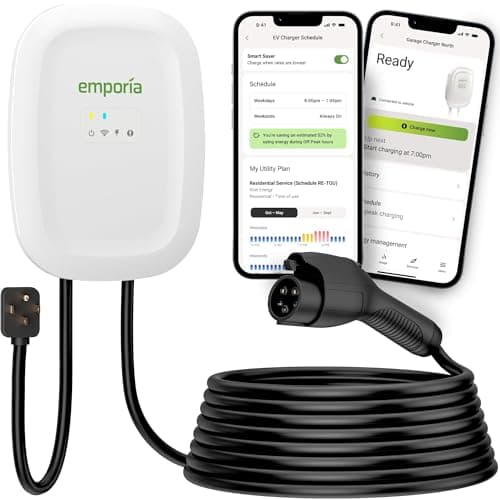
Most people who want the smart features too
Emporia Level 2 (48A)
The smart charger that does not charge a smart-charger premium — 48-amp capability and real energy monitoring for the price of a dumb one.
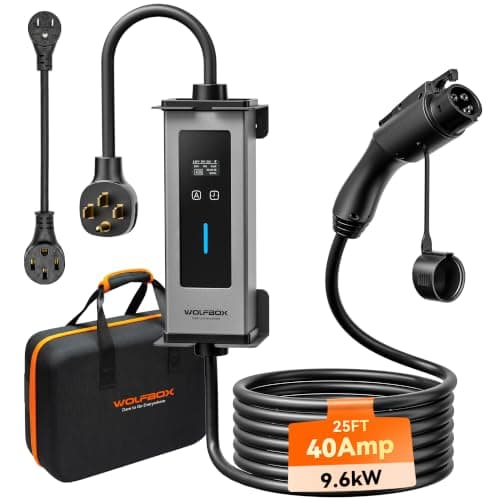
One charger for home and travel
WOLFBOX Portable (Level 1/2)
A dual-level portable that charges on both 120V and 240V, ships with both plug adapters, and adds a delay timer for off-peak charging — a genuine take-anywhere charger.
#ad · As an Amazon Associate we earn from qualifying purchases.
Questions
Frequently asked
Can I charge my EV from a regular wall outlet?
Do I need a special charger to charge at home?
How long does it take to charge an EV at home?
Should I charge to 100% every night?
Is it safe to charge an EV at home in the rain?
Keep reading
Related
Receipts
Sources
- US DOE / fueleconomy.gov — EV charging basics
- US DOE Alternative Fuels Data Center — charging at home
We do not run a testing lab, and we do not pretend to. Where a measured number came from someone else's lab, we name them and link them. Where we could not verify something, we say so on the page rather than quietly leaving it out. Read our full method.