HUB 05 · Guides & Buying Advice
Can I Take My EV Charger With Me When I Move?
A plug-in charger is luggage. A hardwired one is usually a fixture — which means it stays with the house unless your contract says otherwise, in writing, by name.
We earn a commission when you buy through our Amazon links, at no extra cost to you. It never affects our rankings, and we say so when the cheaper product is the better buy. How this works.
If your charger plugs into a NEMA 14-50 receptacle, yes — unplug it, box it, take it. It is personal property in the same way a washing machine on a cord is. If your charger is hardwiredto the wall, the answer is "probably not, unless you deal with it in the contract." In general US real-estate practice a device that is hardwired into the building is treated as a fixture, and fixtures convey with the sale unless the seller names them as exclusions in the written agreement. The written contract controls, which is the good news: this is a problem you solve with a sentence, before you list, rather than an argument you have on closing day.
This question comes up constantly and it almost never gets a straight answer, partly because the honest one has three branches. So: which of these is your situation?
Case 1 — a plug-in charger. Take it.
A charger that terminates in a NEMA 14-50 plug is an appliance. Switch off the breaker, unplug it, unbolt the wall bracket, patch the screw holes, and it goes in the van with everything else. Nobody's contract covers it and no buyer expects it, exactly as nobody expects your microwave.
What stays behind is the receptacle and the circuit, because those are part of the building's wiring. That is not a loss — it is a genuine selling feature. A 240-volt outlet in the garage is the expensive half of an EV charging setup and the next owner can plug their own charger into it on day one. Say so in the listing.
This is the single strongest practical argument for buying plug-in rather than hardwired if you expect to move, and we make it in portable vs hardwired. It is also why a dual-voltage portable is the most move-proof thing in the category: it works on a 240-volt outlet at the new house and on a household socket on the first night, before an electrician has been anywhere near the place.
Case 2 — a hardwired charger. Handle it in the contract.
A hardwired charger has its conductors landed directly inside the unit and is bolted to the structure. That is the textbook description of annexation, which is what makes something a fixture. Realtor association guidance on hardwired smart devices is consistent: they are generally treated as fixtures, and a seller who wants to keep one should either remove it before listing or list it as a named exclusion. Fixture analysis varies by state — Oregon's statute, for instance, weighs physical annexation, adaptation to the property and the installer's objective intent, with intent weighted most heavily — but every version of the test gives the written contract the final word.
So there are two clean ways to keep it and one messy way to lose it:
- Remove it before you list. Cleanest option. Have an electrician take the charger off and terminate the circuit properly — usually by fitting a NEMA 14-50 receptacle, which leaves the house with a better amenity than a bare whip and removes the charger from the conversation entirely. Then it is Case 1.
- Exclude it by name, in writing. "Seller to remove the wall-mounted EV charger prior to closing; the 240-volt circuit and receptacle to remain." Put it in the listing and in the purchase agreement. Be specific about whether the unit, the cabling, or both are staying — UK conveyancers advise exactly this kind of written inventory, and the logic travels.
- Say nothing and assume it is yours. This is how people end up having the argument at the walkthrough, or taking a charger off a wall they have already sold. Don't.
None of this is legal advice and the rules are local. Fixture law is state law and your purchase agreement is the document that decides it. Ask your agent or attorney, and get the answer into the contract rather than into an email. One sentence in the right place costs nothing; the same sentence missing can cost you the charger.
Case 3 — you rent, or the charger is not yours
If you installed a charger in a rental, whatever your landlord agreed to in writing governs — which is the reason we tell renters to buy portable in the first place, in best EV charger for renters. A plug-in unit leaves no trace and no argument.
If the charger came through a utility program, a lease, a dealer incentive or an HOA installation, read that paperwork before you touch it: the hardware may not be yours to move. HOA and condo situations have their own layer — see EV charging for condos and HOAs.
What the charger is worth moving
Worth asking honestly, because a charger is a cheap item inside an expensive move:
- Take it if it is a good unit and your car is not changing. A 40 or 48-amp smart charger with a long cable is real money and holds up fine to being re-installed.
- Think twice if your next car has a different plug. A J1772 charger and a NACS-port car need an adapter forever, and the reverse is also true. Model year matters here — a 2025-or-newer Ioniq 5 has a native NACS port where a 2024 car has J1772. Our NACS vs J1772 explainer and the which adapter do I need guide cover the combinations.
- Leave it if the next house already has one. Selling a house with a working charger is a documented selling point. Buying one that has a charger means not doing this twice.
- Leave it if the unit is tired. Cables take abuse and connectors wear. If yours is cracked, stiff or intermittent, moving it is moving a problem — see how long do EV chargers last and troubleshooting.
What you cannot take, in any case
The circuit. The breaker, the conductors in the wall, the conduit and the receptacle are part of the building's electrical system, and they stay — pulling a cable out of a finished wall is destructive and nobody sane is going to do it for the copper value. Which means the expensive part of your original install is not portable. A 240-volt circuit is typically the larger line item on the invoice; our installation cost guide has the ranges. Budget for that again at the new address, and budget for it before you decide whether hauling the charger itself is worth the trouble.
A practical checklist for each end of the move
Before you list the old house. Decide whether the charger is going with you. If it is and it is hardwired, book the electrician to remove it and fit a receptacle before the photos are taken — it is cleaner than an exclusion clause and it improves the listing. If it is staying, say so prominently: "Level 2 EV charger installed and included" is worth saying out loud.
In the contract. Name the charger explicitly as included or excluded, and say what happens to the circuit and the receptacle. Vague is how disputes start. If you are the buyer, ask for the make, model and install date, and ask whether a permit was pulled — see do I need a permit for an EV charger.
On removal day. Breaker off first, confirmed off. An electrician for anything hardwired — this is not the DIY moment, and can I install an EV charger myself is honest about where that line sits. Keep the original mounting hardware, the manual and the box; a charger arrives at the new house far more usable with its bracket and template than without.
At the new house, before you commit to a charger location. Find the panel, check for spare breaker space, and get a load calculation done. If the service is tight, that changes the hardware conversation rather than just the price — read the 100-amp panel roundup and the load-managed charger roundup. Then measure the cable run from the proposed wall position to where the car's charge port will actually sit, using the cable length guide— a charger that reached fine at the old house may not reach at the new one.
For the gap in between. There will be days, possibly weeks, between unplugging and a new circuit being live. A dual-voltage portable covers that: on a household 120-volt socket it adds roughly 3 to 4 miles of range an hour, which is enough to keep a car usable while you wait, and on a 240-volt outlet it is a full Level 2 charger. This is the single most useful thing to own during a move, and it keeps earning afterwards as a travel cord — see best portable EV chargers and do I need an emergency EV charger.
If the new place cannot take a charger at all. It happens — a condo, a street-parked terrace, a rental with no assigned space. There are honest workarounds, and EV charging without a driveway and charging an EV in an apartment set them out.
The gear
Recommended gear for this guide
The products this guide refers to, with prices pulled live from Amazon and dated on each card.
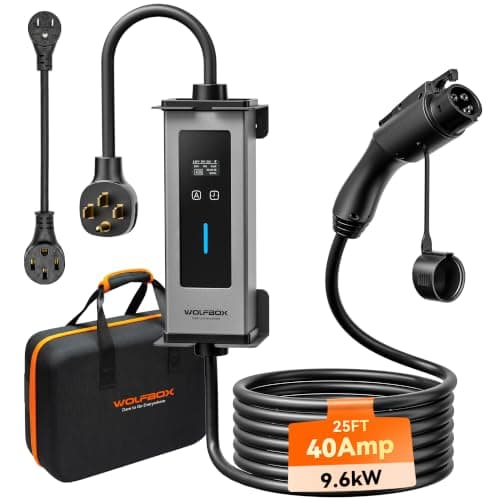
One charger for home and travel
WOLFBOX Portable (Level 1/2)
A dual-level portable that charges on both 120V and 240V, ships with both plug adapters, and adds a delay timer for off-peak charging — a genuine take-anywhere charger.
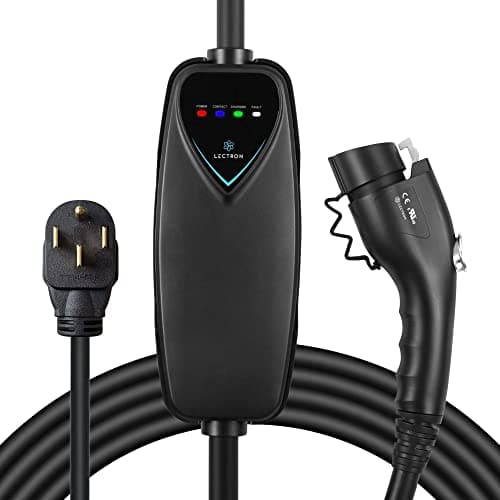
A simple, inexpensive plug-in charger
Lectron Level 2 (40A)
A simple, ETL-listed plug-in charger from a known EV brand — a no-frills, low-cost way to charge at Level 2.
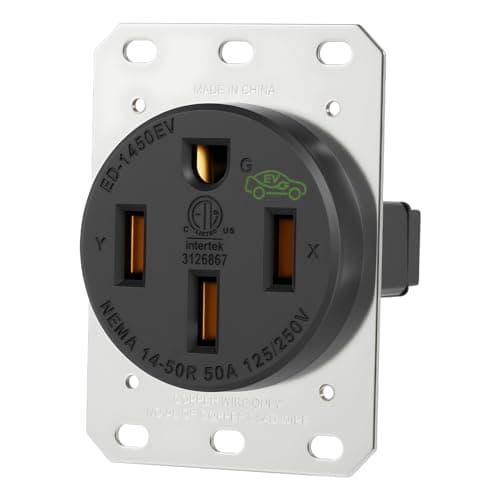
The outlet a plug-in charger needs
Industrial NEMA 14-50 Outlet
The receptacle a plug-in charger actually plugs into — buy the industrial-grade, listed version, because the cheap ones are the part that fails.
#ad · As an Amazon Associate we earn from qualifying purchases.
Questions
Frequently asked
Can I take my EV charger when I sell my house?
Is an EV charger a fixture?
Can I take the 240-volt outlet too?
Should I buy a plug-in or hardwired charger if I might move?
How do I charge my EV while I wait for the new circuit?
Do I need a new permit to install the charger at the new house?
Keep reading
Related
- Portable vs HardwiredThe decision that determines whether this is even a question.
- Best EV Charger for RentersCharging without altering a building you do not own.
- Level 2 Installation CostThe part of the original install you cannot take with you.
- Best Portable EV ChargersWhat to charge from during the gap between houses.
- EV Charging Without a DrivewayIf the new address cannot take a charger at all.
- New EV Owner Charging ChecklistThe same setup questions, from the beginning.
Receipts
Sources
- Massachusetts Association of Realtors — fixtures guidance (hardwired smart devices are generally treated as fixtures; a seller should remove the item before listing or list it as an exclusion)
- Inman — How to avoid home sale trouble over fixtures (fixtures a seller wants to keep must be itemized in the written contract or they transfer with the sale)
- Oregon Revised Statutes 100.626 — the fixture test (physical annexation, adaptation to the property, and the installer's objective intent, with intent weighted most heavily) and the presumption for owner-installed charging stations in a condominium
- Smart Home Charge — I am moving house: what should I do with my EV charging point? (sellers are not required to leave fixtures; conveyancers advise a written inventory stating whether the charger, the cabling, or neither stays)
We do not run a testing lab, and we do not pretend to. Where a measured number came from someone else's lab, we name them and link them. Where we could not verify something, we say so on the page rather than quietly leaving it out. Read our full method.