Skip to content
Volt & Cable

HUB 01 · Level 2 Home Chargers

The Best EV Chargers for a NEMA 6-50 Outlet

A 6-50 welder outlet is a 50-amp circuit already sitting in your garage. The awkward truth is that almost no charger ships with a 6-50 plug today — so this page ranks the pairings that actually work.

By Stephen V.Updated How we research
#ad

We earn a commission when you buy through our Amazon links, at no extra cost to you. It never affects our rankings, and we say so when the cheaper product is the better buy. How this works.

The short answer

Quick picks

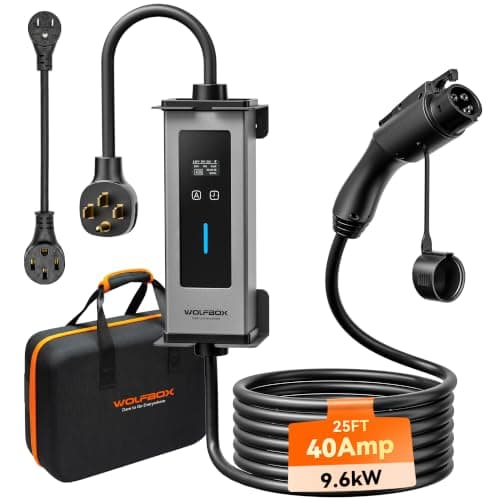
  • WOLFBOX WOLFBOX Portable (Level 1/2)
    01 WOLFBOX Portable (Level 1/2)
    8.6

    A dual-level portable that charges on both 120V and 240V, ships with both plug adapters, and adds a delay timer for off-peak charging — a genuine take-anywhere charger.

    Best for: One charger for home and travel

    $299.99Amazon
  • Suplevel Suplevel NEMA 6-50P → 14-50R Adapter
    02 Suplevel NEMA 6-50P → 14-50R Adapter
    8.0

    The best-documented cord in the category — 6-gauge wire and a named ETL listing behind a 50-amp welder outlet, where most rivals ship 10 AWG and mention no certification at all.

    Best for: A welder or shop 6-50 outlet

    $23.99Amazon
  • ChargePoint ChargePoint Home Flex
    03 ChargePoint Home Flex
    8.2

    The polished, well-supported option — adjustable up to 50 amps and tied into the largest public charging app in North America.

    Best for: Buyers who want the established brand and app

    $599.00Amazon
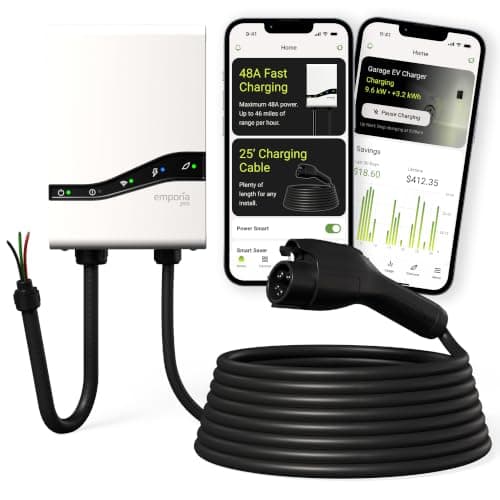
  • Emporia Emporia Pro (48A, PowerSmart)
    04 Emporia Pro (48A, PowerSmart)
    8.8

    The one charger that changes the electrical answer rather than working around it — it watches the whole panel and backs off instead of tripping the main.

    Best for: A 100-amp service you would rather not upgrade

    $599.00Amazon
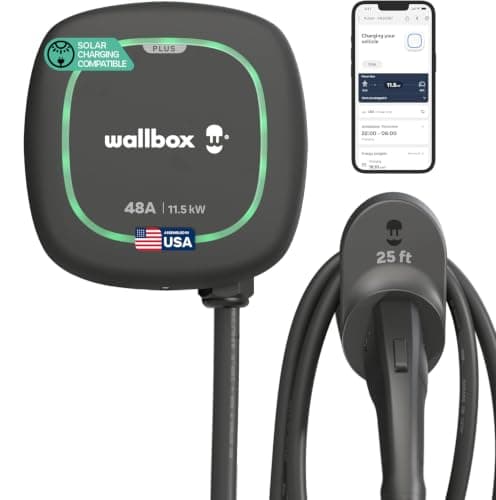
  • Wallbox Wallbox Pulsar Plus (48A)
    05 Wallbox Pulsar Plus (48A)
    8.4

    One of the smallest 48-amp units you can buy — a genuinely compact hardwired charger for a tidy wall.

    Best for: A compact, fast, hardwired install

    $699.00Amazon
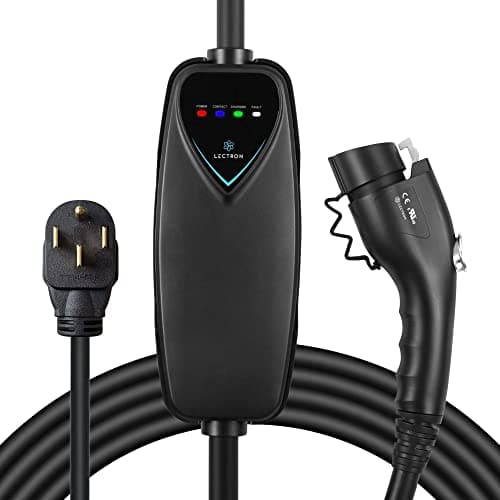
  • Lectron Lectron Level 2 (40A)
    06 Lectron Level 2 (40A)
    7.4

    A simple, ETL-listed plug-in charger from a known EV brand — a no-frills, low-cost way to charge at Level 2.

    Best for: A simple, inexpensive plug-in charger

    $269.99Amazon

#ad · Live prices from the Amazon Product API, as of October 17, 2026. Where we have no verified live price, we show none — we would rather leave a gap than print a number that has gone stale.

If you have a NEMA 6-50 outlet and want to charge from it tonight, buy an adjustable charger and a documented adapter: the WOLFBOX Portable, which dials from 6 to 40 amps, behind the Suplevel 6-50P to 14-50R adapter, whose seller specifies a 32-amp ceiling. Set the charger to 32 amps and you have around 7.7 kW with nothing straining. If you would rather do this properly and permanently, the better answer is to have an electrician hardwirea 40-amp charger to that same circuit — the Emporia Pro or the Wallbox Pulsar Plus — which gets you the full 40 amps the circuit allows and removes the adapter from the chain entirely.

A 6-50 is one of the better surprises a garage can hold. It is a three-prong, 250-volt receptacle normally installed for a welder or a shop tool, and it sits on a 50-amp circuit— the same circuit size a NEMA 14-50 EV outlet uses. Electrically you are already most of the way to Level 2 charging. The only thing in your way is the plug shape.

That used to be a non-issue, because chargers shipped with interchangeable plug heads and a 6-50 was one of the options. Today the market has standardized hard on the NEMA 14-50, and across the chargers we track there is currently nothing on sale with a factory 6-50 plug. So "the best NEMA 6-50 EV charger" is really a question about pairings, and this page answers it that way instead of pretending a product exists.

What a 6-50 is, exactly

  • Two hots and a ground. No neutral. That is the whole difference from a 14-50, which adds a neutral pin and can therefore supply 120 volts as well as 240. A Level 2 charger does not use the neutral — it runs line-to-line at 240 volts — so the missing pin costs you nothing for charging. Our does an EV charger need a neutral wire guide explains why in full, and NEMA 6-50 vs 14-50 for EV charging compares the two receptacles directly.
  • A 50-amp circuit, so 40 amps of charging. NEC 625.42 treats EV charging as a continuous load and caps it at 80% of the circuit rating. Fifty amps times 0.8 is 40 amps, or about 9.6 kW. That is the real ceiling of your outlet, whatever the charger claims.
  • It is rated 250 volts, not 125/250. Which is why you cannot simply swap a 14-50 receptacle onto a 6-50 circuit: there is no neutral conductor in the box to land. That swap is a common piece of bad internet advice and it produces a receptacle that looks right and is wired wrong.

The short version

  • WOLFBOX Portable (6–40A) — best overall on a 6-50, because it adjusts. The adapter route only works safely with a charger you can turn down, and this one goes from 6 to 40 amps with the setting on the unit. ETL listed, IP66, 25-foot cable, with both a 14-50 and a household 5-15 plug. Full review.
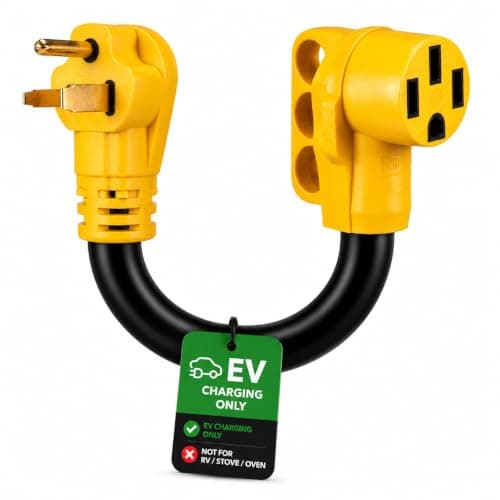
  • Suplevel 6-50P to 14-50R adapter — the part that makes any of this work. Six-gauge three-conductor cable and a stated ETL listing, which is more documentation than anything else in this category offers. Its seller specifies setting the charger to no more than 32 amps — read that as the real limit.
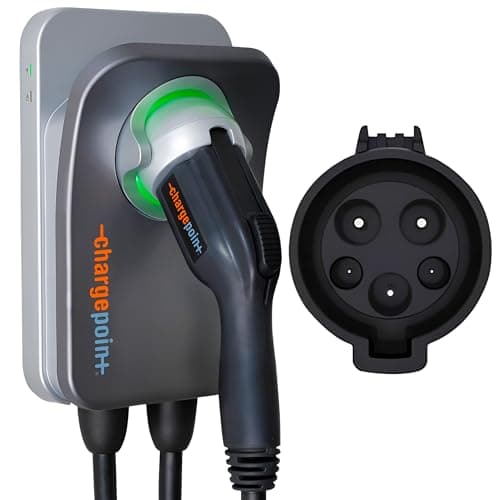
  • ChargePoint Home Flex — best adjustable wall unit for the adapter route. Set the amperage in the app anywhere from 16 to 50, so 32 amps behind the adapter is a setting rather than a compromise. Its own datasheet describes three-wire power — L1, L2 and earth, no neutral — which tells you exactly how at home it is on a 6-50 circuit. Full review.
  • Emporia Pro — best if you hardwire to the circuit instead. Remove the receptacle, land the charger on the circuit, set it to 40 amps, and you have the full capability of the outlet with no adapter in the chain. Adds panel-wide load management on top. Full review.
  • Wallbox Pulsar Plus — the compact hardwired alternative. Same idea, smallest box, 25-foot cable, Energy Star and UL. Dial it to 40 amps for a 50-amp circuit. Full review.
  • Lectron Level 2 (40A) — cheapest, with one caveat you must respect. Its 40 amps is fixed, not adjustable, so behind a 32-amp-rated adapter it is the wrong pairing. On a hardwired 50-amp circuit it is fine, and it is the lowest-cost way to get there.

The two honest routes, side by side

Route one: keep the receptacle, add an adapter. Cheap, reversible, done in an afternoon, and it keeps the outlet available for the welder it was installed for. The cost is amperage: the Suplevel adapter's seller instructs you to set the charging current to no more than 32 amps, so you are running 7.7 kW rather than the 9.6 kW the circuit could carry. For most daily driving that difference is invisible — 32 amps still replaces a 40-mile commute in under two hours.

Route two: hardwire the charger to the circuit. An electrician removes the 6-50 receptacle and lands the charger's conductors directly, set to 40 amps. You get the circuit's full output, no adapter, no plug to overheat, and a tidier install. You lose the welder outlet, and you are paying for an electrician visit. If the 6-50 was put in for a tool you still use, route one is the better answer. Our EV charger vs 240V outlet page sets out the general trade, and can I install an EV charger myself is honest about which parts of this are DIY.

Do not let the adapter become the weak link. Any adapter in a charging chain carries the full current for hours at a time, and the cheap ones in this category ship 8 or 10 AWG wire with no stated certification. Two rules make this safe: buy the one that publishes its conductor gauge and names a listing, and set the charger to the adapter's stated limit rather than the circuit's. Then check the coupling by hand after the first long session — warm is normal, hot is a stop-and-reassess. Our outlet adapter roundup ranks the whole category on exactly these criteria.

How the picks compare on paper

Published manufacturer figures from the live listings, with the live price alongside. The column that decides the adapter route is amperage adjustability — a charger with a fixed 40-amp output cannot be dialed down to the adapter's rating.

PickBest forPublished specs (manufacturer)Price
WOLFBOX Portable (Level 1/2)One charger for home and travel6–40A · 9.6kW · J1772 · Level 1/2 · NEMA 14-50 + 5-15 · ETL · IP66 · 25ft$299.99
Suplevel NEMA 6-50P → 14-50R AdapterA welder or shop 6-50 outlet6-50P → 14-50R · 6 AWG / 3C STW · ETL Listed (per listing) · 1 ft · seller caps 32A$23.99
ChargePoint Home FlexBuyers who want the established brand and appAdjustable to 50A · J1772 · NEMA 14-50 plug · Energy Star$599.00
Emporia Pro (48A, PowerSmart)A 100-amp service you would rather not upgradeUp to 48A hardwired · J1772 · PowerSmart + Vue monitor · UL · ENERGY STAR · NEMA 4$599.00
Wallbox Pulsar Plus (48A)A compact, fast, hardwired installHardwired 48A / 11.5kW · J1772 · 25ft cable · Energy Star + UL$699.00
Lectron Level 2 (40A)A simple, inexpensive plug-in charger40A / 9.6kW · J1772 · NEMA 14-50 plug · ETL · 16ft extension$269.99

#ad Prices read live from the Amazon Product API as of October 17, 2026, and they move. Specs are the manufacturer's published claims from the live listing — we have not bench-measured them. Where we have no verified price we print none rather than a number that has gone stale.

What we left out, and why

Chargers advertised with a 6-50 plug on marketplace listings. They appear and disappear, frequently from sellers with no named safety listing, and a plug head is not a reason to accept an uncertified 40-amp device on a garage wall. We will add one the moment a listed unit from a brand we already track carries a factory 6-50 cordset.

Swapping the 6-50 receptacle for a 14-50. Not a product, and not sound advice: a 6-50 circuit has no neutral conductor, and a 14-50 is a 125/250-volt device that expects one. Hardwire the charger or use an adapter.

80-amp chargers. A 50-amp circuit cannot feed one, so they are off the table here by definition. See the 80-amp roundup if you are considering a new circuit instead.

In detail

The picks, in full

01
WOLFBOX WOLFBOX Portable (Level 1/2)

One charger for home and travel

WOLFBOX Portable (Level 1/2)

6–40A · 9.6kWJ1772 · Level 1/2NEMA 14-50 + 5-15ETL · IP66 · 25ft
8.6/10

A dual-level portable that charges on both 120V and 240V, ships with both plug adapters, and adds a delay timer for off-peak charging — a genuine take-anywhere charger.

Charge speed
8
Portability
10
Build & weather
8
Cable & connector
8
Value
9

Pros

  • Charges on both 120V (Level 1) and 240V (Level 2), and ships with both the NEMA 5-15 and NEMA 14-50 plug adapters — one charger for home and the road
  • Adjustable current (6–40A) plus a built-in delay timer, so you can dial it down for a weaker circuit and start on cheaper overnight rates without an app
  • ETL certified with an IP66 weather rating and a 25-foot cable — a genuine take-anywhere travel charger

Cons

  • A portable brick that lives on the floor or a hook, not a tidy mounted wall unit
  • 40-amp draw needs a properly rated 14-50 outlet — do not run it flat-out on a worn receptacle

Don't buy this if…

…you want a permanent, tidy wall installation with per-charge energy data in an app. A portable trades the mounted look and the app for the ability to come with you.

$299.99View on Amazon

Price as of October 17, 2026. Prices change — Amazon's is the one that counts.

#ad · we may earn a commission from this link to WOLFBOX Portable (Level 1/2)

02
Suplevel Suplevel NEMA 6-50P → 14-50R Adapter

A welder or shop 6-50 outlet

Suplevel NEMA 6-50P → 14-50R Adapter

6-50P → 14-50R6 AWG / 3C STWETL Listed (per listing)1 ft · seller caps 32A
8.0/10

The best-documented cord in the category — 6-gauge wire and a named ETL listing behind a 50-amp welder outlet, where most rivals ship 10 AWG and mention no certification at all.

Compatibility
7
Safety listing
8
Conductor rating
9
Value
8

Pros

  • Six-gauge, three-conductor STW is genuinely sized for a 50-amp circuit, and the listing is direct about why that matters — the wire is there for "solving the problem of excessive heat generation of other 8/10AWG products"
  • States "ETL Listed" in its electrical-rating bullet, naming a real certification body, which most adapters in this category never claim at all
  • A 6-50 sits on a 50-amp circuit, so even at the 32 amps this seller specifies you charge meaningfully faster than any dryer-outlet adapter on this page can manage
  • One foot long with molded ends that face opposite directions and an ergonomic grip, so it seats without twisting and stays a plug adapter rather than a cord
  • Backed by a stated 18-month warranty

Cons

  • The seller instructs you to "set the charging current to no more than 32A before charging the EV" — so the cord, not the 50-amp circuit, becomes the limit, and you give up the 40 amps the circuit would otherwise allow
  • "ETL Listed" is stated flatly with no indication of what carries it — the cable, the connectors or the finished assembly — so treat it as a listing claim rather than a verified end-product listing
  • No IP or weather rating is published anywhere in the listing; the jacket is described only as flame-retardant and UV-resistant, so keep the coupling out of standing water
  • The listing never mentions that the 14-50R's neutral pin is unconnected — a 6-50 supplies two hots and a ground and no neutral, which is fine for a Level 2 charger but means nothing in that socket will get 120 volts

Don't buy this if…

…your 240-volt outlet is a dryer receptacle. A 6-50 is a three-prong 250-volt welder outlet on a 50-amp circuit — a completely different animal from a 10-30 or 14-30 dryer outlet, and this will not fit one.

$23.99View on Amazon

Price as of October 17, 2026. Prices change — Amazon's is the one that counts.

#ad · we may earn a commission from this link to Suplevel NEMA 6-50P → 14-50R Adapter

03
ChargePoint ChargePoint Home Flex

Buyers who want the established brand and app

ChargePoint Home Flex

Adjustable to 50AJ1772NEMA 14-50 plugEnergy Star
8.2/10

The polished, well-supported option — adjustable up to 50 amps and tied into the largest public charging app in North America.

Charge speed
9
Build & weather
8
Smart features
9
Cable & connector
8
Value
7

Pros

  • Amperage is adjustable in the app to match whatever breaker you install, up to 50A
  • Integrates with ChargePoint's large public-network app — one app for home and away
  • Long track record and responsive support, which budget brands cannot match

Cons

  • Costs more than equally capable chargers from newer brands
  • The experience leans hard on the ChargePoint account and app

Don't buy this if…

…price is your first priority. The Emporia matches most of what this does for meaningfully less — you are paying here for brand maturity and the unified app, which are real but not free.

$599.00View on Amazon

$657.999% off

Price as of October 17, 2026. Prices change — Amazon's is the one that counts.

#ad · we may earn a commission from this link to ChargePoint Home Flex

04
Emporia Emporia Pro (48A, PowerSmart)

A 100-amp service you would rather not upgrade

Emporia Pro (48A, PowerSmart)

Up to 48A hardwiredJ1772PowerSmart + Vue monitorUL · ENERGY STAR · NEMA 4
8.8/10

The one charger that changes the electrical answer rather than working around it — it watches the whole panel and backs off instead of tripping the main.

Charge speed
10
Build & weather
8
Smart features
10
Cable & connector
9
Value
7

Pros

  • PowerSmart reads the whole panel through the bundled Vue energy monitor and throttles the charger when the house draws hard, so a tight service is a setting rather than a rebuild
  • Full 48 amps — about 11.5 kW — when hardwired on a 60-amp circuit, so you are not trading speed for the load management
  • UL listed, ENERGY STAR certified and NEMA 4 rated, on a 25-foot cable, with the J1772 connector most non-Tesla EVs use

Cons

  • The most expensive charger in this group, and the premium buys panel headroom rather than charging speed
  • The Vue monitor has to go inside your electrical panel, so this is licensed-electrician work — there is no version of this you install yourself in an afternoon
  • Whether load management is accepted in place of a service upgrade is your local inspector's call, not the manufacturer's

Don't buy this if…

…your panel already has room for the circuit you want. If the load calculation passes without help, PowerSmart solves a problem you do not have — the standard Emporia Level 2 charges at exactly the same rate for meaningfully less.

$599.00View on Amazon

Price as of October 17, 2026. Prices change — Amazon's is the one that counts.

#ad · we may earn a commission from this link to Emporia Pro (48A, PowerSmart)

05
Wallbox Wallbox Pulsar Plus (48A)

A compact, fast, hardwired install

Wallbox Pulsar Plus (48A)

Hardwired 48A / 11.5kWJ177225ft cableEnergy Star + UL
8.4/10

One of the smallest 48-amp units you can buy — a genuinely compact hardwired charger for a tidy wall.

Charge speed
10
Build & weather
8
Smart features
8
Cable & connector
8
Value
8

Pros

  • Physically tiny for a 48-amp charger — the least obtrusive box in this roundup
  • Full 48-amp hardwired speed, matching the fastest home units
  • Energy Star and UL certified

Cons

  • Hardwired only at 48A — no plug-in convenience if you might move it
  • App has historically drawn more owner complaints than the hardware

Don't buy this if…

…you want to unplug and take the charger with you, or you rent. This is a hardwired fixture — a portable EVSE or a plug-in unit is the right call for anyone who might move.

$699.00View on Amazon

$799.9913% off

Price as of October 17, 2026. Prices change — Amazon's is the one that counts.

#ad · we may earn a commission from this link to Wallbox Pulsar Plus (48A)

06
Lectron Lectron Level 2 (40A)

A simple, inexpensive plug-in charger

Lectron Level 2 (40A)

40A / 9.6kWJ1772NEMA 14-50 plugETL · 16ft extension
7.4/10

A simple, ETL-listed plug-in charger from a known EV brand — a no-frills, low-cost way to charge at Level 2.

Charge speed
8
Build & weather
8
Smart features
5
Cable & connector
8
Value
8

Pros

  • ETL certified — a real safety listing at a budget price
  • Plug-in NEMA 14-50 install — no electrician needed if the outlet exists, and it ships with a 16-foot extension cord for reach
  • Straightforward and inexpensive, from an established EV-charging brand

Cons

  • No app, energy monitoring, or scheduling — a bare-bones charger
  • 40-amp ceiling

Don't buy this if…

…you want energy monitoring or scheduling. For similar money the Emporia adds real smart features — this Lectron's appeal is simplicity, a trusted brand, and price.

$269.99View on Amazon

Price as of October 17, 2026. Prices change — Amazon's is the one that counts.

#ad · we may earn a commission from this link to Lectron Level 2 (40A)

What to look for in a charger for a 6-50 outlet

Adjustable amperage, if an adapter is involved. This is the whole ballgame. A charger whose output you can set — the WOLFBOX from 6 to 40 amps, the ChargePoint from 16 to 50 — can be matched to the adapter's rating. A charger with a fixed 40-amp output cannot, and pairing one with a 32-amp-rated adapter means running a part above its stated limit for hours. Our guide to setting the amps covers how each unit does it.

A published conductor gauge on the adapter. The Suplevel pick states 6 AWG three-conductor STW and is explicit that the heavier wire is there to avoid the heat thinner adapters generate. Most competitors publish nothing. On a part that carries 32 amps continuously, a published gauge is the single most informative thing on the listing.

A named safety listing on both halves. UL or ETL on the charger, and a named listing on the adapter. "ETL Listed" stated flatly without saying what carries it is a claim rather than a verified end-product listing — we say so on the card rather than glossing it, and we still prefer it to the many adapters that claim nothing at all.

Cable length, because welder outlets are rarely where you park. A 6-50 was installed for a workbench, which means it is often at the back of the garage or on the wrong wall. Measure before you buy: the WOLFBOX, EVIQO-class and Wallbox picks publish 25 feet, and the cable length guide covers how to measure the run properly.

Whether you still need the outlet. This is the question that decides the whole page. If the welder or the tool is still in use, keep the receptacle and accept 32 amps. If the 6-50 is a leftover from a previous owner, hardwiring a charger to it is the better permanent answer and gets you the full 40 amps. Either way the circuit was already paid for, which makes this one of the cheapest paths to Level 2 charging there is — compare it against the figures in our installation cost guide.

GFCI and the breaker, which is your electrician's call. Receptacle and hardwired installs are treated differently, and the ChargePoint datasheet, for instance, specifies a non-GFCI breaker for hardwired installations. Do not change a breaker type on internet advice — see do I need a GFCI breaker for EV charging.
How we picked

We do not run a testing lab

We compiled published specifications from manufacturer manuals and spec sheets, verified the safety listings (UL / ETL), computed the real running and installation costs, checked the wiring math against the NEC continuous-load rule, and read aggregated owner reviews — then scored each product against a published rubric. The scores are judgments from documented research — they are not bench measurements, because we do not have a test lab and we are not going to pretend we do. Every spec and cost figure is cited in Sources.

Questions

Frequently asked

Can I charge an EV from a NEMA 6-50 outlet?
Yes. A 6-50 is a 250-volt receptacle on a 50-amp circuit, which supports up to 40 amps of EV charging under the NEC's continuous-load rule — the same ceiling a NEMA 14-50 gives you. You need either an adapter from 6-50 to your charger's plug, or a charger hardwired to the circuit.
Do any EV chargers come with a 6-50 plug?
Across the chargers we track, not currently. The market standardized on the NEMA 14-50, and the interchangeable plug heads that used to include a 6-50 option have largely disappeared from consumer units. That is why this page ranks pairings — an adjustable charger plus a documented adapter — rather than naming a product that does not exist.
Does a 6-50 charge slower than a 14-50?
Not because of the receptacle. Both sit on 50-amp circuits and both allow 40 amps of charging. What slows you down is the adapter: the best-documented 6-50 adapter we rank has its seller specify a 32-amp maximum, so the adapter route gives you about 7.7 kW instead of 9.6 kW. Hardwire the charger to the circuit and the difference disappears.
Is the missing neutral a problem?
No, not for charging. A Level 2 charger runs between the two hot legs at 240 volts and does not use a neutral — ChargePoint's own datasheet, for example, describes the Home Flex's power wiring as three-wire: L1, L2 plus earth, no neutral. The one thing to know is that an adapter presenting a 14-50 socket on a 6-50 circuit has an unconnected neutral pin, so nothing plugged into it will get 120 volts.
Can I replace my 6-50 outlet with a 14-50?
Not without rewiring. A 14-50 is a 125/250-volt receptacle that expects a neutral, and a 6-50 circuit does not have one, so there is nothing in the box to land. Either pull a new cable, hardwire the charger, or use an adapter. This is licensed-electrician territory — see NEMA 6-50 vs 14-50 for EV charging.

Keep reading

Receipts

Sources

We do not run a testing lab, and we do not pretend to. Where a measured number came from someone else's lab, we name them and link them. Where we could not verify something, we say so on the page rather than quietly leaving it out. Read our full method.