Skip to content
Volt & Cable

HUB 01 · Level 2 Home Chargers

The Best EV Chargers for a Hyundai Ioniq 5

One question decides this entire purchase, and it is not amperage — it is your model year. A 2025 or newer Ioniq 5 has a Tesla-style NACS port; a 2022 to 2024 car does not.

By Stephen V.Updated How we research
#ad

We earn a commission when you buy through our Amazon links, at no extra cost to you. It never affects our rankings, and we say so when the cheaper product is the better buy. How this works.

The short answer

Quick picks

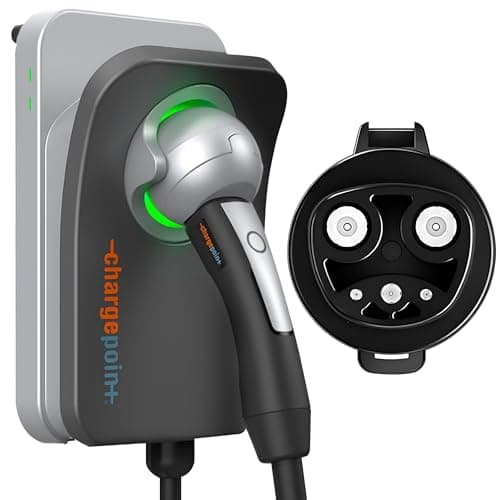
  • ChargePoint ChargePoint Home Flex NACS (hardwired)
    01 ChargePoint Home Flex NACS (hardwired)
    8.6

    The established-brand pick: amperage selectable from 16 all the way to 50, so one unit fits whatever breaker your panel can actually spare.

    Best for: Buyers who want the mature brand and app

    $516.71Amazon
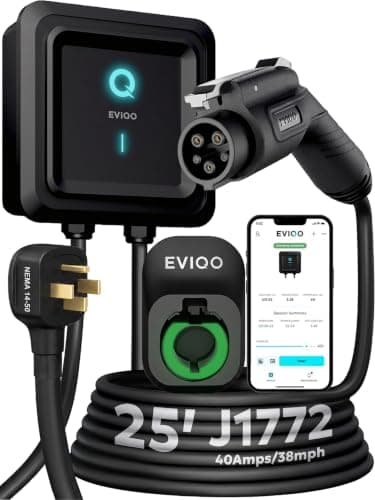
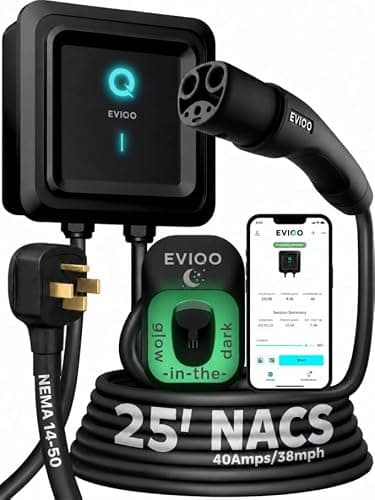
  • EVIQO EVIQO NACS (40A)
    02 EVIQO NACS (40A)
    8.8

    The most weather-rated plug-in NACS unit here — IP66 / NEMA 4 with both UL and ETL listings, usually at the bottom of the price band.

    Best for: An outdoor wall on a budget

    $479.99Amazon
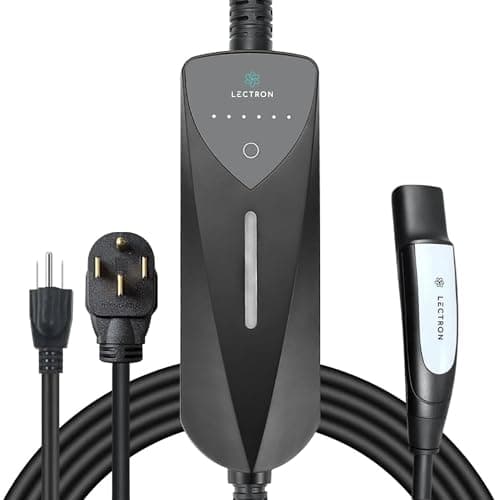
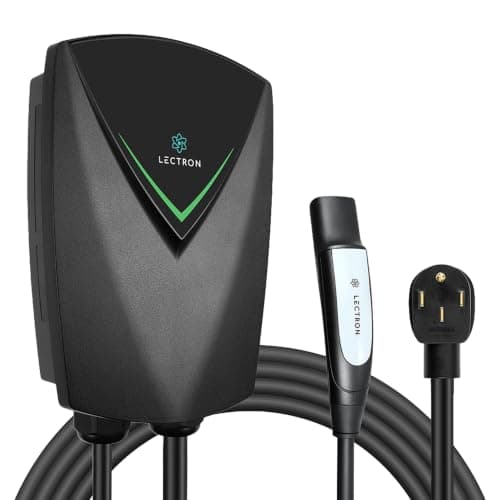
  • Lectron Lectron Nexus NACS (40A)
    03 Lectron Nexus NACS (40A)
    7.8

    The certification pick: the listing names UL 2594, the standard actually written for EV supply equipment, and it plugs into a 14-50 outlet you may already have.

    Best for: A plug-in NACS charger with a named safety standard

    $449.99Amazon
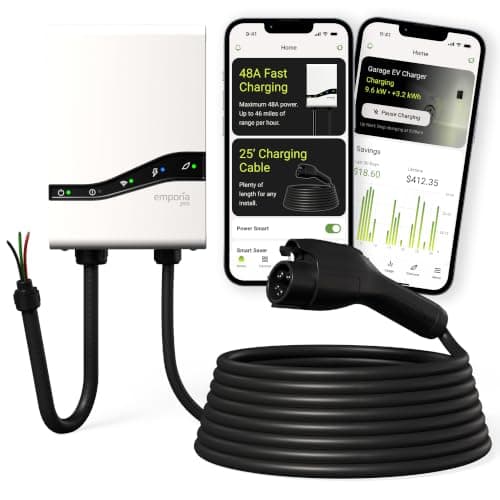
  • Emporia Emporia Pro (48A, PowerSmart)
    04 Emporia Pro (48A, PowerSmart)
    8.8

    The one charger that changes the electrical answer rather than working around it — it watches the whole panel and backs off instead of tripping the main.

    Best for: A 100-amp service you would rather not upgrade

    $599.00Amazon
  • EVIQO EVIQO Level 2 (40A)
    05 EVIQO Level 2 (40A)
    8.6

    A weatherproof, UL-and-ETL-listed smart charger that regularly sits at the bottom of the price band — a lot of charger for the money.

    Best for: Budget-conscious buyers who still want smart features

    $449.99Amazon
  • Lectron Lectron NACS Portable (8–40A)
    06 Lectron NACS Portable (8–40A)
    8.4

    A NACS charger that is not bolted to anything — 240-volt speed at home, a 120-volt plug for the road, and it moves when you do.

    Best for: Renters and anyone who travels

    Check priceAmazon

#ad · Live prices from the Amazon Product API, as of October 17, 2026. Where we have no verified live price, we show none — we would rather leave a gap than print a number that has gone stale.

For a 2025 or newer Hyundai Ioniq 5 — the ones with the native NACS port — buy the ChargePoint Home Flex NACS. It is adjustable from 16 to 50 amps, so it covers the car's full 10.9 kW AC ceiling and still fits whatever breaker your electrician can actually land, with no adapter hanging off the end of the cable. If your Ioniq 5 is a 2022 to 2024 car with the J1772 inlet, the equivalent answer is the Emporia Pro in its J1772 form at 48 amps. Either way, a 48-amp charger is the ceiling worth paying for on this car and an 80-amp charger is money set on fire.

Most "best charger for an Ioniq 5" advice is a generic roundup with the car's name pasted on top, and in 2026 that is actively misleading, because Hyundai changed the charge port mid-life. The Chargeport's connector tracker lists the Ioniq 5 (2022–2024) as CCS1— a J1772 inlet for AC charging with the DC pins below it — and the Ioniq 5 (2025–2027) as native NACS (J3400), no adapter needed. Those two cars want different hardware on the garage wall. Buy the wrong one and you are either shopping for an adapter you did not budget for or looking at a connector that will not seat.

The second thing worth knowing is that the Ioniq 5 is not one of the cars where amperage is a bottomless upgrade. InsideEVs puts the car's AC acceptance at up to 10.9 kW, which at 240 volts is roughly 45 amps. A 48-amp charger covers that completely. A 40-amp charger gets you about 88% of it. An 80-amp charger gets you exactly the same 10.9 kW as the 48-amp unit, for roughly double the price and a 100-amp dedicated circuit.

The short version

  • ChargePoint Home Flex NACS — best for a 2025 or newer Ioniq 5. Native NACS plug, adjustable 16–50 amps so it reaches the car's full AC rate, hardwired, NEMA 3R for outdoor walls, and the same account works at public ChargePoint stations on a trip. Full review.
  • EVIQO NACS (40A) — best value for a NACS-port car. UL and ETL listed with an IP66 / NEMA 4 enclosure, at 9.6 kW. That is 88% of what the car can take and still a full battery overnight. Full review.
  • Lectron Nexus NACS (40A) — best plug-in NACS unit. Plugs into a NEMA 14-50 receptacle instead of needing a hardwired run, and names UL 2594 as its standard, which plenty of cheap NACS chargers never do. Full review.
  • Emporia Pro (48A) — best for a 2022 to 2024 J1772 Ioniq 5. The full 10.9 kW with headroom, in a NEMA 4 box, with the Vue monitor and mains sensors in the carton so a 100-amp service can often take it without an upgrade.
  • EVIQO Level 2 (40A) — best value in J1772. The same hardware as the NACS pick with the standard connector, a 25-foot cable and a 14-50 plug. Full review.
  • Lectron NACS Portable (8–40A) — best for renters and travel. Adjustable down to 8 amps, with both a 14-50 and a household 5-15 plug, so one cord covers the garage, the rental and the relative's house. Full review.

Which plug does your Ioniq 5 have?

Check the model year on the door jamb sticker, then look at the port itself behind the flap on the passenger-side rear quarter panel:

  • 2022, 2023, 2024 — CCS1. A round J1772 inlet on top with two large DC pins underneath. Level 2 charging uses the top portion only, so anyJ1772 charger on this site connects natively. For Tesla Superchargers you need a DC NACS adapter, which is a separate purchase — see can you use a Tesla Supercharger with a non-Tesla EV.
  • 2025 and newer — native NACS (J3400). A single small Tesla-style port handling both AC and DC. A NACS charger plugs straight in. A J1772 charger needs a J1772 to NACS adapter permanently in the loop — which works, and is the right move if you already own a J1772 charger, but is not what you want to design a new install around.

If you already own a J1772 charger, do not replace it. A UL 2251 listed J1772-to-NACS adapter costs a small fraction of a new charger and carries the full charging current. Leave it fitted to the connector and the install is unchanged. We rank those in the best J1772 to Tesla adapters, and do charging adapters slow down charging answers the obvious follow-up: no, not at Level 2 rates.

What the Ioniq 5 actually accepts on AC

Three published numbers decide the shortlist, and all three belong to the car rather than the charger:

  • Up to 10.9 kW on AC. InsideEVs' charging deep-dive gives this figure and draws the same conclusion we do — that an owner who wants the fastest home charging should look at a 48-amp station. 10.9 kW divided by 240 volts is about 45 amps, so a 48-amp charger covers the car with a little to spare and nothing above 48 amps does anything at all.
  • A 63 kWh or 84 kWh battery, depending on trim. The long-range cars carry the larger pack. At 10.9 kW an 84 kWh battery is roughly an eight-hour fill from near-empty; at 9.6 kW (40 amps) it is closer to nine. Both finish inside a normal overnight window, which is the single most important thing to understand before spending on amperage.
  • An 800-volt architecture on the DC side. This is why the Ioniq 5 has a reputation for fast charging — it is a DC story, not an AC one, and it has no bearing on which home charger to buy. Our 10 to 80 percent fast charging explainer covers that side.

How the picks compare on paper

Published manufacturer figures from the live listings, with the live price alongside. Read the connector column first — it, not the amperage, is what rules a charger in or out for your car.

ChargerBest forPublished specs (manufacturer)Price
ChargePoint Home Flex NACS (hardwired)Buyers who want the mature brand and app16–50A adjustable · NACS (J3400) · Hardwired · NEMA 3R outdoor$516.71
EVIQO NACS (40A)An outdoor wall on a budget40A / 9.6kW · NACS (J3400) · IP66 / NEMA 4 · UL + ETL$479.99
Lectron Nexus NACS (40A)A plug-in NACS charger with a named safety standard40A / 240V · NACS (J3400) · NEMA 14-50 plug · UL 2594 (ETL listed)$449.99
Emporia Pro (48A, PowerSmart)A 100-amp service you would rather not upgradeUp to 48A hardwired · J1772 · PowerSmart + Vue monitor · UL · ENERGY STAR · NEMA 4$599.00
EVIQO Level 2 (40A)Budget-conscious buyers who still want smart features40A / 9.6kW · J1772 · 25ft cable · UL & ETL, IP66/NEMA 4$449.99
Lectron NACS Portable (8–40A)Renters and anyone who travels8–40A adjustable · NACS (J3400) · NEMA 14-50 + 5-15 · ETL certified · 20ftNot verified today

#ad Prices read live from the Amazon Product API as of October 17, 2026, and they move. Specs are the manufacturer's published claims from the live listing — we have not bench-measured them. Where we have no verified price we print none rather than a number that has gone stale.

What we left out, and why

80-amp chargers. A 19.2 kW unit cannot push more than 10.9 kW into an Ioniq 5, and it needs a hardwired 100-amp dedicated circuit to do it. The 80-amp roundup explains the narrow set of cars those are for. An Ioniq 5 is not one of them.

Level 1 only. A household outlet adds roughly 3 to 4 miles of range an hour. Against an 84 kWh pack that is a multi-day refill from low. We make the honest case for it in can you live with only Level 1 charging, and this is not the car that case fits best.

Dual-connector chargers. If an Ioniq 5 shares the driveway with a J1772 car, a two-connector unit is worth a look instead — see the best chargers for two EVs and charging two EVs in one household.

In detail

The picks, in full

01
ChargePoint ChargePoint Home Flex NACS (hardwired)

Buyers who want the mature brand and app

ChargePoint Home Flex NACS (hardwired)

16–50A adjustableNACS (J3400)HardwiredNEMA 3R outdoor
8.6/10

The established-brand pick: amperage selectable from 16 all the way to 50, so one unit fits whatever breaker your panel can actually spare.

Charge speed
10
Build & weather
9
Smart features
9
Cable & connector
8
Value
7

Pros

  • Amperage is set in the app — 16, 24, 32, 40, 48 or 50 amps — so the charger adapts to the circuit instead of the other way round
  • Hardwired at up to 50 amps, the fastest configuration in this roundup
  • NEMA 3R outdoor-rated enclosure, and one ChargePoint account covers home charging and the largest public network in North America

Cons

  • Hardwired only — there is no unplugging this one and taking it with you, and the install is licensed work
  • Costs more than equally capable NACS chargers from newer brands

Don't buy this if…

…you rent or you might move. A hardwired charger stays with the house — the plug-in Lectron Nexus or the Lectron NACS portable is the one that leaves with you.

$516.71View on Amazon

Price as of October 17, 2026. Prices change — Amazon's is the one that counts.

#ad · we may earn a commission from this link to ChargePoint Home Flex NACS (hardwired)

02
EVIQO EVIQO NACS (40A)

An outdoor wall on a budget

EVIQO NACS (40A)

40A / 9.6kWNACS (J3400)IP66 / NEMA 4UL + ETL
8.8/10

The most weather-rated plug-in NACS unit here — IP66 / NEMA 4 with both UL and ETL listings, usually at the bottom of the price band.

Charge speed
8
Build & weather
10
Smart features
8
Cable & connector
8
Value
10

Pros

  • IP66 / NEMA 4 weatherproof rating and both UL and ETL listings — the strongest enclosure spec among the plug-in picks
  • Wi-Fi app with scheduling on a long 25-foot cable, which reaches across a two-car garage
  • Typically the cheapest properly certified NACS wall unit of this group

Cons

  • The Wi-Fi radio is 2.4 GHz only, which is a nuisance on some mesh routers that hide the 2.4 GHz band
  • Newer brand with a shorter support track record than ChargePoint or Emporia

Don't buy this if…

…brand maturity is what reassures you. The certifications check out on paper, but if you want a decade of support history behind the box, the ChargePoint is the conservative buy.

$479.99View on Amazon

$510.006% off

Price as of October 17, 2026. Prices change — Amazon's is the one that counts.

#ad · we may earn a commission from this link to EVIQO NACS (40A)

03
Lectron Lectron Nexus NACS (40A)

A plug-in NACS charger with a named safety standard

Lectron Nexus NACS (40A)

40A / 240VNACS (J3400)NEMA 14-50 plugUL 2594 (ETL listed)
7.8/10

The certification pick: the listing names UL 2594, the standard actually written for EV supply equipment, and it plugs into a 14-50 outlet you may already have.

Charge speed
8
Build & weather
8
Smart features
6
Cable & connector
8
Value
9

Pros

  • Certified to UL 2594 — the EV-supply-equipment standard — rather than gesturing vaguely at being 'certified'
  • Plug-in NEMA 14-50 install, so no electrician is needed if the outlet already exists and is properly rated
  • Ships with a Tesla-style connector holder, so the plug has somewhere to live off the floor

Cons

  • The 23-foot cable is shorter than the 25-foot units here — measure the run to your charge port before you buy
  • 40 amps is the plug-in ceiling; Lectron's 48-amp Nexus is a separate, hardwired-only listing

Don't buy this if…

…you want the fastest home charging your panel can support. Forty amps on a 14-50 plug is as far as this goes — the hardwired ChargePoint or Emporia Pro is the pick if you can carry a 60-amp circuit.

$449.99View on Amazon

Price as of October 17, 2026. Prices change — Amazon's is the one that counts.

#ad · we may earn a commission from this link to Lectron Nexus NACS (40A)

04
Emporia Emporia Pro (48A, PowerSmart)

A 100-amp service you would rather not upgrade

Emporia Pro (48A, PowerSmart)

Up to 48A hardwiredJ1772PowerSmart + Vue monitorUL · ENERGY STAR · NEMA 4
8.8/10

The one charger that changes the electrical answer rather than working around it — it watches the whole panel and backs off instead of tripping the main.

Charge speed
10
Build & weather
8
Smart features
10
Cable & connector
9
Value
7

Pros

  • PowerSmart reads the whole panel through the bundled Vue energy monitor and throttles the charger when the house draws hard, so a tight service is a setting rather than a rebuild
  • Full 48 amps — about 11.5 kW — when hardwired on a 60-amp circuit, so you are not trading speed for the load management
  • UL listed, ENERGY STAR certified and NEMA 4 rated, on a 25-foot cable, with the J1772 connector most non-Tesla EVs use

Cons

  • The most expensive charger in this group, and the premium buys panel headroom rather than charging speed
  • The Vue monitor has to go inside your electrical panel, so this is licensed-electrician work — there is no version of this you install yourself in an afternoon
  • Whether load management is accepted in place of a service upgrade is your local inspector's call, not the manufacturer's

Don't buy this if…

…your panel already has room for the circuit you want. If the load calculation passes without help, PowerSmart solves a problem you do not have — the standard Emporia Level 2 charges at exactly the same rate for meaningfully less.

$599.00View on Amazon

Price as of October 17, 2026. Prices change — Amazon's is the one that counts.

#ad · we may earn a commission from this link to Emporia Pro (48A, PowerSmart)

05
EVIQO EVIQO Level 2 (40A)

Budget-conscious buyers who still want smart features

EVIQO Level 2 (40A)

40A / 9.6kWJ177225ft cableUL & ETL, IP66/NEMA 4
8.6/10

A weatherproof, UL-and-ETL-listed smart charger that regularly sits at the bottom of the price band — a lot of charger for the money.

Charge speed
8
Build & weather
9
Smart features
8
Cable & connector
8
Value
10

Pros

  • Carries both UL and ETL listings plus an IP66 / NEMA 4 weatherproof rating
  • Wi-Fi app with scheduling, at a price that undercuts the established brands
  • Long 25-foot cable and a plug-in NEMA 14-50 install

Cons

  • Newer brand with a shorter track record than ChargePoint or Wallbox
  • 40-amp ceiling, so not the fastest if your panel could do more

Don't buy this if…

…you want the reassurance of a long-established brand and support network. The hardware is well-certified, but if brand maturity matters to you, the ChargePoint is the safer pick.

$449.99View on Amazon

$510.9912% off

Price as of October 17, 2026. Prices change — Amazon's is the one that counts.

#ad · we may earn a commission from this link to EVIQO Level 2 (40A)

06
Lectron Lectron NACS Portable (8–40A)

Renters and anyone who travels

Lectron NACS Portable (8–40A)

8–40A adjustableNACS (J3400)NEMA 14-50 + 5-15ETL certified · 20ft
8.4/10

A NACS charger that is not bolted to anything — 240-volt speed at home, a 120-volt plug for the road, and it moves when you do.

Charge speed
8
Portability
10
Build & weather
7
Cable & connector
8
Value
9

Pros

  • Ships with both a 240-volt 14-50 plug and a 120-volt 5-15 plug, so it is a home charger and a road-trip cord in one
  • Current adjusts from 8 to 40 amps, which lets you dial it down for an unfamiliar outlet instead of hoping
  • ETL certified, with overvoltage, overcurrent and over-temperature protection built in — an independent safety listing, which not every portable on Amazon can show
  • Nothing is fixed to the wall — it goes in the trunk and leaves with you when you move, though a wall mount is in the box if you want one

Cons

  • A brick on a hook rather than a tidy mounted box
  • 20-foot cable — still shorter than the 25-foot portables here, so it has some say in where the car parks
  • No app or energy monitoring — charging status is LED indicators on the unit, not a phone screen

Don't buy this if…

…you want a permanent, tidy wall install with per-charge energy data. A portable trades the mounted look and the app for the ability to come with you.

Check price on Amazon →

No buyable offer at the last price check (October 17, 2026). We show nothing rather than a stale number.

#ad · we may earn a commission from this link to Lectron NACS Portable (8–40A)

How we ranked these for the Ioniq 5 specifically

Connector first, always. A charger that needs an adapter to reach your car is a worse buy than an identical charger that does not, all else equal. That single criterion is why a NACS unit tops this page rather than the J1772 charger we rate highest site-wide: more than half the Ioniq 5s now on the road are 2025 or newer.

Does it reach 45 amps? The car's 10.9 kW works out at roughly 45 amps, so the meaningful question is whether a charger can get there. The ChargePoint NACS unit is adjustable to 50 amps and the Emporia Pro delivers 48, so both do. The 40-amp picks land at 9.6 kW, about 88% of the car's capability — a real difference, and for most owners an irrelevant one.

What the garage already has. A 40-amp plug-in charger on an existing NEMA 14-50 receptacle is a short job. A 48-amp charger is a hardwired 60-amp circuit and a permit in most jurisdictions, because NEC 625.42 treats EV charging as a continuous load and requires the circuit to be rated at 125% of the charger's output. Our wire size and breaker guide and EV charger vs 240V outlet set out what each route involves before you shortlist anything.

Cable length against where the port is. The Ioniq 5's charge port is on the passenger-side rearquarter panel — unusual, and the reason cable length bites on this car more than most. If you nose into the garage and the charger is on the driver's side wall, you are reaching diagonally across the whole vehicle. The EVIQO and Lectron picks publish 25 and 20 feet respectively; measure the real run first using the cable length guide, and if nothing reaches, the long-cable roundup ranks reach specifically.

A named safety listing. UL or ETL on the unit, stated by the manufacturer. Every pick here has one. At 40 to 48 amps of continuous current in an attached garage this is not the line item to economize on, and a good number of cheap NACS chargers name no standard at all.

Scheduling, if your utility has time-of-use rates. On a time-of-use tariff, moving the session into the overnight window saves more money than any amperage upgrade will. The ChargePoint, EVIQO and Emporia units all schedule in-app, and the Ioniq 5 can also schedule from the car — so a simple charger is not a dealbreaker. See best dumb EV chargers if you would rather not involve an app, and how to save money charging an EV for the arithmetic.
How we picked

We do not run a testing lab

We compiled published specifications from manufacturer manuals and spec sheets, verified the safety listings (UL / ETL), computed the real running and installation costs, checked the wiring math against the NEC continuous-load rule, and read aggregated owner reviews — then scored each product against a published rubric. The scores are judgments from documented research — they are not bench measurements, because we do not have a test lab and we are not going to pretend we do. Every spec and cost figure is cited in Sources.

Questions

Frequently asked

What size charger does a Hyundai Ioniq 5 need?
A 48-amp charger is the match. The car accepts up to 10.9 kW on AC, which is about 45 amps at 240 volts, so 48 amps covers it with a little margin and nothing above 48 amps adds speed. A 40-amp charger reaches 9.6 kW — around 88% of the car's rate — and still refills the big pack overnight, which is why it is the pick most owners should actually buy.
Does the Ioniq 5 use J1772 or NACS?
Both, depending on model year. The Chargeport's connector tracker lists 2022 to 2024 cars as CCS1, meaning a J1772 inlet for AC charging, and 2025 and newer cars as native NACS (J3400) with no adapter needed for Tesla Superchargers. Check the door jamb sticker before you buy a charger — this is the one spec that rules hardware in or out. Our NACS vs J1772 explainer covers the standards themselves.
Can I use my old J1772 charger on a 2025 Ioniq 5?
Yes, with a J1772-to-NACS adapter fitted to the connector. A UL 2251 listed adapter carries the full Level 2 current and costs a fraction of a new charger, so if you already own a charger this is the cheap answer rather than a replacement. It does not slow charging down at Level 2 rates — see do charging adapters slow down charging.
How long does it take to charge an Ioniq 5 at home?
On the published figures, an 84 kWh long-range pack is roughly an eight-hour fill at 10.9 kW and closer to nine hours at 9.6 kW, before charging losses and the taper near full. The 63 kWh standard-range car is proportionally quicker. Nobody charges from empty nightly, though — the number that matters is how long your daily mileage takes to replace, which is usually one to two hours. Our how long to charge an EV guide shows the method.
Do I need a 60-amp breaker for an Ioniq 5 charger?
Only if you install a 48-amp charger. NEC 625.42 treats EV charging as a continuous load and requires the circuit to be rated at 125% of the charger's output, so 48 amps needs a 60-amp breaker and 40 amps needs a 50-amp breaker. Your electrician decides this from the load calculation on your panel, not from the car — the wire size and breaker guide has the table.

Keep reading

Receipts

Sources

We do not run a testing lab, and we do not pretend to. Where a measured number came from someone else's lab, we name them and link them. Where we could not verify something, we say so on the page rather than quietly leaving it out. Read our full method.