HUB 05 · Guides & Buying Advice
Does an EV Charger Need a Neutral Wire?
Short answer: no. A Level 2 charger runs between the two hot legs and never touches the neutral — which explains almost every confusing thing about EV outlets, once you see it.
We earn a commission when you buy through our Amazon links, at no extra cost to you. It never affects our rankings, and we say so when the cheaper product is the better buy. How this works.
No. A Level 2 EV charger does not need a neutral wire. It draws its power line-to-line— 240 volts across the two hot legs of your panel — plus an equipment ground for safety. ChargePoint's own specification sheet for the Home Flex states the power wiring plainly: three wire — L1, L2 plus earth (no neutral). That single fact explains a long list of things that otherwise look like contradictions: why a three-prong 6-50 welder outlet charges an EV perfectly well, why the four-prong 14-50 has a neutral pin your charger will never use, and why the neutral socket inside a 6-50 adapter is dead.
The confusion is understandable, because the receptacle the industry settled on — the NEMA 14-50 — does have a neutral. People reasonably conclude the charger must want it. It does not. The 14-50 won on availability and history, not on electrical necessity: it is the RV-park and electric-range receptacle, so it was already everywhere, and its neutral exists to let a range run its 120-volt clock and oven light off the same cord. Your charger ignores that pin.
What a Level 2 charger is actually connected to
Three conductors, in a residential single-phase panel:
- L1 — one hot leg. 120 volts to ground.
- L2 — the other hot leg. Also 120 volts to ground, but opposite in phase, so the voltage between L1 and L2 is 240.
- Equipment ground. Not a current-carrying conductor in normal operation. It is the fault path, and it is mandatory.
The charger sits across L1 and L2 and sees 240 volts. There is no 120-volt load inside it that needs a return path to the panel's neutral bar, which is what a neutral is for. Our 120V vs 240V charging explainer covers why the doubled voltage is the whole point of Level 2, and charging speed: kW vs amps has the arithmetic.
One real exception, and it is not about the wall. A dual-voltage portablecharger — the kind that plugs into either a 240-volt outlet or a household 120-volt socket — does use a neutral when you plug it into the 120-volt socket, because at that moment it is a line-to-neutral load. That is a property of the 5-15 plug on the adapter, not of the 240-volt circuit. On 240 volts the same unit runs line-to-line with no neutral. See best 110V EV chargers.
What this means for your outlet
NEMA 6-50 (three prongs: two hots, one ground). No neutral, and none needed. A 6-50 is a 250-volt welder receptacle on a 50-amp circuit, which supports up to 40 amps of EV charging under the NEC's continuous-load rule — the same ceiling a 14-50 gives you. If you have one in the garage, you have an EV charging circuit. Our NEMA 6-50 charger roundup covers how to use it, since almost nothing ships with a 6-50 plug any more.
NEMA 14-50 (four prongs: two hots, neutral, ground). Has a neutral, which your charger will not use. The neutral is why the receptacle is rated 125/250 volts and can serve dual-voltage appliances. It is also why this receptacle needs a four-conductor cable run, which costs slightly more in copper than a 6-50 does. Our NEMA 14-50 outlet guide and NEMA 6-50 vs 14-50 compare the two directly.
Hardwired installs. Most Level 2 chargers have three power terminals — L1, L2 and ground — and no neutral terminal at all. If you hardwire using a four-conductor cable because that is what was on the van, the neutral is simply capped off at both ends. Not wrong, just unused. Confirm with the unit's own installation manual, because this is the manufacturer's decision, not a generalization.
Old three-prong dryer outlets (NEMA 10-30). These are the genuinely awkward case, and for the opposite reason: a 10-30 has two hots and a neutraland no separate equipment ground. That is a missing ground, not a missing neutral — a real safety consideration rather than a non-issue. We cover it honestly in NEMA 10-30 vs 14-50 for EV charging and in can I use a dryer outlet for EV charging.
The mistake this guide exists to prevent
The most common piece of bad advice in this area is: "I have a 6-50 and my charger has a 14-50 plug, so I will just swap the receptacle." You cannot. A 14-50 is a 125/250-volt device that expects a neutral conductor, and a 6-50 circuit does not have one in the box to land. Fitting a 14-50 anyway produces a receptacle that looks correct and is wired wrong, and in the worst version of it somebody lands the ground on the neutral terminal to make the screws line up.
Two correct answers instead:
- Hardwire the charger to the existing 6-50 circuit, set to 40 amps. No adapter, no plug, full use of the circuit. An electrician removes the receptacle and lands L1, L2 and ground on the charger's terminals.
- Use a plug adapterfrom 6-50 to your charger's plug, and set the charger to the adapter's stated limit. The best-documented one we rank publishes 6 AWG three-conductor cable and names a listing; its seller specifies 32 amps, which is the number you should actually dial in. Our outlet adapter roundup ranks the category on exactly these criteria.
That second route has a detail worth knowing. An adapter that presents a 14-50 socket on a 6-50 circuit has a neutral pin that is not connected to anything, because there is no neutral behind it. For a Level 2 charger this is fine. For anything else — an RV, a camping fridge, a plug-in tool expecting 120 volts from that socket — it is not. Adapter listings in this category almost never mention it; treat that socket as charger-only.
The numbers, for the parts involved
Published manufacturer figures from the live listings, with the live price alongside. The receptacle, the adapter and a hardwired charger are the three answers to the neutral question, which is why all three are here.
| Part | Best for | Published specs (manufacturer) | Price |
|---|---|---|---|
| Industrial NEMA 14-50 Outlet | The outlet a plug-in charger needs | NEMA 14-50R · 50A · 125/250V · 3-pole 4-wire · ETL listed | $17.99 |
| Suplevel NEMA 6-50P → 14-50R Adapter | A welder or shop 6-50 outlet | 6-50P → 14-50R · 6 AWG / 3C STW · ETL Listed (per listing) · 1 ft · seller caps 32A | $23.99 |
| Emporia Pro (48A, PowerSmart) | A 100-amp service you would rather not upgrade | Up to 48A hardwired · J1772 · PowerSmart + Vue monitor · UL · ENERGY STAR · NEMA 4 | $599.00 |
#ad Prices read live from the Amazon Product API as of October 17, 2026, and they move. Specs are the manufacturer's published claims from the live listing — we have not bench-measured them. Where we have no verified price we print none rather than a number that has gone stale.
What to check before you buy anything
1. Count the prongs on the outlet you have. Three prongs with two angled blades and a round pin is a 6-50 — two hots and a ground, 250 volts, 50-amp circuit, no neutral, and a perfectly good EV circuit. Four prongs is a 14-50 (one L-shaped pin) or a 14-30 dryer outlet (smaller, 30-amp circuit). Three prongs with one L-shaped pin is an old 10-30 dryer outlet, which has a neutral and no separate ground. Our outlet types explainer has the pictures.
2. Read your charger's installation manual for its terminals. Three power terminals (L1, L2, ground) is the norm and tells you the unit never wanted a neutral. This is the authoritative source for your specific hardware, ahead of anything on this page or any forum.
3. Do not change the receptacle to match the plug. Match in the other direction: adapter on the plug, or hardwire the charger. Changing a receptacle type without changing the cable behind it is the error that produces a wrong-but-tidy install.
4. Size the circuit, not the charger. NEC 625.42 treats EV charging as a continuous load and requires the circuit to be rated at 125% of the charger's output: 40 amps of charging needs a 50-amp circuit, 48 amps needs 60. A 6-50 and a 14-50 are both 50-amp circuits, so both top out at 40 amps of charging whatever the charger claims. Our wire size and breaker guide has the table.
5. Leave the breaker type to your electrician. Receptacle and hardwired installs are treated differently, and manufacturers specify. ChargePoint's datasheet, for example, calls for a dedicated dual-pole breaker rated at 125% of the maximum load and specifies a non-GFCI breaker for hardwired installations. Do not change a breaker type on internet advice — see do I need a GFCI breaker for EV charging.
6. If you are running new cable anyway, ask about the 14-50. A four-conductor run costs a little more and leaves you a dual-voltage receptacle that an RV, a future appliance or a different charger can use. If the run is long and copper prices make that painful, a hardwired charger on three conductors is the cheaper and perfectly proper alternative — see EV charger vs 240V outlet for the trade-off, and the installation cost guide for what each route runs.
The gear
Recommended gear for this guide
The products this guide refers to, with prices pulled live from Amazon and dated on each card.
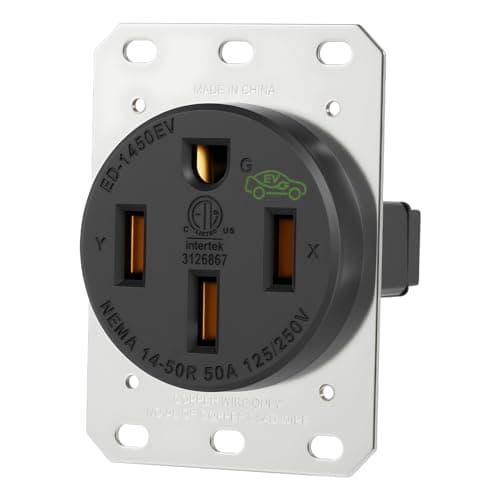
The outlet a plug-in charger needs
Industrial NEMA 14-50 Outlet
The receptacle a plug-in charger actually plugs into — buy the industrial-grade, listed version, because the cheap ones are the part that fails.
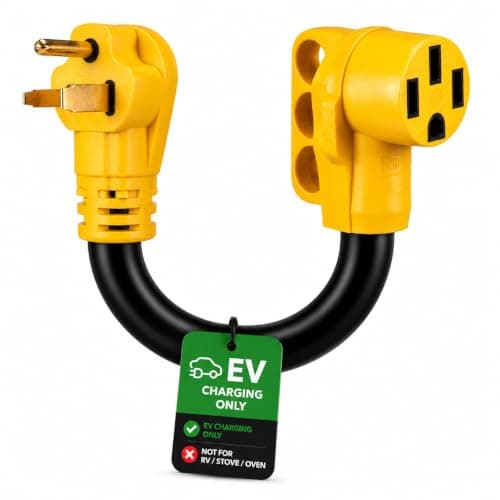
A welder or shop 6-50 outlet
Suplevel NEMA 6-50P → 14-50R Adapter
The best-documented cord in the category — 6-gauge wire and a named ETL listing behind a 50-amp welder outlet, where most rivals ship 10 AWG and mention no certification at all.
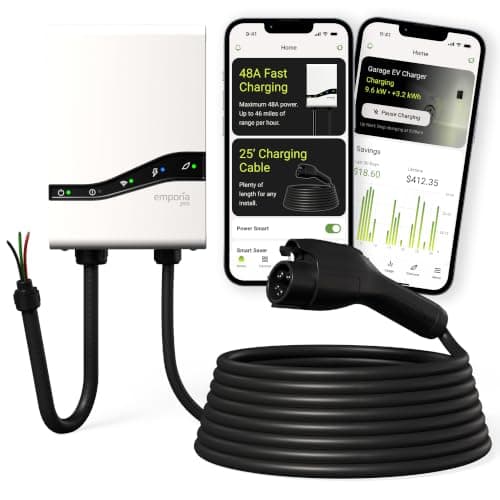
A 100-amp service you would rather not upgrade
Emporia Pro (48A, PowerSmart)
The one charger that changes the electrical answer rather than working around it — it watches the whole panel and backs off instead of tripping the main.
#ad · As an Amazon Associate we earn from qualifying purchases.
Questions
Frequently asked
Does a Level 2 EV charger use a neutral wire?
Why does a NEMA 14-50 outlet have a neutral then?
Can I use a 6-50 outlet with no neutral for EV charging?
Can I convert a 6-50 outlet to a 14-50?
Is a missing neutral a safety problem?
Does the neutral pin on my adapter do anything?
Keep reading
Related
- NEMA 6-50 vs 14-50 for EV ChargingThe two receptacles compared, and why the swap people attempt does not work.
- Best EV Chargers for a NEMA 6-50 OutletHow to actually use the welder circuit already in your garage.
- EV Outlet Types ExplainedHow to identify what is on your wall by counting prongs.
- EV Charger Wire Size & BreakerSizing the circuit, which is the part that actually matters.
- NEMA 10-30 vs 14-50 for EV ChargingThe outlet where the missing conductor is the ground, not the neutral.
- EV Charger vs 240V OutletHardwire on three conductors, or pull four and fit a receptacle.
Receipts
Sources
- ChargePoint Home Flex specification sheet — Power Wiring: 3 Wire, L1, L2 plus Earth (no neutral); dedicated dual-pole breaker rated 125% of maximum load; non-GFCI breaker for hardwired installs
- Lectron — NEMA 6-50 vs NEMA 14-50 (a 6-50 uses two hots and a ground with no neutral; a 14-50 adds a neutral that allows dual-voltage use)
- Enel X — Home EV charging: how to know which plug type is right for you (why the 14-50's neutral and availability made it the default)
- EC&M — NEC Article 625, Electric Vehicle Charging Systems (the 125% continuous-load rule behind the 40-amp ceiling on any 50-amp circuit)
We do not run a testing lab, and we do not pretend to. Where a measured number came from someone else's lab, we name them and link them. Where we could not verify something, we say so on the page rather than quietly leaving it out. Read our full method.