HUB 05 · Guides & Buying Advice
Type 2 vs J1772
If you searched for a "Type 2 charger" in the United States, the plug you want is almost certainly J1772 - which the international standard calls Type 1. Here is why the names collide, and why it matters less than it looks.
We earn a commission when you buy through our Amazon links, at no extra cost to you. It never affects our rankings, and we say so when the cheaper product is the better buy. How this works.
There is no contest here, because they are not competitors in the same market. Type 1 and J1772 are the same connector— the international standard IEC 62196-2 defines its Type 1 configuration from the SAE J1772 specification, so a plug labeled “Type 1” in a European review is the plug on the end of every J1772 charger sold in North America. Type 2is the Mennekes connector, the European AC standard, and it is not sold for US homes at all. If you landed here searching for a “Type 2 charger” for an American house, what you are looking for is a Level 2 charger— a power level, not a plug shape — and the plug on it will be J1772 or NACS.
The three naming systems people mix up
Almost all the confusion on this topic comes from three unrelated systems of names being used in the same sentence. Separating them fixes the problem permanently:
- Type 1 / Type 2 / Type 3 — connector shapes. These come from IEC 62196-2, the international standard for AC charging plugs. They describe the physical interface: how many pins, what shape, what it mates with. Nothing about speed.
- Level 1 / Level 2 / DC fast — power levels. These are North American usage. Level 1 is a household 120-volt outlet, Level 2 is 240 volts, DC fast charging bypasses the car's onboard charger entirely. Nothing about plug shape.
- Mode 1 to Mode 4 — control and safety schemes. From IEC 61851, the companion standard. You will see these in European documentation and essentially never in American.
So “Type 2” and “Level 2” are not alternative spellings of each other. They answer different questions, and a charger has an answer to both: a typical European home charger is Type 2, Mode 3; a typical American one is Type 1 (J1772), Level 2. Our types of EV chargers guide walks the levels and the J1772 explainer walks the connector.
What is physically different
The short answer is pins, and the reason is three-phase power:
- Type 1 (J1772) has five contacts. Two AC conductors, a protective conductor and two signal pins. It is a single-phaseconnector — there is no provision in the shape for more.
- Type 2 (Mennekes) has up to seven. Up to four AC conductors, a protective conductor and the same two signal pins. The extra conductors carry the second and third phases, which is what lets it do three-phase AC charging at up to 63 amps per phase.
That is the whole engineering difference. Type 2 is not better built or more modern; it is shaped for a grid that delivers three phases to ordinary buildings. European homes commonly have three-phase or can get it, which is why a 22 kW home charger is a normal product there and an exotic one here.
Why no US house has a Type 2 charger. American residential service is single-phase, split into two 120-volt legs that give you 240 volts across them. There is no third phase at the panel for a Type 2 connector's extra pins to connect to. Buying a Type 2 charger for a US home would mean paying for conductors that terminate in nothing — and then needing an adapter to reach your car anyway. Three-phase service in North America is a commercial arrangement, not a residential one.
The current ratings, which surprise people
There is a widespread assumption that Type 2 is simply the faster connector. On AC, in a single-phase house, the opposite is closer to true:
- Type 1 under IEC 62196-2 is described up to 32 amps — but a maximum of 80 amps is allowed in the United States, where SAE J1772 describes the higher rating. At 240 volts that is 19.2 kW through a single-phase connector, and it is why American 80-amp home chargers exist at all. We rank them in the 80-amp roundup.
- Type 2 carries up to 63 amps per phase. Across three phases that is roughly 43 kW in theory, though 22 kW is the practical ceiling at most European sites. Across one phase it is 63 amps, which is in the same territory as the American 80-amp figure rather than ahead of it.
So the honest comparison is: Type 2 wins decisively where three-phase power exists, and the two are broadly comparable where it does not. For a US buyer the whole question is moot, because the AC ceiling is set by your car's onboard charger long before the connector becomes the limit — most EVs cap AC charging at 11.5 kW, which is 48 amps. See kW vs amps explained and what amp EV charger do I need.
Where each one is actually used
- Type 1 (J1772): North America and Japan, for single-phase AC. On US cars it is also the top half of the CCS1DC inlet — the J1772 portion handles AC and two large pins below it handle DC. That is covered in CCS1 vs CCS2.
- Type 2 (Mennekes): The European Union, where regulation requires public AC charging points to provide a Type 2 socket or connector, plus the UK. India uses it for high-power AC at 22 kW and above. China uses a similar but not identical design under its own GB/T standard. Type 2 is also the AC half of the CCS2 DC inlet used in Europe.
- Type 3: Italy and France historically, now deprecated. You will see it in older documentation and nowhere else.
- North American three-phase AC: There is a standard for it — SAE J3068 — but it is commercial equipment. It is not what a home charger uses and not what is on your car.
So what should a US buyer actually get?
Two connectors, and your car decides which:
- J1772 (Type 1), if your car has a J1772 or CCS1 inlet. That is most non-Tesla EVs sold in North America up to roughly the 2024 model year, plus every plug-in hybrid. This is the largest installed base of home and public AC charging in the country. Start at best home EV chargers.
- NACS / SAE J3400, if your car has the Tesla-style port. Every Tesla, and a growing list of 2025-onward models from Hyundai, Kia, Ford, Rivian and others. Note that NACS is a North Americanstandard and sits outside the Type 1 / Type 2 naming entirely — it is neither. Start at best NACS home chargersor, if you are weighing them against Tesla's own box, Tesla Wall Connector alternatives. Then read NACS vs J1772 for which one your next car will have.
The second decision, and the one people searching for a “Type 2 plug-in charger” are usually really asking about, is plug-in versus hardwired. A plug-in charger has a NEMA plug on the supply side and lands in a receptacle; a hardwired charger is wired directly into the circuit. Plug-in is cheaper, portable and installable yourself if the outlet exists; hardwired goes higher in amperage and is required above 48 amps on most units. Our EV charger vs 240V outlet and tethered vs untetheredguides cover both axes — and note that “untethered” or “socketed” chargers, where you bring your own cable, are another European convention that barely exists on American home hardware.
What if I genuinely have Type 2 equipment?
It happens — an imported car, a charger bought abroad, a European relocation. Three honest points:
- A Type 2 charger on a US single-phase supply will work at single-phase rates only, assuming it is rated for the voltage and frequency, and assuming the installation satisfies your local inspector. The unused phase conductors simply are not landed. Whether a non-certified imported unit passes inspection is a question for your electrician and your jurisdiction, not for a website.
- Type 2 to J1772 adapters exist and we do not recommend them as a permanent home solution. An adapter is the right tool for a connector mismatch at a public station, not for the one circuit you use every night. Buy the correct charger; it costs less than the risk. For the adapters we dorank — all of them NACS-to-J1772 or J1772-to-NACS — see which EV charging adapter do I need and are EV charging adapters safe.
- A car with a Type 2 inlet is a harder problem than a charger with a Type 2 plug. North American public charging will not serve it natively anywhere. This is a vehicle-import question rather than a home-charging one.
The one-line summary
J1772 is Type 1. If you are shopping in the United States, ignore the Type 1 / Type 2 vocabulary entirely: decide between J1772 and NACSbased on your car's inlet, decide between plug-in and hardwired based on your garage, and pick an amperage your panel can carry. The international naming is useful only for reading European reviews without being misled by them.
The gear
Recommended gear for this guide
The products this guide refers to, with prices pulled live from Amazon and dated on each card.
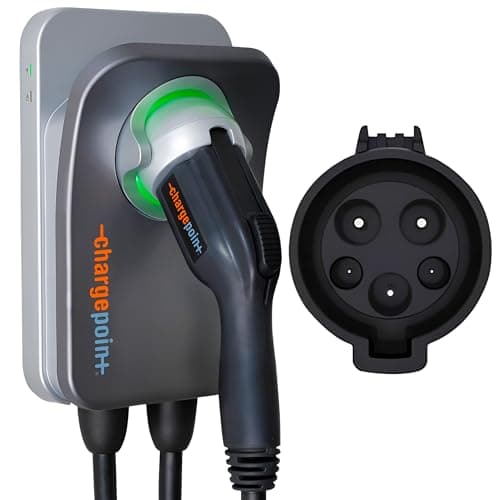
Buyers who want the established brand and app
ChargePoint Home Flex
The polished, well-supported option — adjustable up to 50 amps and tied into the largest public charging app in North America.
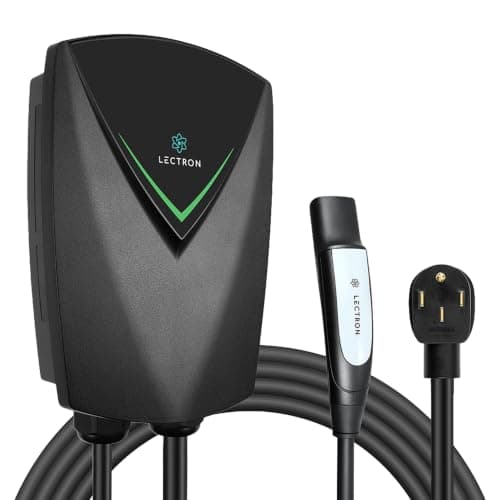
A plug-in NACS charger with a named safety standard
Lectron Nexus NACS (40A)
The certification pick: the listing names UL 2594, the standard actually written for EV supply equipment, and it plugs into a 14-50 outlet you may already have.
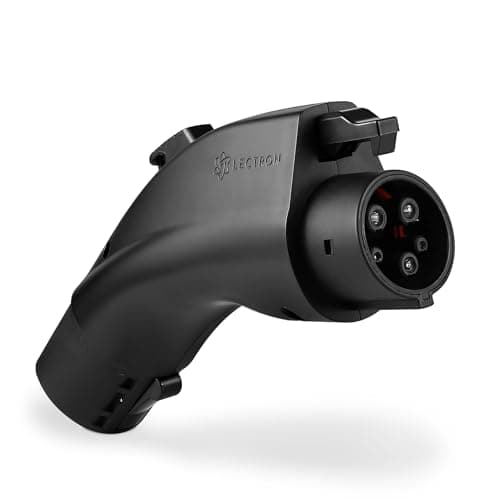
A J1772 car using NACS chargers
Lectron NACS → J1772 Adapter
The default adapter for a J1772 car to use a Tesla-style (NACS) home or destination charger — rated for the full 48 amps.
#ad · As an Amazon Associate we earn from qualifying purchases.
Questions
Frequently asked
Is J1772 the same as Type 2?
Can I use a Type 2 charger in the US?
Is Type 2 the same as Level 2?
Why does Europe use a different plug?
Which connector is faster, Type 1 or Type 2?
Where does NACS fit into Type 1 and Type 2?
Keep reading
Related
- J1772 Connector ExplainedThe connector itself - pins, signalling and what it will and will not do.
- NACS vs J1772The comparison that actually matters to a US buyer.
- CCS1 vs CCS2 ConnectorsThe DC versions of the same regional split.
- Types of EV ChargersLevel 1, Level 2 and DC fast - the power levels, not the plugs.
- EV Outlet Types ExplainedThe NEMA plug on the wall end, which is a third naming system again.
- Tethered vs UntetheredAnother European convention that barely exists on US home hardware.
Receipts
Sources
- Wikipedia - IEC 62196 (Type 1 defined in IEC 62196-2 from the SAE J1772 specification, originally designed by Yazaki: five contacts, single-phase only, used in the US and Japan, described to 32 A with a maximum of 80 A allowed only in the US under SAE J1772. Type 2 originally designed by Mennekes, earlier German VDE-AR-E 2623-2-2 withdrawn 2012: up to seven contacts, three-phase to 63 A, EU regulation requires a Type 2 socket or connector at public AC points, India for 22 kW and above, China a similar design under GB/T 20234.2. Type 3 Italy and France, deprecated. SAE J3068 listed as the North American Type 2 standard; SAE J3400 listed among related standards)
- Monta - IEC 62196 explained (IEC 62196 covers the physical charging interfaces while IEC 61851 governs charging modes and control; Type 2 three-phase AC to about 22 kW in practice)
- MIDA Power - Comparison of Type 1 (J1772) and Type 2 (IEC 62196-2) systems (Type 1 as the North American single-phase interface; Type 2 pin assignment L1-L3, neutral, protective earth, control pilot, proximity pilot)
We do not run a testing lab, and we do not pretend to. Where a measured number came from someone else's lab, we name them and link them. Where we could not verify something, we say so on the page rather than quietly leaving it out. Read our full method.