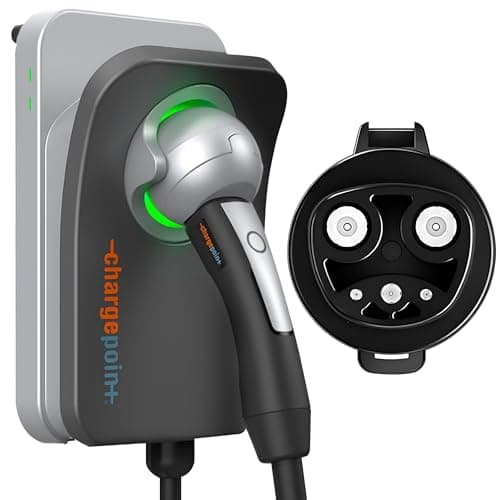
If you want the closest like-for-like replacement, buy the ChargePoint Home Flex NACS. It is the same idea as Tesla's box — hardwired, native NACS plug, outdoor rated — with a wider adjustable range (16 to 50 amps against Tesla's 12 to 48) and an app that is not tied to one carmaker. If you would rather not pay an electrician at all, the Lectron Nexus NACS plugs into a NEMA 14-50 receptacle, which Tesla does not offer in any form. And if the real problem is that your driveway has a Tesla on one side and a J1772 car on the other, the Grizzl-E Duo Connect in its J1772-plus-NACS build is the cheaper answer to the question the Universal Wall Connector was built for.
Let us be fair to the incumbent first, because “alternatives” pages usually are not. The Tesla Wall Connector is a genuinely good piece of hardware at a genuinely low price. EnergySage's 2026 review lists the Gen 3 at $485, rated at 48 amps and adjustable from 12 to 48, delivering up to 11.5 kW through a 24-foot cable in a NEMA 3R enclosure, with Wi-Fi, power sharing across up to 16 units and a four-year warranty. For a one-Tesla household with an electrician already booked, that is hard to beat and we are not going to pretend otherwise.
But it has four hard limits, and each one sends a different buyer somewhere else:
- It is hardwired only. There is no plug-in version. If you already have a NEMA 14-50 receptacle in the garage — and a great many houses do, because of RVs, welders and dryers — Tesla has nothing that uses it. You are paying for licensed electrical work to install a charger next to an outlet that would have powered it.
- It stops at 11.5 kW. 48 amps is the ceiling. Most EVs cap AC charging at exactly that figure, so for most people this is irrelevant. For the short list of cars that accept 19.2 kW, Tesla simply does not sell the hardware.
- It is NACS-only. A J1772 car needs an adapter permanently hanging off the handle. Tesla's answer is the Universal Wall Connector, which EnergySage lists at $600— about $115 more than the Gen 3 — and which is still one cable serving one car at a time.
- You cannot reliably buy it from a retailer. This is the quiet one. Tesla sells its wall connectors direct, and their availability through normal retail channels is sporadic. We track the Universal Wall Connector in our own product registry and it has had no live, buyable retail listing for months — which is precisely why this page carries no price card for it while every alternative below has one.
The short version
- ChargePoint Home Flex NACS — the closest like-for-like swap. Hardwired, native NACS, NEMA 3R, and selectable at 16, 24, 32, 40, 48 or 50 amps in the app, so it adapts to whatever breaker your panel can actually spare instead of demanding one size. One account also covers the largest public charging network in North America. Full review.
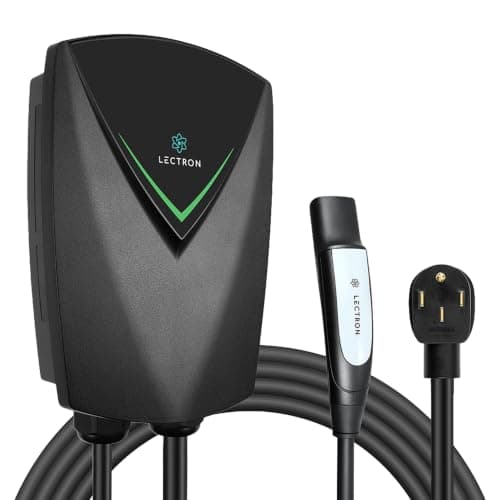
- Lectron Nexus NACS — the plug-in option Tesla does not sell. 40 amps through a NEMA 14-50 plug, with UL 2594 named explicitly on the listing and a 23-foot cable. If the outlet exists, this is a same-afternoon install with no electrician. Full review.
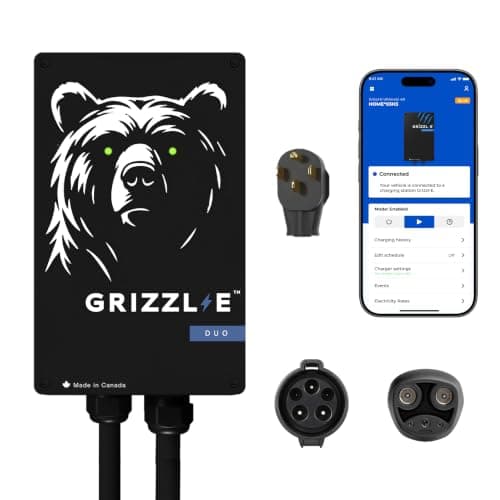
- Grizzl-E Duo Connect (J1772 + NACS) — the Universal Wall Connector answer. One J1772 head and one NACS head on the same plug-in unit, two 25-foot cables, UL Type 4 cast metal. Both cars plug in natively, at the same time, on one circuit. Full review.
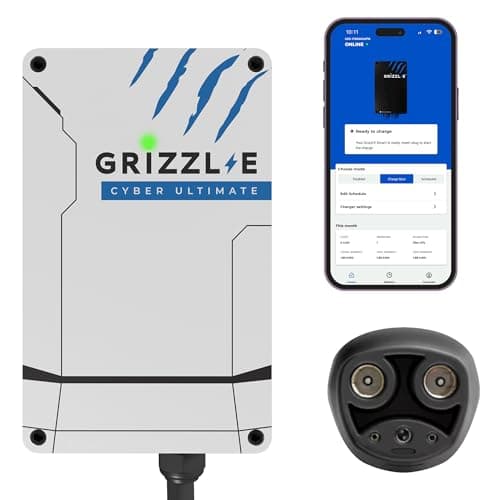
- Grizzl-E Ultimate 80A — the only way past 11.5 kW. 19.2 kW through a native NACS plug, hardwired on a 100-amp circuit, in a UL Type 4 metal box that schedules with or without an internet connection. Overkill for most cars, and the right buy for the few that can use it. Full review.
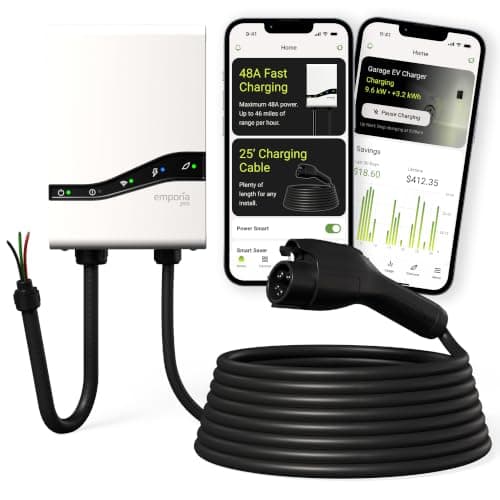
- Emporia Pro (48A) — if the panel is the problem, not the charger. Matches Tesla's 48 amps exactly, in J1772, and ships with a panel energy monitor that throttles the charger when the house draws hard — which can let a 100-amp service take a charger it would otherwise fail. Full review.
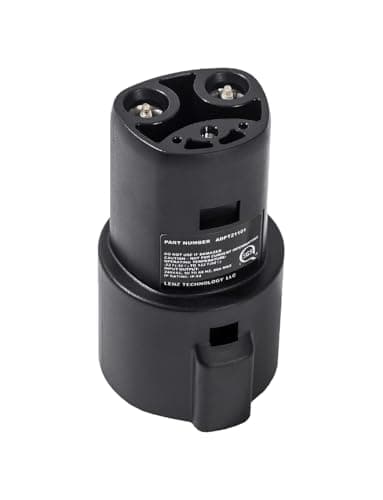
- LENZ J1772 to NACS adapter — the $30 version of this whole page. UL 2251 certified, rated to 80 amps. If you already own a J1772 charger, this is the honest answer: keep it, fit the adapter, spend nothing else. Full review.
Which limit are you actually trying to escape?
This is the only question that matters, and answering it honestly collapses the shortlist to one or two units. Find your situation:
- “I have a 14-50 outlet already.” Buy the Lectron Nexus NACS. You are done, there is no electrician, and the charger leaves with you if you move. This is the single most common reason people go looking for an alternative and the one Tesla cannot serve at any price. Check the receptacle is on a real 50-amp circuit first — our NEMA 14-50 outlet guide covers what to look for, and can I use a dryer outlet for EV charging covers the case where it turns out to be a 14-30.
- “Two cars, two different plugs.” Buy the Grizzl-E Duo Connect J1772-plus-NACS. It costs less than Tesla's Universal and serves both cars simultaneously rather than one at a time. The trade is real and we state it on the card: both cars share one 40-amp circuit, so 20 amps each while both are connected. See the best chargers for two EVs for the full field.
- “My car accepts 19.2 kW.” Buy the Grizzl-E Ultimate 80A and budget for a hardwired 100-amp circuit. Before you do, confirm the figure in your owner's manual rather than from a forum — the 80-amp roundup explains how short that list of cars really is.
- “I want 48 amps but my panel is full.” Buy the Emporia Pro. It is the one charger here that changes the electrical answer instead of working around it. Read the 100-amp panel roundup and chargers with load management before you book a service upgrade.
- “I already own a J1772 charger.” Buy the LENZ adapter and nothing else. A UL 2251 adapter carries full Level 2 current and does not slow charging down — do charging adapters slow down charging has the mechanism. Replacing a working charger to avoid a $30 part is the most expensive mistake on this page.
- “Honestly, I just want the mature brand and app.” Buy the ChargePoint Home Flex NACS. That is the like-for-like swap, and the adjustable 16-to-50-amp range is a genuine improvement on Tesla's 12-to-48.
How the alternatives compare on paper
Published manufacturer figures from the live listings, with the live price alongside. Read the install column before the amperage column — whether a unit is hardwired or plug-in decides your total cost far more than the last eight amps do.
| Alternative | Best for | Published specs (manufacturer) | Price |
|---|
| ChargePoint Home Flex NACS (hardwired) | Buyers who want the mature brand and app | 16–50A adjustable · NACS (J3400) · Hardwired · NEMA 3R outdoor | $516.71 |
| Lectron Nexus NACS (40A) | A plug-in NACS charger with a named safety standard | 40A / 240V · NACS (J3400) · NEMA 14-50 plug · UL 2594 (ETL listed) | $449.99 |
| Grizzl-E Duo Connect (J1772 + NACS) | A mixed Tesla / J1772 driveway | J1772 + NACS · Up to 40A shared · Two 25ft cables · UL Type 4 · NEMA 14-50 | $899.99 |
| Grizzl-E Ultimate 80A (NACS) | NACS / Tesla cars that can take 19.2 kW | Up to 80A / 19.2 kW · NACS (Tesla-style) · Hardwired · 100A circuit · UL Type 4, works offline | $899.00 |
| Emporia Pro (48A, PowerSmart) | A 100-amp service you would rather not upgrade | Up to 48A hardwired · J1772 · PowerSmart + Vue monitor · UL · ENERGY STAR · NEMA 4 | $599.00 |
| LENZ J1772 → NACS Adapter | A Tesla / NACS car using J1772 chargers | J1772 → NACS · 80A max · Level 1 & 2 AC · UL 2251 certified | $29.99 |
#ad Prices read live from the Amazon Product API as of October 18, 2026, and they move. Specs are the manufacturer's published claims from the live listing — we have not bench-measured them. Where we have no verified price we print none rather than a number that has gone stale.
What the Tesla Wall Connector still wins on
A roundup that cannot name the incumbent's strengths is advertising. Three of them are real:
Price, if you are hardwiring anyway. At the $485 EnergySage lists, the Gen 3 undercuts most hardwired NACS competition. The cheaper alternatives on this page are cheaper mainly because they are 40-amp plug-in units, which is a different product. If you have already accepted the cost of a hardwired 60-amp circuit, Tesla's box is good value for a Tesla.
Cable length. 24 feet is longer than four of the six units here. Cable reach is the specification people regret most, and it is worth more in practice than a few amps — see how long an EV charger cable should be and the long-cable roundup if your run is awkward.
Power sharing across many units. EnergySage lists power sharing for up to 16 Wall Connectors on one supply. Nothing on this page matches that, and for a small apartment building or a shared driveway it is a decisive feature. If that is your situation, read EV charging for condos and HOAs before shopping for a single home charger at all.
What we left out, and why
The Tesla Universal Wall Connector itself. We track it, we think it is a clever product, and we will not put a price card on it: it has had no live, buyable retail listing for months. Showing a buy button that lands on a dead page or a search results screen is worse than showing nothing. If you want it, buy it direct from Tesla.
The Tesla Mobile Connector. It is a travel cord, not a home charger — a different category with a different page. See best portable EV chargers and portable vs hardwired.
Chargers with no named safety listing. There is a long tail of cheap NACS-plug units on marketplaces that name no UL or ETL standard at all. At 40 amps of continuous current in an attached garage, that is not a corner to cut, and none of them appear here.
The criteria we ranked on
Does it remove the limit you are escaping? This page is unusual in that the right pick is almost entirely determined by which of Tesla's four constraints is binding for you, not by which charger is “best”. A hardwired 48-amp NACS unit that is marginally nicer than Tesla's is a pointless purchase if your actual problem was that you wanted to use the 14-50 outlet you already have. Rank 1 goes to the closest like-for-like swap; ranks 2 to 5 each solve one specific limit.
Install route and what it really costs. A plug-in charger on an existing, correctly-rated NEMA 14-50 receptacle is a same-day job you can do yourself. A hardwired charger is licensed work and a permit in most jurisdictions. EnergySage puts Tesla Wall Connector installation at $800 to $3,000depending on the house, and that range applies to any hardwired unit here — it dwarfs the price difference between every charger on this page. Our installation cost guide and EV charger vs 240V outlet set out both routes properly.
A named safety listing on the unit. UL or ETL, with a standard number, stated by the manufacturer. The Lectron Nexus names UL 2594, the EV-supply-equipment standard; the LENZ adapter names UL 2251, the connector standard; the Grizzl-E units are UL tested and certified; the Emporia Pro is UL listed and ENERGY STAR certified. We do not rank hardware that names nothing.
Amperage you can actually land. The NEC treats EV charging as a continuous load, so the circuit is sized at 125% of the charger's maximum output — 48 amps wants a 60-amp circuit, 40 amps wants a 50-amp circuit, 80 amps wants 100. That is why an adjustable charger is worth more than a fast one: the ChargePoint unit can be set to whatever your panel can spare and still be the right charger after a service upgrade. Our wire size and breaker guide has the table, and what amp EV charger do I need works through the sizing.
Connector, judged against the whole household. A native NACS plug is better than an adapter, all else equal. But “all else equal” rarely holds: if a J1772 car is going to share the driveway inside the charger's ten-year life, a J1772 unit plus a NACS adapter for the Tesla is more flexible than a NACS unit plus a J1772 adapter for the other car, because the J1772 installed base at public stations is still enormous. Our NACS vs J1772 explainer and which adapter do I need cover the decision in both directions, and Type 2 vs J1772 covers the naming you will hit the moment you read a European review of any of this.
Whether it keeps working when the Wi-Fi does not. On a time-of-use tariff, a charger that loses its schedule when the cloud is unreachable costs you money silently. Grizzl-E states that scheduling and energy statistics work with or without an internet connection; most of the field does not make that claim. See EV charger Wi-Fi connection problems.
What leaves with you. A hardwired charger is a fixture and stays with the house. A plug-in charger is a possession. If there is any chance you move inside five years, that distinction is worth more than any spec on the table — can I take my EV charger with me when I move and the best EV charger for renters both come down on the plug-in side.