Skip to content
Volt & Cable

HUB 01 · Level 2 Home Chargers

EV Charger Reviews

Every charger, portable EVSE and adapter we cover, with the review behind each one - plus an honest account of what our reviews are and are not.

By Stephen V.Updated How we research
#ad

We earn a commission when you buy through our Amazon links, at no extra cost to you. It never affects our rankings, and we say so when the cheaper product is the better buy. How this works.

The short answer

Quick picks

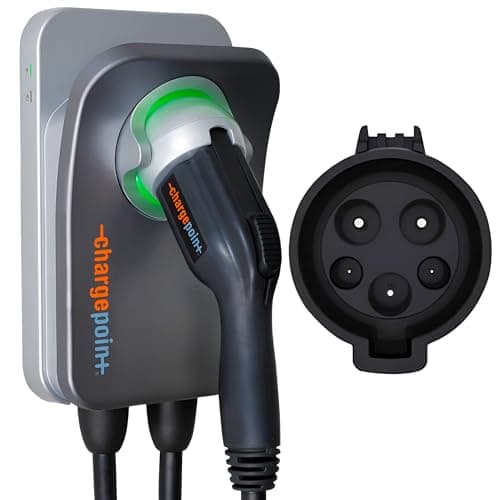
  • ChargePoint ChargePoint Home Flex
    01 ChargePoint Home Flex
    8.2

    The polished, well-supported option — adjustable up to 50 amps and tied into the largest public charging app in North America.

    Best for: Buyers who want the established brand and app

    $599.00Amazon
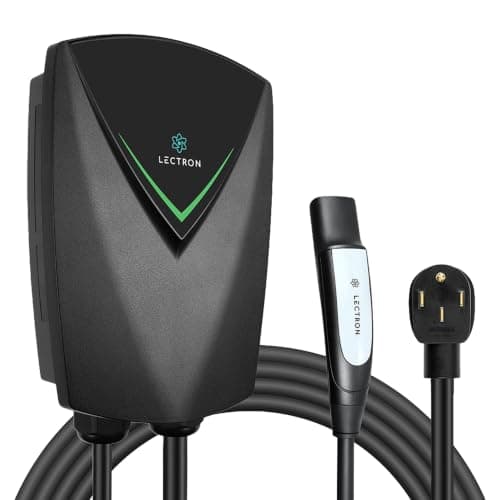
  • Lectron Lectron Nexus NACS (40A)
    02 Lectron Nexus NACS (40A)
    7.8

    The certification pick: the listing names UL 2594, the standard actually written for EV supply equipment, and it plugs into a 14-50 outlet you may already have.

    Best for: A plug-in NACS charger with a named safety standard

    $449.99Amazon
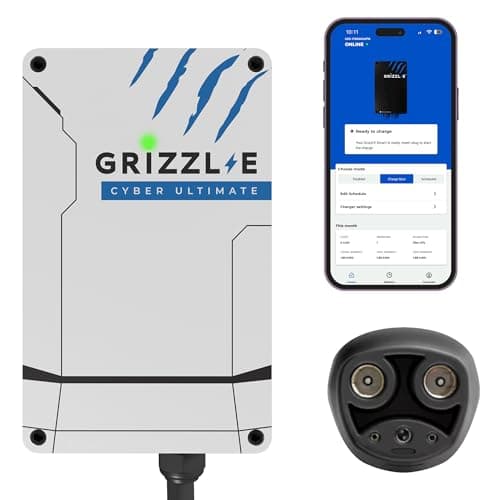
  • Grizzl-E Grizzl-E Ultimate 80A (NACS)
    03 Grizzl-E Ultimate 80A (NACS)
    8.4

    The rugged 80-amp pick for a NACS car — a UL Type 4 metal box that hits 19.2 kW and keeps working with or without Wi-Fi.

    Best for: NACS / Tesla cars that can take 19.2 kW

    $599.99Amazon
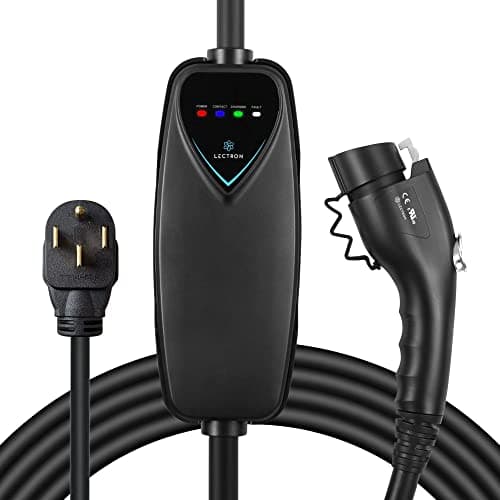
  • Lectron Lectron Level 2 (40A)
    04 Lectron Level 2 (40A)
    7.4

    A simple, ETL-listed plug-in charger from a known EV brand — a no-frills, low-cost way to charge at Level 2.

    Best for: A simple, inexpensive plug-in charger

    $279.99Amazon
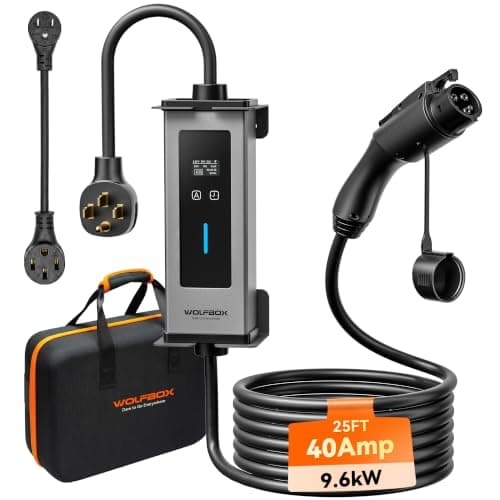
  • WOLFBOX WOLFBOX Portable (Level 1/2)
    05 WOLFBOX Portable (Level 1/2)
    8.6

    A dual-level portable that charges on both 120V and 240V, ships with both plug adapters, and adds a delay timer for off-peak charging — a genuine take-anywhere charger.

    Best for: One charger for home and travel

    $299.99Amazon
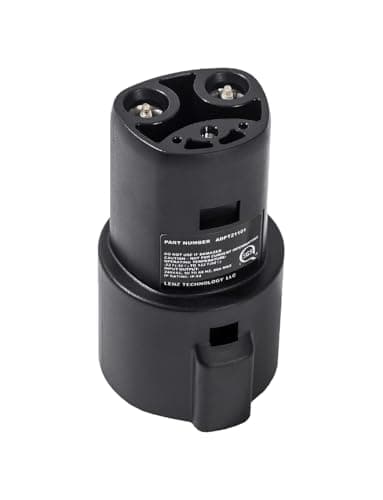
  • LENZ LENZ J1772 → NACS Adapter
    06 LENZ J1772 → NACS Adapter
    9.3

    A UL-2251-certified J1772-to-NACS adapter — the one a Tesla or a 2026+ NACS-port EV needs to use the huge installed base of J1772 chargers.

    Best for: A Tesla / NACS car using J1772 chargers

    $29.99Amazon

#ad · Live prices from the Amazon Product API, as of November 13, 2026. Where we have no verified live price, we show none — we would rather leave a gap than print a number that has gone stale.

This is the index of every EV charger review on the site — 28 single-product reviews and 30 head-to-head comparisons, grouped below by what you are shopping for. If you want a ranked answer rather than a list, go to best home EV chargers for J1772 cars or best NACS home chargers for a Tesla or a 2025-onward NACS-port car. If you want to know what our reviews actually consist of before you trust one, skip to how we research— the short version is that we compile published specifications, safety listings and owner reports and we check prices daily against the retailer API. We do not have a test lab and we never claim otherwise.

A note on vocabulary first, because it is the reason people land here from several different searches. EVSEstands for Electric Vehicle Supply Equipment, and it is the correct term for the thing most people call a charger. Strictly, the charger is inside the car — the onboard unit that converts AC to DC and sets your maximum home charging speed — while the box on the wall supplies and controls power. We use “charger” throughout the site because that is what everyone says, but if you came here searching for EVSE reviews, you are in the right place and you are using the more precise word. The one place the distinction genuinely matters is DC fast charging, where the conversion hardware really is in the cabinet rather than the car.

Where to start, by category

Six units, one per category, each with the full review behind it. These are the pages to read first if you do not know what you are looking for yet. If you would rather see the whole field in one table than read six reviews, the Level 2 charger comparison sets every unit side by side on amperage, connector, install type and enclosure rating.

  • ChargePoint Home Flex — the mature J1772 wall charger. Amperage selectable in the app, outdoor rated, and the account also works at the largest public network in North America. Full review.
  • Lectron Nexus NACS — the plug-in Tesla-plug charger. 40 amps through a NEMA 14-50 with UL 2594 named on the listing, so no electrician is needed if the outlet exists. Full review.
  • Grizzl-E Ultimate 80A — the fastest tier that exists. 19.2 kW on a hardwired 100-amp circuit in a UL Type 4 metal box. Only worth it if your car genuinely accepts it. Full review.
  • Lectron Level 2 — the cheapest known brand. A plain 40-amp plug-in unit with a real ETL listing and a short cable. Full review.
  • WOLFBOX Portable — the adjustable travel unit. 6 to 40 amps, so one cord copes with a strong garage circuit and a doubtful one at a rental. Full review.
  • LENZ J1772 to NACS adapter — the cheapest useful thing here. UL 2251 certified and rated to 80 amps, it lets a Tesla or NACS-port car use any J1772 charger. Full review.

The shortlist on paper

Published manufacturer figures from the live listings, with the live price alongside. Every price on this site renders from a daily retailer-API check and carries its own date — we do not type prices into pages, because a typed number is wrong by the following week.

ProductBest forPublished specs (manufacturer)Price
ChargePoint Home FlexBuyers who want the established brand and appAdjustable to 50A · J1772 · NEMA 14-50 plug · Energy Star$599.00
Lectron Nexus NACS (40A)A plug-in NACS charger with a named safety standard40A / 240V · NACS (J3400) · NEMA 14-50 plug · UL 2594 (ETL listed)$449.99
Grizzl-E Ultimate 80A (NACS)NACS / Tesla cars that can take 19.2 kWUp to 80A / 19.2 kW · NACS (Tesla-style) · Hardwired · 100A circuit · UL Type 4, works offline$599.99
Lectron Level 2 (40A)A simple, inexpensive plug-in charger40A / 9.6kW · J1772 · NEMA 14-50 plug · ETL · 16ft extension$279.99
WOLFBOX Portable (Level 1/2)One charger for home and travel6–40A · 9.6kW · J1772 · Level 1/2 · NEMA 14-50 + 5-15 · ETL · IP66 · 25ft$299.99
LENZ J1772 → NACS AdapterA Tesla / NACS car using J1772 chargersJ1772 → NACS · 80A max · Level 1 & 2 AC · UL 2251 certified$29.99

#ad Prices read live from the Amazon Product API as of November 13, 2026, and they move. Specs are the manufacturer's published claims from the live listing — we have not bench-measured them. Where we have no verified price we print none rather than a number that has gone stale.

Level 2 wall chargers — J1772

The connector on most non-Tesla EVs sold in North America through roughly the 2024 model year, plus every plug-in hybrid. If you are not sure which connector your car has, NACS vs J1772 settles it in a paragraph.

Level 2 wall chargers — NACS (Tesla plug)

Native Tesla-style connectors, for a Tesla or any 2025-onward car with a NACS inlet. If you are weighing these against Tesla's own hardware, Tesla Wall Connector alternatives is organized around that decision specifically.

Portable and travel EVSE

Cordsets rather than wall boxes: they plug into an outlet, need no installation, and come with you. Portable vs hardwired covers whether this is the right category for you at all.

Adapters and connectors

The cheapest category on the site and often the correct purchase instead of a charger. Which EV charging adapter do I need points you at the right direction of travel, and do charging adapters slow down charging answers the usual worry.

Head-to-head comparisons

Thirty of these, because “which of these two” is the question people actually arrive with. The most-read ones:

The complete, always-current list of every page on the site — including every review and comparison added after this page was written — is the site index, which is generated from the same registry that builds the pages and therefore cannot fall out of date.

In detail

The picks, in full

01
ChargePoint ChargePoint Home Flex

Buyers who want the established brand and app

ChargePoint Home Flex

Adjustable to 50AJ1772NEMA 14-50 plugEnergy Star
8.2/10

The polished, well-supported option — adjustable up to 50 amps and tied into the largest public charging app in North America.

Charge speed
9
Build & weather
8
Smart features
9
Cable & connector
8
Value
7

Pros

  • Amperage is adjustable in the app to match whatever breaker you install, up to 50A
  • Integrates with ChargePoint's large public-network app — one app for home and away
  • Long track record and responsive support, which budget brands cannot match

Cons

  • Costs more than equally capable chargers from newer brands
  • The experience leans hard on the ChargePoint account and app

Don't buy this if…

…price is your first priority. The Emporia matches most of what this does for meaningfully less — you are paying here for brand maturity and the unified app, which are real but not free.

$599.00View on Amazon

$657.999% off

Price as of November 13, 2026. Prices change — Amazon's is the one that counts.

#ad · we may earn a commission from this link to ChargePoint Home Flex

02
Lectron Lectron Nexus NACS (40A)

A plug-in NACS charger with a named safety standard

Lectron Nexus NACS (40A)

40A / 240VNACS (J3400)NEMA 14-50 plugUL 2594 (ETL listed)
7.8/10

The certification pick: the listing names UL 2594, the standard actually written for EV supply equipment, and it plugs into a 14-50 outlet you may already have.

Charge speed
8
Build & weather
8
Smart features
6
Cable & connector
8
Value
9

Pros

  • Certified to UL 2594 — the EV-supply-equipment standard — rather than gesturing vaguely at being 'certified'
  • Plug-in NEMA 14-50 install, so no electrician is needed if the outlet already exists and is properly rated
  • Ships with a Tesla-style connector holder, so the plug has somewhere to live off the floor

Cons

  • The 23-foot cable is shorter than the 25-foot units here — measure the run to your charge port before you buy
  • 40 amps is the plug-in ceiling; Lectron's 48-amp Nexus is a separate, hardwired-only listing

Don't buy this if…

…you want the fastest home charging your panel can support. Forty amps on a 14-50 plug is as far as this goes — the hardwired ChargePoint or Emporia Pro is the pick if you can carry a 60-amp circuit.

$449.99View on Amazon

Price as of November 13, 2026. Prices change — Amazon's is the one that counts.

#ad · we may earn a commission from this link to Lectron Nexus NACS (40A)

03
Grizzl-E Grizzl-E Ultimate 80A (NACS)

NACS / Tesla cars that can take 19.2 kW

Grizzl-E Ultimate 80A (NACS)

Up to 80A / 19.2 kWNACS (Tesla-style)Hardwired · 100A circuitUL Type 4, works offline
8.4/10

The rugged 80-amp pick for a NACS car — a UL Type 4 metal box that hits 19.2 kW and keeps working with or without Wi-Fi.

Charge speed
10
Build & weather
10
Smart features
7
Cable & connector
8
Value
7

Pros

  • Full 80 amps / 19.2 kW when hardwired on a 100-amp circuit, with a native NACS plug for a Tesla or NACS-port EV
  • Heavy-duty UL Type 4 indoor/outdoor metal enclosure, made in Canada — the rugged Grizzl-E build in its fastest form
  • Scheduling and energy stats that work with or without an internet connection, so it does not depend on a live cloud

Cons

  • 80 amps needs a hardwired 100-amp dedicated circuit — a major electrical job
  • Only adds speed if your car's onboard AC charger supports 19.2 kW; most EVs cap at 11.5 kW (48A)
  • The J1772 version of the Ultimate is frequently out of stock, and stock on the NACS one runs thin

Don't buy this if…

…your car cannot accept 19.2 kW on AC, or your panel cannot carry a 100-amp circuit. Step down to a 48-amp charger — it will charge most EVs at exactly the same speed for far less.

$599.99View on Amazon

$899.0033% off

Price as of November 13, 2026. Prices change — Amazon's is the one that counts.

#ad · we may earn a commission from this link to Grizzl-E Ultimate 80A (NACS)

04
Lectron Lectron Level 2 (40A)

A simple, inexpensive plug-in charger

Lectron Level 2 (40A)

40A / 9.6kWJ1772NEMA 14-50 plugETL · 16ft extension
7.4/10

A simple, ETL-listed plug-in charger from a known EV brand — a no-frills, low-cost way to charge at Level 2.

Charge speed
8
Build & weather
8
Smart features
5
Cable & connector
8
Value
8

Pros

  • ETL certified — a real safety listing at a budget price
  • Plug-in NEMA 14-50 install — no electrician needed if the outlet exists, and it ships with a 16-foot extension cord for reach
  • Straightforward and inexpensive, from an established EV-charging brand

Cons

  • No app, energy monitoring, or scheduling — a bare-bones charger
  • 40-amp ceiling

Don't buy this if…

…you want energy monitoring or scheduling. For similar money the Emporia adds real smart features — this Lectron's appeal is simplicity, a trusted brand, and price.

$279.99View on Amazon

Price as of November 13, 2026. Prices change — Amazon's is the one that counts.

#ad · we may earn a commission from this link to Lectron Level 2 (40A)

05
WOLFBOX WOLFBOX Portable (Level 1/2)

One charger for home and travel

WOLFBOX Portable (Level 1/2)

6–40A · 9.6kWJ1772 · Level 1/2NEMA 14-50 + 5-15ETL · IP66 · 25ft
8.6/10

A dual-level portable that charges on both 120V and 240V, ships with both plug adapters, and adds a delay timer for off-peak charging — a genuine take-anywhere charger.

Charge speed
8
Portability
10
Build & weather
8
Cable & connector
8
Value
9

Pros

  • Charges on both 120V (Level 1) and 240V (Level 2), and ships with both the NEMA 5-15 and NEMA 14-50 plug adapters — one charger for home and the road
  • Adjustable current (6–40A) plus a built-in delay timer, so you can dial it down for a weaker circuit and start on cheaper overnight rates without an app
  • ETL certified with an IP66 weather rating and a 25-foot cable — a genuine take-anywhere travel charger

Cons

  • A portable brick that lives on the floor or a hook, not a tidy mounted wall unit
  • 40-amp draw needs a properly rated 14-50 outlet — do not run it flat-out on a worn receptacle

Don't buy this if…

…you want a permanent, tidy wall installation with per-charge energy data in an app. A portable trades the mounted look and the app for the ability to come with you.

$299.99View on Amazon

Price as of November 13, 2026. Prices change — Amazon's is the one that counts.

#ad · we may earn a commission from this link to WOLFBOX Portable (Level 1/2)

06
LENZ LENZ J1772 → NACS Adapter

A Tesla / NACS car using J1772 chargers

LENZ J1772 → NACS Adapter

J1772 → NACS80A maxLevel 1 & 2 ACUL 2251 certified
9.3/10

A UL-2251-certified J1772-to-NACS adapter — the one a Tesla or a 2026+ NACS-port EV needs to use the huge installed base of J1772 chargers.

Compatibility
9
Safety listing
10
Build quality
8
Value
10

Pros

  • Explicitly certified to UL 2251 — the connector-safety standard that matters for an adapter carrying full current
  • Lets a Tesla or a 2026+ NACS-port car (Hyundai, Kia, Rivian, and others) use any J1772 charger
  • Inexpensive and pocketable

Cons

  • AC charging only
  • Small enough to misplace — keep it clipped in the frunk

Don't buy this if…

…your car uses a J1772 port. This adapter points the other way — a J1772 car needs a NACS-to-J1772 adapter to use Tesla equipment.

$29.99View on Amazon

Price as of November 13, 2026. Prices change — Amazon's is the one that counts.

#ad · we may earn a commission from this link to LENZ J1772 → NACS Adapter

What our reviews are, and what they are not

We do not have a test lab, and no review here is a bench measurement. This is the first thing to say, because a great many “EV charger review” pages imply hands-on testing they have not done. Our reviews compile the manufacturer's published specifications from the live retail listing, the named safety listings, the documented behavior of the product, and aggregated owner reports — and then do the arithmetic that matters, such as what a given amperage means for your car's actual onboard charger. Where two sources disagree, we say so on the page rather than picking the flattering one. Our research method and editorial policy set this out in full.

Scores are judgments from documented research, against a published rubric. Every product carries scores for things like charge speed, build and weather resistance, and value. Those are reasoned positions derived from specifications and owner reports, not instrument readings, and the rubric is public.

Every product has stated cons and a “do not buy if” line. That is a structural rule of this site, not a stylistic preference. If we cannot write an honest reason not to buy something, we do not understand it well enough to review it.

Prices come from a daily retailer-API check, never from memory. Prices on this site render from a feed that is refreshed daily and timestamped on the page. If the check is stale or a product has no live offer, we print no number at all rather than a stale one — which is why you will occasionally see “check current price” where a figure would be. Three of the products in our registry are in that state as we write this, and we would rather show you that than anchor you to last month's price.

We will point you at the cheaper option when it is the right one. The clearest examples on the site: we tell Tesla owners who already own a J1772 charger to buy a thirty-dollar adapter instead of a new charger; we tell most people a 40-amp charger is indistinguishable from a 48-amp one overnight; and our EVSE tester roundup ranks a twenty-dollar outlet analyzer above a thousand-dollar professional kit. Those recommendations pay us less. They are still the right answer.

How the pages fit together. A review covers one product in depth. A head-to-head resolves one specific either/or. A roundup ranks a category against stated criteria. A guideexplains a mechanism and sells nothing. If you are early in the process, start with a guide — how to choose an EV charger and what amp EV charger do I need between them answer most of what decides a purchase, and neither needs you to have a shortlist yet.

Affiliate disclosure, plainly. We earn a commission when you buy through our links, at no cost to you, and that is marked with an #ad label wherever a buy link appears. It does not change the rankings; the full disclosure explains the arrangement.
How we picked

We do not run a testing lab

We compiled published specifications from manufacturer manuals and spec sheets, verified the safety listings (UL / ETL), computed the real running and installation costs, checked the wiring math against the NEC continuous-load rule, and read aggregated owner reviews — then scored each product against a published rubric. The scores are judgments from documented research — they are not bench measurements, because we do not have a test lab and we are not going to pretend we do. Every spec and cost figure is cited in Sources.

Questions

Frequently asked

What does EVSE stand for?
Electric Vehicle Supply Equipment. It is the technically correct name for the unit on your wall or the cordset in your trunk. The actual charger— the hardware that converts AC to DC — is inside the car for Level 1 and Level 2 charging, which is why your car's onboard charger, not the wall unit, sets your maximum home charging speed. DC fast charging is the exception: there the conversion happens in the cabinet. We say “charger” on this site because that is the common usage.
Do you test the chargers you review?
No, and we will not imply otherwise. We do not own a test lab. Our reviews compile published manufacturer specifications from the live listing, named safety listings, documented product behavior and aggregated owner reports, then work through what those figures mean for a real install. Our scores are reasoned judgments against a published rubric rather than instrument readings. See how we research.
Which review should I read first?
If you have a J1772 car, the ChargePoint Home Flex and Emporia Level 2 reviews cover the two units most people end up choosing between. For a Tesla or NACS-port car, start with the Lectron Nexus NACS. If you rent or cannot install anything, the WOLFBOX portable. And if you already own a charger with the wrong plug, read the LENZ adapter review before you buy anything at all.
How often are the prices updated?
Daily. Prices render from a retailer-API feed refreshed on a schedule and timestamped where they appear, behind a freshness gate — if a check is missed or a product has no live offer, the page shows no number rather than a stale one. We never type a price into an article.
Why do some products show no price?
Because there was no verified live offer at the last check. It usually means the listing is temporarily out of stock or has been withdrawn. We deliberately print nothing instead of the last number we saw, because an out-of-date price is worse than no price — it anchors you to a figure you cannot actually pay. Where this happens we try to say what we know, as on the Tesla Wall Connector alternatives page, which explains that Tesla's own unit has had no live retail listing for months.
Do you review anything other than chargers?
Yes — adapters, extension cables, cable management, NEMA outlets, splitter switches and, as of this month, EVSE testers. The accessories hub and adapters hub collect those, and several of them are better purchases than a new charger.

Keep reading

Receipts

Sources

We do not run a testing lab, and we do not pretend to. Where a measured number came from someone else's lab, we name them and link them. Where we could not verify something, we say so on the page rather than quietly leaving it out. Read our full method.