HUB 01 · Level 2 Home Chargers
Level 2 EV Charger Comparison
Sixteen chargers in one place, grouped by the four things that actually decide the purchase: amperage, connector, install type and enclosure rating. Deliberately unranked - if you want a recommendation instead, we have that too.
We earn a commission when you buy through our Amazon links, at no extra cost to you. It never affects our rankings, and we say so when the cheaper product is the better buy. How this works.
Every Level 2 charger worth comparing differs on exactly four things: how many amps it can deliver, which plug is on the end of the cable, whether it hardwires or plugs in, and what its enclosure is rated for. Everything else — the app, the screen, the color, the brand — is a tiebreaker. This page tables all sixteen units we cover against those four columns and gets out of the way. It does not pick a winner on purpose: if you want the ranked answer, that is best home EV chargers.
Comparison pages in this category usually fail in one of two ways. Either they list four chargers and call it the market, or they bury the one number that decides everything — the amperage your circuit can legally carry — under a paragraph about app features. So before the tables, here is how to read them, in the order the decisions actually happen.
The four columns that decide it
1. Amperage, which is really a question about your breaker. A Level 2 charger is a continuous load, so the circuit feeding it has to be rated at least 125% of the charger's output — or, read the other way, the charger can draw no more than 80% of the breaker. That single rule produces the whole amperage ladder:
- 32 amps — 7.7 kW on a 40-amp circuit. The realistic ceiling in houses with an older panel. We cover it at best 32-amp chargers.
- 40 amps — 9.6 kW on a 50-amp circuit. This is what a NEMA 14-50 outlet supports, which is why so many plug-in chargers are built to exactly 40 amps.
- 48 amps — 11.5 kW on a 60-amp circuit, and hardwired, because no common household receptacle is rated to carry it continuously.
- 80 amps — 19.2 kW on a 100-amp circuit. Real, rare, and useless to a car that cannot accept it.
The arithmetic is just volts times amps: 240 × 40 = 9,600 watts, 240 × 48 = 11,520 watts. Our wire size and breaker guide turns each rung into the conductor and breaker an electrician will actually quote, and what amp charger do I need works the problem from the panel backwards.
2. Connector — J1772 or NACS. J1772 is the AC inlet on almost every non-Tesla EV sold in North America before the NACS transition. NACS, now standardized as SAE J3400, is the Tesla-style plug most manufacturers are moving to. The tables below keep them in separate groups because this is the one column where buying the wrong row means buying an adapter forever. If you are unsure which your car has, NACS vs J1772 settles it in a paragraph.
3. Install — plug-in or hardwired. A plug-in charger ends in a NEMA 14-50 cord and can be unplugged and taken with you; it is also capped at 40 amps by the receptacle. A hardwired charger is wired into a junction box, which unlocks 48 amps and deletes the receptacle — the part of a home charging setup that most often fails. The trade is mobility against speed and reliability, and we have argued it out at portable vs hardwired.
4. Enclosure rating — and these are not interchangeable labels. NEMA Type 3R promises protection against falling rain, sleet and snow. NEMA Type 4 adds windblown dust and hose-directed water. IP66, the IEC equivalent, is dust-tight and rated against powerful water jets. A charger on a sheltered garage wall barely cares; one on an exposed driveway wall cares a great deal, which is the premise of best outdoor EV chargers and of the enclosure-first ranking in most durable EV chargers.
Group 1 — the 48-amp J1772 tier (11.5 kW)
These four are the fastest chargers most cars can actually use, because 11.5 kW is where the majority of onboard AC chargers stop. All four need a 60-amp circuit to reach 48 amps, and at that output they are hardwired rather than plugged in.
| Charger (48A tier) | Best for | Published specs | Price |
|---|---|---|---|
| Emporia Level 2 (48A) | Most people who want the smart features too | Up to 48A / 11.5kW · J1772 · 25ft cable · Wi-Fi + app | Not verified today |
| ChargePoint Home Flex | Buyers who want the established brand and app | Adjustable to 50A · J1772 · NEMA 14-50 plug · Energy Star | $599.00 |
| Wallbox Pulsar Plus (48A) | A compact, fast, hardwired install | Hardwired 48A / 11.5kW · J1772 · 25ft cable · Energy Star + UL | $689.99 |
| Emporia Pro (48A, PowerSmart) | A 100-amp service you would rather not upgrade | Up to 48A hardwired · J1772 · PowerSmart + Vue monitor · UL · ENERGY STAR · NEMA 4 | $599.00 |
#ad Prices read live from the Amazon Product API as of November 13, 2026, and they move. Specs are the manufacturer's published claims from the live listing — we have not bench-measured them. Where we have no verified price we print none rather than a number that has gone stale.
The spread inside one tier is the useful thing here. The Emporia and the ChargePoint reach the same 11.5 kW; what separates them is app maturity, support and price. The Emporia Pro is the odd one out — it costs more and the premium buys load management, which is panel headroom rather than charging speed, and it needs a monitor installed inside your electrical panel by a licensed electrician.
Group 2 — the 40-amp plug-in J1772 tier (9.6 kW)
If you already have a NEMA 14-50 outlet, this is your group. Nothing here needs an electrician on install day, and the speed penalty against the tier above is smaller than the price gap suggests: 9.6 kW instead of 11.5 kW is about an hour longer on a typical overnight charge, not a different lifestyle.
| Charger (40A plug-in) | Best for | Published specs | Price |
|---|---|---|---|
| Autel MaxiCharger (40A) | Feature-maximalists who want a tidy install | 40A / 9.6kW · J1772 · 25ft cable + holster · Wi-Fi + Bluetooth | $424.00 |
| EVIQO Level 2 (40A) | Budget-conscious buyers who still want smart features | 40A / 9.6kW · J1772 · 25ft cable · UL & ETL, IP66/NEMA 4 | Not verified today |
| Lectron Level 2 (40A) | A simple, inexpensive plug-in charger | 40A / 9.6kW · J1772 · NEMA 14-50 plug · ETL · 16ft extension | $279.99 |
| Grizzl-E Duo Connect (dual 40A) | Two EVs on one circuit | Dual J1772 · Up to 40A shared · Two 25ft cables · NEMA 14-50 plug | $599.99 |
#ad Prices read live from the Amazon Product API as of November 13, 2026, and they move. Specs are the manufacturer's published claims from the live listing — we have not bench-measured them. Where we have no verified price we print none rather than a number that has gone stale.
The Grizzl-E Duo is in this group for a specific reason: it is the only unit on the page with two cables, and the two cars share one circuit's amperage rather than each getting 40 amps. That is the honest answer for two EVs on one circuit, and the wrong buy for one car.
Group 3 — the NACS (J3400) tier
Same hardware philosophy, Tesla-style plug. Three of these four are 40-amp plug-in units and the ChargePoint is hardwired and adjustable from 16 to 50 amps, which makes it the one that fits an awkward panel without a second purchase.
| Charger (NACS / J3400) | Best for | Published specs | Price |
|---|---|---|---|
| Emporia Level 2 NACS (48A) | Most NACS-port households | 48A rated · NACS (J3400) · NEMA 14-50 plug · UL + Energy Star | Not verified today |
| ChargePoint Home Flex NACS (hardwired) | Buyers who want the mature brand and app | 16–50A adjustable · NACS (J3400) · Hardwired · NEMA 3R outdoor | $549.00 |
| Lectron Nexus NACS (40A) | A plug-in NACS charger with a named safety standard | 40A / 240V · NACS (J3400) · NEMA 14-50 plug · UL 2594 (ETL listed) | $449.99 |
| EVIQO NACS (40A) | An outdoor wall on a budget | 40A / 9.6kW · NACS (J3400) · IP66 / NEMA 4 · UL + ETL | Not verified today |
#ad Prices read live from the Amazon Product API as of November 13, 2026, and they move. Specs are the manufacturer's published claims from the live listing — we have not bench-measured them. Where we have no verified price we print none rather than a number that has gone stale.
Worth knowing before you shop this group: a J1772 charger plus a J1772-to-NACS adapter charges a Tesla at full speed too, so a native NACS unit is a convenience purchase rather than a requirement. We rank the whole group at best NACS home chargers.
Group 4 — the 80-amp tier (19.2 kW)
Two units, both hardwire-only on a dedicated 100-amp circuit, and both pointless unless your car's onboard charger accepts more than 11.5 kW. Very few do.
| Charger (80A tier) | Best for | Published specs | Price |
|---|---|---|---|
| Autel MaxiCharger 80A (AC Pro) | J1772 cars with a 19.2 kW onboard charger | Up to 80A / 19.2 kW · J1772 · Hardwired · 100A circuit · Wi-Fi + app, 25ft | $1,069.00 |
| Grizzl-E Ultimate 80A (NACS) | NACS / Tesla cars that can take 19.2 kW | Up to 80A / 19.2 kW · NACS (Tesla-style) · Hardwired · 100A circuit · UL Type 4, works offline | $599.99 |
#ad Prices read live from the Amazon Product API as of November 13, 2026, and they move. Specs are the manufacturer's published claims from the live listing — we have not bench-measured them. Where we have no verified price we print none rather than a number that has gone stale.
Before you price the electrical work, read the fastest Level 2 charger for your car — it is the page that works out whether 19.2 kW is reachable for the vehicle in your driveway, which is the only question that makes this group interesting.
Group 5 — portable units, compared on the same terms
A portable 40-amp charger is electrically the same thing as a plug-in wall unit; it just lives on a hook instead of a bracket. Included here because the comparison people most often get wrong is “wall charger versus portable”, and on paper the gap is narrower than the category names imply.
| Portable charger | Best for | Published specs | Price |
|---|---|---|---|
| WOLFBOX Portable (Level 1/2) | One charger for home and travel | 6–40A · 9.6kW · J1772 · Level 1/2 · NEMA 14-50 + 5-15 · ETL · IP66 · 25ft | $299.99 |
| EVDANCE 40A Portable | Off-peak charging without an app | 40A / 9.6kW · J1772 · NEMA 14-50 plug · 25ft, timer | $199.98 |
#ad Prices read live from the Amazon Product API as of November 13, 2026, and they move. Specs are the manufacturer's published claims from the live listing — we have not bench-measured them. Where we have no verified price we print none rather than a number that has gone stale.
What each tier costs, in brackets rather than numbers
We do not type prices into our prose — they move weekly and a number written here would be wrong by the time you read it, which is why every figure on this site renders live from the retailer API with its own timestamp. What is stable is the shape of the pricing, and that is worth knowing before you open the tables:
- The 40-amp plug-in tier is the budget and mid-range band, and it is where the spread is widest: the cheapest ETL-listed unit and the most feature-dense 40-amp charger can differ by a factor of two with the same output. You are buying app, enclosure and cable, not kilowatts.
- The 48-amp tier sits a step above, and the step is smaller than the install cost that goes with it. On most quotes the 60-amp circuit costs more than the difference between a 40-amp and a 48-amp charger.
- Load-managed and dual-cable units are the premium band, and what the premium buys is electrical capacity or a second car — not speed. That is a real problem solved at a real price, but only if you have the problem.
- The 80-amp tier is roughly double a good 48-amp charger, before the 100-amp circuit it requires. It is the only tier where the hardware is the cheap half of the decision.
One pattern to watch for across all four: a 40-amp charger discounted below a cheap 48-amp charger is common, and it is usually the better buy anyway if your outlet is already there. Our budget roundup tracks the bottom of the band, and EV charger buying mistakes covers the ones that cost the most money.
Three comparisons that do not matter as much as they look
Screen versus no screen. A display on the unit tells you what the app already tells you, in a place you only look at when something is wrong. Useful on a charger with no connectivity; close to irrelevant on one with an app.
Brand match with your car. There is no technical advantage to buying a charger from a company that also makes cars. The handshake is a standard, not a partnership — any J1772 charger negotiates correctly with any J1772 car.
Cable length beyond what you need. Most units here ship a 23 to 25 foot cable, which reaches across a two-car garage. Longer is not better: more cable is heavier to handle, harder to store tidily and more exposed to damage. Measure the run to your charge port before treating length as a selling point, as our cable length guide argues at more length than this paragraph does.
What a comparison table cannot show you
Four things decide owner satisfaction and none of them fit in a column, so we will name them plainly:
- App and cloud dependence. Two chargers with identical specs behave completely differently when the Wi-Fi drops. Some keep charging on their last schedule; some get sulky. Our Wi-Fi troubleshooting guide exists because this is the most common complaint in the category.
- Cable stiffness in the cold. A 25-foot cable that coils easily in August can be a wrestling match in January, and no spec sheet publishes a figure for it. We rank what manufacturers do publish — operating temperature range — at best EV chargers for cold weather.
- Warranty, and who answers the phone. Grizzl-E publishes a 3-year or 5-year replacement warranty on its Level 2 units; Emporia's help center describes a 3-year warranty covering manufacturing defects, and notes that cutting the NEMA whip voids it. Those are the terms, which is not the same thing as the odds of a pleasant claim.
- The receptacle you plug into. On a plug-in install, the weakest part of the system is usually the outlet rather than the charger. We make the case for specifying a better one at NEMA 14-50 outlets.
How to use this page in four steps
Step 1: find your ceiling, not your preference. Ask an electrician what your panel can spare, or read the panel yourself. A 100-amp service with a working air conditioner and an electric range may have room for a 40-amp circuit and nothing more. That answer eliminates two of the five groups above before you have compared a single feature.
Step 2: find your car's ceiling. The charger cannot push more power than the car's onboard AC charger accepts. If your car stops at 11.5 kW — most do — an 80-amp charger charges it at exactly the same speed as a 48-amp one, for roughly double the money and a far bigger electrical job.
Step 3: pick the connector your car actually has, or budget an adapter knowingly. This is the one decision that is annoying rather than expensive to get wrong.
Step 4: only now compare features. With amperage, connector and install type fixed, you are usually choosing between two or three units, and the remaining questions are app quality, cable length and enclosure rating. That is a ten-minute decision, and our review index has the long version of each one.
One thing we will not do on this page is imply that the most expensive charger is the best one. The cheapest unit in the tables above is a properly ETL-listed 40-amp charger, and for a household with one commuter car and an existing 14-50 outlet it is a completely defensible buy. Speed you cannot use is not a feature.
The gear
Recommended gear for this guide
The products this guide refers to, with prices pulled live from Amazon and dated on each card.
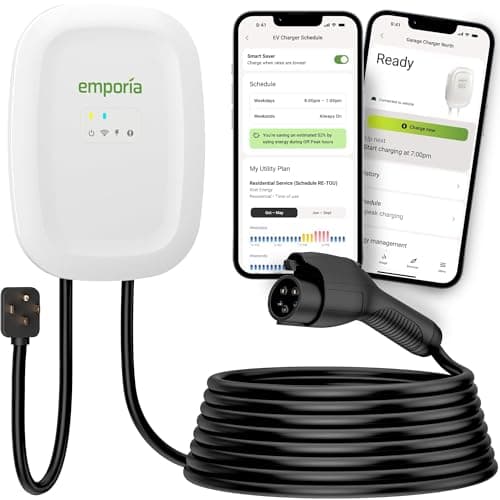
Most people who want the smart features too
Emporia Level 2 (48A)
The smart charger that does not charge a smart-charger premium — 48-amp capability and real energy monitoring for the price of a dumb one.
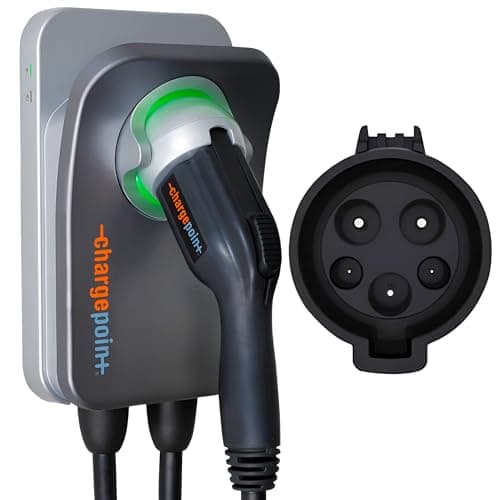
Buyers who want the established brand and app
ChargePoint Home Flex
The polished, well-supported option — adjustable up to 50 amps and tied into the largest public charging app in North America.
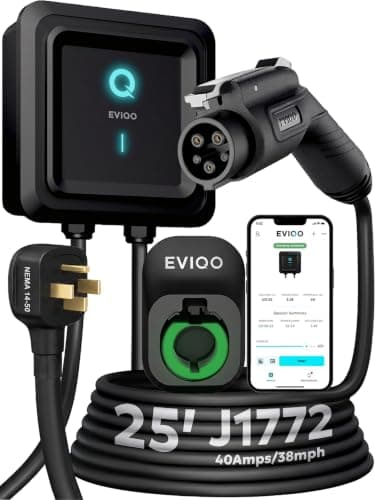
Budget-conscious buyers who still want smart features
EVIQO Level 2 (40A)
A weatherproof, UL-and-ETL-listed smart charger that regularly sits at the bottom of the price band — a lot of charger for the money.
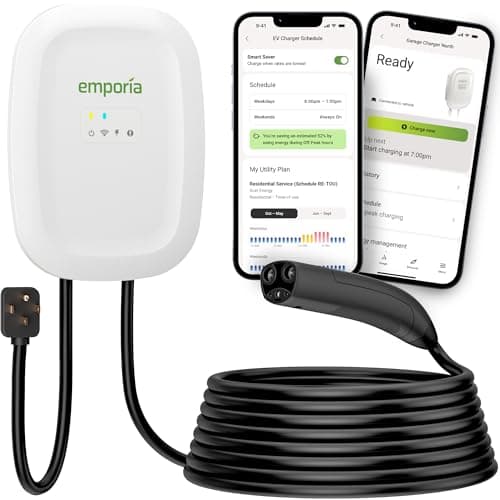
Most NACS-port households
Emporia Level 2 NACS (48A)
The charger we already rate best for most homes, with a Tesla-style plug on the end — UL and Energy Star listed, and no adapter in the loop.
#ad · As an Amazon Associate we earn from qualifying purchases.
Questions
Frequently asked
Which Level 2 charger is the fastest?
Are Level 2 chargers interchangeable between cars?
Does a more expensive charger charge faster?
Why does this page not rank the chargers?
Do I need 48 amps?
Can I compare prices here, or do they go stale?
Keep reading
Related
- Best Home EV ChargersThe ranked version of this page, if you would rather be told what to buy.
- The Fastest Charger for Your CarWhich amperage tier your own vehicle can actually use.
- Most Durable EV ChargersThe same field ranked on enclosure standard, materials and warranty.
- What Amp Charger Do I Need?Working the amperage question from your panel backwards.
- How to Choose an EV ChargerThe decision order, written as a walkthrough rather than a table.
- EV Charger ReviewsThe individual review behind every unit in the tables above.
Receipts
Sources
- US DOE Alternative Fuels Data Center - Charging at home (residential Level 2 operates at 240 V AC and adds significantly more range per hour than Level 1)
- NEMA Enclosures - NEMA rating buying guide, Type 1 / 3R / 4 / 4X / 12 differences (Type 3R: falling rain, sleet, snow; Type 4: windblown dust and hose-directed water)
- UL Solutions - EVSE testing and certification (UL 2594, the standard written for EV supply equipment)
- Grizzl-E (United Chargers) FAQ - Level 2 products carry a 3-year or 5-year replacement warranty beginning on the date of purchase; the Ultimate delivers 80A or 48A depending on settings
- Emporia help center - EV charger warranty terms (3-year warranty covering manufacturing defects; cutting the NEMA whip voids coverage)
- EVIQO - Level 2 EV charger, 40A NEMA 14-50 plug-in product page (IP66 / NEMA 4 enclosure, UL and ETL listings)
- Amazon Product Advertising API, checked 2026-11-01 - live titles, availability and prices for all sixteen chargers tabled on this page
We do not run a testing lab, and we do not pretend to. Where a measured number came from someone else's lab, we name them and link them. Where we could not verify something, we say so on the page rather than quietly leaving it out. Read our full method.