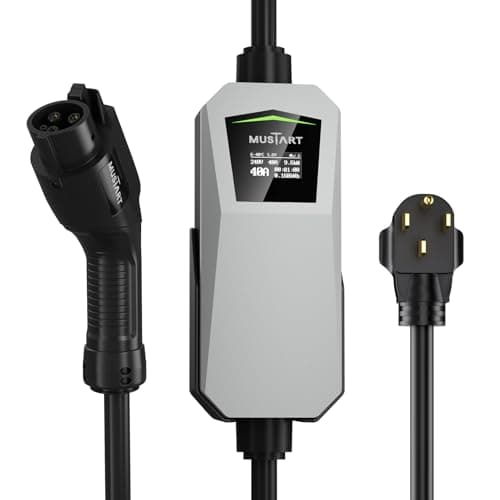
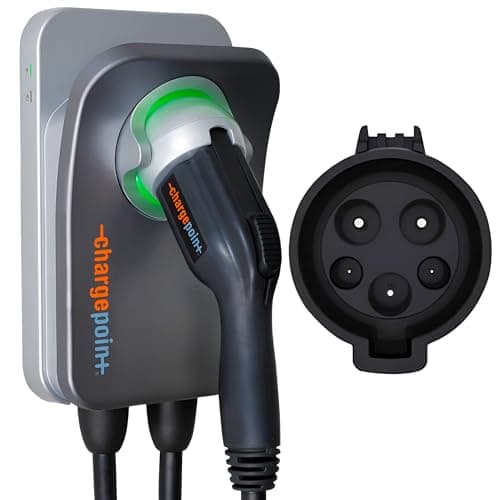
The best NEMA 14-50 EV charger is the ChargePoint Home Flex, and it is for the buyer plugging into an outlet someone else installed: its amperage is selectable from 16 to 50, so the same box runs legally on a 30-amp circuit, a 40-amp circuit or a true 50-amp one, which is the flexibility that matters when you do not know what is behind the faceplate. The budget pick is the MUSTART 40A Portable— the cheapest 14-50 charger in our registry that still delivers the full 40 amps a 14-50 circuit allows, so you are giving up the wall mount and the app, not the speed. For a Tesla-style port, the Emporia Level 2 NACS is the native-plug pick on the same outlet.
This page is about the outlet, not the output. If you want the field ranked on the charger's amperage instead, that is our 40-amp roundup. If you have a welder-style socket rather than a range-style one, it is the NEMA 6-50 roundup. Prices here come from the live Amazon feed with their own date stamp; specs are the maker's published claims from the live listing, and we have not bench-tested anything.
The 14-50 caps you at 40 amps. This is not negotiable.
A NEMA 14-50 receptacle is rated 50 amps at 125/250 volts and it lives on a 50-amp circuit. The National Electrical Code treats EV charging as a continuous load, which means a charger may draw no more than 80% of the circuit rating — 40 amps on a 50-amp circuit. Every charger on this page therefore delivers at most 9.6 kW when plugged into a 14-50, whatever the box is rated for. A 48-amp Emporia plugged into a 14-50 is a 40-amp charger. A 50-amp-capable ChargePoint plugged into a 14-50 is a 40-amp charger.
That has a straightforward consequence for how to spend money here: on a 14-50 plug, paying for 48-amp capability buys you nothing today. It buys you the option of hardwiring the same unit onto a 60-amp circuit later, which is a real option but a future one. If you are certain the charger stays on the plug, the cheaper 40-amp units on this list are the same charger in every way that reaches the car. Our wire size and breaker guide has the full circuit table, and charger vs 240-volt outlet covers the plug-versus-hardwire decision from the install side.
The receptacle is the weak point, every time
The most common hardware failure in a plug-in EV installation is not the charger. It is the outlet. Residential-grade 14-50 receptacles are designed for the intermittent load of an RV or a range, and a 40-amp continuous draw for six hours a night loosens the contacts, browns the plastic and eventually arcs. The fix is cheap and specific: an industrial-grade, listed 14-50 receptacle, fitted by a licensed electrician, on a circuit with the correct breaker. If the outlet is outdoors it also needs an enclosure that stays weatherproof with the plug sitting in it — covered in the outdoor setup guide.
If the outlet already exists and you did not install it, test it before you trust it. A 50-amp circuit analyzer reports open grounds, reversed polarity and low voltage for about twenty dollars — one of the four products in our accessories under $25. An outlet wired adequately for a welder in 1998 is not automatically wired adequately for nightly EV charging.
Every 14-50 charger we list
Each row ships with a NEMA 14-50 plug per its own listing. The price cell is a live buy button.
| Charger with a 14-50 plug | Best for | Key specs (manufacturer) | Price |
|---|
| ChargePoint Home Flex | Buyers who want the established brand and app | Adjustable to 50A · J1772 · NEMA 14-50 plug · Energy Star | $599.00·Amazon |
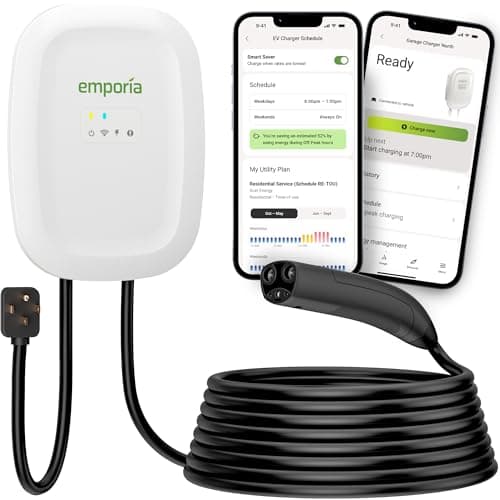
| Emporia Level 2 NACS (48A) | Most NACS-port households | 48A rated · NACS (J3400) · NEMA 14-50 plug · UL + Energy Star | Check price·Amazon |
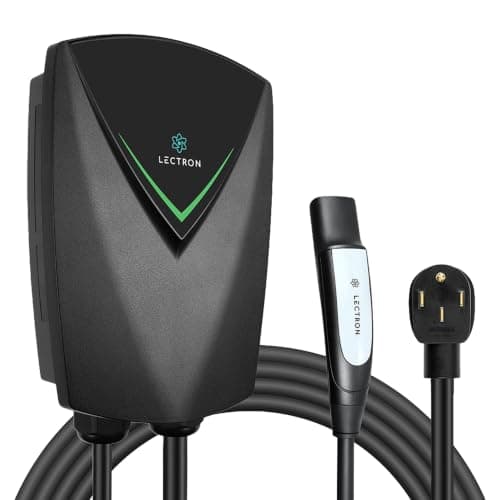
| Lectron Nexus NACS (40A) | A plug-in NACS charger with a named safety standard | 40A / 240V · NACS (J3400) · NEMA 14-50 plug · UL 2594 (ETL listed) | $449.99·Amazon |
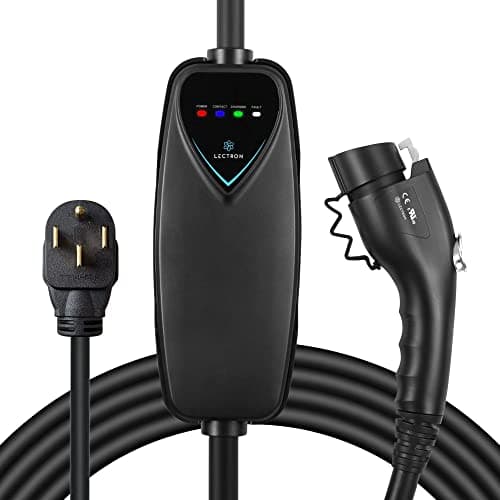
| Lectron Level 2 (40A) | A simple, inexpensive plug-in charger | 40A / 9.6kW · J1772 · NEMA 14-50 plug · ETL · 16ft extension | $279.99·Amazon |
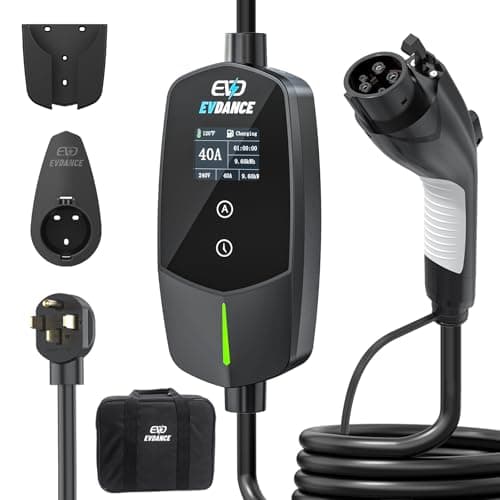
| EVDANCE 40A Portable | Off-peak charging without an app | 40A / 9.6kW · J1772 · NEMA 14-50 plug · 25ft, timer | $199.98·Amazon |
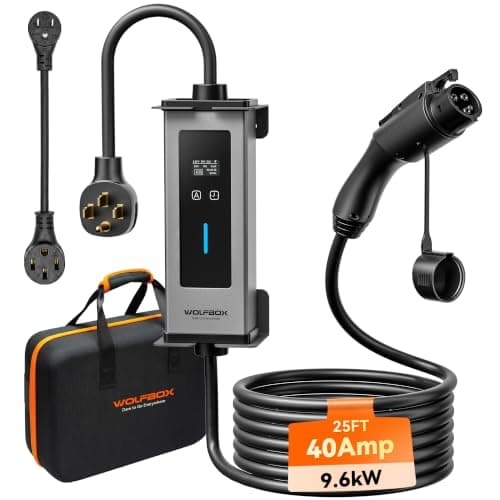
| WOLFBOX Portable (Level 1/2) | One charger for home and travel | 6–40A · 9.6kW · J1772 · Level 1/2 · NEMA 14-50 + 5-15 · ETL · IP66 · 25ft | $299.99·Amazon |
| MUSTART 40A Portable | The cheapest capable portable | 40A / 9.6kW · J1772 · NEMA 14-50 plug · 21ft cable, LCD | Check price·Amazon |
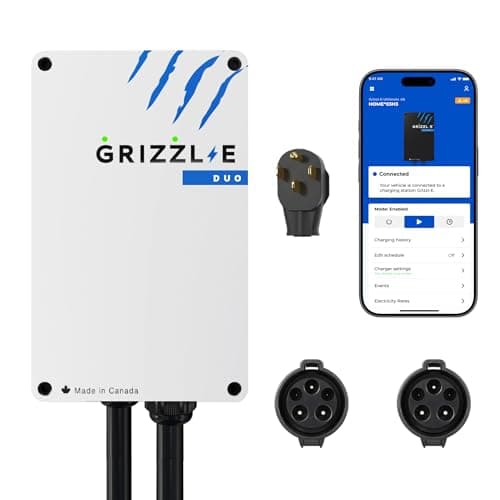
| Grizzl-E Duo Connect (dual 40A) | Two EVs on one circuit | Dual J1772 · Up to 40A shared · Two 25ft cables · NEMA 14-50 plug | $599.99·Amazon |
#ad · Prices read live from the Amazon Product API as of November 13, 2026, and they move. Specs are the manufacturer's published claims from the live listing — we have not bench-measured them. Where we have no verified price we print none rather than a number that has gone stale. We may earn a commission.
Wall box or portable? On this outlet it is a genuine choice
Because a 14-50 plug caps everything at 40 amps, the wall-mounted units and the portable cords on this list are performance equals. That makes the decision about everything except speed. A wall box gives you a holster, a cable management arrangement, a tidy install and — on the ChargePoint, Emporia and Grizzl-E Duo — an app with scheduling and energy reporting. A portable cord gives you the ability to unplug it, take it to a rental, and move house with it.
Two special cases on the list are worth naming. The Grizzl-E Duo Connectis the only unit here that charges two cars, sharing the same 40 amps between them — the right answer for a two-EV driveway with one circuit, and the subject of our two-EV roundup. The WOLFBOX Portable ships with both a 14-50 plug and a 5-15 adapter and is adjustable from 6 to 40 amps, which makes it the one unit here that works on the garage outlet and on a household socket at a hotel.
If you do not have a 14-50 yet
Installing one is usually cheaper than installing a hardwired charger circuit, because the circuit is smaller: 50 amps rather than 60, which means 6 AWG rather than 4 AWG copper, and a 50-amp breaker. It also leaves you with a general-purpose 240-volt outlet rather than a charger bolted to a wall. The counter-argument is that you cap yourself at 40 amps permanently, and that a plug is one more connection to fail. Both sides are laid out in portable vs hardwired, and the installation cost guide has what the job costs. If your panel cannot spare 50 amps at all, read chargers for a 100-amp panel before you buy anything on this page.