Skip to content
Volt & Cable

HUB 02 · Portable & Travel Chargers

The Best EV Chargers Under $200

Under $200 you are buying a cord, not a wall box — but one of these cords delivers a full 40 amps. Ranked from the live price feed, with the trade-offs named.

By Stephen V.Updated How we research
#ad

We earn a commission when you buy through our Amazon links, at no extra cost to you. It never affects our rankings, and we say so when the cheaper product is the better buy. How this works.

The short answer

Quick picks

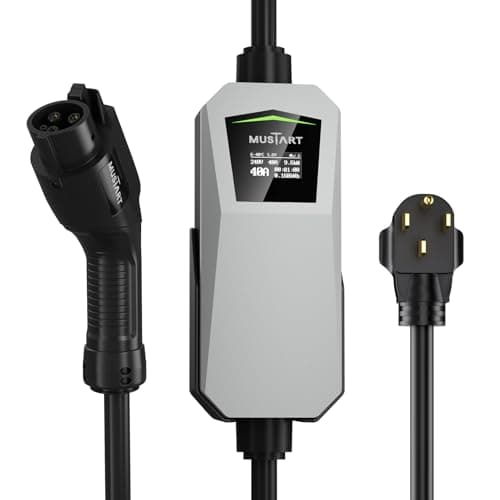
  • MUSTART MUSTART 40A Portable
    01 MUSTART 40A Portable
    8.2

    A budget 40-amp portable with an LCD readout — the value pick when you just need 240V charging that moves.

    Best for: The cheapest capable portable

    Check priceAmazon
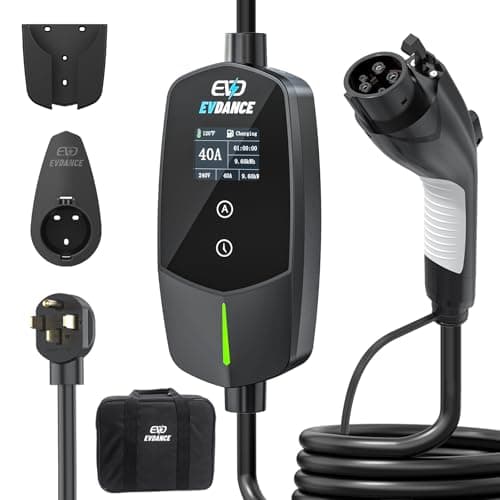
  • EVDANCE EVDANCE 40A Portable
    02 EVDANCE 40A Portable
    8.2

    A 40-amp portable with adjustable current and a charge-delay timer, on a long 25-foot cable — flexible for off-peak charging.

    Best for: Off-peak charging without an app

    $199.98Amazon
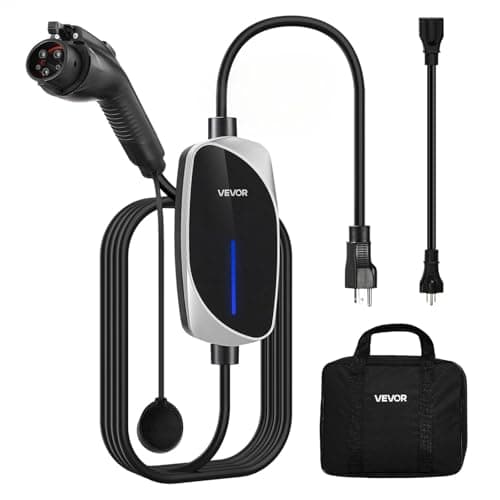
  • VEVOR VEVOR Level 1&2 (16A, 25ft)
    03 VEVOR Level 1&2 (16A, 25ft)
    7.4

    The cheapest dual-voltage cord in this group, on a 25-foot cable that matches the longest here — but it is a 6-20 charger with a 5-15 adapter, not a native 110V unit.

    Best for: The lowest price on a dual-voltage cord

    $111.90Amazon
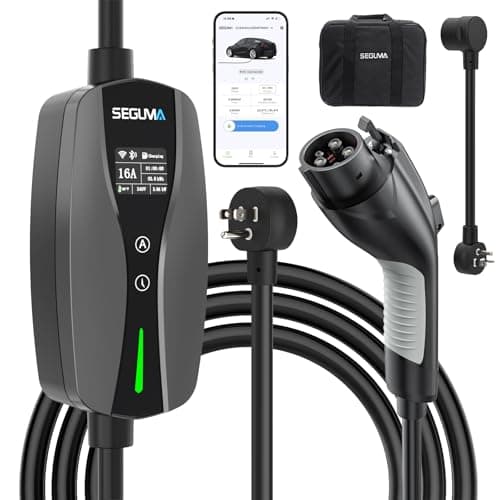
  • SEGUMA SEGUMA Wi-Fi Level 1/2 (12A/16A)
    04 SEGUMA Wi-Fi Level 1/2 (12A/16A)
    7.8

    A 120-volt cord that plugs into any household outlet and lives in the trunk — with app scheduling, a live display, and 16 amps on 240 volts if you have the outlet.

    Best for: A 120V backup that is not dumb

    $116.99Amazon
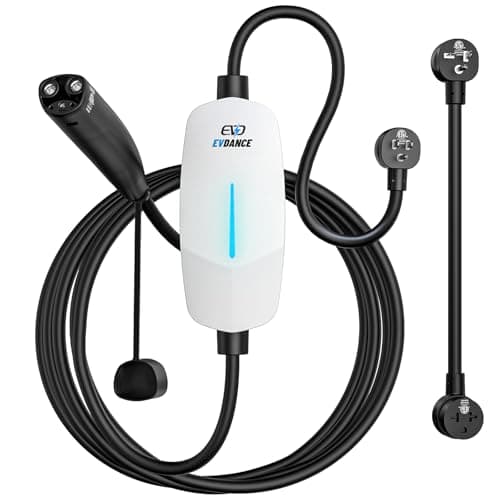
  • EVDANCE EVDANCE NACS Mobile Connector (12A/16A)
    05 EVDANCE NACS Mobile Connector (12A/16A)
    7.6

    The same sensible 12A/120V formula with a Tesla-style NACS plug on the end — the replacement mobile connector for a Tesla or any NACS EV.

    Best for: Tesla and other NACS cars

    $149.99Amazon
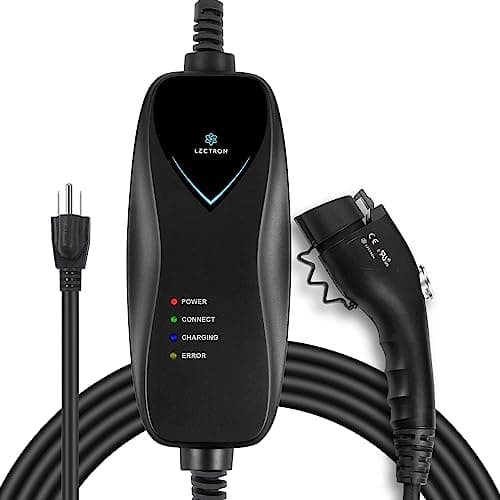
  • Lectron Lectron Level 1 (110V, 15A)
    06 Lectron Level 1 (110V, 15A)
    6.8

    The best-known name in this group and the highest 110V rate on the list, on the shortest cable — worth it only if you have a 20-amp receptacle to use it on.

    Best for: The fastest rate a 110V charger offers

    $159.99Amazon
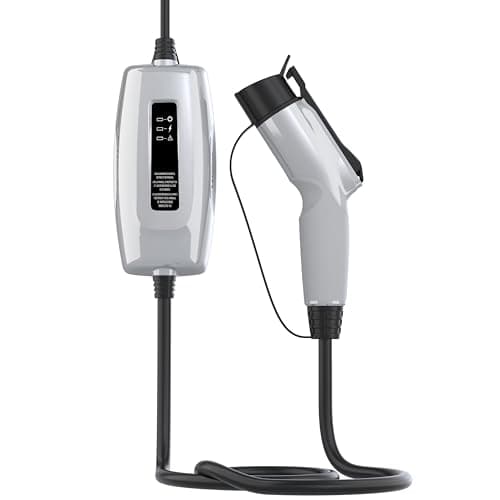
  • Schumacher Electric Schumacher SEV1670 (12A, 120V)
    07 Schumacher SEV1670 (12A, 120V)
    6.6

    A conservatively rated 12-amp Level 1 charger from a long-established automotive electrical brand — the pick if a name you recognize matters more than the spec sheet.

    Best for: Buyers who want an established brand

    $129.99Amazon

#ad · Live prices from the Amazon Product API, as of November 13, 2026. Where we have no verified live price, we show none — we would rather leave a gap than print a number that has gone stale.

The best EV charger under $200 is the MUSTART 40A Portable, and it is for the buyer who wants real Level 2 speed on an entry budget: a full 40 amps on a NEMA 14-50 plug, which is the same 9.6 kW that wall chargers costing three times as much deliver. The budget pick is the VEVOR Level 1 & 2 (16A)— the cheapest charger in our registry, with a 6-20 plug and a 5-15 adapter in the box so it works off a 240-volt outlet or an ordinary household socket. If your car has a Tesla-style port, the EVDANCE NACS Mobile Connector is the native-plug version, also under the line.

One thing has to be said before the picks: nothing in this band is a wall charger. Every product here is a portable cord— a plug on one end, a J1772 or NACS handle on the other, and the electronics in a box in the middle. That is not a criticism. A cord is the right buy for a renter, for a second car, for a glovebox, and for anyone whose garage already has a 240-volt outlet. It is the wrong buy if you want something bolted to a wall with a holster and an app. All prices here come from the live Amazon feed with their own date stamp.

The band splits in two: 120-volt cords and 240-volt cords

Almost every charger under $200 is one of two things, and confusing them is the most expensive mistake a first-time buyer makes in this band.

  • A 120-volt (Level 1) cord plugs into an ordinary household socket and draws 12 to 16 amps. It adds roughly 3 to 5 miles of range per hour. That is genuinely enough for a plug-in hybrid or a short commute, and genuinely not enough for a long-range EV you drain daily. The Schumacher, the Lectron Level 1 and the SEGUMA sit here.
  • A 240-volt (Level 2) cordplugs into a dryer-style or welder-style outlet and draws 16 to 40 amps. At 40 amps it adds roughly 30 miles per hour — full Level 2 speed. The MUSTART and the EVDANCE 40A sit here. The VEVOR and the SEGUMA are dual-voltage: they do either, at 16 amps.

So the first question is not price, it is what outlet you have. If the answer is “a normal wall socket”, the cheap Level 1 cords are your whole market and our 110-volt roundupgoes deeper. If the answer is “there is a dryer outlet in the garage”, buy the 40-amp cord and get wall-charger speed for cord money. Our 120V vs 240V guide has the range-per-hour math for both.

The band in one table

Every row carried a live price under $200 when this page last refreshed. The price cell is a live buy button.

Charger (under $200)Best forKey specs (manufacturer)Price
MUSTART 40A PortableThe cheapest capable portable40A / 9.6kW · J1772 · NEMA 14-50 plug · 21ft cable, LCDCheck priceAmazon
EVDANCE 40A PortableOff-peak charging without an app40A / 9.6kW · J1772 · NEMA 14-50 plug · 25ft, timer$199.98Amazon
VEVOR Level 1&2 (16A, 25ft)The lowest price on a dual-voltage cord16A · 120V or 240V · J1772 · NEMA 6-20P + 5-15 adapter · 25ft cable$111.90Amazon
SEGUMA Wi-Fi Level 1/2 (12A/16A)A 120V backup that is not dumb12A @ 120V / 16A @ 240V · J1772 · NEMA 5-15 + 6-20 adapter · ETL certified · 25ft$116.99Amazon
EVDANCE NACS Mobile Connector (12A/16A)Tesla and other NACS cars12A @ 120V / 16A @ 240V · NACS (J3400) · NEMA 5-15 + 6-20 · 25ft cable$149.99Amazon
Lectron Level 1 (110V, 15A)The fastest rate a 110V charger offers15A @ 110V · J1772 · NEMA 5-15 plug · ETL certified · 16ft$159.99Amazon
Schumacher SEV1670 (12A, 120V)Buyers who want an established brandLevel 1 · 120V · 12A · Model SEV1670$129.99Amazon

#ad · Prices read live from the Amazon Product API as of November 13, 2026, and they move. Specs are the manufacturer's published claims from the live listing — we have not bench-measured them. Where we have no verified price we print none rather than a number that has gone stale. We may earn a commission.

Why the 40-amp cord is the pick

A 40-amp portable is the one thing in this band that does not feel like a compromise. Plugged into a NEMA 14-50 outlet it draws the same 40 amps a $450 wall charger draws on the same outlet, because the outlet — not the charger — is the limit: a 14-50 lives on a 50-amp circuit, and the NEC continuous-load rule caps a 50-amp circuit at 40 amps. A hardwired 48-amp charger beats it only on a 60-amp circuit. So if you already have the outlet, the cheap cord and the expensive box deliver identical power.

What you give up is permanence and polish: no wall mount, no holster, no app, no energy reporting, and a plug you are physically unplugging rather than a fixed install. For a lot of buyers that is a feature — a cord moves house with you, which is exactly the argument in taking your charger when you move. If you want the permanent version instead, our under-$500 roundup is the next band up, and portable vs hardwired argues both sides.

What to check before you buy anything in this band

Cheap EV charging hardware is where uncertified product shows up, so three checks are worth more than any feature comparison. First, a safety listing.Look for a UL or ETL mark on the listing itself — the SEGUMA, the EVDANCE and the Lectron publish one. A device that pulls 16 to 40 amps continuously for hours, unattended, is not the place to save twenty dollars on certification.

Second, the plug on the end.A 240-volt cord ships with one specific plug — 14-50, 6-20, 10-30 — and if it does not match your outlet you need an adapter, which caps the current further. Our outlet types guide identifies what you have, and the adapters under $50 covers the bridge if you need one. Third, never run one of these off a household extension cord. That is the one rule with no exceptions in this category; our extension cord guide explains what actually fails.
In detail

The picks, in full

01
MUSTART MUSTART 40A Portable

The cheapest capable portable

MUSTART 40A Portable

40A / 9.6kWJ1772NEMA 14-50 plug21ft cable, LCD
8.2/10

A budget 40-amp portable with an LCD readout — the value pick when you just need 240V charging that moves.

Charge speed
8
Portability
9
Build & weather
7
Cable & connector
7
Value
10

Pros

  • One of the least expensive true 40-amp portables on Amazon
  • LCD display shows charging status and faults at a glance
  • Outdoor-rated connector and enclosure

Cons

  • Shorter 21-foot cable than some rivals
  • Value brand — fit and finish are functional rather than premium

Don't buy this if…

…you need the longer reach of a 25-foot cable, or you want a 120V plug in the box too. The Lectron portable is more flexible; the MUSTART's whole pitch is the low price.

Check price on Amazon →

No buyable offer at the last price check (November 13, 2026). We show nothing rather than a stale number.

#ad · we may earn a commission from this link to MUSTART 40A Portable

02
EVDANCE EVDANCE 40A Portable

Off-peak charging without an app

EVDANCE 40A Portable

40A / 9.6kWJ1772NEMA 14-50 plug25ft, timer
8.2/10

A 40-amp portable with adjustable current and a charge-delay timer, on a long 25-foot cable — flexible for off-peak charging.

Charge speed
8
Portability
9
Build & weather
7
Cable & connector
8
Value
9

Pros

  • Built-in delay timer lets you start on cheaper overnight rates without any app
  • Adjustable current adapts it to different circuits
  • Long 25-foot cable

Cons

  • No smart-app monitoring — the timer is the extent of the scheduling
  • Value brand with a shorter track record

Don't buy this if…

…you want full energy monitoring and remote control. This is a capable manual charger; a wall unit like the Emporia is the one to buy for app-based tracking.

$199.98View on Amazon

Price as of November 13, 2026. Prices change — Amazon's is the one that counts.

#ad · we may earn a commission from this link to EVDANCE 40A Portable

03
VEVOR VEVOR Level 1&2 (16A, 25ft)

The lowest price on a dual-voltage cord

VEVOR Level 1&2 (16A, 25ft)

16A · 120V or 240VJ1772NEMA 6-20P + 5-15 adapter25ft cable
7.4/10

The cheapest dual-voltage cord in this group, on a 25-foot cable that matches the longest here — but it is a 6-20 charger with a 5-15 adapter, not a native 110V unit.

Charge speed
5
Portability
9
Build & weather
6
Cable & connector
8
Value
9

Pros

  • 25 feet of cable — as long as anything else here, and the difference between reaching the charge port and moving the car
  • Runs on either 120 or 240 volts, so the same unit covers a household outlet now and a 240-volt 6-20 outlet later
  • The cheapest unit on this page, and the cheapest way here to get dual-voltage capability on a full-length cable

Cons

  • The native plug is a NEMA 6-20 (240V); 120-volt use runs through the included 5-15 adapter rather than a purpose-built plug
  • The listing headline does not state a UL or ETL certification — if a third-party safety listing is a hard requirement for you, buy the ETL-listed EVDANCE instead
  • 16 amps is above the 12 amps a standard 15-amp household circuit should carry continuously, so on 120 volts it wants a dedicated 20-amp receptacle

Don't buy this if…

…your only outlet is an ordinary 15-amp household socket shared with other things. Buy a 12-amp charger sized to that circuit — a bigger number on the box you cannot safely use is not an upgrade.

$111.90View on Amazon

Price as of November 13, 2026. Prices change — Amazon's is the one that counts.

#ad · we may earn a commission from this link to VEVOR Level 1&2 (16A, 25ft)

04
SEGUMA SEGUMA Wi-Fi Level 1/2 (12A/16A)

A 120V backup that is not dumb

SEGUMA Wi-Fi Level 1/2 (12A/16A)

12A @ 120V / 16A @ 240VJ1772NEMA 5-15 + 6-20 adapterETL certified · 25ft
7.8/10

A 120-volt cord that plugs into any household outlet and lives in the trunk — with app scheduling, a live display, and 16 amps on 240 volts if you have the outlet.

Charge speed
4
Portability
10
Build & weather
8
Cable & connector
9
Value
8

Pros

  • The NEMA 5-15 plug is on the cord itself, so it goes straight into an ordinary household outlet with no adapter in the chain — exactly what you want from a charger that lives in the trunk
  • ETL and FCC certified, and the listing names the UL 2594, UL 2231-2 and CSA C22.2 criteria it was built to — far more specific than the vague 'certified' most cords in this price band claim
  • Current adjusts from 6 to 16 amps with app scheduling over Wi-Fi, and a 1.77-inch display on the unit reads out amps, volts, kWh and elapsed time without reaching for a phone
  • 25-foot cable, an IP66-rated body specified down to 22 degrees below zero, and a storage bag in the box

Cons

  • On a standard household outlet it is a Level 1 charger — roughly 3 to 5 miles of range per hour, which will not replace a day's commute overnight
  • The 16-amp Level 2 mode needs a NEMA 6-20 outlet, which most garages do not have, and the listing states it will not work on 6-15, 10-30 or 14-30 outlets
  • A one-year warranty where several rivals give two, and the scheduling runs through SEGUMA's own app rather than anything you already have

Don't buy this if…

…you drive a full EV daily and this would be your only charger. Level 1 from a household outlet cannot keep up with a real commute — buy a 240-volt Level 2 portable and keep a cord like this as the spare.

$116.99View on Amazon

Price as of November 13, 2026. Prices change — Amazon's is the one that counts.

#ad · we may earn a commission from this link to SEGUMA Wi-Fi Level 1/2 (12A/16A)

05
EVDANCE EVDANCE NACS Mobile Connector (12A/16A)

Tesla and other NACS cars

EVDANCE NACS Mobile Connector (12A/16A)

12A @ 120V / 16A @ 240VNACS (J3400)NEMA 5-15 + 6-2025ft cable
7.6/10

The same sensible 12A/120V formula with a Tesla-style NACS plug on the end — the replacement mobile connector for a Tesla or any NACS EV.

Charge speed
4
Portability
10
Build & weather
7
Cable & connector
9
Value
8

Pros

  • Native NACS connector, so a Tesla Model 3/Y/S/X plugs straight in with no adapter in the chain
  • Same 12-amp 120-volt draw a normal household circuit is rated to carry continuously, and it steps up to 16A on a 240-volt 6-20 outlet
  • 25-foot cable — considerably longer than the mobile connector most cars ship with

Cons

  • NACS only: a J1772 car needs an adapter, which is one more failure point and one more thing to lose
  • Level 1 speed is Level 1 speed — roughly 3 to 5 miles of range per hour, whatever the plug on the end

Don't buy this if…

…you already have the mobile connector that came with the car and it works. This is a spare or a replacement, not an upgrade — it does not charge any faster.

$149.99View on Amazon

Price as of November 13, 2026. Prices change — Amazon's is the one that counts.

#ad · we may earn a commission from this link to EVDANCE NACS Mobile Connector (12A/16A)

06
Lectron Lectron Level 1 (110V, 15A)

The fastest rate a 110V charger offers

Lectron Level 1 (110V, 15A)

15A @ 110VJ1772NEMA 5-15 plugETL certified · 16ft
6.8/10

The best-known name in this group and the highest 110V rate on the list, on the shortest cable — worth it only if you have a 20-amp receptacle to use it on.

Charge speed
5
Portability
9
Build & weather
8
Cable & connector
6
Value
6

Pros

  • ETL certified, from a brand with a long track record in EV charging rather than a marketplace name that appeared last year
  • 15 amps is the highest 120-volt draw on this list — roughly 25% more energy per hour than the 12-amp units
  • Simple, cased and rugged, with no app or account to set up

Cons

  • 15 amps continuous is more than a standard 15-amp household circuit should carry — to use the full rate safely you need a dedicated 20-amp receptacle, not the socket by the garage door
  • 16-foot cable is the shortest here, which decides where you can park
  • Costs meaningfully more than the 12-amp chargers while delivering, in real terms, a few extra miles overnight

Don't buy this if…

…you are plugging into an ordinary shared 15-amp household outlet. The extra amps are the whole reason to pay the premium, and on that circuit you should not be drawing them.

$159.99View on Amazon

$179.9911% off

Price as of November 13, 2026. Prices change — Amazon's is the one that counts.

#ad · we may earn a commission from this link to Lectron Level 1 (110V, 15A)

07
Schumacher Electric Schumacher SEV1670 (12A, 120V)

Buyers who want an established brand

Schumacher SEV1670 (12A, 120V)

Level 1 · 120V12AModel SEV1670
6.6/10

A conservatively rated 12-amp Level 1 charger from a long-established automotive electrical brand — the pick if a name you recognize matters more than the spec sheet.

Charge speed
4
Portability
9
Build & weather
8
Cable & connector
5
Value
7

Pros

  • Schumacher has been making automotive battery chargers for decades — a real company with a real warranty department, which is not the norm in this price band
  • 12 amps is correctly sized to a standard household circuit rather than pushed past it for a bigger number on the box
  • Sold through mainstream retail as well as Amazon, so returns and support are straightforward

Cons

  • The listing headline states only the amperage and voltage — it does not state cable length or a safety listing, so check the listing detail before you buy on those points
  • Level 1 only: there is no 240-volt mode, so it cannot follow you to a faster outlet later
  • Priced above the value-brand 12-amp chargers for what is, electrically, the same job

Don't buy this if…

…you might add a 240-volt outlet down the line. A dual-voltage charger costs about the same and keeps that option open; this one is Level 1 forever.

$129.99View on Amazon

$159.9919% off

Price as of November 13, 2026. Prices change — Amazon's is the one that counts.

#ad · we may earn a commission from this link to Schumacher SEV1670 (12A, 120V)

How we picked

We do not run a testing lab

We compiled published specifications from manufacturer manuals and spec sheets, verified the safety listings (UL / ETL), computed the real running and installation costs, checked the wiring math against the NEC continuous-load rule, and read aggregated owner reviews — then scored each product against a published rubric. The scores are judgments from documented research — they are not bench measurements, because we do not have a test lab and we are not going to pretend we do. Every spec and cost figure is cited in Sources.

Questions

Frequently asked

Can you get a real Level 2 charger for under $200?

Yes, as a portable cord. The MUSTART 40A and the EVDANCE 40A are both 240-volt, 40-amp units on a NEMA 14-50 plug, which is full Level 2 speed. What you cannot get under $200 is a wall-mounted, app-connected charger — the cheapest of those is roughly $270.

Is a cheap EV charger safe?

A listed one is. Insist on a UL or ETL mark on the live listing, and plug it into a dedicated circuit with an outlet rated for the current — never an extension cord or a shared receptacle. The failure point in cheap installs is almost always the outlet, not the charger.

How fast does a $200 EV charger charge?

It depends entirely on voltage. A 120-volt cord adds roughly 3 to 5 miles of range an hour. A 40-amp, 240-volt cord adds roughly 30. Both figures are in this band, which is why the outlet you own matters more than the price you pay.

What is the cheapest EV charger in this roundup?

The VEVOR Level 1 & 2 (16A), which is also the cheapest charger in our registry. It is dual-voltage with a 6-20 plug and a 5-15 adapter, so it does 16 amps at 240 volts or a slower household charge, and it is the budget pick on this page for that flexibility.

Keep reading

Receipts

Sources

We do not run a testing lab, and we do not pretend to. Where a measured number came from someone else's lab, we name them and link them. Where we could not verify something, we say so on the page rather than quietly leaving it out. Read our full method.