HUB 05 · Guides & Buying Advice
How Much Does a DC Fast Charger Cost to Install?
The hardware is the cheap half. Published federal figures put a single DC fast connector at $38,000 to $90,000 before anyone digs a trench - and a study of 54 real California chargers found total project costs of $122,000 to $440,000.
We earn a commission when you buy through our Amazon links, at no extra cost to you. It never affects our rankings, and we say so when the cheaper product is the better buy. How this works.
For a single public DC fast charging connector, the US Department of Energy's Alternative Fuels Data Center puts the equipment at $38,000 to $90,000 and the installation at a further $20,000 to $60,000 per connector, citing the NLR and INL Levelized Cost of Charging EVs in the United States report. But the best real-world evidence says budget higher: a 2023 study of 54 DC fast chargers at 36 sites on California highway corridors found full project costs of $122,000 to $440,000, against the $20,000 to $150,000 that earlier studies had reported. The charger itself is not what blows the budget. The electrical and civil work to get power to it is.
Two things make this question hard to answer with one number, and both are worth understanding before you read any figure at all.
The first is that “cost” means four different thingsin this market: the price of the cabinet, the cost of installing it, the cost of the utility upgrade that may be needed to feed it, and the per-kWh price a driver pays at the end. People searching for what a DC fast charger costs are usually asking about one of the first three. If you are actually asking the fourth — what it costs to useone — that is a completely different page and we have written it: how much does DC fast charging cost.
The second is that almost every number in circulation is a vendor estimate. Searching this topic returns a great many confident ranges from companies that sell installation services. We are going to stick to two sources that publish their method: the DOE's AFDC, and a peer-reviewed study of chargers that were actually built.
What the published figures actually say
The DOE's AFDC maintains per-connector figures across all three charging levels. Laid side by side, they are the clearest illustration of why DC fast charging is a commercial proposition and Level 2 is a domestic one:
- DC fast, public — equipment $38,000 to $90,000 per connector, rising with power output, citing the NLR/INL levelized-cost report. Installation is given separately at $20,000 to $60,000 per connector, depending on charger power and how many chargers go in at one site.
- Level 2, public or workplace — equipment around $3,500 per connector, with installation averaging around $2,500 per connector. An order of magnitude below DC fast on both lines.
- Level 2, residential — equipment $380 to $690 (AFDC cites a Rocky Mountain Institute report for the residential equipment figures), with installation around $1,300.
- Level 1, residential — equipment $0 to $900, the zero being the case where the cordset that came with the car is all you need, with installation of $400 to $600 if a circuit has to be added at all.
Read the DC fast line and the residential Level 2 line together and the ratio is roughly a hundred to one. That gap is the single most useful fact on this page, and the rest of it is an explanation of where the money goes.
Why the real projects cost more than the estimates
In 2023, Tisura Gamage, Gil Tal and Alan Jenn of UC Davis published an examination of the full project costs of 54 DC fast chargers across 36 sites on major California corridors — Interstate 5, State Route 99, US 101 — in Case Studies on Transport Policy. Their finding was blunt: where existing studies reported $20,000 to $150,000, they found actual costs ranging from $122,000 to $440,000.
Their explanation for the gap is specific and it is not “prices went up”. Corridor chargers get sited in remote places next to highways, where there is no shared urban utility infrastructure to tap. A large share of the project cost goes to on-site make-ready infrastructure— the conduit, trenching, switchgear, transformer pad and service work that has to exist before a charger can be bolted down. That figure swings enormously with site-specific conditions and with design choices the developer makes. Their conclusion is the sentence anyone budgeting one of these should read first: a DC fast charging installation should be treated as a civil construction project, with significant electrical planning and coordination with local stakeholders, and with the utility engaged early — because shifting some of the work onto the utility side of the meter can lower the total.
One finding worth repeating for anyone drawn to off-grid solar. The same study found that grid-connected designs were substantially cheaper than off-grid solar systems with on-site storage. If your plan for avoiding a utility upgrade is panels and a battery, the published evidence says that is the more expensive route, not the cheaper one. Our solar charging roundup covers what solar genuinely does well, which is offsetting Level 2 energy at a house.
Where the money actually goes
AFDC lists what drives installation cost, and the ordering is instructive because the charger is not on the list at all:
- Labor — AFDC calls it the largest expense in a typical installation. Not the hardware. Not the permit. The hours.
- Trenching and site location. The distance from the service entrance to where the charger has to stand, and what is in between. Asphalt, a sidewalk, a landscaped island and a property line are all different prices for the same hundred feet.
- Existing wiring and the electrical upgrades needed for the load you want now plus the load you want later. This is the line item that turns into a transformer and a twelve-week utility lead time.
- Number and type of chargers. AFDC notes that per-charger cost falls significantlyfor larger installations — the make-ready work is mostly a fixed cost you amortize across however many connectors you land on it. This is why you almost never see a single DC fast charger built alone, and why the per-connector ranges are so wide.
- Permitting and inspection. AFDC notes inspection requirements affect the project timeline, which on a commercial build is itself a cost.
And then it keeps costing money after it is switched on. AFDC lists the operating costs as electricity, demand charges and annual charging-network fees, with the site host bearing maintenance and payment-transaction costs if it owns the hardware. Demand charges deserve a flag: a DC fast charger draws enormous power in short bursts, which is precisely the usage pattern commercial tariffs penalize hardest.
One procurement note from the same AFDC page that applies equally to a home charger, and that we think is underrated: choosing hardware that speaks OCPP 1.6 or higherlets a site host switch networks later without replacing equipment, which is how you avoid a stranded asset. We explain the protocol in what is OCPP, and the same logic is why a home charger that depends on one company's cloud is a worse ten-year buy than one that does not.
Why you cannot install one at a house
A meaningful share of the people asking this question are homeowners wondering whether they can skip the overnight wait. The answer is no, and the reason is not cost alone — it is physics and service capacity.
- The conversion hardware is in the charger, not the car. This is the structural difference between the levels. Level 1 and Level 2 deliver AC to the vehicle and the car's onboard charger rectifies it, which is why your car's onboard charger caps your home charging speed. DC fast charging bypasses that unit and performs the AC-to-DC conversion inside the cabinet. That cabinet is the $38,000 to $90,000. Our DC fast charging explainer covers the mechanism.
- A house does not have the service. A 150 kW charger is drawing more than a typical home's entire service rating, continuously, while it runs. A 350 kW unit is several times that. Residential service in the US is single-phase and sized in the region of 100 to 200 amps at 240 volts; the arithmetic does not close, and no amount of panel work makes it close without a utility-side transformer and a commercial service.
- The car would not take it for long anyway. DC charging tapers sharply as the battery fills, which is why public fast charging is quoted 10 to 80% rather than to 100% — see 10 to 80 percent fast charging explained. A home charger finishing the job overnight is working with that curve. A fast charger at home would spend most of its night tapered down to a rate a Level 2 charger delivers for a hundredth of the price.
- Routine fast charging is harder on the pack. The reason to prefer slow AC charging at home is not only cost. Should I charge my EV to 100 percent covers the battery-care side of the same decision.
What to spend the money on instead
If you came here from the home-charging direction, the honest answer is that the thing you want costs between $380 and $690 for the equipment and around $1,300to install, on the DOE's own figures, and it will refill a normal day's driving in about an hour. The three chargers below are where we would start, and best home EV chargers ranks the field properly, with the reviews index behind it if you would rather read about each unit individually.
Before you commit, two of our pages will save you more money than any hardware choice: what a Level 2 installation actually costs walks the quote line by line, and EV charger vs 240V outletexplains the decision that most changes the bill — whether your electrician installs a receptacle and you plug a charger into it, or hardwires the charger directly. Then check the EV charger tax credit, because the federal credit applies to residential charging equipment and installation in eligible locations and is routinely left unclaimed.
And if the underlying worry is that home charging will not be enough for how you drive, read is it cheaper to charge at home or in public and EV charging on a road trip. The normal answer for a household with a driveway is Level 2 at home for the daily 90% and public DC fast charging for the occasional long trip — which is exactly the split the $122,000 corridor chargers exist to serve.
If you are actually building one
For a business, a fleet depot or a property that genuinely needs DC fast charging, the published evidence supports a short list of practical conclusions:
- Talk to the utility before you talk to anyone else. The UC Davis study found that moving work to the utility side of the meter can reduce the total project cost, and transformer lead times are measured in months rather than weeks.
- Build more connectors than you need today. AFDC states per-charger cost drops significantly at larger installations, because make-ready is substantially a fixed cost. The cheapest second charger you will ever install is the one you install at the same time as the first.
- Budget make-ready as the main line item, not a contingency. That is the central finding of the California study and the thing the cheaper published estimates miss.
- Model demand charges before you model revenue. They are a function of peak draw, which is what this equipment is for.
- Specify OCPP 1.6 or higher so the hardware is not married to one network operator for its service life.
- If a site only needs to cover dwell time, price Level 2 first. At around $3,500 of equipment and $2,500 of installation per connector, a workplace, hotel or apartment block can often put in a bank of Level 2 chargers for less than one DC fast connector. For that case start at EV charging for condos and HOAs and charging your EV at work.
The gear
Recommended gear for this guide
The products this guide refers to, with prices pulled live from Amazon and dated on each card.
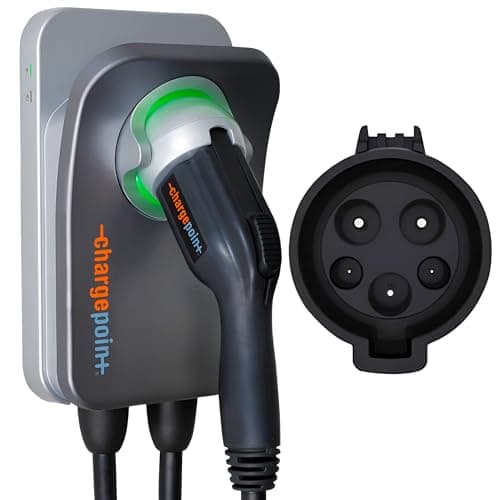
Buyers who want the established brand and app
ChargePoint Home Flex
The polished, well-supported option — adjustable up to 50 amps and tied into the largest public charging app in North America.
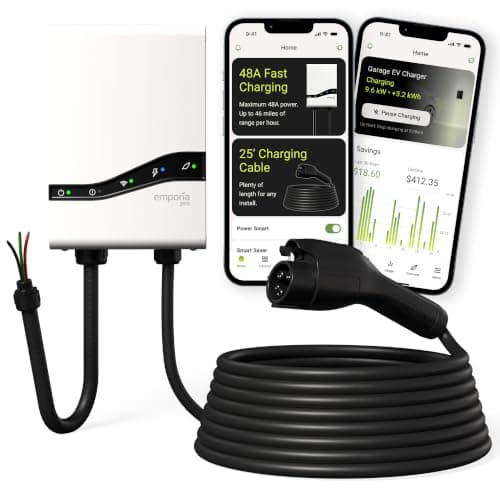
A 100-amp service you would rather not upgrade
Emporia Pro (48A, PowerSmart)
The one charger that changes the electrical answer rather than working around it — it watches the whole panel and backs off instead of tripping the main.
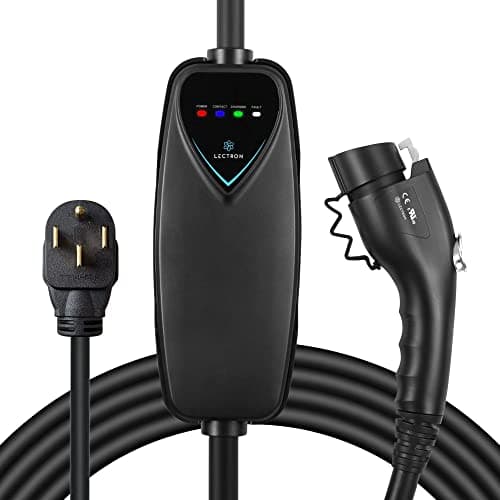
A simple, inexpensive plug-in charger
Lectron Level 2 (40A)
A simple, ETL-listed plug-in charger from a known EV brand — a no-frills, low-cost way to charge at Level 2.
#ad · As an Amazon Associate we earn from qualifying purchases.
Questions
Frequently asked
How much does a DC fast charger cost?
Why is installation so expensive compared to the charger?
Can I install a DC fast charger at my house?
Is it cheaper per charger to install several at once?
Does a DC fast charger need three-phase power?
What about off-grid solar instead of a utility upgrade?
Keep reading
Related
- How Much Does DC Fast Charging Cost?The other question: what a driver pays per kWh at a public charger.
- Level 2 Installation CostThe install that actually applies to a house, quoted line by line.
- DC Fast Charging ExplainedWhy the conversion hardware sits in the cabinet rather than the car.
- EV Charger vs 240V OutletThe decision that most changes a residential install quote.
- Best Home EV ChargersWhat $380 to $690 of equipment actually buys you.
- The EV Charger Tax CreditThe residential credit that routinely goes unclaimed.
Receipts
Sources
- US DOE Alternative Fuels Data Center - Procurement and Installation for Electric Vehicle Charging Infrastructure (DC fast equipment $38,000-$90,000 per connector and installation $20,000-$60,000 per connector, citing the NLR/INL 'Levelized Cost of Charging EVs in the United States' report; public Level 2 about $3,500 equipment and about $2,500 installation per connector; residential Level 2 equipment $380-$690 citing Rocky Mountain Institute, installation about $1,300; residential Level 1 equipment $0-$900, installation $400-$600; labor named as the largest expense in a typical installation; per-charger cost falls significantly at larger installations; operating costs include electricity, demand charges and annual network fees; OCPP 1.6 or higher avoids stranded assets)
- Gamage, T., Tal, G. and Jenn, A. (2023), 'The Costs and Challenges of Installing Corridor DC Fast Chargers in California', Case Studies on Transport Policy, UCD-ITS-RP-23-10, DOI 10.1016/j.cstp.2023.100969 (full project costs of 54 DC fast chargers at 36 sites on California corridors: $122,000-$440,000, against $20,000-$150,000 in existing studies; on-site make-ready infrastructure a large share of cost and highly site-dependent; recommends treating DCFC installation as a civil construction project and engaging utilities early; grid-connected designs substantially cheaper than off-grid solar with on-site storage)
We do not run a testing lab, and we do not pretend to. Where a measured number came from someone else's lab, we name them and link them. Where we could not verify something, we say so on the page rather than quietly leaving it out. Read our full method.