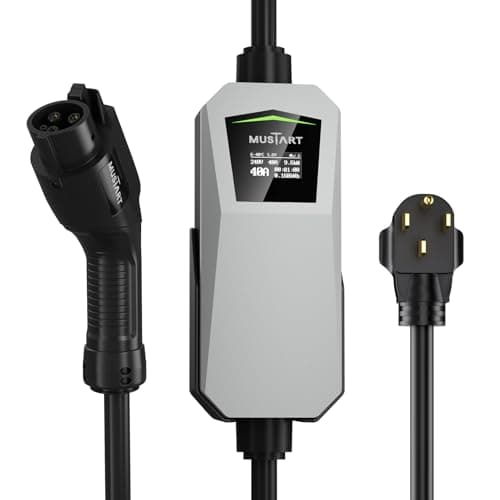
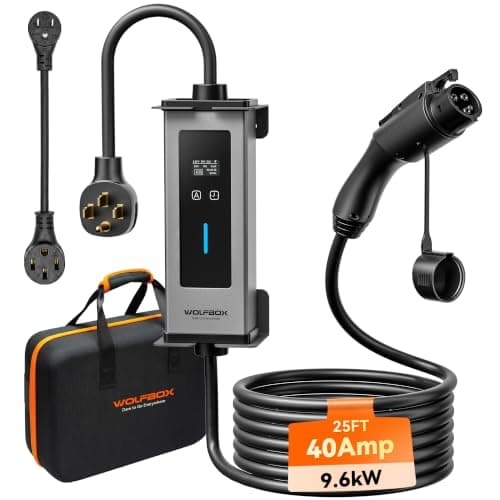
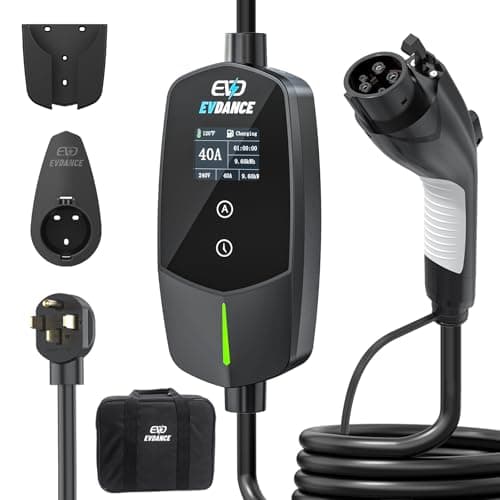
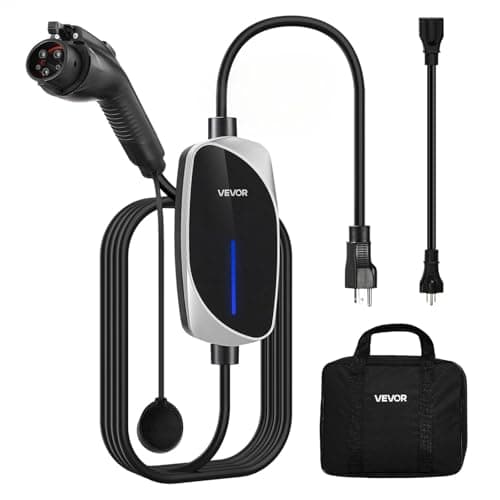
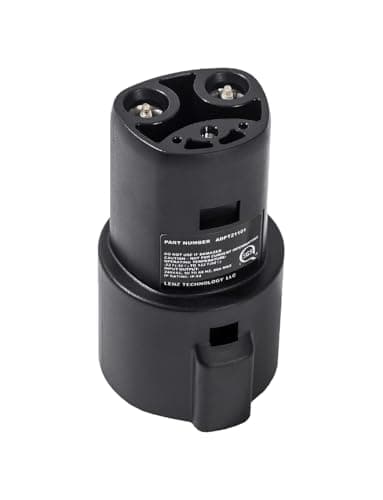
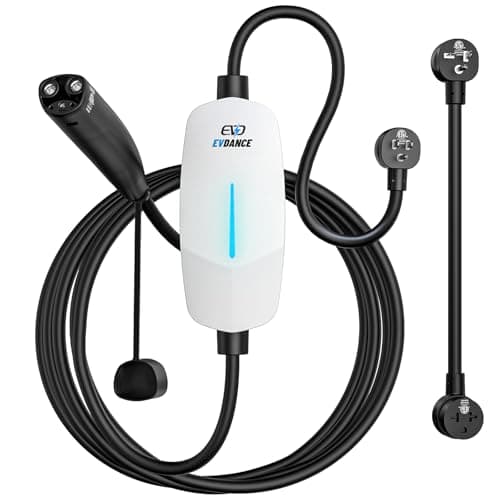
The best Tesla Mobile Connector alternative is the EVDANCE NACS Mobile Connector, and it is for the owner who wants a like-for-like spare or replacement: a native NACS plug so nothing hangs off the handle, a 25-foot cable rather than Tesla's 20, and both a 120-volt and a 240-volt plug in the box. If you want to beat Tesla's cord rather than match it, the MUSTART 40A Portable plus a UL-certified LENZ J1772-to-NACS adapterdelivers 40 amps against the Mobile Connector's published 32-amp maximum, for roughly the same money. Those are the only two routes, and the rest of this page is how to choose between them.
One disclosure first, because it shapes everything below: Tesla sells the Mobile Connector through its own store, not through Amazon, so we have no affiliate interest in it either way and no live price for it. We are not going to invent one. Everything we say about Tesla's cord below comes from Tesla's own published documentation, cited at the bottom of the page.
What the Mobile Connector is, and what it is known for
The Mobile Connector is Tesla's portable charging cord: a NACS handle on the car end, a swappable NEMA adapter on the wall end, and the electronics in a brick between them. It is a genuinely good piece of hardware and the reasons people like it are real. The adapter system is the cleverest part — the NEMA adapter is keyed and identified to the connector, so the cord knows which circuit it is plugged into and sets its own current limit accordingly instead of trusting the user to get it right. That is a safety feature most third-party cords simply do not have, and it is why we tell readers never to put a generic wall pigtail in front of a Mobile Connector (the cord then assumes a 14-50 and defaults to its full current on a smaller breaker). Tesla's own manual carries the same warning.
Two facts about it drive this page. First, the Gen 2 Mobile Connector's owner's manual publishes a 32-amp maximum, with the attached NEMA adapter setting the actual limit — down from the 40 amps the Gen 1 unit allowed. Second, in April 2022 Tesla stopped including it with new vehicles and began selling it as a separate accessory, a change widely covered at the time and never reversed. So a large and growing number of Tesla owners have a car with no cord in the trunk, which is exactly the search that brought most readers here.
The two routes, and the arithmetic that decides
There are only two ways to replace a Mobile Connector, and the choice is not really about brands.
Route 1 — a native NACS cord. A portable with a Tesla-style plug on the car end connects directly, nothing dangles, nothing gets lost. The EVDANCE NACS Mobile Connectoris the closest thing to a straight swap we can buy: 12 amps at 120 volts, 16 amps at 240 volts on the included NEMA 6-20 plug, and a 25-foot cable. Note what it does not do — it does not reach 32 amps, so on a 14-50 outlet Tesla's own cord is faster. As a spare in the frunk, a replacement for a lost cord, or the thing you leave at a relative's house, it is the tidy answer.
Route 2 — a J1772 cord plus an adapter. Buy a standard J1772 portable and put a certified J1772-to-NACS adapter on the end. This is the route that actually beats Tesla's cord: the MUSTART 40A Portable and the EVDANCE 40A Portable both deliver a full 40 amps, and the WOLFBOX Portableis adjustable from 6 to 40 amps with both plugs in the box. Forty amps on a 14-50 is 9.6 kW against the Mobile Connector's 7.7 kW, which is roughly a quarter more range per hour. The cost of the route is one adapter and one extra connection in the chain.
The arithmetic that catches people out: the cheapest sticker priceon this page is the VEVOR dual-voltage cord, but it is a J1772 unit, so a Tesla owner has to add the adapter — and once you do, the native EVDANCE NACS cord is the cheaper route overall and simpler besides. That is why we rank the EVDANCE first rather than the cheapest line item. Check both live prices before you commit; the gap moves.
The alternatives, side by side
Each row is a live buy button, priced from the feed and date-stamped. The last row is the adapter that routes 2 through 5 require.
| Alternative | Best for | Key specs (manufacturer) | Price |
|---|
| EVDANCE NACS Mobile Connector (12A/16A) | Tesla and other NACS cars | 12A @ 120V / 16A @ 240V · NACS (J3400) · NEMA 5-15 + 6-20 · 25ft cable | $149.99·Amazon |
| MUSTART 40A Portable | The cheapest capable portable | 40A / 9.6kW · J1772 · NEMA 14-50 plug · 21ft cable, LCD | Check price·Amazon |
| WOLFBOX Portable (Level 1/2) | One charger for home and travel | 6–40A · 9.6kW · J1772 · Level 1/2 · NEMA 14-50 + 5-15 · ETL · IP66 · 25ft | $299.99·Amazon |
| EVDANCE 40A Portable | Off-peak charging without an app | 40A / 9.6kW · J1772 · NEMA 14-50 plug · 25ft, timer | $199.98·Amazon |
| VEVOR Level 1&2 (16A, 25ft) | The lowest price on a dual-voltage cord | 16A · 120V or 240V · J1772 · NEMA 6-20P + 5-15 adapter · 25ft cable | $111.90·Amazon |
| LENZ J1772 → NACS Adapter | A Tesla / NACS car using J1772 chargers | J1772 → NACS · 80A max · Level 1 & 2 AC · UL 2251 certified | $29.99·Amazon |
#ad · Prices read live from the Amazon Product API as of November 13, 2026, and they move. Specs are the manufacturer's published claims from the live listing — we have not bench-measured them. Where we have no verified price we print none rather than a number that has gone stale. We may earn a commission.
Match it on the thing you actually wanted
- You lost the cord that came with the car. The EVDANCE NACS Mobile Connector. Native plug, no adapter, longer cable than the original, and dual-voltage so it covers both the household socket and a 240-volt 6-20.
- You want it to charge faster than Tesla's. The MUSTART 40A Portable with the LENZ adapter. Forty amps on a NEMA 14-50 is the most any portable delivers, and it is more than the Mobile Connector's published ceiling.
- You want one cord for home and travel. The WOLFBOX Portable. It ships with both the NEMA 5-15 and NEMA 14-50 plugs, adjusts from 6 to 40 amps for a weaker circuit, publishes ETL certification and an IP66 rating, and has a delay timer so you can start on overnight rates without an app.
- You want reach. The EVDANCE 40A Portableruns 25 feet at a full 40 amps. Tesla's cord is published at 20 feet (6 m), and if the charge port is on the far side of the car from the outlet, those five feet decide whether you reverse in every night.
- You only need the lowest sticker price. The VEVOR Level 1 & 2is the cheapest cord here on a 25-foot cable — but read its cons honestly: the listing headline names no UL or ETL certification, its native plug is a 240-volt 6-20, and a Tesla needs the adapter on top.
- You still have the Tesla cord and just need it to reach. Then do not replace it at all. A NACS extension adds 21 feet to the cord you already own, and our extension cable roundup covers the safety rules that go with it.
Where no alternative wins
Two things about Tesla's cord genuinely cannot be replaced by anything on this page, and an alternatives page that pretends otherwise is not worth reading.
The keyed adapter system. Tesla's NEMA adapters identify themselves to the connector, so swapping from a 14-50 to a 5-15 automatically re-limits the current. No third-party cord on this list does that; on those units you set the current yourself (the WOLFBOX and EVDANCE at least let you) or you rely on the plug you fitted being the plug the circuit can carry. If you share one cord across several different outlets, that is a real argument for buying Tesla's.
First-party support. If something goes wrong with Tesla's cord, it is Tesla's problem. If something goes wrong with a third-party cord, it is a marketplace return. We think the hardware on this page is sound — every unit except the VEVOR names a third-party safety listing — but the support asymmetry is real and you should price it in.
If, having read that, you would rather have Tesla's own hardware, buy it from Tesla. We would rather say so than sell you something. And if the thing you were actually comparing was the wall-mounted unit rather than the travel cord, that is a different page: Tesla Wall Connector alternatives.
The criteria we ranked on
1. Does it remove the need for an adapter, or add one? For a single-Tesla household the native-NACS cord wins on simplicity alone: one fewer connection, one fewer thing to leave at a campsite. For a mixed household the J1772 cord plus adapter is strictly more useful, because the same cord charges the other car. We ranked the native plug first because the search that brings people here is overwhelmingly single-car.
2. Published amperage against the 32-amp benchmark. We treated Tesla's own published ceiling as the bar. A cord that cannot reach it is a spare; a cord that exceeds it is an upgrade. Both are legitimate purchases and the page says which is which rather than blurring them.
3. A named safety listing. Four of the six picks name ETL or UL in the live listing, and the LENZ adapter names UL 2251 specifically — the connector standard that matters when an adapter is carrying full current for hours. The VEVOR is on the page because it is the cheapest full-length dual-voltage cord, and its missing listing is written into its cons rather than hidden.
4. Cable length, measured against 20 feet. Tesla publishes the Mobile Connector cable at 6 meters. Four of the picks here run 25 feet. On a car whose charge port sits at the rear quarter, that is often the whole difference between plugging in from where you park and parking where the cord reaches.
5. Whether it can be dialed down. This is the criterion most roundups skip and the one that matters most on a travel cord. A fixed 40-amp plug on a tired 14-50 at a rental is a bad combination. The WOLFBOX adjusts 6–40 A and the EVDANCE pair step between 120 V and 240 V, so both can be matched to a circuit you do not trust. Our how to set the amps guide covers doing it properly.
What we did not score. We did not test any of these cords, measure a charge rate, or verify an enclosure rating ourselves. Amperages, cable lengths and certifications are the manufacturers' published claims from the live listings; the Tesla figures are Tesla's own, sourced below.