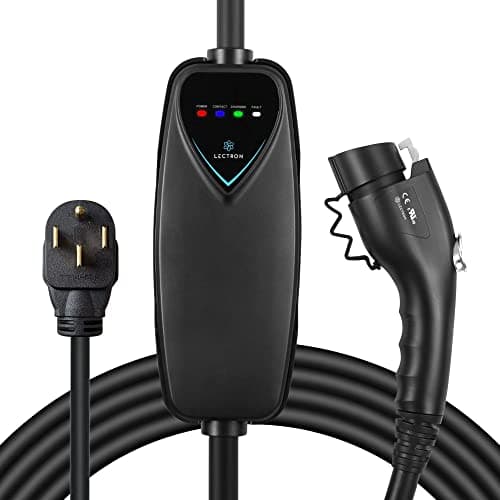
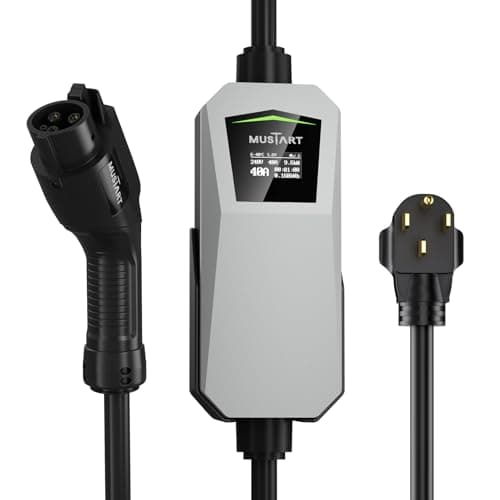
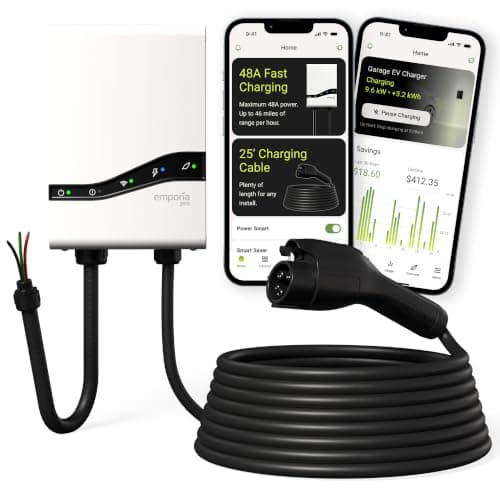
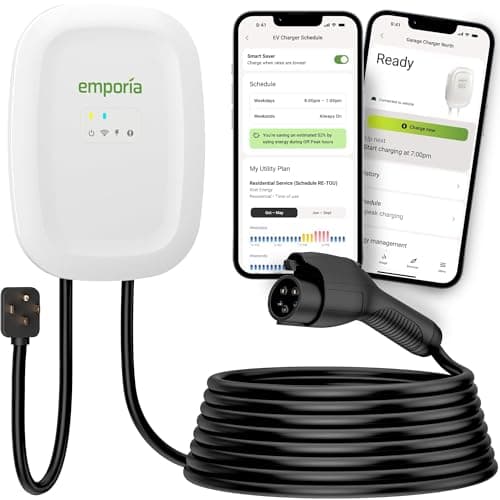
The best J1772 EV charger is the Emporia Level 2 (48A), and it is for the buyer who wants the most charger the mainstream price band contains: a 48-amp rating, a 25-foot cable, Wi-Fi scheduling and energy monitoring. The budget pick is the Lectron Level 2 (40A)— the cheapest charger in our registry, a plain ETL-listed 40-amp box on a NEMA 14-50 plug. If the charger needs to travel, the MUSTART 40A Portable is the cheapest true 40-amp cord we can find; if it needs to be a spare in the trunk, the EVDANCE Level 1 & 2 is the 120-volt answer.
Every price on this page is read from the live Amazon feed and stamped with its own date, so the rankings reflect what things actually cost rather than what they cost when the page was written. We compile published manufacturer specs and safety listings, read the live listing, and do the circuit arithmetic; we have not bench-tested these units and we do not claim to have. Our research method sets out exactly what our scores are and are not.
What J1772 actually is, in one paragraph
J1772 is the SAE standard for the AC charge connector used by essentially every non-Tesla electric vehicle sold in North America: a round five-pin plug with two large power pins, a ground, and two small signalling pins that let the charger and the car negotiate how much current is safe. It handles Level 1 (120-volt) and Level 2 (240-volt) AC charging only — DC fast charging uses a different connector entirely, which is why a CCS1 plug looks like a J1772 with two extra pins bolted underneath. If you have read the plug called “Type 1” or seen European sites talk about “Type 2”, that is a naming difference rather than a product difference, and we untangle it in Type 2 vs J1772. The connector itself is explained pin by pin in the J1772 connector explainer.
Why a J1772 charger is still the more universal buy
The obvious objection to this page in 2026 is that the industry is moving to NACS — the Tesla-style J3400 plug — so why buy the old connector? The answer is an asymmetry that almost nobody states plainly, and it runs in J1772's favor at home.
A J1772 charger plus a certified J1772-to-NACS adapter charges a NACS car. A NACS charger plus a certified NACS-to-J1772 adapter charges a J1772 car. Both directions work, both directions are cheap, and both adapters are AC-only. So far, symmetric. The asymmetry is in the fleet: the cars that have NACS ports are new, and the cars that have J1772 ports are everything else — the Bolt in the driveway, the Leaf the neighbor drives, the Ioniq 5 from before the switchover, the plug-in hybrid, and the used EV the next owner of your house will park in your garage. If you buy a J1772 charger you are buying the plug that fits the larger installed base and adapting up to the newer cars. If you buy NACS you are buying the plug that fits the newer cars and adapting down. For a charger that will be bolted to a wall for ten years, the first bet is the safer one.
There is one exception worth stating: if your household is all-Tesla and likely to stay that way, buy the native plug and skip the dangling adapter. Our best NACS home chargers roundup is the same job done on the other connector, and NACS vs J1772 covers the transition itself. The adapters are ranked in best J1772 to Tesla adapters.
The J1772 field in one table
Every row below is a J1772 charger with a live price at the last feed refresh, spanning all four install types the connector comes in. The price cell is a live buy button, so you can check any row without scrolling back to the picks.
| J1772 charger | Best for | Key specs (manufacturer) | Price |
|---|
| Emporia Level 2 (48A) | Most people who want the smart features too | Up to 48A / 11.5kW · J1772 · 25ft cable · Wi-Fi + app | Check price·Amazon |
| Lectron Level 2 (40A) | A simple, inexpensive plug-in charger | 40A / 9.6kW · J1772 · NEMA 14-50 plug · ETL · 16ft extension | $279.99·Amazon |
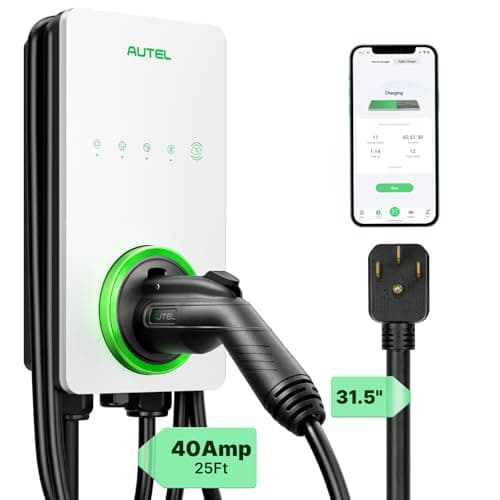
| Autel MaxiCharger (40A) | Feature-maximalists who want a tidy install | 40A / 9.6kW · J1772 · 25ft cable + holster · Wi-Fi + Bluetooth | $424.00·Amazon |
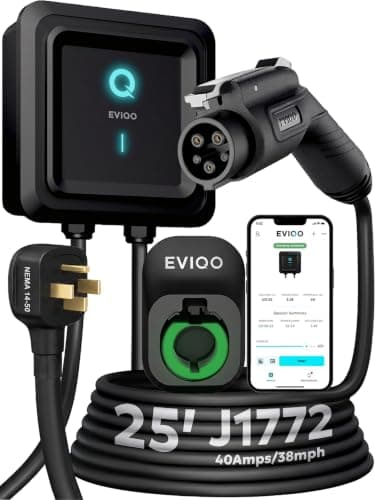
| EVIQO Level 2 (40A) | Budget-conscious buyers who still want smart features | 40A / 9.6kW · J1772 · 25ft cable · UL & ETL, IP66/NEMA 4 | Check price·Amazon |
| MUSTART 40A Portable | The cheapest capable portable | 40A / 9.6kW · J1772 · NEMA 14-50 plug · 21ft cable, LCD | Check price·Amazon |
| Emporia Pro (48A, PowerSmart) | A 100-amp service you would rather not upgrade | Up to 48A hardwired · J1772 · PowerSmart + Vue monitor · UL · ENERGY STAR · NEMA 4 | $599.00·Amazon |
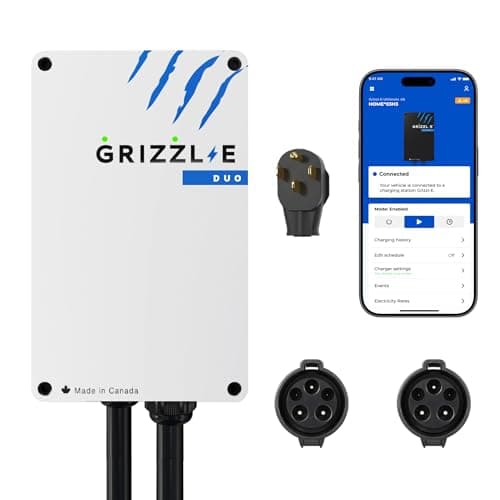
| Grizzl-E Duo Connect (dual 40A) | Two EVs on one circuit | Dual J1772 · Up to 40A shared · Two 25ft cables · NEMA 14-50 plug | $599.99·Amazon |
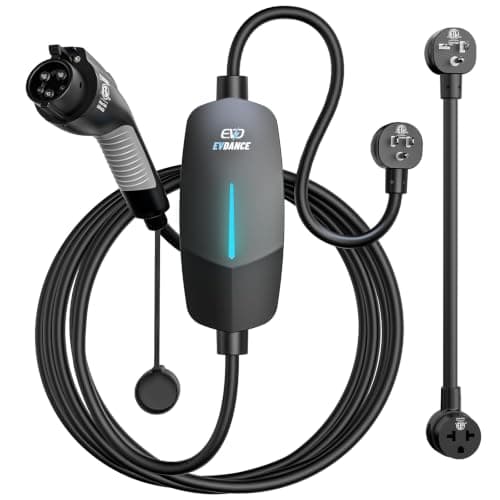
| EVDANCE Level 1&2 (12A/16A) | Most people buying a 110V charger | 12A @ 120V / 16A @ 240V · J1772 · NEMA 5-15 + 6-20 · ETL listed · 25ft | $119.99·Amazon |
#ad · Prices read live from the Amazon Product API as of November 13, 2026, and they move. Specs are the manufacturer's published claims from the live listing — we have not bench-measured them. Where we have no verified price we print none rather than a number that has gone stale. We may earn a commission.
Step one is the breaker, not the brand
A Level 2 charger is a continuous load, which means the circuit feeding it has to be rated at least 125% of the charger's output — read the other way, the charger may draw no more than 80% of the breaker. That single rule decides which row of the table you belong in before any brand preference enters the picture:
- A 50-amp circuit supports 40 amps, or 9.6 kW. This is what a NEMA 14-50 outlet gives you, which is exactly why so many plug-in J1772 chargers are built to 40 amps and no further. The Lectron, the Autel, the EVIQO, the MUSTART and the Grizzl-E Duo all live here.
- A 60-amp circuit supports 48 amps, or 11.5 kW, and it has to be hardwired, because no residential plug is rated to carry 48 amps continuously. The Emporia Level 2 and the Emporia Pro can both do this.
- A 20-amp 120-volt circuitsupports 16 amps on a dedicated receptacle, and an ordinary shared 15-amp household socket should carry 12. That is the EVDANCE cord's territory, and it is roughly 3 to 5 miles of range per hour.
The practical consequence is worth spelling out, because it saves money: if you are plugging into a NEMA 14-50 outlet rather than hardwiring, a 48-amp charger and a 40-amp charger deliver identical power, and the cheaper one is the better buy. Our wire size and breaker guide has the full table, and what amp charger do I need works through it from the panel side.
Wall unit, portable, or 120-volt cord
J1772 chargers come in three physically different shapes, and the table above mixes all three deliberately, because the autocomplete evidence shows people searching for a “j1772 wall charger”, a “portable j1772 charger” and a “j1772 level 1 charger” in roughly equal measure. They are not competing products.
A wall unit is the right answer for a house you own. It mounts, it holsters the handle, the cable manages itself, and the hardwired versions are the only route to 48 amps. The Emporia Level 2, the Autel, the EVIQO and the ChargePoint-class units are all this shape; our hardwired roundup covers the permanent-install end of it.
A portableis a plug on one end, a J1772 handle on the other, and the electronics in a brick in the middle. It delivers the same amps as a wall unit of the same rating — the MUSTART is a full 40 amps — but it lives on a hook rather than a bracket and it comes with you. That is the correct buy for a renter, a second car, or anyone whose garage already has a 240-volt outlet. See best portable EV chargers and portable vs hardwired.
A 120-volt cord is not a home charging solution for a commuter and we will not pretend otherwise. It is a backup, a spare, and a genuinely good answer for a plug-in hybrid with a small battery. The EVDANCE is on this list because it is ETL listed, sized to 12 amps rather than overstated, and switches to 16 amps at 240 volts if you later add an outlet. More of them in best 110V EV chargers.
The budget pick, honestly
The Lectron Level 2 (40A)is the cheapest charger in our registry and it sits a long way below the rest of the wall units here. It is a 40-amp, ETL-listed, J1772 box on a NEMA 14-50 plug with a 16-foot cable, and what you give up for the saving is the software: no Wi-Fi, no scheduling, no per-session energy reporting. If your utility bills on a time-of-use plan and you need the charger itself to move the session to overnight rates, that omission costs real money and the Emporia is the better buy. If your car does the scheduling — most do — or your rate is flat, the Lectron delivers the same 40 amps as units costing nearly twice as much. The budget roundup puts it against the rest of the cheap field, and our full review goes through the 16-foot cable question in detail.
What we left out, and why
The Grizzl-E Classic. For years this was the obvious no-app J1772 recommendation, and its ASIN is dead: the Amazon product page returns a 404 and the catalog API rejects the identifier outright. We will not put a buy button on a listing that does not exist. If that is the charger you came looking for, we wrote Grizzl-E alternatives for exactly that problem.
The 80-amp J1772 tier. The Autel MaxiCharger AC Pro reaches 80 amps on a 100-amp circuit, which almost no house has spare. It is a real product and we cover it in the 80-amp roundup, but putting it on a general J1772 list would mislead the 95% of readers whose panel tops out well below it.
Anything with no named safety listing. There is a long tail of cheap J1772 units on marketplaces that name no UL, cUL or ETL standard anywhere in the listing. At 40 amps of continuous current in an attached garage, that is not a corner to cut, and none of them appear here. The listing-ranked version of this argument is best UL-listed EV chargers.
The criteria we ranked on
1. Does the amperage match a circuit a real house has? We weighted 40-amp and 48-amp units above the 80-amp tier on purpose. A charger you cannot feed is a charger that runs at whatever your breaker allows, and the overwhelming majority of homes with an EV outlet have a 50-amp or 60-amp circuit. Rating a unit highly for a ceiling the reader cannot reach is a scoring error dressed up as a recommendation.
2. Is there a named third-party safety listing? Every unit on this page names a UL, cUL or ETL listing in its live listing text, and several name the specific standard (UL 2594 for the equipment, UL 2251 for connectors). This is the one criterion we treat as a gate rather than a score: a 40-amp continuous load with no listing does not make the page at any price.
3. Cable length, which people underestimate. The difference between 16 feet and 25 feet is the difference between reaching the charge port from where the charger has to be mounted and reversing into the garage every night. J1772 ports sit in wildly different places — front fender, rear quarter, nose — so measure before you choose. The cable question in full is EV charger cable length.
4. Enclosure rating, if any part of the install is outdoors. A published IP66 or NEMA 4 rating covers windblown dust and hose-directed water; NEMA 3R covers falling rain and snow. Both are fine under an eave; only the first is fine on an exposed wall. The enclosure-ranked list is the most durable EV chargers.
5. Whether the smart features earn their price. We do not treat Wi-Fi as automatically good. Scheduling matters if your rate plan is time-of-use and your car cannot schedule itself; load management matters if your panel is tight. Everything else is telemetry. If none of it applies to you, the no-app roundup is the cheaper, longer-lived answer, and do I need a smart charger makes the case either way.
What we did not score. We did not measure charge rates, cable flexibility in cold weather, or enclosure durability ourselves. Those claims are the manufacturer's, sourced below, and where a maker does not publish a figure we say so rather than filling it in.