Skip to content
Volt & Cable

HUB 01 · Level 2 Home Chargers

The Best 50-Amp EV Chargers

"50 amp" means two different things, and only one of them is a charger setting. Here is which chargers genuinely reach 50 amps, which ones correctly fill a 50-amp circuit, and the breaker each needs.

By Stephen V.Updated How we research
#ad

We earn a commission when you buy through our Amazon links, at no extra cost to you. It never affects our rankings, and we say so when the cheaper product is the better buy. How this works.

The short answer

Quick picks

#ad · Live prices from the Amazon Product API, as of November 13, 2026. Where we have no verified live price, we show none — we would rather leave a gap than print a number that has gone stale.

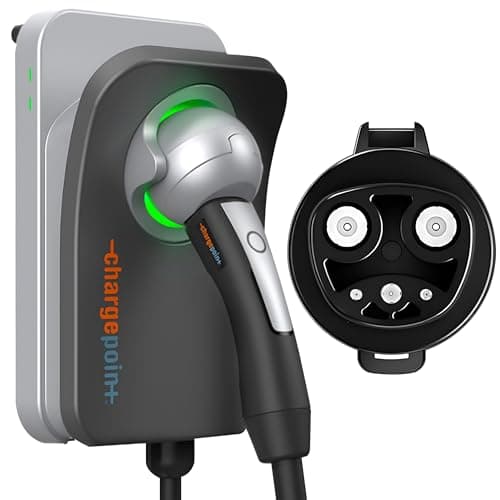
The best 50-amp EV charger is the ChargePoint Home Flex, and it is for the buyer who wants a genuine 50-amp setting rather than a 50-amp breaker: its output is selectable from 16 to 50 amps, so it is the one unit here whose own rating matches the number you searched for. For a Tesla-style port, the ChargePoint Home Flex NACS is the same 16-to-50-amp range with the native plug. The budget pick is the Lectron Level 2 (40A)— the cheapest charger in our registry that correctly fills a 50-amp circuit, which is what most people searching this actually have. Which of those two pages you belong on is settled in the next paragraph.

The phrase “50-amp EV charger” is used for two different things and the gap between them is a breaker, a wire gauge and several hundred dollars of installation. We compile published specs and do the NEC arithmetic; prices come from the live Amazon feed with their own date stamp. We have not bench-tested these units.

The distinction that decides this purchase

Meaning one: a charger that outputs 50 amps.EV charging is a continuous load, so the NEC requires the circuit to be rated at least 125% of it. Fifty amps × 1.25 = 62.5 amps, and the next standard breaker above that is 70. So a charger actually set to 50 amps needs a 70-amp breakerand conductors sized to match — typically 4 AWG copper — and it has to be hardwired, because no household plug is rated to carry it.

Meaning two: a charger for a 50-amp circuit. Here 50 is the breaker, and the 80% rule caps the charger at 40 amps. This is the far more common case, because a 50-amp circuit feeding a NEMA 14-50 outlet is the standard EV install in American garages. If you have a 14-50 socket, you are in this group, and our NEMA 14-50 roundup is the page written for it.

Both groups are served below, labelled. The wire size and breaker guide has the complete table if you want to check your own numbers, and how to set the amps covers configuring a unit down to the circuit you actually have — which is mandatory, not optional, on every adjustable charger here.

The chargers that genuinely reach 50 amps

Only two units in our registry publish a 50-amp output rating: the ChargePoint Home Flex and its NACS sibling, both specified as adjustable from 16 to 50 amps. That adjustability is the reason the Home Flex is the pick rather than simply the highest number — it is the only unit that can be set correctly for a 30-, 40-, 50- or 60-amp circuit from the same box, which matters if you are installing into an existing panel whose spare capacity is not yet known.

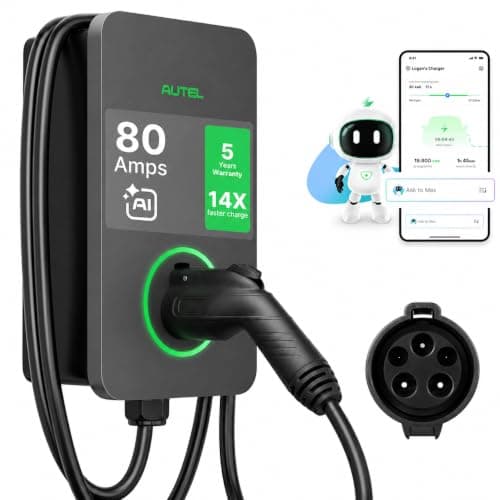
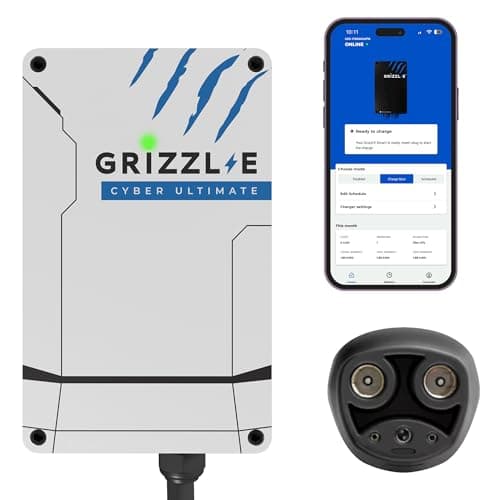
Above them sit two 80-amp units that pass through 50 on their way up: the Grizzl-E Ultimate 80A and the Autel MaxiCharger 80A (AC Pro). Both will run at 50 amps, and both are genuinely better hardware — the Grizzl-E in a UL Type 4 enclosure that works with no network at all, the Autel with Wi-Fi and a 25-foot cable. Buying either to run at 50 amps is overbuying unless you plan to upgrade the circuit later, and neither is cheap; our 80-amp roundup covers them for what they are.

Why no 50-amp charger is plug-in

There is a practical reason the two meanings never overlap: no residential plug standard is rated to carry 50 amps continuously. A NEMA 14-50 receptacle is a 50-amp device on a 50-amp circuit, and the continuous-load rule hands 40 amps to the charger. A NEMA 14-60 exists but is not a receptacle you will find in a garage, and nothing above it is a plug-in proposition at all. So a genuine 50-amp charger is always hardwired, always on a 70-amp breaker, and always an electrician's job rather than an afternoon's. If somebody is selling you a 50-amp charger on a plug, the 50 is the breaker.

Every pick, with the circuit each one needs

ChargerBest forKey specs (manufacturer)Price
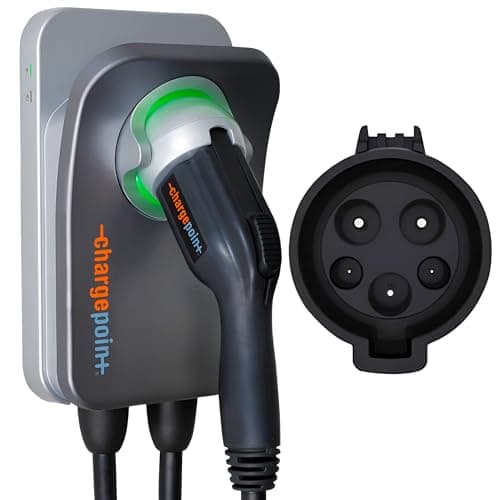
ChargePoint Home FlexBuyers who want the established brand and appAdjustable to 50A · J1772 · NEMA 14-50 plug · Energy Star$599.00Amazon
ChargePoint Home Flex NACS (hardwired)Buyers who want the mature brand and app16–50A adjustable · NACS (J3400) · Hardwired · NEMA 3R outdoor$549.00Amazon
Grizzl-E Ultimate 80A (NACS)NACS / Tesla cars that can take 19.2 kWUp to 80A / 19.2 kW · NACS (Tesla-style) · Hardwired · 100A circuit · UL Type 4, works offline$599.99Amazon
Autel MaxiCharger 80A (AC Pro)J1772 cars with a 19.2 kW onboard chargerUp to 80A / 19.2 kW · J1772 · Hardwired · 100A circuit · Wi-Fi + app, 25ft$1,069.00Amazon
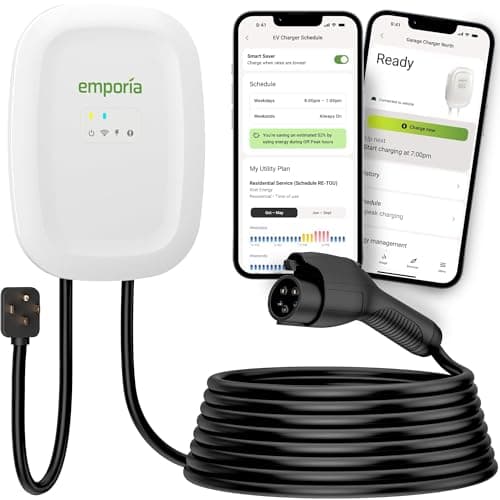
Emporia Level 2 (48A)Most people who want the smart features tooUp to 48A / 11.5kW · J1772 · 25ft cable · Wi-Fi + appCheck priceAmazon
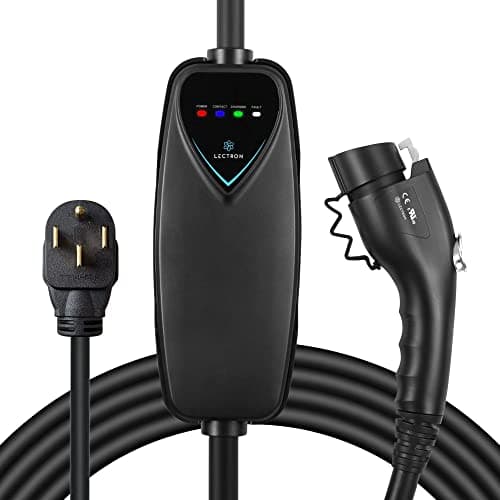
Lectron Level 2 (40A)A simple, inexpensive plug-in charger40A / 9.6kW · J1772 · NEMA 14-50 plug · ETL · 16ft extension$279.99Amazon

#ad · Prices read live from the Amazon Product API as of November 13, 2026, and they move. Specs are the manufacturer's published claims from the live listing — we have not bench-measured them. Where we have no verified price we print none rather than a number that has gone stale. We may earn a commission.

Is 50 amps worth the install?

Usually not, and this is the part the number hides. Fifty amps at 240 volts is 12 kW. Forty amps is 9.6 kW. The difference is roughly 7 miles of range per hour of charging — on a car whose onboard charger can accept 12 kW at all, and most cannot: 11.5 kW (48 amps) is the common ceiling, and plenty of vehicles stop at 7.7 kW (32 amps). Your charging speed is the lower of the charger, the circuit and the car, and for most cars the car is already the limit.

Against that modest gain you are paying for a 70-amp breaker, heavier conductors and a hardwired install, and possibly for panel capacity you do not have. The 48-amp tier — ranked here— reaches the real ceiling of most vehicles on a 60-amp circuit, which is a materially cheaper job. If your panel is tight, a load-managing charger is a better answer than a bigger one: chargers with load management share capacity rather than demanding more of it. Have a licensed electrician confirm what your service can carry before committing to any of this.
In detail

The picks, in full

01
ChargePoint ChargePoint Home Flex

Buyers who want the established brand and app

ChargePoint Home Flex

Adjustable to 50AJ1772NEMA 14-50 plugEnergy Star
8.2/10

The polished, well-supported option — adjustable up to 50 amps and tied into the largest public charging app in North America.

Charge speed
9
Build & weather
8
Smart features
9
Cable & connector
8
Value
7

Pros

  • Amperage is adjustable in the app to match whatever breaker you install, up to 50A
  • Integrates with ChargePoint's large public-network app — one app for home and away
  • Long track record and responsive support, which budget brands cannot match

Cons

  • Costs more than equally capable chargers from newer brands
  • The experience leans hard on the ChargePoint account and app

Don't buy this if…

…price is your first priority. The Emporia matches most of what this does for meaningfully less — you are paying here for brand maturity and the unified app, which are real but not free.

$599.00View on Amazon

$657.999% off

Price as of November 13, 2026. Prices change — Amazon's is the one that counts.

#ad · we may earn a commission from this link to ChargePoint Home Flex

02
ChargePoint ChargePoint Home Flex NACS (hardwired)

Buyers who want the mature brand and app

ChargePoint Home Flex NACS (hardwired)

16–50A adjustableNACS (J3400)HardwiredNEMA 3R outdoor
8.6/10

The established-brand pick: amperage selectable from 16 all the way to 50, so one unit fits whatever breaker your panel can actually spare.

Charge speed
10
Build & weather
9
Smart features
9
Cable & connector
8
Value
7

Pros

  • Amperage is set in the app — 16, 24, 32, 40, 48 or 50 amps — so the charger adapts to the circuit instead of the other way round
  • Hardwired at up to 50 amps, the fastest configuration in this roundup
  • NEMA 3R outdoor-rated enclosure, and one ChargePoint account covers home charging and the largest public network in North America

Cons

  • Hardwired only — there is no unplugging this one and taking it with you, and the install is licensed work
  • Costs more than equally capable NACS chargers from newer brands

Don't buy this if…

…you rent or you might move. A hardwired charger stays with the house — the plug-in Lectron Nexus or the Lectron NACS portable is the one that leaves with you.

$549.00View on Amazon

Price as of November 13, 2026. Prices change — Amazon's is the one that counts.

#ad · we may earn a commission from this link to ChargePoint Home Flex NACS (hardwired)

03
Grizzl-E Grizzl-E Ultimate 80A (NACS)

NACS / Tesla cars that can take 19.2 kW

Grizzl-E Ultimate 80A (NACS)

Up to 80A / 19.2 kWNACS (Tesla-style)Hardwired · 100A circuitUL Type 4, works offline
8.4/10

The rugged 80-amp pick for a NACS car — a UL Type 4 metal box that hits 19.2 kW and keeps working with or without Wi-Fi.

Charge speed
10
Build & weather
10
Smart features
7
Cable & connector
8
Value
7

Pros

  • Full 80 amps / 19.2 kW when hardwired on a 100-amp circuit, with a native NACS plug for a Tesla or NACS-port EV
  • Heavy-duty UL Type 4 indoor/outdoor metal enclosure, made in Canada — the rugged Grizzl-E build in its fastest form
  • Scheduling and energy stats that work with or without an internet connection, so it does not depend on a live cloud

Cons

  • 80 amps needs a hardwired 100-amp dedicated circuit — a major electrical job
  • Only adds speed if your car's onboard AC charger supports 19.2 kW; most EVs cap at 11.5 kW (48A)
  • The J1772 version of the Ultimate is frequently out of stock, and stock on the NACS one runs thin

Don't buy this if…

…your car cannot accept 19.2 kW on AC, or your panel cannot carry a 100-amp circuit. Step down to a 48-amp charger — it will charge most EVs at exactly the same speed for far less.

$599.99View on Amazon

$899.0033% off

Price as of November 13, 2026. Prices change — Amazon's is the one that counts.

#ad · we may earn a commission from this link to Grizzl-E Ultimate 80A (NACS)

04
Autel Autel MaxiCharger 80A (AC Pro)

J1772 cars with a 19.2 kW onboard charger

Autel MaxiCharger 80A (AC Pro)

Up to 80A / 19.2 kWJ1772Hardwired · 100A circuitWi-Fi + app, 25ft
8.4/10

The J1772 way to get the full 19.2 kW at home — a hardwired 80-amp charger for the few EVs that can actually use it.

Charge speed
10
Build & weather
8
Smart features
9
Cable & connector
8
Value
7

Pros

  • Delivers the full 80 amps / 19.2 kW when hardwired on a 100-amp circuit — up to roughly 70 miles of range per hour for a car that can take it
  • J1772 connector fits the majority of non-Tesla EVs, with Wi-Fi, app control and a 25-foot cable
  • Indoor/outdoor rated with a long warranty and cloud/OCPP features for advanced or multi-unit setups

Cons

  • 80 amps needs a hardwired 100-amp dedicated circuit — a major electrical job most home panels cannot spare
  • Only adds speed if your car's onboard AC charger supports 19.2 kW; most EVs cap at 11.5 kW (48A), where a cheaper 48-amp unit charges just as fast
  • Leans on Wi-Fi/cloud and costs roughly double a good 48-amp charger

Don't buy this if…

…your EV's onboard charger tops out at 11.5 kW (most do) or your panel cannot carry a 100-amp circuit. In either case an 80-amp charger delivers no extra speed — buy a 48-amp unit and save the money and the electrical work.

$1,069.00View on Amazon

$1,299.0018% off

Price as of November 13, 2026. Prices change — Amazon's is the one that counts.

#ad · we may earn a commission from this link to Autel MaxiCharger 80A (AC Pro)

05
Emporia Emporia Level 2 (48A)

Most people who want the smart features too

Emporia Level 2 (48A)

Up to 48A / 11.5kWJ177225ft cableWi-Fi + app
9.0/10

The smart charger that does not charge a smart-charger premium — 48-amp capability and real energy monitoring for the price of a dumb one.

Charge speed
10
Build & weather
8
Smart features
9
Cable & connector
8
Value
10

Pros

  • 48-amp capable when hardwired, which is faster than the 40-amp plug-in default
  • Genuine energy monitoring and scheduling in the app, at a price that undercuts most smart rivals
  • 25-foot cable is long enough to reach across a two-car garage

Cons

  • 48-amp operation requires hardwiring on a 60-amp circuit — the NEMA 14-50 plug version is capped at 40A
  • App and Wi-Fi are central to the experience, so setup is more involved than a plug-and-go unit

Don't buy this if…

…you never want to open an app. Much of what you pay for here is the software, and if you would rather have a box that just works with no app in the loop, the app-free picks in our dumb-charger roundup are the honest alternative — the old no-app favorite, the Grizzl-E Classic, is discontinued on Amazon.

Check price on Amazon →

No buyable offer at the last price check (November 13, 2026). We show nothing rather than a stale number.

#ad · we may earn a commission from this link to Emporia Level 2 (48A)

06
Lectron Lectron Level 2 (40A)

A simple, inexpensive plug-in charger

Lectron Level 2 (40A)

40A / 9.6kWJ1772NEMA 14-50 plugETL · 16ft extension
7.4/10

A simple, ETL-listed plug-in charger from a known EV brand — a no-frills, low-cost way to charge at Level 2.

Charge speed
8
Build & weather
8
Smart features
5
Cable & connector
8
Value
8

Pros

  • ETL certified — a real safety listing at a budget price
  • Plug-in NEMA 14-50 install — no electrician needed if the outlet exists, and it ships with a 16-foot extension cord for reach
  • Straightforward and inexpensive, from an established EV-charging brand

Cons

  • No app, energy monitoring, or scheduling — a bare-bones charger
  • 40-amp ceiling

Don't buy this if…

…you want energy monitoring or scheduling. For similar money the Emporia adds real smart features — this Lectron's appeal is simplicity, a trusted brand, and price.

$279.99View on Amazon

Price as of November 13, 2026. Prices change — Amazon's is the one that counts.

#ad · we may earn a commission from this link to Lectron Level 2 (40A)

How we picked

We do not run a testing lab

We compiled published specifications from manufacturer manuals and spec sheets, verified the safety listings (UL / ETL), computed the real running and installation costs, checked the wiring math against the NEC continuous-load rule, and read aggregated owner reviews — then scored each product against a published rubric. The scores are judgments from documented research — they are not bench measurements, because we do not have a test lab and we are not going to pretend we do. Every spec and cost figure is cited in Sources.

Questions

Frequently asked

Does a 50-amp EV charger need a 50-amp breaker?

No. A charger set to 50 amps is a continuous load, so the NEC requires a circuit rated at least 62.5 amps — a 70-amp breaker in practice, with conductors to match. A 50-amp breaker supports a 40-amp charger.

What charger should I buy for a 50-amp circuit?

A 40-amp one, or an adjustable unit set to 40. That is the maximum a 50-amp circuit may carry continuously. Our NEMA 14-50 roundup ranks exactly that field.

Is 50 amps much faster than 40?

About 12 kW against 9.6 kW, or roughly 7 extra miles of range per hour — and only if your car's onboard charger can accept 12 kW, which many cannot. The upgrade from a 50-amp to a 70-amp circuit rarely pays for itself.

Can a 50-amp charger be plugged in rather than hardwired?

Not at 50 amps. No residential plug standard is rated to carry 50 amps continuously, so a 50-amp output has to be hardwired. Plug-in installs on a 14-50 are capped at 40.

Keep reading

Receipts

Sources

We do not run a testing lab, and we do not pretend to. Where a measured number came from someone else's lab, we name them and link them. Where we could not verify something, we say so on the page rather than quietly leaving it out. Read our full method.