Skip to content
Volt & Cable

HUB 01 · Level 2 Home Chargers

The Fastest Level 2 Home Charger for Your Car

Three ceilings set your charging speed: the circuit, the charger and the car. The lowest one wins, and it is usually the car - which is why the fastest charger on the market is the wrong buy for most drivers.

By Stephen V.Updated How we research
#ad

We earn a commission when you buy through our Amazon links, at no extra cost to you. It never affects our rankings, and we say so when the cheaper product is the better buy. How this works.

The short answer

Quick picks

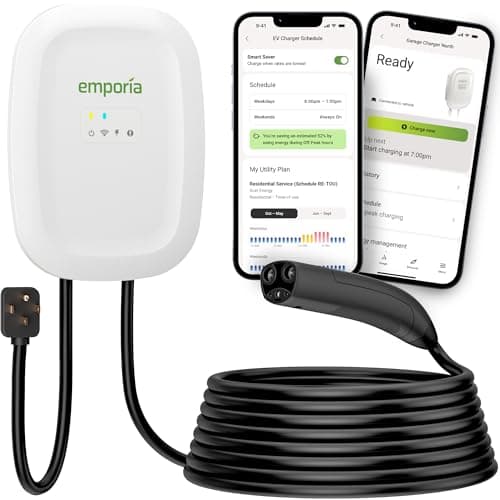
  • Emporia Emporia Level 2 (48A)
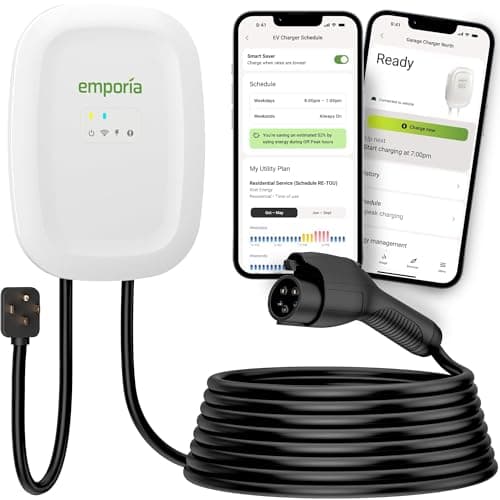
    01 Emporia Level 2 (48A)
    9.0

    The smart charger that does not charge a smart-charger premium — 48-amp capability and real energy monitoring for the price of a dumb one.

    Best for: Most people who want the smart features too

    Check priceAmazon
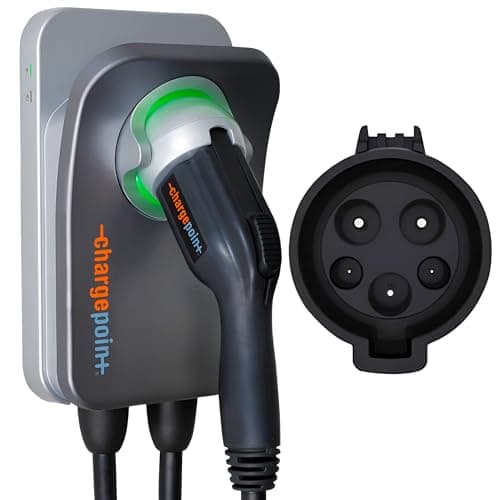
  • ChargePoint ChargePoint Home Flex
    02 ChargePoint Home Flex
    8.2

    The polished, well-supported option — adjustable up to 50 amps and tied into the largest public charging app in North America.

    Best for: Buyers who want the established brand and app

    $599.00Amazon
  • Emporia Emporia Level 2 NACS (48A)
    03 Emporia Level 2 NACS (48A)
    8.8

    The charger we already rate best for most homes, with a Tesla-style plug on the end — UL and Energy Star listed, and no adapter in the loop.

    Best for: Most NACS-port households

    Check priceAmazon
  • Autel Autel MaxiCharger 80A (AC Pro)
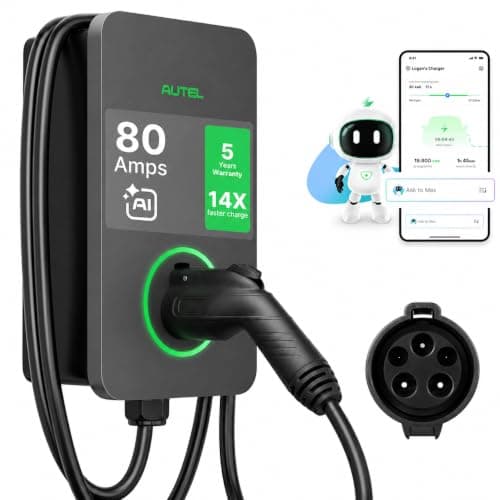
    04 Autel MaxiCharger 80A (AC Pro)
    8.4

    The J1772 way to get the full 19.2 kW at home — a hardwired 80-amp charger for the few EVs that can actually use it.

    Best for: J1772 cars with a 19.2 kW onboard charger

    $1,069.00Amazon
  • Grizzl-E Grizzl-E Ultimate 80A (NACS)
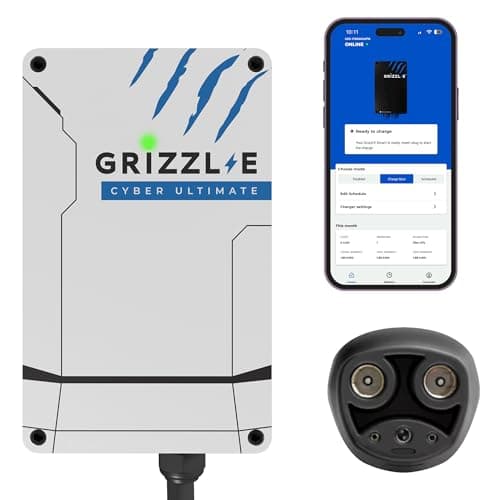
    05 Grizzl-E Ultimate 80A (NACS)
    8.4

    The rugged 80-amp pick for a NACS car — a UL Type 4 metal box that hits 19.2 kW and keeps working with or without Wi-Fi.

    Best for: NACS / Tesla cars that can take 19.2 kW

    $599.99Amazon
  • EVIQO EVIQO Level 2 (40A)
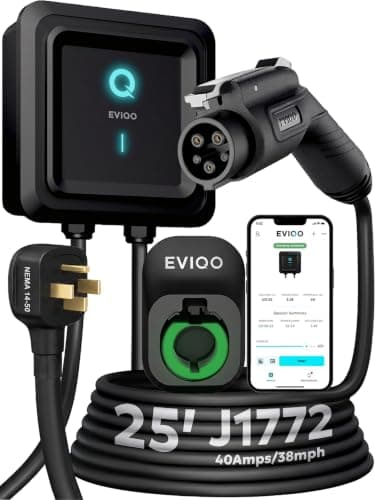
    06 EVIQO Level 2 (40A)
    8.6

    A weatherproof, UL-and-ETL-listed smart charger that regularly sits at the bottom of the price band — a lot of charger for the money.

    Best for: Budget-conscious buyers who still want smart features

    Check priceAmazon

#ad · Live prices from the Amazon Product API, as of November 13, 2026. Where we have no verified live price, we show none — we would rather leave a gap than print a number that has gone stale.

For the great majority of drivers the fastest Level 2 charger worth buying is a 48-amp unit, and the best-value one is the Emporia Level 2 — because 11.5 kW is where most EVs' onboard AC chargers stop, and a charger cannot push power the car refuses to take. Faster hardware exists: two 80-amp units deliver 19.2 kW on a hardwired 100-amp circuit. They are the right answer only for the handful of cars that publish an AC acceptance above 11.5 kW. Check your car before you buy your charger, and the whole question usually gets cheaper.

“Fastest” is the most mis-sold word in this category. A charger listing can truthfully claim 19.2 kW while delivering 7.7 kW in your garage, and nothing has gone wrong — that is simply the lowest of three ceilings doing its job. This page is organized around those ceilings rather than around the hardware, because that is the order in which your real speed gets decided.

Ceiling 1: the circuit

A Level 2 charger is a continuous load, so it can draw no more than 80% of the breaker feeding it. A 50-amp circuit gives you 40 amps; a 60-amp circuit gives you 48; 19.2 kW needs a dedicated 100-amp circuit. Those are not preferences, they are the rule the installer works to, and our wire size and breaker guideshows what each rung costs in copper. If your panel is full, this ceiling is the binding one and nothing else on this page matters until it is solved — see chargers for a 100-amp panel.

Ceiling 2: the charger

This is the one every product page talks about, and the simplest: 240 volts times the charger's amperage. Forty amps is 9.6 kW, 48 amps is 11.5 kW, 80 amps is 19.2 kW. Note what the tiers are worth in practice. Going from 40 to 48 amps is a 20% speed increase and usually means hardwiring on a bigger circuit. Going from 48 to 80 amps is a 67% increase on paper — and zero in the driveway for most cars, which brings us to the ceiling that actually decides this.

Ceiling 3: the car, which is usually the one that binds

Every EV has an onboard charger: the AC-to-DC converter inside the car that the wall unit feeds. Its rating is a hard limit. Plug a 19.2 kW charger into a car whose onboard charger accepts 11.5 kW and the car draws 11.5 kW, exactly as it would from a charger costing half as much. We explain the mechanism at kW vs amps explained, and it is also the most common answer to why is my EV charging so slow.

Three things are worth knowing about finding your own figure, and we would rather give you the method than a table of numbers we cannot keep current for every model year.

  • Most EVs sold in North America cap at 11.5 kW (48 amps) on AC. That is why 48-amp chargers dominate the premium tier and why the 80-amp tier is so thin.
  • Trim and model year change the answer, sometimes dramatically. Tesla publishes this on its own support site and it is a useful illustration: the Onboard Charger page lists Model Y with an 11.5 kW (48 amp) onboard charger and a 60-amp breaker recommendation, while a footnote on the Wall Connector page states that the maximum charge rate for Model 3 Rear-Wheel Drive, Model Y Rear-Wheel Drive and Model Y All-Wheel Drive is 32 A (7.7 kW). Same manufacturer, same website, two different answers depending on which car you actually own. If a buyer takes the headline figure and sizes a 60-amp circuit for a car that draws 32 amps, they have paid for copper they will never use.
  • A small number of cars genuinely accept more than 11.5 kW. The clearest case is the Lucid Air, whose onboard charger is reported at up to 19.2 kW (240 V, 80 A) on many trims, and for which Lucid sells a Connected Home Charging Station rated up to 19.2 kW. If that is your car, the 80-amp tier is real speed rather than a spec-sheet trophy — see also charging a Lucid Air at home.

Where to find your car's number, in order of reliability. The owner's manual section on AC charging; the manufacturer's own charging support page for your exact model and trim; the window sticker or build sheet if you still have it. Third-party spec aggregators disagree with each other more often than you would hope — we checked one popular model and found 10.5, 10.6, 10.9 and “about 11” kW across four sites, which is why we are not publishing a model-by-model table on this page. Our home charging guide and the per-vehicle pages linked below carry what each manufacturer publishes.

What the ceilings mean in miles

Charging speed in kilowatts converts to range per hour through your car's efficiency. At a round 3.5 miles per kWh — a reasonable midsize-EV figure, not a measurement of your car — the arithmetic is: 7.7 kW is about 27 miles per hour of charging, 9.6 kW is about 34, 11.5 kW is about 40, and 19.2 kW is about 67. Put a typical 40-mile commute next to those numbers and the practical conclusion is uncomfortable for anyone selling the fastest charger: a 40-amp unit replaces a day's driving in a little over an hour. The tiers above it buy convenience on unusual days, not daily capability.

If you meant DC fast charging, that is a different animal

A share of people searching for the fastest charger are thinking of the 150 kW pedestals at a highway stop, not a wall unit. Those are DC fast chargers: they bypass the car's onboard AC charger entirely and feed the battery directly, which is exactly why they are not a home product. The cabinet does the AC-to-DC conversion, so the hardware is enormous, and the published federal figures put a single public connector at tens of thousands of dollars of equipment before any trenching. We laid out the numbers and the sources at how much a DC fast charger costs to install and the mechanism at DC fast charging explained. For a house, 19.2 kW of AC is the ceiling, and almost nobody needs to reach it.

Two households, same question, different answers

Household A: one EV, 40-mile commute, 100-amp service, existing 14-50 outlet. The fastest sensible charger here is a 40-amp plug-in unit, and the correct amount of money to spend on speed is zero extra. Nine hours parked at 9.6 kW is more energy than the car can hold. The upgrade worth paying for in this house is not amperage — it is a better receptacle and a cable hook.

Household B: two EVs, 200-amp service, one charger, both cars driven daily. Here speed is genuinely scarce, because the cars are queuing for one cable. The answer is still not 80 amps: it is 48 amps plus a plan for the queue, which means either a second circuit, a dual-cable unit that shares amperage, or load management so both can charge without tripping the main. We worked the whole scenario at charging two EVs in one household.

The pattern in both: the fastest charger is a question about the gap between when you plug in and when you leave. If that gap is eight hours, almost any Level 2 charger is fast enough, and the money is better spent on the parts of the install that decide whether it is still working in ten years.

How we ranked these

Criteria, in the order we weighted them: usable delivered power (the power a mainstream EV can actually accept, not the badge number), cost per usable kW, adjustability (whether one unit can be dialed to fit whatever circuit you end up with), install burden and connector fit. Every pick is an existing registry entry whose listing we re-verified live on 2026-11-01; we have not bench-tested any of them and the scores are judgments from published specs, as how we research sets out.

In detail

The picks, in full

01
Emporia Emporia Level 2 (48A)

Most people who want the smart features too

Emporia Level 2 (48A)

Up to 48A / 11.5kWJ177225ft cableWi-Fi + app
9.0/10

The smart charger that does not charge a smart-charger premium — 48-amp capability and real energy monitoring for the price of a dumb one.

Charge speed
10
Build & weather
8
Smart features
9
Cable & connector
8
Value
10

Pros

  • 48-amp capable when hardwired, which is faster than the 40-amp plug-in default
  • Genuine energy monitoring and scheduling in the app, at a price that undercuts most smart rivals
  • 25-foot cable is long enough to reach across a two-car garage

Cons

  • 48-amp operation requires hardwiring on a 60-amp circuit — the NEMA 14-50 plug version is capped at 40A
  • App and Wi-Fi are central to the experience, so setup is more involved than a plug-and-go unit

Don't buy this if…

…you never want to open an app. Much of what you pay for here is the software, and if you would rather have a box that just works with no app in the loop, the app-free picks in our dumb-charger roundup are the honest alternative — the old no-app favorite, the Grizzl-E Classic, is discontinued on Amazon.

Check price on Amazon →

No buyable offer at the last price check (November 13, 2026). We show nothing rather than a stale number.

#ad · we may earn a commission from this link to Emporia Level 2 (48A)

02
ChargePoint ChargePoint Home Flex

Buyers who want the established brand and app

ChargePoint Home Flex

Adjustable to 50AJ1772NEMA 14-50 plugEnergy Star
8.2/10

The polished, well-supported option — adjustable up to 50 amps and tied into the largest public charging app in North America.

Charge speed
9
Build & weather
8
Smart features
9
Cable & connector
8
Value
7

Pros

  • Amperage is adjustable in the app to match whatever breaker you install, up to 50A
  • Integrates with ChargePoint's large public-network app — one app for home and away
  • Long track record and responsive support, which budget brands cannot match

Cons

  • Costs more than equally capable chargers from newer brands
  • The experience leans hard on the ChargePoint account and app

Don't buy this if…

…price is your first priority. The Emporia matches most of what this does for meaningfully less — you are paying here for brand maturity and the unified app, which are real but not free.

$599.00View on Amazon

$657.999% off

Price as of November 13, 2026. Prices change — Amazon's is the one that counts.

#ad · we may earn a commission from this link to ChargePoint Home Flex

03
Emporia Emporia Level 2 NACS (48A)

Most NACS-port households

Emporia Level 2 NACS (48A)

48A ratedNACS (J3400)NEMA 14-50 plugUL + Energy Star
8.8/10

The charger we already rate best for most homes, with a Tesla-style plug on the end — UL and Energy Star listed, and no adapter in the loop.

Charge speed
9
Build & weather
8
Smart features
9
Cable & connector
9
Value
9

Pros

  • Native NACS connector — a Tesla or a 2025-onward NACS-port EV plugs straight in with nothing hanging off the handle
  • UL listed and Energy Star certified, which several cheap NACS units on Amazon cannot claim
  • 25-foot cable and the same Emporia energy monitoring and scheduling as the J1772 model we rate best overall

Cons

  • 48 amps is the hardware ceiling, not what the plug delivers — on a NEMA 14-50 the 50-amp circuit caps continuous draw at 40A, so the full 48 needs the hardwired version
  • Wi-Fi and the app are central to the experience, so setup is more involved than a sealed plug-and-go box

Don't buy this if…

…you are buying it for the 48-amp number but not hardwiring it. On a 14-50 plug it charges at 40 amps like everything else on a 50-amp circuit — at that point the cheaper Lectron Nexus or EVIQO does the same job for less.

Check price on Amazon →

No buyable offer at the last price check (November 13, 2026). We show nothing rather than a stale number.

#ad · we may earn a commission from this link to Emporia Level 2 NACS (48A)

04
Autel Autel MaxiCharger 80A (AC Pro)

J1772 cars with a 19.2 kW onboard charger

Autel MaxiCharger 80A (AC Pro)

Up to 80A / 19.2 kWJ1772Hardwired · 100A circuitWi-Fi + app, 25ft
8.4/10

The J1772 way to get the full 19.2 kW at home — a hardwired 80-amp charger for the few EVs that can actually use it.

Charge speed
10
Build & weather
8
Smart features
9
Cable & connector
8
Value
7

Pros

  • Delivers the full 80 amps / 19.2 kW when hardwired on a 100-amp circuit — up to roughly 70 miles of range per hour for a car that can take it
  • J1772 connector fits the majority of non-Tesla EVs, with Wi-Fi, app control and a 25-foot cable
  • Indoor/outdoor rated with a long warranty and cloud/OCPP features for advanced or multi-unit setups

Cons

  • 80 amps needs a hardwired 100-amp dedicated circuit — a major electrical job most home panels cannot spare
  • Only adds speed if your car's onboard AC charger supports 19.2 kW; most EVs cap at 11.5 kW (48A), where a cheaper 48-amp unit charges just as fast
  • Leans on Wi-Fi/cloud and costs roughly double a good 48-amp charger

Don't buy this if…

…your EV's onboard charger tops out at 11.5 kW (most do) or your panel cannot carry a 100-amp circuit. In either case an 80-amp charger delivers no extra speed — buy a 48-amp unit and save the money and the electrical work.

$1,069.00View on Amazon

$1,299.0018% off

Price as of November 13, 2026. Prices change — Amazon's is the one that counts.

#ad · we may earn a commission from this link to Autel MaxiCharger 80A (AC Pro)

05
Grizzl-E Grizzl-E Ultimate 80A (NACS)

NACS / Tesla cars that can take 19.2 kW

Grizzl-E Ultimate 80A (NACS)

Up to 80A / 19.2 kWNACS (Tesla-style)Hardwired · 100A circuitUL Type 4, works offline
8.4/10

The rugged 80-amp pick for a NACS car — a UL Type 4 metal box that hits 19.2 kW and keeps working with or without Wi-Fi.

Charge speed
10
Build & weather
10
Smart features
7
Cable & connector
8
Value
7

Pros

  • Full 80 amps / 19.2 kW when hardwired on a 100-amp circuit, with a native NACS plug for a Tesla or NACS-port EV
  • Heavy-duty UL Type 4 indoor/outdoor metal enclosure, made in Canada — the rugged Grizzl-E build in its fastest form
  • Scheduling and energy stats that work with or without an internet connection, so it does not depend on a live cloud

Cons

  • 80 amps needs a hardwired 100-amp dedicated circuit — a major electrical job
  • Only adds speed if your car's onboard AC charger supports 19.2 kW; most EVs cap at 11.5 kW (48A)
  • The J1772 version of the Ultimate is frequently out of stock, and stock on the NACS one runs thin

Don't buy this if…

…your car cannot accept 19.2 kW on AC, or your panel cannot carry a 100-amp circuit. Step down to a 48-amp charger — it will charge most EVs at exactly the same speed for far less.

$599.99View on Amazon

$899.0033% off

Price as of November 13, 2026. Prices change — Amazon's is the one that counts.

#ad · we may earn a commission from this link to Grizzl-E Ultimate 80A (NACS)

06
EVIQO EVIQO Level 2 (40A)

Budget-conscious buyers who still want smart features

EVIQO Level 2 (40A)

40A / 9.6kWJ177225ft cableUL & ETL, IP66/NEMA 4
8.6/10

A weatherproof, UL-and-ETL-listed smart charger that regularly sits at the bottom of the price band — a lot of charger for the money.

Charge speed
8
Build & weather
9
Smart features
8
Cable & connector
8
Value
10

Pros

  • Carries both UL and ETL listings plus an IP66 / NEMA 4 weatherproof rating
  • Wi-Fi app with scheduling, at a price that undercuts the established brands
  • Long 25-foot cable and a plug-in NEMA 14-50 install

Cons

  • Newer brand with a shorter track record than ChargePoint or Wallbox
  • 40-amp ceiling, so not the fastest if your panel could do more

Don't buy this if…

…you want the reassurance of a long-established brand and support network. The hardware is well-certified, but if brand maturity matters to you, the ChargePoint is the safer pick.

Check price on Amazon →

No buyable offer at the last price check (November 13, 2026). We show nothing rather than a stale number.

#ad · we may earn a commission from this link to EVIQO Level 2 (40A)

The decision, in one paragraph each

If your car accepts 11.5 kW and your panel can carry a 60-amp circuit — the common case for a current mainstream EV — buy a 48-amp charger and hardwire it. That is the fastest speed your car will ever use at home, and the two cheapest ways to get it are the Emporia and, for a NACS-port car, its NACS sibling.

If your panel cannot spare 60 amps, buy an adjustable charger rather than a smaller one. The ChargePoint Home Flex sets anywhere from 16 to 50 amps, so the unit survives a panel upgrade later instead of becoming a spare. An unadjustable 40-amp charger is cheaper today and permanently 40 amps.

If your car publishes an AC acceptance above 11.5 kW and you are willing to pay for a 100-amp circuit, the 80-amp tier is genuinely faster: the Autel MaxiCharger 80A for a J1772 car, the Grizzl-E Ultimate for a NACS one. Price the electrical work first. A 100-amp dedicated circuit is a service-level job, and on many houses it triggers a panel upgrade that costs more than the charger. Our installation cost guide breaks that quote down line by line.

If you already have a NEMA 14-50 outlet, think hard before giving it up. A 40-amp plug-in charger is 9.6 kW, needs no electrician, and can move house with you. The upgrade to 48 amps costs a hardwired install and buys about six miles of range per hour. For a car that sits in a garage for nine hours a night, that is a difference you will struggle to notice.

What does not make charging faster, despite the marketing: a longer cable, a better app, a bigger screen, a “turbo” mode, or a charger rated above your car's acceptance. Nor does an adapterslow you down, as long as it is rated for the current. The only genuine levers are the circuit, the charger's amperage and the car.

The honest comparison with the tiers we already rank

This page exists because “fastest” is a question about your car, and our amperage pages are questions about hardware. If you have already settled on a tier, go straight to it: best 48-amp chargers for the 11.5 kW field, best 80-amp chargers for the 19.2 kW pair, or the full comparison matrix if you would rather see every tier side by side before choosing.
How we picked

We do not run a testing lab

We compiled published specifications from manufacturer manuals and spec sheets, verified the safety listings (UL / ETL), computed the real running and installation costs, checked the wiring math against the NEC continuous-load rule, and read aggregated owner reviews — then scored each product against a published rubric. The scores are judgments from documented research — they are not bench measurements, because we do not have a test lab and we are not going to pretend we do. Every spec and cost figure is cited in Sources.

Questions

Frequently asked

What is the fastest Level 2 home charger you can buy?
An 80-amp unit delivering 19.2 kW on a hardwired, dedicated 100-amp circuit. Two are currently sold through Amazon: the Autel MaxiCharger 80A with a J1772 connector and the Grizzl-E Ultimate 80A with a NACS connector. Both are only as fast as the car allows.
Will an 80-amp charger charge my Tesla faster?
No. Tesla's own support pages put the Model 3 and Model Y onboard charger at 11.5 kW (48 amps) at best, with a footnote capping several variants at 32 A (7.7 kW). An 80-amp charger cannot exceed the car's limit, so you would be paying for a 100-amp circuit to charge at exactly the speed a 48-amp unit gives you. See charging a Tesla at home.
Does hardwiring make a charger faster?
Indirectly, yes. Hardwiring removes the NEMA 14-50 receptacle, which is what caps a plug-in charger at 40 amps, so it is the only way to run a 48-amp or 80-amp unit at its rating. On a charger that is already 40 amps, hardwiring changes nothing about speed — it just deletes the part most likely to fail. More at best hardwired Level 2 chargers.
How do I find my car's onboard charger rating?
Check the AC charging section of the owner's manual first, then the manufacturer's charging support page for your exact model year and trim. Do not rely on a third-party spec site: we found four different figures for one popular model across four sites. If you cannot find it, size for 48 amps if the panel allows — it is never slower than the car, and the extra cost over 40 amps is modest.
Is 40 amps enough?
For most households, comfortably. At 9.6 kW a 40-amp charger adds roughly 34 miles of range per hour at a typical efficiency, so it replaces an average day of driving in about an hour and a half and fills a battery overnight several times over. We work this through with real mileage at what amp charger do I need.
Why is my charging slower than the charger's rating in cold weather?
Because the battery, not the charger, is throttling. A cold pack accepts less power until it warms, which looks identical to a slow charger from the driver's seat. See EV charging in cold weather and why charging amperage keeps dropping.

Keep reading

Receipts

Sources

We do not run a testing lab, and we do not pretend to. Where a measured number came from someone else's lab, we name them and link them. Where we could not verify something, we say so on the page rather than quietly leaving it out. Read our full method.