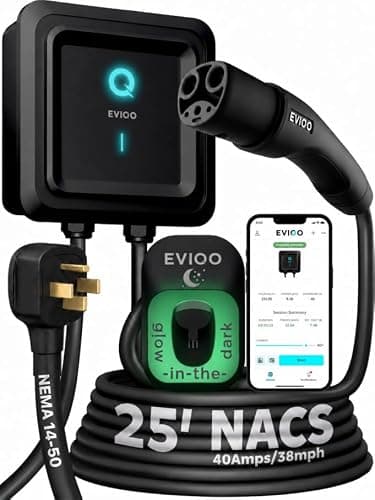
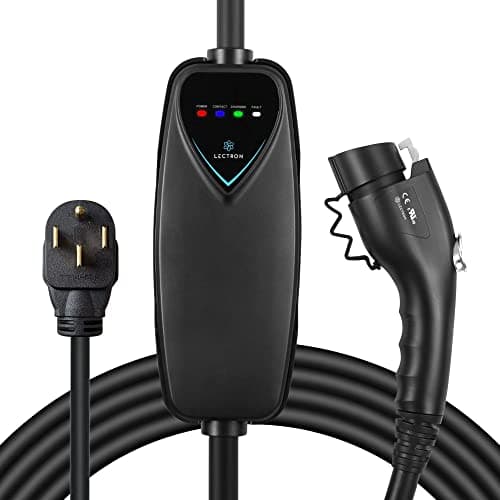
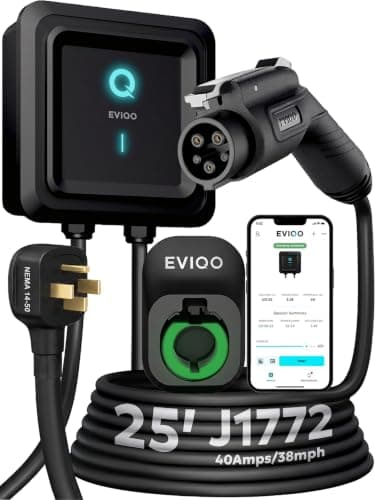
The best UL-listed EV charger is the EVIQO Level 2 (40A), and it is for the buyer who wants the certification to be the deciding spec without paying a premium for it: its listing names both UL and ETL, in an IP66 / NEMA 4 enclosure, at the lowest price of any dual-listed charger we track. The budget pick is the Lectron Level 2 (40A), and it comes with a caveat we will not bury: it is ETLlisted, not UL listed. That is a real certification to the same safety standard by a different accredited lab — the section below explains exactly what the difference is and is not — and it is the cheapest safety-listed charger in our registry by a wide margin.
This page ranks on the electrical safety listing. It is deliberately not the same page as the most durable EV chargers, which ranks on the enclosurestandard — UL Type 4 against NEMA 3R against IP66 — and answers a different question about weather and abuse. Every certification claim below is the manufacturer's published claim from the live retail listing. We did not test any of these units and we cannot audit a certification file; what we can do is tell you which makers name a standard and which only show a badge.
What a UL listing on an EV charger actually means
The standard that applies to home charging hardware is UL 2594, the standard for electric-vehicle supply equipment; the connectors and couplers are covered by UL 2251, and adapter assemblies by UL 2252. A “UL listed” charger has been evaluated by UL Solutions against the relevant standard and is subject to ongoing factory surveillance. That is the claim. It is not a performance rating, it says nothing about charging speed or app quality, and it is not the same thing as “UL recognized components”, which means some parts inside were evaluated and the finished product was not.
ETL is not a lesser mark.This is the single most misunderstood point in the category. Intertek's ETL mark certifies a product against the same published standard— UL 2594 for an EVSE — by a different Nationally Recognized Testing Laboratory, recognised by OSHA exactly as UL is. An ETL-listed charger tested to UL 2594 has met the same requirements. What should concern you is neither mark: a listing that shows a certification graphic without naming a standard or a file, or one that claims “CE” (a European self-declaration with no North American standing) on a product sold for a 240-volt American circuit.
How to verify a listing claim in two minutes
- Find the standard number on the listing.“UL 2594”, “cETLus to UL 2594” or “UL 2251” is a checkable claim. “UL certified components” or a bare logo is not.
- Look for the mark on the product photographs, on the data label — not only in the marketing copy. The label carries the file or control number.
- Search the certifier's own directory by brand and model. UL Solutions and Intertek both publish public directories of certified products.
- Check what was certified. On a plug-in charger the cord and plug assembly matter as much as the box; on a hardwired unit the enclosure rating matters as much as the electronics.
The listings, side by side
Each row shows the certification its own listing publishes. The price cell is a live buy button.
| Charger | Best for | Listing / specs (as published) | Price |
|---|
| EVIQO Level 2 (40A) | Budget-conscious buyers who still want smart features | 40A / 9.6kW · J1772 · 25ft cable · UL & ETL, IP66/NEMA 4 | Check price·Amazon |
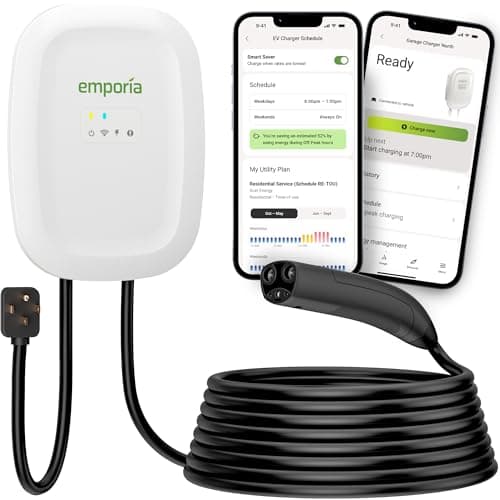
| Emporia Level 2 NACS (48A) | Most NACS-port households | 48A rated · NACS (J3400) · NEMA 14-50 plug · UL + Energy Star | Check price·Amazon |
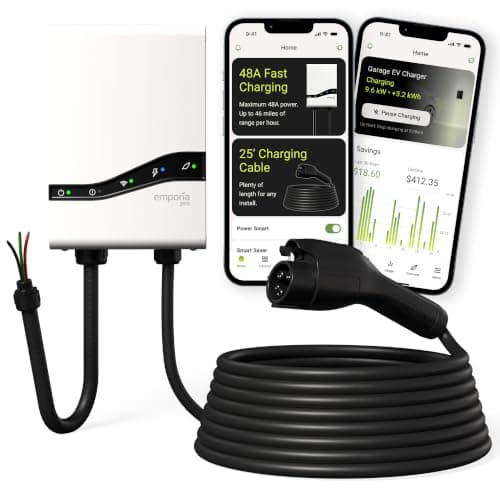
| Emporia Pro (48A, PowerSmart) | A 100-amp service you would rather not upgrade | Up to 48A hardwired · J1772 · PowerSmart + Vue monitor · UL · ENERGY STAR · NEMA 4 | $599.00·Amazon |
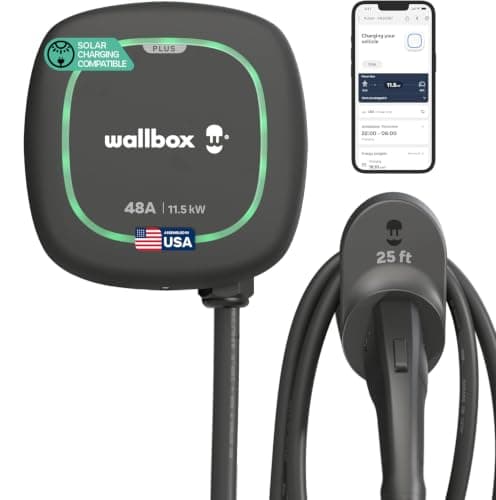
| Wallbox Pulsar Plus (48A) | A compact, fast, hardwired install | Hardwired 48A / 11.5kW · J1772 · 25ft cable · Energy Star + UL | $689.99·Amazon |
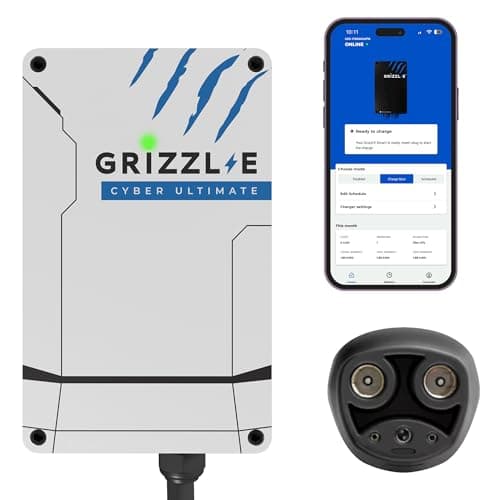
| Grizzl-E Ultimate 80A (NACS) | NACS / Tesla cars that can take 19.2 kW | Up to 80A / 19.2 kW · NACS (Tesla-style) · Hardwired · 100A circuit · UL Type 4, works offline | $599.99·Amazon |
| EVIQO NACS (40A) | An outdoor wall on a budget | 40A / 9.6kW · NACS (J3400) · IP66 / NEMA 4 · UL + ETL | Check price·Amazon |
| Lectron Level 2 (40A) | A simple, inexpensive plug-in charger | 40A / 9.6kW · J1772 · NEMA 14-50 plug · ETL · 16ft extension | $279.99·Amazon |
#ad · Prices read live from the Amazon Product API as of November 13, 2026, and they move. Specs are the manufacturer's published claims from the live listing — we have not bench-measured them. Where we have no verified price we print none rather than a number that has gone stale. We may earn a commission.
What a listing does not cover — and what else to insist on
A safety listing is necessary and not sufficient. Three further things decide whether an install is safe, and none of them is the charger's certificate. The circuit: a continuous load may use only 80% of its breaker rating, so a 40-amp charger needs a 50-amp circuit and a 48-amp charger needs a 60-amp one — see the wire and breaker guide. The receptacle, on a plug-in install: residential-grade 14-50 outlets are the most common failure point in the entire category, and the industrial-grade replacement costs almost nothing. And ground-fault protection, which interacts with the charger's own internal protection in ways that cause nuisance trips — the GFCI guide has the detail.
Finally, a listing is not a warranty and not a guarantee of longevity. How long EV chargers lastcovers the failure modes that have nothing to do with certification: cable flex, connector wear, and the cloud service behind a smart charger going away. A listed charger from a company that stops supporting it is still a listed charger — which is why one of the picks here, the Grizzl-E Ultimate, is on the list partly because it works with no network at all.