Skip to content
Volt & Cable

HUB 01 · Level 2 Home Chargers

The Most Durable EV Chargers

Durability in this category is four published facts: the enclosure standard, what the enclosure is made of, the safety listing and the warranty length. Ranked on those, with the part that actually fails named.

By Stephen V.Updated How we research
#ad

We earn a commission when you buy through our Amazon links, at no extra cost to you. It never affects our rankings, and we say so when the cheaper product is the better buy. How this works.

The short answer

Quick picks

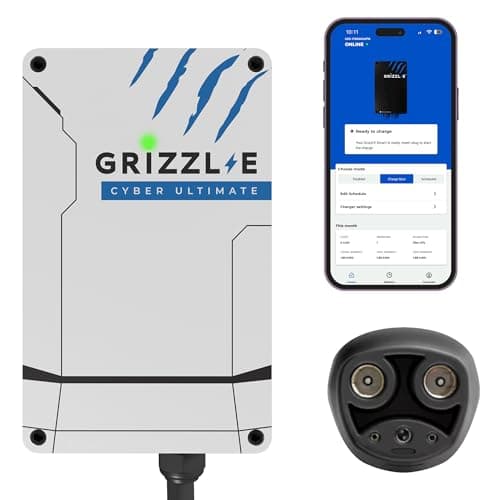
  • Grizzl-E Grizzl-E Ultimate 80A (NACS)
    01 Grizzl-E Ultimate 80A (NACS)
    8.4

    The rugged 80-amp pick for a NACS car — a UL Type 4 metal box that hits 19.2 kW and keeps working with or without Wi-Fi.

    Best for: NACS / Tesla cars that can take 19.2 kW

    $599.99Amazon
  • EVIQO EVIQO Level 2 (40A)
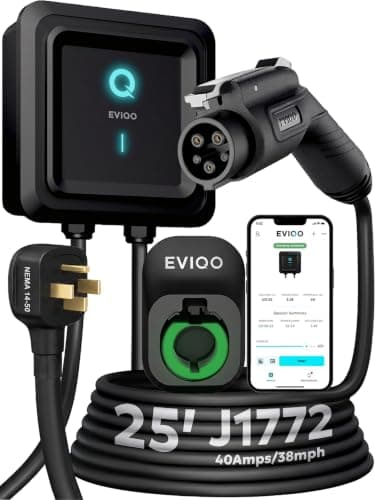
    02 EVIQO Level 2 (40A)
    8.6

    A weatherproof, UL-and-ETL-listed smart charger that regularly sits at the bottom of the price band — a lot of charger for the money.

    Best for: Budget-conscious buyers who still want smart features

    Check priceAmazon
  • Emporia Emporia Pro (48A, PowerSmart)
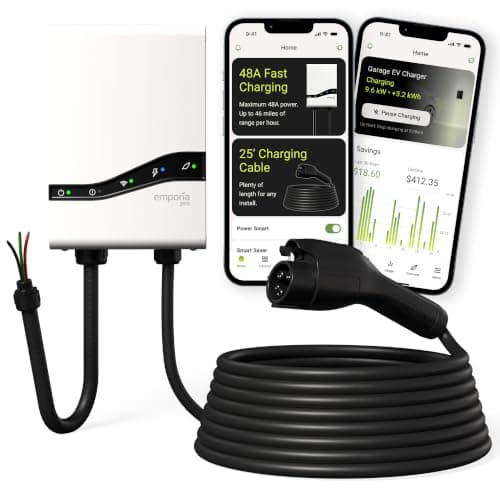
    03 Emporia Pro (48A, PowerSmart)
    8.8

    The one charger that changes the electrical answer rather than working around it — it watches the whole panel and backs off instead of tripping the main.

    Best for: A 100-amp service you would rather not upgrade

    $599.00Amazon
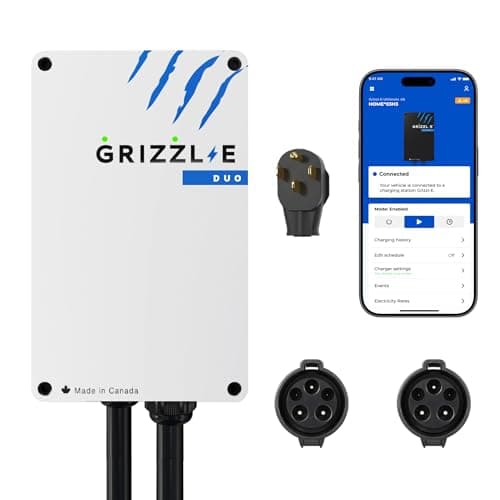
  • Grizzl-E Grizzl-E Duo Connect (dual 40A)
    04 Grizzl-E Duo Connect (dual 40A)
    8.0

    Two 25-foot cables sharing one circuit — the honest answer for a two-EV household that will not run a second line.

    Best for: Two EVs on one circuit

    $599.99Amazon
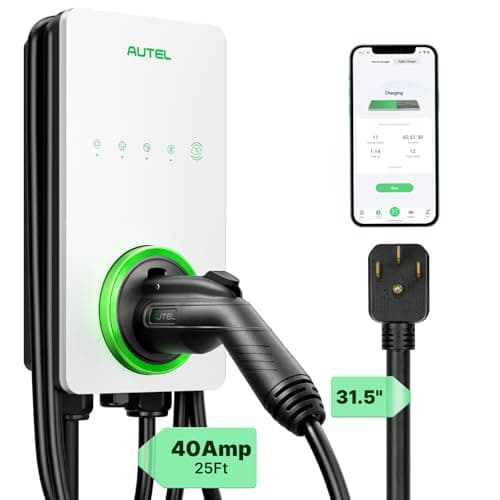
  • Autel Autel MaxiCharger (40A)
    05 Autel MaxiCharger (40A)
    8.6

    A feature-dense smart unit with Wi-Fi, Bluetooth and a separate holster in the box — strong if you want everything and a clean install.

    Best for: Feature-maximalists who want a tidy install

    $424.00Amazon
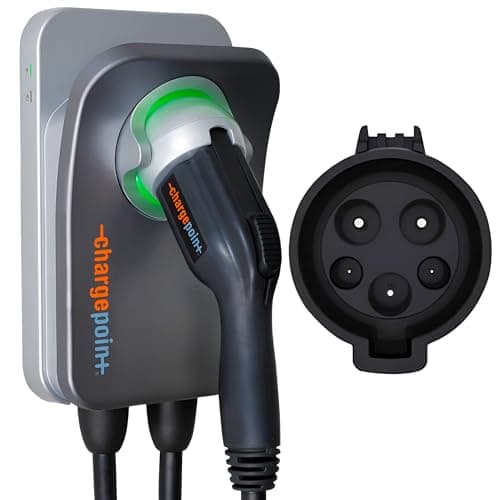
  • ChargePoint ChargePoint Home Flex
    06 ChargePoint Home Flex
    8.2

    The polished, well-supported option — adjustable up to 50 amps and tied into the largest public charging app in North America.

    Best for: Buyers who want the established brand and app

    $599.00Amazon

#ad · Live prices from the Amazon Product API, as of November 13, 2026. Where we have no verified live price, we show none — we would rather leave a gap than print a number that has gone stale.

If you want the toughest home charger sold on Amazon today, it is the Grizzl-E Ultimate: a cast metal enclosure rated UL Type 4, hardwired, from a maker that publishes a 3-year or 5-year replacement warranty. If 80 amps is more charger than your car or your panel can use — it usually is — the EVIQO Level 2 carries an IP66 / NEMA 4 rating with both UL and ETL listings at the bottom of the price band, and the Emporia Pro pairs a NEMA Type 4 enclosure with a UL listing and ENERGY STAR. The charger most people should worry about replacing is not on this page: it is the receptacle behind a plug-in unit.

“Rugged”, “heavy duty” and “weatherproof” are not specifications. They appear in listing titles because nothing stops them appearing there. So this ranking only uses facts a manufacturer has committed to in writing, and names the ones nobody publishes so you know what you are guessing about.

The four criteria, and why they are in this order

1. The enclosure standard, stated as a type number. The two you will see are not equivalent. NEMA Type 3R promises protection against falling rain, sleet and snow. NEMA Type 4 adds windblown dust and hose-directed water. IP66, the IEC equivalent, is dust-tight and rated against powerful water jets. A listing that says “IP65” or “weather resistant” without a type number has told you less than it appears to. This is the first criterion because it is the only one that describes the enclosure's job in a way an inspector would recognize.

2. What the enclosure is made of. Most home chargers are molded polycarbonate, which is genuinely fine — it does not corrode and it is what almost every UL-listed unit uses. Cast aluminum is the exception rather than the rule, and it buys two things: impact resistance, and heat dissipation through the case itself. A metal box that a snow shovel hits in January is in a different category from a plastic one, and a hardwired metal unit has no plug to work loose.

3. The safety listing, by standard number. UL 2594 is the standard written specifically for EV supply equipment. A charger listed to it — by UL or by another accredited lab such as Intertek, whose mark is ETL — has been tested against the failure modes that matter here, including ground-fault protection. A charger with no named standard has been tested against nothing you can look up.

4. The warranty, in years, from the maker's own documents. Grizzl-E states on its FAQ that its Level 2 products carry either a 3-year or 5-year replacement warranty beginning on the date of purchase, with no registration required and no change based on where you bought it. Emporia's help center describes a 3-year warranty covering manufacturing defects, and is explicit that it excludes damage from external forces and that cutting the NEMA whip voids coverage. Those two are the clearest published terms in this group, which is itself a signal.

We deliberately do not score on brand reputation, review-star averages or anecdotes. We have not weather-tested any of these units and we are not going to imply otherwise — the method, including where the per-product scores come from, is set out at how we research.

Why each pick is here, and where each one gives

  • Grizzl-E Ultimate 80A — the toughest, and the most over-specified. Cast metal, UL Type 4, works without an internet connection. The honest cons: 80 amps needs a hardwired 100-amp circuit most panels cannot spare, the NACS connector means a J1772 car needs an adapter, and stock on the Ultimate line is intermittent. You are also paying for charging speed your car probably cannot use — see the fastest charger for your car.
  • EVIQO Level 2 — the best-rated enclosure per dollar. IP66 / NEMA 4 with both UL and ETL listings, usually at the cheap end of the field. Cons: a newer brand with a shorter support record than ChargePoint or Emporia, a 40-amp ceiling, and a 2.4 GHz Wi-Fi radio that is a nuisance on some mesh networks.
  • Emporia Pro — the durable choice that also protects the panel. NEMA Type 4, UL listed, ENERGY STAR, 48 amps hardwired, plus load management that backs off instead of tripping the main breaker. Cons: the most expensive unit here, the current monitor has to be installed inside your electrical panel by a licensed electrician, and whether load management substitutes for a service upgrade is your inspector's call.
  • Grizzl-E Duo Connect — the same metal build, two cables. For a two-car household that will not run a second circuit. Cons: the two cars share the circuit's amperage, so a second car halves the rate to the first, and it is an expensive way to charge one vehicle. Full argument at best chargers for two EVs.
  • Autel MaxiCharger 40A — weather-rated with the tidiest install. A NEMA 4 enclosure and a separate holster in the box, so the cable is not hanging off the unit's own strain relief. Cons: a 40-amp ceiling if your panel could do 48, and more features than a set-and-forget buyer needs.
  • ChargePoint Home Flex — included with its weakest number stated. It is the most mature product here, with the best support record and 16-to-50-amp adjustability, and its published enclosure rating is NEMA Type 3R — rain, sleet and snow, but not hose-directed water. On a sheltered wall that is a non-issue. On an exposed one, every other unit on this list is better sealed, and it costs more than most of them.

Four durability claims worth ignoring

  • “Military grade” and “aerospace aluminum”. Neither phrase maps to a test, a standard or a certifying body. Aluminum is aluminum; the question is the enclosure type number and whether the seals and gland are part of the listing.
  • An IP number with no NEMA type and no listing. IP ratings are real, but on a product that names no safety standard the IP figure is a self-declaration. A charger listed to UL 2594 has had its enclosure assessed as part of the listing; a charger with only a marketing IP claim has not.
  • “Waterproof” without qualification. No home charger is waterproof in the submersion sense, and none needs to be. Hose-directed water — the Type 4 test — is the realistic worst case on a house wall.
  • Star averages as a proxy for longevity. A four-month-old listing with 2,000 five-star reviews tells you about unboxing, not about year six. Warranty length and enclosure standard are the only forward-looking facts available to you at purchase.

The install decisions that extend a charger's life

Three of them are worth more than the difference between any two units on this page, and all three are decisions you make with the electrician rather than with the retailer.

  • Mount it where water does not run down the wall onto it, and at a height that keeps the connector off the floor — our mounting height guide has the numbers and the code considerations.
  • Specify the receptacle, if you are plugging in. An industrial-grade 14-50 costs a few dollars more than a builder-grade one and is the single part carrying the continuous load. If you want to confirm yours was wired correctly before you trust it, a cheap outlet analyzer does it in under a minute.
  • Decide about surge protection deliberately. A charger is a mains-connected electronic device on a long run, often on an exposed wall. We cover what is worth doing and what is theater at EV charger surge protection.

The part that actually fails is usually not the charger

On a plug-in install, the component under the most stress is the NEMA 14-50 receptacle. It carries 32 to 40 amps continuously for hours at a time, which is a duty cycle ordinary residential devices never ask of it, and a cheap one loosens, heats and discolors long before a UL-listed charger gives up. That is why we keep recommending an industrial-grade receptacle on any plug-in setup, and why hardwiring — which deletes the receptacle entirely — is the single biggest durability upgrade available to most buyers. See best hardwired Level 2 chargers and why a charging breaker runs hot.

After the receptacle, the two parts owners replace are the cable and the connector latch — both of which are handled rather than installed, and both of which suffer from being dropped, driven over and left in a puddle. A wall holster is a four-dollar insurance policy against the expensive end of that, which is the whole argument of do I need a holster and cable organizers. For how long the whole assembly should be expected to last, we wrote how long do EV chargers last.

How this differs from our outdoor roundup

Best outdoor EV chargers answers a siting question: the wall faces the weather, what survives there? This page answers a longevity question: which of these is built to still be working in a decade, indoors or out? The two overlap on enclosure ratings and then diverge — the outdoor page weighs published temperature range and GFCI behavior, this one weighs material, listing standard and warranty terms. If your charger lives in a garage, this is the page you want. If it lives on a driveway wall, read both, and the cold weather roundup if you are north of the snow line.

In detail

The picks, in full

01
Grizzl-E Grizzl-E Ultimate 80A (NACS)

NACS / Tesla cars that can take 19.2 kW

Grizzl-E Ultimate 80A (NACS)

Up to 80A / 19.2 kWNACS (Tesla-style)Hardwired · 100A circuitUL Type 4, works offline
8.4/10

The rugged 80-amp pick for a NACS car — a UL Type 4 metal box that hits 19.2 kW and keeps working with or without Wi-Fi.

Charge speed
10
Build & weather
10
Smart features
7
Cable & connector
8
Value
7

Pros

  • Full 80 amps / 19.2 kW when hardwired on a 100-amp circuit, with a native NACS plug for a Tesla or NACS-port EV
  • Heavy-duty UL Type 4 indoor/outdoor metal enclosure, made in Canada — the rugged Grizzl-E build in its fastest form
  • Scheduling and energy stats that work with or without an internet connection, so it does not depend on a live cloud

Cons

  • 80 amps needs a hardwired 100-amp dedicated circuit — a major electrical job
  • Only adds speed if your car's onboard AC charger supports 19.2 kW; most EVs cap at 11.5 kW (48A)
  • The J1772 version of the Ultimate is frequently out of stock, and stock on the NACS one runs thin

Don't buy this if…

…your car cannot accept 19.2 kW on AC, or your panel cannot carry a 100-amp circuit. Step down to a 48-amp charger — it will charge most EVs at exactly the same speed for far less.

$599.99View on Amazon

$899.0033% off

Price as of November 13, 2026. Prices change — Amazon's is the one that counts.

#ad · we may earn a commission from this link to Grizzl-E Ultimate 80A (NACS)

02
EVIQO EVIQO Level 2 (40A)

Budget-conscious buyers who still want smart features

EVIQO Level 2 (40A)

40A / 9.6kWJ177225ft cableUL & ETL, IP66/NEMA 4
8.6/10

A weatherproof, UL-and-ETL-listed smart charger that regularly sits at the bottom of the price band — a lot of charger for the money.

Charge speed
8
Build & weather
9
Smart features
8
Cable & connector
8
Value
10

Pros

  • Carries both UL and ETL listings plus an IP66 / NEMA 4 weatherproof rating
  • Wi-Fi app with scheduling, at a price that undercuts the established brands
  • Long 25-foot cable and a plug-in NEMA 14-50 install

Cons

  • Newer brand with a shorter track record than ChargePoint or Wallbox
  • 40-amp ceiling, so not the fastest if your panel could do more

Don't buy this if…

…you want the reassurance of a long-established brand and support network. The hardware is well-certified, but if brand maturity matters to you, the ChargePoint is the safer pick.

Check price on Amazon →

No buyable offer at the last price check (November 13, 2026). We show nothing rather than a stale number.

#ad · we may earn a commission from this link to EVIQO Level 2 (40A)

03
Emporia Emporia Pro (48A, PowerSmart)

A 100-amp service you would rather not upgrade

Emporia Pro (48A, PowerSmart)

Up to 48A hardwiredJ1772PowerSmart + Vue monitorUL · ENERGY STAR · NEMA 4
8.8/10

The one charger that changes the electrical answer rather than working around it — it watches the whole panel and backs off instead of tripping the main.

Charge speed
10
Build & weather
8
Smart features
10
Cable & connector
9
Value
7

Pros

  • PowerSmart reads the whole panel through the bundled Vue energy monitor and throttles the charger when the house draws hard, so a tight service is a setting rather than a rebuild
  • Full 48 amps — about 11.5 kW — when hardwired on a 60-amp circuit, so you are not trading speed for the load management
  • UL listed, ENERGY STAR certified and NEMA 4 rated, on a 25-foot cable, with the J1772 connector most non-Tesla EVs use

Cons

  • The most expensive charger in this group, and the premium buys panel headroom rather than charging speed
  • The Vue monitor has to go inside your electrical panel, so this is licensed-electrician work — there is no version of this you install yourself in an afternoon
  • Whether load management is accepted in place of a service upgrade is your local inspector's call, not the manufacturer's

Don't buy this if…

…your panel already has room for the circuit you want. If the load calculation passes without help, PowerSmart solves a problem you do not have — the standard Emporia Level 2 charges at exactly the same rate for meaningfully less.

$599.00View on Amazon

Price as of November 13, 2026. Prices change — Amazon's is the one that counts.

#ad · we may earn a commission from this link to Emporia Pro (48A, PowerSmart)

04
Grizzl-E Grizzl-E Duo Connect (dual 40A)

Two EVs on one circuit

Grizzl-E Duo Connect (dual 40A)

Dual J1772Up to 40A sharedTwo 25ft cablesNEMA 14-50 plug
8.0/10

Two 25-foot cables sharing one circuit — the honest answer for a two-EV household that will not run a second line.

Charge speed
7
Build & weather
10
Smart features
7
Cable & connector
9
Value
7

Pros

  • Charges two vehicles from a single circuit by splitting the available current
  • Two long 25-foot cables reach both bays of most garages
  • Same rugged Grizzl-E metal enclosure as the Classic, now with Wi-Fi and the Grizzl-E Connect app for scheduling and per-car priority

Cons

  • The two cars share the circuit's amperage — plugging in the second car halves the rate to the first
  • Overkill and more expensive if you only ever charge one vehicle — and the Connect model costs meaningfully more than the older dumb Duo did

Don't buy this if…

…you only charge one car. You are paying for a second cable you will never use — buy the single-cable Classic and pocket the difference.

$599.99View on Amazon

$899.9933% off

Price as of November 13, 2026. Prices change — Amazon's is the one that counts.

#ad · we may earn a commission from this link to Grizzl-E Duo Connect (dual 40A)

05
Autel Autel MaxiCharger (40A)

Feature-maximalists who want a tidy install

Autel MaxiCharger (40A)

40A / 9.6kWJ177225ft cable + holsterWi-Fi + Bluetooth
8.6/10

A feature-dense smart unit with Wi-Fi, Bluetooth and a separate holster in the box — strong if you want everything and a clean install.

Charge speed
8
Build & weather
9
Smart features
9
Cable & connector
9
Value
8

Pros

  • Ships with a separate holster, so you get tidy cable management out of the box
  • Both Wi-Fi and Bluetooth, so app control still works if your garage Wi-Fi is weak
  • Weather-rated enclosure for indoor or outdoor mounting

Cons

  • 40-amp ceiling means it is not the fastest option if your panel could support 48A
  • The feature set is more than a set-and-forget charger buyer needs

Don't buy this if…

…your electrical panel can support a 48-amp circuit and you want the fastest home charging. The 48A Emporia will add range quicker; the Autel's strength is features and the in-box holster, not top speed.

$424.00View on Amazon

$470.0010% off

Price as of November 13, 2026. Prices change — Amazon's is the one that counts.

#ad · we may earn a commission from this link to Autel MaxiCharger (40A)

06
ChargePoint ChargePoint Home Flex

Buyers who want the established brand and app

ChargePoint Home Flex

Adjustable to 50AJ1772NEMA 14-50 plugEnergy Star
8.2/10

The polished, well-supported option — adjustable up to 50 amps and tied into the largest public charging app in North America.

Charge speed
9
Build & weather
8
Smart features
9
Cable & connector
8
Value
7

Pros

  • Amperage is adjustable in the app to match whatever breaker you install, up to 50A
  • Integrates with ChargePoint's large public-network app — one app for home and away
  • Long track record and responsive support, which budget brands cannot match

Cons

  • Costs more than equally capable chargers from newer brands
  • The experience leans hard on the ChargePoint account and app

Don't buy this if…

…price is your first priority. The Emporia matches most of what this does for meaningfully less — you are paying here for brand maturity and the unified app, which are real but not free.

$599.00View on Amazon

$657.999% off

Price as of November 13, 2026. Prices change — Amazon's is the one that counts.

#ad · we may earn a commission from this link to ChargePoint Home Flex

Buying for durability: four things worth doing, one worth skipping

Read the enclosure type number, not the adjective. If a listing does not state NEMA Type 3R, Type 4 or an IP code, assume the manufacturer had nothing to state. On this page the figures come from each maker's own product page or datasheet, cited in Sources.

Prefer hardwired if the charger is never moving. It deletes the receptacle, the plug and the connection most likely to loosen, and on a 48-amp unit it is required anyway. The cost is mobility: a hardwired charger does not come with you, which matters more than people expect — see taking your charger when you move.

Buy the holster and the hook. Nearly every out-of-warranty failure we read about in owner reviews involves the cable or the handle rather than the box on the wall. Keeping both off the floor is cheap.

Check what the warranty excludes, not how long it runs. Emporia's terms are a good example of why: a 3-year warranty that explicitly excludes damage from external forces and is voided by cutting the NEMA whip is a defects warranty, not an accident warranty. A 5-year replacement warranty on a metal unit is a stronger position, provided the company is still there in year five.

What to skip: paying for amperage as a proxy for toughness. An 80-amp charger is not more durable because it is bigger; the Ultimate ranks first here for its case and its warranty, not its output. If your car caps at 11.5 kW, buying 19.2 kW of charger to get a metal box is an expensive way to buy a metal box.

Where this ranking is a judgment rather than a fact

Two of our criteria are published numbers and two are not quite. Enclosure standard and warranty length are documented and we have cited them. Material and construction quality are partly visual and partly inference from the listing photographs and manuals — we have not taken a case apart. Nobody in this category publishes a mean-time-to-failure figure, an ingress test report for the cable gland, or a cycle count for the connector latch. If a competitor's page gives you a confident durability score to one decimal place, ask what it was measured with. Ours is a ranking of documented commitments, and that is all it claims to be. The whole field, including the units that did not make this list, is tabled at the Level 2 charger comparison.
How we picked

We do not run a testing lab

We compiled published specifications from manufacturer manuals and spec sheets, verified the safety listings (UL / ETL), computed the real running and installation costs, checked the wiring math against the NEC continuous-load rule, and read aggregated owner reviews — then scored each product against a published rubric. The scores are judgments from documented research — they are not bench measurements, because we do not have a test lab and we are not going to pretend we do. Every spec and cost figure is cited in Sources.

Questions

Frequently asked

Is a metal EV charger better than a plastic one?
For impact and heat, yes — a cast aluminum case resists knocks and sheds heat through the enclosure. For water and dust ingress, no: the rating is what matters, and plenty of polycarbonate units are rated NEMA Type 4 or IP66 while some metal boxes are only 3R. Material and sealing are separate questions and a good charger answers both.
What does NEMA 4 actually mean on an EV charger?
NEMA Type 4 enclosures are rated for indoor or outdoor use with protection against windblown dust, rain, splashing water and hose-directed water. Type 3R, the other common rating in this category, covers falling rain, sleet and snow but not hose-directed water. If your charger sits where a pressure washer or a sprinkler can reach it, that difference is the one to care about.
Does a longer warranty mean a more durable charger?
It means the manufacturer is willing to carry more risk, which is weak evidence in the right direction. Read the exclusions: a 3-year warranty covering manufacturing defects only is a narrower promise than its length suggests, and physical damage is excluded almost everywhere.
What usually breaks first in a home charging setup?
On a plug-in install, the receptacle — it carries a continuous 32 to 40 amps for hours, which no ordinary residential outlet is designed around. After that, the cable and the connector handle, because they are the parts that get handled, dropped and driven over. The charger body itself is rarely the first thing to go, which is why outlet quality deserves more of your budget than it usually gets.
Will a durable charger survive being run over?
No enclosure rating covers a vehicle driving over a cable, and no manufacturer warranty we read covers it either — Emporia's terms explicitly exclude damage from external forces. Mount a hook, coil the cable off the ground, and treat the connector as the fragile part of the system. It is.
How long should a home EV charger last?
Longer than the warranty, if it is listed, sealed appropriately for where it is mounted and not abused. We work through the published lifespan expectations, and what actually ends a charger's life, at how long do EV chargers last.

Keep reading

Receipts

Sources

We do not run a testing lab, and we do not pretend to. Where a measured number came from someone else's lab, we name them and link them. Where we could not verify something, we say so on the page rather than quietly leaving it out. Read our full method.