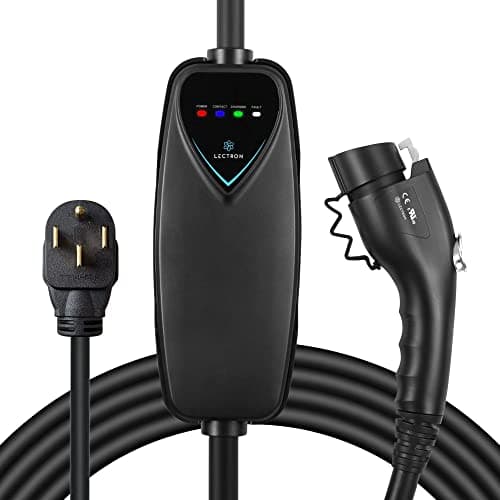
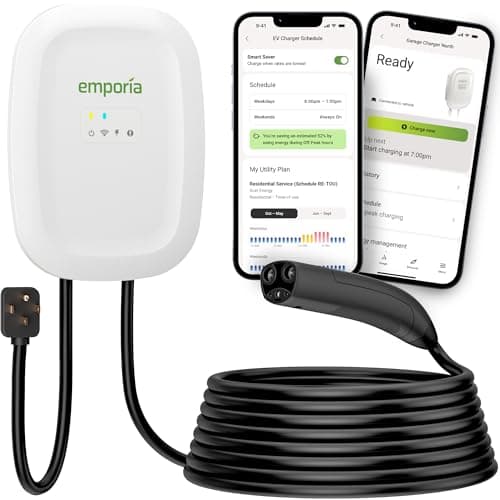
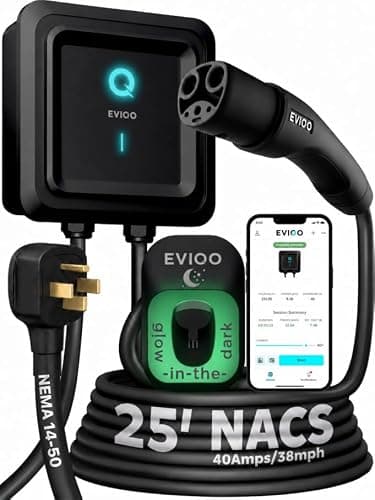
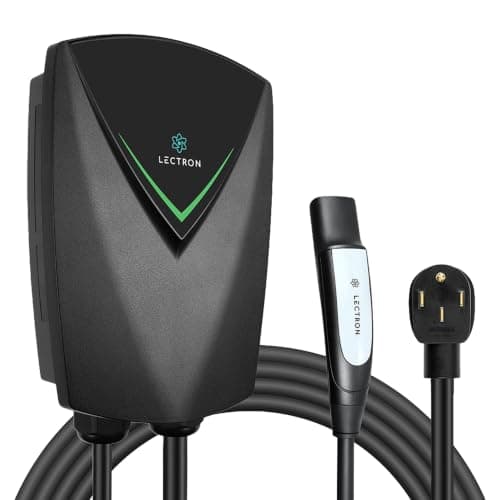
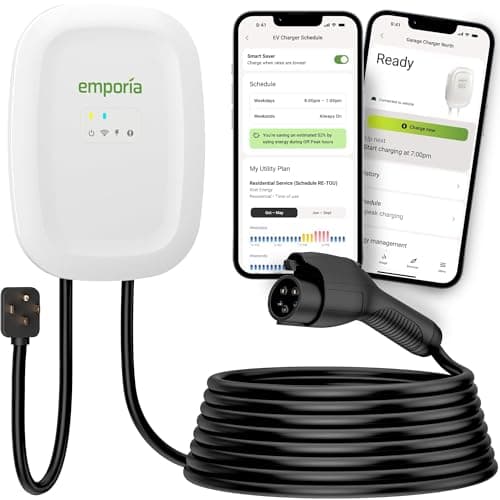
The best EV charger under $500 is the Emporia Level 2 (48A), and it is for the buyer who wants the fastest charger the band contains without giving up the app: 48 amps, a 25-foot cable, Wi-Fi, scheduling and energy monitoring, all comfortably inside the ceiling. The budget pick is the Lectron Level 2 (40A)— the cheapest charger in our registry, a plain ETL-listed 40-amp box on a NEMA 14-50 plug, and the right answer if what you want is Level 2 power and nothing else. If your car has a Tesla-style port, the Emporia Level 2 NACS is the same 48 amps with the native plug, also under the line.
Every price on this page comes from the live Amazon feed and is stamped with its own date, so the band is real rather than remembered — a page that hardcodes a price is wrong within a month. We compile published manufacturer specs and safety listings, read the live listing, and do the circuit math; we have not bench-tested these units and we do not claim to have. Our research method spells out exactly what our scores are. Where a maker does not publish a figure, we say so instead of filling it in.
What $500 actually buys in 2026
The useful thing about this band is that it is no longer the compromise band. Five hundred dollars now covers the full feature set: a 40- or 48-amp output, a 25-foot cable, Wi-Fi, scheduling to off-peak hours, per-session energy reporting, and a weather-rated enclosure. Nothing on this list is a stripped-down unit. The Emporia and the Emporia NACS both carry a 48-amp rating; the EVIQO pair publish IP66 / NEMA 4 enclosures with both UL and ETL listings; the Autel adds Bluetooth and a holster in the box.
What $500 does notbuy is the top of the market, and it is worth being clear about what you are giving up. You are not getting an 80-amp hardwired unit — those start well above this band and need a 100-amp circuit most houses do not have. Our 80-amp roundup covers that tier. You are generally not getting built-in load management either, which is the feature that lets a charger share a tight panel; for that see chargers with load management. And a charger price is an applianceprice, not an installed price — the electrician, the breaker and the wire are a separate bill, covered in our installation cost guide.
The band in one table
Every row is a charger whose live price sat under $500 when this page last refreshed, with the specs the purchase actually turns on. The price cell is a live buy button, so you can check any row without scrolling back.
| Charger (under $500) | Best for | Key specs (manufacturer) | Price |
|---|
| Emporia Level 2 (48A) | Most people who want the smart features too | Up to 48A / 11.5kW · J1772 · 25ft cable · Wi-Fi + app | Check price·Amazon |
| Lectron Level 2 (40A) | A simple, inexpensive plug-in charger | 40A / 9.6kW · J1772 · NEMA 14-50 plug · ETL · 16ft extension | $279.99·Amazon |
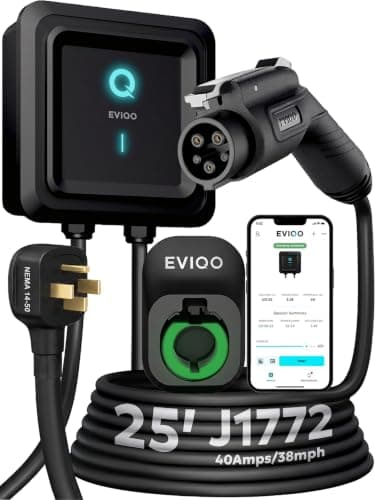
| EVIQO Level 2 (40A) | Budget-conscious buyers who still want smart features | 40A / 9.6kW · J1772 · 25ft cable · UL & ETL, IP66/NEMA 4 | Check price·Amazon |
| Emporia Level 2 NACS (48A) | Most NACS-port households | 48A rated · NACS (J3400) · NEMA 14-50 plug · UL + Energy Star | Check price·Amazon |
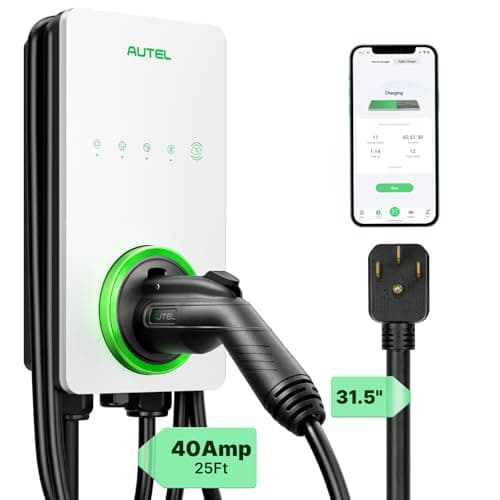
| Autel MaxiCharger (40A) | Feature-maximalists who want a tidy install | 40A / 9.6kW · J1772 · 25ft cable + holster · Wi-Fi + Bluetooth | $424.00·Amazon |
| EVIQO NACS (40A) | An outdoor wall on a budget | 40A / 9.6kW · NACS (J3400) · IP66 / NEMA 4 · UL + ETL | Check price·Amazon |
| Lectron Nexus NACS (40A) | A plug-in NACS charger with a named safety standard | 40A / 240V · NACS (J3400) · NEMA 14-50 plug · UL 2594 (ETL listed) | $449.99·Amazon |
#ad · Prices read live from the Amazon Product API as of November 13, 2026, and they move. Specs are the manufacturer's published claims from the live listing — we have not bench-measured them. Where we have no verified price we print none rather than a number that has gone stale. We may earn a commission.
Where the money stops buying speed
Inside this band the price differences are small and the speed differences are smaller. The gap between a 40-amp and a 48-amp charger is 9.6 kW against 11.5 kW — roughly 30 miles of range an hour against roughly 36, on a car that can accept it. Most drivers add 30 to 40 miles a day, which either figure replaces in about an hour, so the extra amps are headroom rather than a daily benefit. The decision that matters more is whether your circuit can carry them at all.
That is the NEC continuous-load rule, and it is the single piece of arithmetic that makes this band make sense. A charger may draw no more than 80% of its circuit rating continuously, so a 40-amp charger needs a 50-amp breaker and a 48-amp charger needs a 60-amp one. A plug-in charger on a NEMA 14-50 outlet is therefore capped at 40 amps no matter what the box is rated for, because a 14-50 lives on a 50-amp circuit. If you are plugging in rather than hardwiring, a 48-amp charger and a 40-amp charger deliver identical power, and the cheaper one is the better buy. Our wire and breaker guide has the whole table, and how to set the amps covers dialling a charger down to match the circuit you already have.
Connector: get this right before price
Two of the picks here are NACS (the Tesla-style J3400 plug) and the rest are J1772. This is not a preference, it is a fit question. A Tesla, or any newer model that shipped with a NACS port, charges natively from the Emporia NACS, the EVIQO NACS or the Lectron Nexus. A car with a J1772 port takes the Emporia Level 2, the EVIQO Level 2, the Autel or the Lectron vBox. Adapters bridge either direction and work fine — see which adapter you need — but an adapter hanging off the handle for the next eight years is a worse install than buying the right plug the first time. Within this band the native-plug version costs no more, which removes the only reason to compromise.
The budget pick, honestly
The Lectron Level 2 (40A) is the cheapest charger in our registry and it sits a long way below the rest of this list. It is a 40-amp, ETL-listed, J1772 unit on a NEMA 14-50 plug with a 16-foot cable, and what you give up for the saving is the app: no Wi-Fi, no scheduling, no energy reporting. If your utility has a time-of-use plan and you need the charger to shift the session to overnight rates, that omission costs real money and the Emporia is the better buy. If your car does the scheduling (most do) or your rate is flat, the Lectron delivers the same 40 amps as chargers costing nearly twice as much. Our budget roundup puts it against the rest of the cheap field, and the no-app roundup makes the case for skipping the Wi-Fi deliberately.