Skip to content
Volt & Cable

HUB 03 · Adapters & Connectors

The Best EV Charging Adapters Under $50

Fifty dollars covers every adapter most drivers will ever need — if you buy the certified one and respect the amperage it is rated for. Ranked from the live price feed.

By Stephen V.Updated How we research
#ad

We earn a commission when you buy through our Amazon links, at no extra cost to you. It never affects our rankings, and we say so when the cheaper product is the better buy. How this works.

The short answer

Quick picks

#ad · Live prices from the Amazon Product API, as of November 13, 2026. Where we have no verified live price, we show none — we would rather leave a gap than print a number that has gone stale.

The best EV charging adapter under $50 is the LENZ J1772 → NACS, and it is for the Tesla or NACS-port driver who wants to use the J1772 chargers that are still the majority of Level 2 hardware in North America: 80 amps rated, AC Level 1 and 2, and a published UL 2251 certification, which is the spec that separates an adapter from a moulded plastic risk. The budget pick is the FOCSPROD J1772 → Tesla— the cheapest adapter we list that does the same job with a named UL 2252 listing. If your car has a J1772 port and you want to use a Tesla-style charger instead, the EVDANCE NACS → J1772 is the other direction. The cheapest item on this page is the MECMO 14-30 → 14-50, which is a different job entirely: not a connector, a plug.

“EV adapter” covers two unrelated products, and the whole page turns on telling them apart. A connector adaptergoes on the car end — it changes the handle shape so a J1772 charger fits a NACS port, or the reverse. A NEMA plug adapter goes on the wall end — it changes the plug shape so a charger with a 14-50 plug reaches a dryer, welder or older three-prong outlet. Buying the wrong category is the most common mistake here. Prices come from the live Amazon feed, date-stamped.

Connector adapters: what to insist on

A connector adapter carries the car's full charging current plus the control-pilot signal that lets the charger and the vehicle negotiate it. There is exactly one spec that matters, and it is the certification. UL 2251 is the standard for plugs, receptacles and couplers used in electric-vehicle supply equipment, and UL 2252 covers EV connector and adapter assemblies. An adapter whose listing names one of those files is making a checkable claim; an adapter whose listing shows a generic badge is not. The LENZ names UL 2251, the FOCSPROD names UL 2252, and both are under $30 on the live feed, which means there is no price argument for buying an uncertified one.

The second thing to check is the amperage. These adapters are rated to 80 amps, far above what any home charger delivers, so they are not the bottleneck — your car's onboard charger and your circuit are. An adapter does not slow charging down by existing; we go through why in do adapters slow down charging. What they do add is a mechanical joint, and a joint hanging off a handle is a joint that gets dropped. If an adapter is going to live on your charger permanently, consider buying the native plug instead — our NACS home charger roundup covers chargers that need no adapter at all.

NEMA plug adapters: the amperage is the whole product

A NEMA adapter lets a charger with a 14-50 plug use an outlet that is not a 14-50. It is a genuinely useful product and a genuinely abused one, because the adapter does not change the circuit behind the outlet. A 14-30 dryer outlet is a 30-amp circuit, which the NEC continuous-load rule caps at 24 amps for EV charging. Plug a 40-amp charger into a 14-30 adapter without turning the charger down and you are drawing 40 amps through 30-amp wiring for six hours at a stretch. That is how dryer circuits start fires.

So the rule for every adapter in this half of the list is: set the charger to 24 amps first. The Nilight and MECMO 14-30 adapters, the air2yun 10-30 adapter and the WenStorm Tesla 14-30 adapter all live on 30-amp circuits and all need that setting. How to set the amps walks through doing it on each charger. The Suplevel 6-50 adapter is the exception that goes the other way: a 6-50 welder outlet is a 50-amp circuit, so 40 amps is legal — though the seller's own listing caps that specific adapter at 32, which is the figure to respect.

One more distinction worth money: a 10-30 outlet is the old three-prong dryer standard and has no separate ground. The air2yun adapter works, and it is the only way to use that outlet, but it is the compromise option — our 10-30 vs 14-50 guide explains what you are accepting. A four-prong 14-30 is the better outlet if you have both.

The band in one table

Every row carried a live price under $50 when this page last refreshed. “Best for” is the job, not the brand. The price cell is a live buy button.

Adapter (under $50)Best forDirection / rating (manufacturer)Price
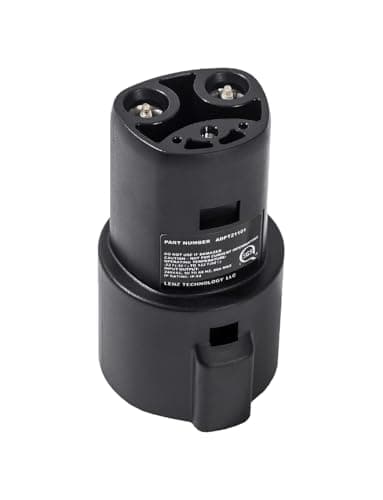
LENZ J1772 → NACS AdapterA Tesla / NACS car using J1772 chargersJ1772 → NACS · 80A max · Level 1 & 2 AC · UL 2251 certified$29.99Amazon
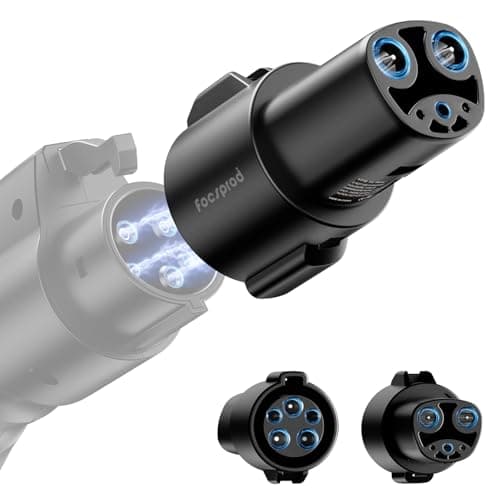
FOCSPROD J1772 → Tesla AdapterA cheap J1772 → Tesla adapterJ1772 → NACS · 80A / 250V · AC charging · UL 2252 listed$26.99Amazon
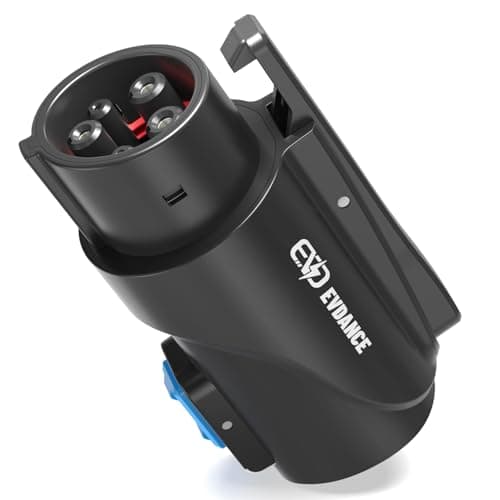
EVDANCE NACS → J1772 AdapterThe value NACS → J1772 adapterNACS → J1772 · Up to 80A / 250V · AC charging · Tesla connectors$49.99Amazon
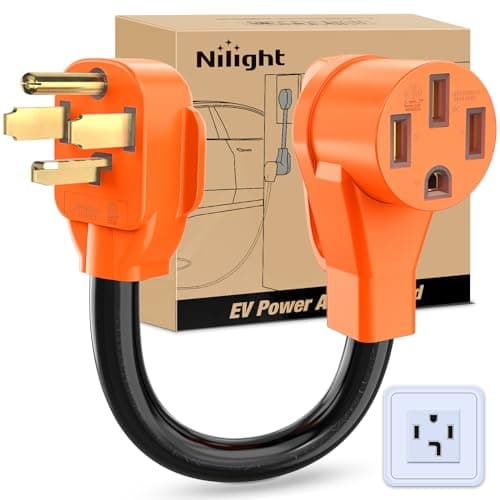
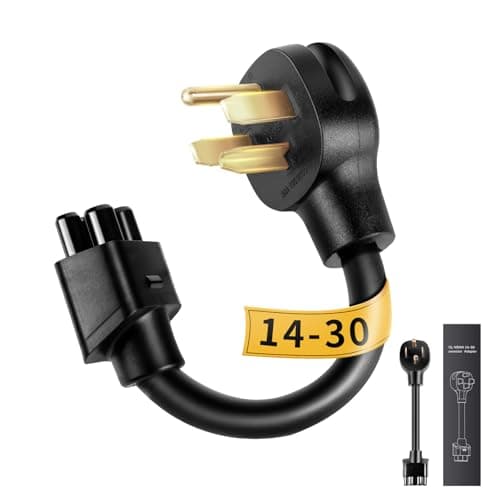
Nilight NEMA 14-30P → 14-50R AdapterA four-prong (14-30) dryer outlet14-30P → 14-50R · 4 × 10 AWG copper · 12 in · STW jacket · Set charger to 24A$22.49Amazon
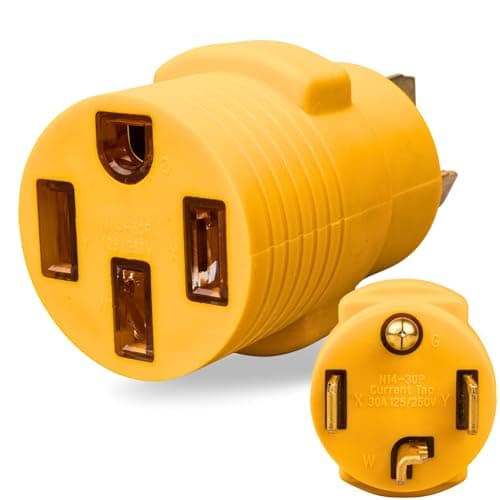
MECMO NEMA 14-30P → 14-50R AdapterBuyers who want the limit stated up front14-30P → 14-50R · Max 24A · 240V · 4-prong dryer only · Gauge not published$19.99Amazon
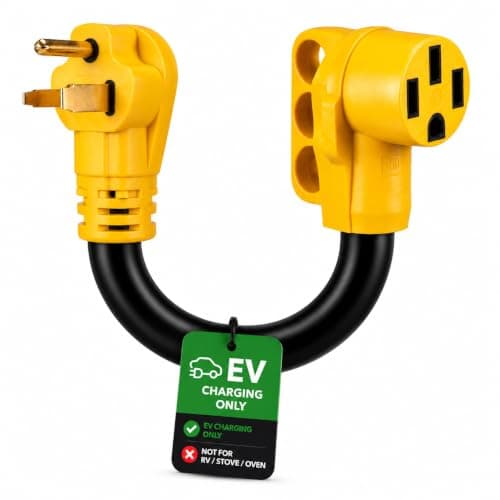
Suplevel NEMA 6-50P → 14-50R AdapterA welder or shop 6-50 outlet6-50P → 14-50R · 6 AWG / 3C STW · ETL Listed (per listing) · 1 ft · seller caps 32A$23.99Amazon
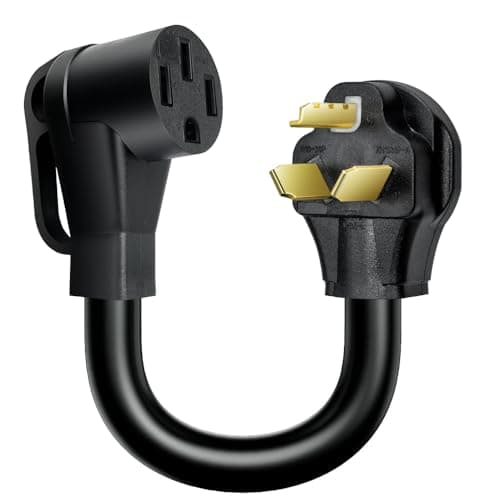
air2yun NEMA 10-30P → 14-50R AdapterAn old three-prong 10-30 outlet, with caveats10-30P → 14-50R · ETL Listed (per listing) · No separate ground · Set charger to 24A$23.99Amazon
WenStorm NEMA 14-30 Tesla AdapterA Tesla Gen 2 Mobile Connector on a dryer circuit14-30 → Tesla Gen 2 MC · 24A · 240V · ETL listed (claimed) · Nickel-plated pins$46.59Amazon

#ad · Prices read live from the Amazon Product API as of November 13, 2026, and they move. Specs are the manufacturer's published claims from the live listing — we have not bench-measured them. Where we have no verified price we print none rather than a number that has gone stale. We may earn a commission.

What not to buy at this price

Two things. First, a DC fast-charging adapteris not in this band and should not be bought in it — the CCS-to-NACS and NACS-to-CCS products are a different class of hardware with different safety requirements, and our CCS to Tesla adapter guide and NACS to CCS guide cover them separately. Everything on this page is AC only.

Second, an adapter that does not publish a gauge or a certification. Several of the cheapest NEMA adapters on the retailer list neither, and the MECMO on this page is honest about one of them: its listing states the 24-amp maximum but not the wire gauge, which we note on the card rather than quietly ignore. When two adapters cost the same and only one names its standard, the choice makes itself.
In detail

The picks, in full

01
LENZ LENZ J1772 → NACS Adapter

A Tesla / NACS car using J1772 chargers

LENZ J1772 → NACS Adapter

J1772 → NACS80A maxLevel 1 & 2 ACUL 2251 certified
9.3/10

A UL-2251-certified J1772-to-NACS adapter — the one a Tesla or a 2026+ NACS-port EV needs to use the huge installed base of J1772 chargers.

Compatibility
9
Safety listing
10
Build quality
8
Value
10

Pros

  • Explicitly certified to UL 2251 — the connector-safety standard that matters for an adapter carrying full current
  • Lets a Tesla or a 2026+ NACS-port car (Hyundai, Kia, Rivian, and others) use any J1772 charger
  • Inexpensive and pocketable

Cons

  • AC charging only
  • Small enough to misplace — keep it clipped in the frunk

Don't buy this if…

…your car uses a J1772 port. This adapter points the other way — a J1772 car needs a NACS-to-J1772 adapter to use Tesla equipment.

$29.99View on Amazon

Price as of November 13, 2026. Prices change — Amazon's is the one that counts.

#ad · we may earn a commission from this link to LENZ J1772 → NACS Adapter

02
FOCSPROD FOCSPROD J1772 → Tesla Adapter

A cheap J1772 → Tesla adapter

FOCSPROD J1772 → Tesla Adapter

J1772 → NACS80A / 250VAC chargingUL 2252 listed
8.5/10

A UL-2252-listed budget option for charging a Tesla at any J1772 station — cheap insurance for road trips.

Compatibility
9
Safety listing
9
Build quality
7
Value
9

Pros

  • Certified to UL 2252 for the Tesla/NACS side of the connection
  • One of the least expensive ways to open up the J1772 network to a Tesla
  • Rated well above any home or public AC circuit

Cons

  • Value brand — inspect for a snug, rattle-free fit before relying on it
  • AC only, as with every passive adapter

Don't buy this if…

…you want the most established name. It does the same job as the LENZ; buy on price and the safety listing, both of which check out here.

$26.99View on Amazon

Price as of November 13, 2026. Prices change — Amazon's is the one that counts.

#ad · we may earn a commission from this link to FOCSPROD J1772 → Tesla Adapter

03
EVDANCE EVDANCE NACS → J1772 Adapter

The value NACS → J1772 adapter

EVDANCE NACS → J1772 Adapter

NACS → J1772Up to 80A / 250VAC chargingTesla connectors
8.3/10

An 80-amp-rated NACS-to-J1772 adapter that usually undercuts the Lectron — the value pick for the same job.

Compatibility
9
Safety listing
8
Build quality
7
Value
9

Pros

  • Rated to a high 80 amps and 250 volts, comfortably above any home circuit
  • Typically cheaper than the Lectron for the same NACS-to-J1772 function
  • Compatible with Tesla Wall Connectors, Destination and Mobile Connectors

Cons

  • AC only — not for Supercharging
  • Value brand; check the fit is snug on your specific connector

Don't buy this if…

…you want the longest track record. Functionally it matches the Lectron; if brand history matters more than price to you, the Lectron is the conservative choice.

$49.99View on Amazon

Price as of November 13, 2026. Prices change — Amazon's is the one that counts.

#ad · we may earn a commission from this link to EVDANCE NACS → J1772 Adapter

04
Nilight Nilight NEMA 14-30P → 14-50R Adapter

A four-prong (14-30) dryer outlet

Nilight NEMA 14-30P → 14-50R Adapter

14-30P → 14-50R4 × 10 AWG copper12 in · STW jacketSet charger to 24A
8.3/10

The adapter for the outlet most American homes already have — a modern four-prong dryer receptacle — and the only one in its price band that publishes its conductor gauge.

Compatibility
10
Safety listing
6
Conductor rating
8
Value
9

Pros

  • Fits the NEMA 14-30 four-prong dryer receptacle, which is the 240-volt outlet most homes built since the mid-1990s already have — no electrician, no new circuit
  • The listing publishes what almost none of its rivals do: four 10 AWG stranded copper conductors, which is the correct gauge for a 30-amp circuit
  • Twelve inches long, so it stays a plug adapter rather than becoming an improvised extension cord
  • A heavy STW thermoplastic jacket the seller rates for outdoor exposure, wear and weather

Cons

  • The listing's own charging advice — "preferably not more than 30 AMP" — is above the 24-amp continuous limit a 30-amp circuit allows once EV charging is treated as a continuous load (NEC 625.42); set your charger to 24 amps, not 30
  • No UL or ETL listing is claimed anywhere in the listing, so there is no named safety certification to check
  • Nothing in the adapter tells your charger it is on a 30-amp circuit — the charger still sees a 14-50 socket, so the amperage setting is entirely on you
  • 10 AWG flexible cord is adequate rather than generous at 24 amps continuous; keep it short, keep it uncoiled and check the plug face for heat after the first long session

Don't buy this if…

…your dryer outlet has three prongs. That is a NEMA 10-30, this will not physically fit, and the 10-30 has its own grounding problem covered further down this page.

$22.49View on Amazon

$24.9910% off

Price as of November 13, 2026. Prices change — Amazon's is the one that counts.

#ad · we may earn a commission from this link to Nilight NEMA 14-30P → 14-50R Adapter

05
MECMO MECMO NEMA 14-30P → 14-50R Adapter

Buyers who want the limit stated up front

MECMO NEMA 14-30P → 14-50R Adapter

14-30P → 14-50RMax 24A · 240V4-prong dryer onlyGauge not published
7.0/10

The only pigtail here that prints the real amperage limit on the product itself — undermined by a listing that contradicts itself and never says what gauge the wire is.

Compatibility
9
Safety listing
5
Conductor rating
6
Value
8

Pros

  • "Max 24Amp 240V" is in the product title, which makes it the only adapter in this roundup that puts the correct continuous limit for a 30-amp circuit in front of you before you buy
  • The listing is emphatic about fitment — four-prong 14-30 only, explicitly not the three-prong 10-30 and not for RV use — which is exactly the mistake buyers make in this category
  • Cheapest of the dryer-outlet pigtails here, and it states the realistic outcome plainly: roughly 20 to 25 miles of range per hour, slower than a 40- or 50-amp circuit

Cons

  • The conductor gauge is not published in the title or in any feature bullet, which is the single most important number for a cord carrying 24 amps continuously
  • The listing tells you it "MUST NOT" be used for more than eight hours continuously — awkward advice for the overnight charging this product exists to enable
  • One feature bullet contradicts the title and two other bullets by referring to "existing 3-prong dryer sockets (10-30P)"; the title and the warning bullets agree it is 14-30 only, and that is what the physical plug matches
  • The listing's own math is off — it calls 24 amps "7,500 Watts", when 24 amps at 240 volts is about 5,760 watts

Don't buy this if…

…you want to know what is inside the cord. It labels the limit better than anything else here and documents the wire worse — the Nilight publishes 10 AWG for about the same money.

$19.99View on Amazon

Price as of November 13, 2026. Prices change — Amazon's is the one that counts.

#ad · we may earn a commission from this link to MECMO NEMA 14-30P → 14-50R Adapter

06
Suplevel Suplevel NEMA 6-50P → 14-50R Adapter

A welder or shop 6-50 outlet

Suplevel NEMA 6-50P → 14-50R Adapter

6-50P → 14-50R6 AWG / 3C STWETL Listed (per listing)1 ft · seller caps 32A
8.0/10

The best-documented cord in the category — 6-gauge wire and a named ETL listing behind a 50-amp welder outlet, where most rivals ship 10 AWG and mention no certification at all.

Compatibility
7
Safety listing
8
Conductor rating
9
Value
8

Pros

  • Six-gauge, three-conductor STW is genuinely sized for a 50-amp circuit, and the listing is direct about why that matters — the wire is there for "solving the problem of excessive heat generation of other 8/10AWG products"
  • States "ETL Listed" in its electrical-rating bullet, naming a real certification body, which most adapters in this category never claim at all
  • A 6-50 sits on a 50-amp circuit, so even at the 32 amps this seller specifies you charge meaningfully faster than any dryer-outlet adapter on this page can manage
  • One foot long with molded ends that face opposite directions and an ergonomic grip, so it seats without twisting and stays a plug adapter rather than a cord
  • Backed by a stated 18-month warranty

Cons

  • The seller instructs you to "set the charging current to no more than 32A before charging the EV" — so the cord, not the 50-amp circuit, becomes the limit, and you give up the 40 amps the circuit would otherwise allow
  • "ETL Listed" is stated flatly with no indication of what carries it — the cable, the connectors or the finished assembly — so treat it as a listing claim rather than a verified end-product listing
  • No IP or weather rating is published anywhere in the listing; the jacket is described only as flame-retardant and UV-resistant, so keep the coupling out of standing water
  • The listing never mentions that the 14-50R's neutral pin is unconnected — a 6-50 supplies two hots and a ground and no neutral, which is fine for a Level 2 charger but means nothing in that socket will get 120 volts

Don't buy this if…

…your 240-volt outlet is a dryer receptacle. A 6-50 is a three-prong 250-volt welder outlet on a 50-amp circuit — a completely different animal from a 10-30 or 14-30 dryer outlet, and this will not fit one.

$23.99View on Amazon

Price as of November 13, 2026. Prices change — Amazon's is the one that counts.

#ad · we may earn a commission from this link to Suplevel NEMA 6-50P → 14-50R Adapter

07
air2yun air2yun NEMA 10-30P → 14-50R Adapter

An old three-prong 10-30 outlet, with caveats

air2yun NEMA 10-30P → 14-50R Adapter

10-30P → 14-50RETL Listed (per listing)No separate groundSet charger to 24A
6.8/10

The least-bad way to charge from a three-prong dryer outlet — but the right answer is having an electrician convert that outlet, not adapting around it.

Compatibility
6
Safety listing
8
Conductor rating
6
Value
7

Pros

  • One of the few adapters in this category that states an ETL listing in the product title rather than leaving certification unmentioned
  • Fits the older three-prong NEMA 10-30 dryer receptacle found in houses wired before the mid-1990s, where no other adapter on this page will seat
  • Molded plug and socket in a flame-resistant, UV-resistant STW jacket, and the listing gives an explicit instruction to stay within 240 volts and 30 amps

Cons

  • A NEMA 10-30 carries two hots and a neutral and no separate equipment grounding conductor — chargers expect a true ground, and grounding through the neutral can put a potential on the vehicle chassis
  • Current code does not permit new 10-30 installations for EV charging; using an existing one is working around the wiring, not fixing it
  • The conductor gauge is not published anywhere in the listing — "100% pure copper" is not a gauge
  • Like every passive pigtail here, it does nothing to tell the charger it is on a 30-amp circuit; you must set 24 amps yourself, every time

Don't buy this if…

…an electrician can convert the receptacle. If the cable behind the wall has a ground, changing a 10-30 to a 14-30 is a short job and it fixes the actual problem — this adapter only routes around it.

$23.99View on Amazon

Price as of November 13, 2026. Prices change — Amazon's is the one that counts.

#ad · we may earn a commission from this link to air2yun NEMA 10-30P → 14-50R Adapter

08
WenStorm WenStorm NEMA 14-30 Tesla Adapter

A Tesla Gen 2 Mobile Connector on a dryer circuit

WenStorm NEMA 14-30 Tesla Adapter

14-30 → Tesla Gen 2 MC24A · 240VETL listed (claimed)Nickel-plated pins
7.3/10

For a Tesla Mobile Connector this is the right shape of answer — an adapter that sets the charge rate to 24 amps instead of leaving that decision to you.

Compatibility
7
Safety listing
8
Conductor rating
8
Value
6

Pros

  • Attaches to the Mobile Connector itself rather than the wall, so the connector charges at the 24 amps a 30-amp circuit allows instead of defaulting to a 14-50's 32 amps
  • That single behavior removes the most dangerous failure mode in this whole category — forgetting to dial the charger down after plugging into a smaller circuit
  • The listing claims an ETL listing plus nickel-plated corrosion-resistant pins, and the seller spells out the visual check (one round pin, one L-shaped pin) that tells a 14-30 apart from a 14-50
  • Compact and travel-friendly, so it lives in the Mobile Connector bag rather than in a drawer

Cons

  • Roughly double the price of a generic wall pigtail, and it only works with a Tesla Mobile Connector — it is useless with any other charger
  • The listing states Gen 2 only and explicitly not Gen 1; if you have a Gen 3 Mobile Connector, confirm compatibility with the seller before buying
  • Tesla sells first-party NEMA adapters for the Mobile Connector through its own shop, and if you can wait for one, buying the adapter from the company that made the connector is the more conservative call
  • It cannot be used on a 14-50 outlet, so it is a single-purpose part rather than a travel kit

Don't buy this if…

…you do not own a Tesla Mobile Connector. It attaches to that specific charger, not to a wall outlet — for any other charger you want one of the wall-side pigtails on this page.

$46.59View on Amazon

Price as of November 13, 2026. Prices change — Amazon's is the one that counts.

#ad · we may earn a commission from this link to WenStorm NEMA 14-30 Tesla Adapter

How we picked

We do not run a testing lab

We compiled published specifications from manufacturer manuals and spec sheets, verified the safety listings (UL / ETL), computed the real running and installation costs, checked the wiring math against the NEC continuous-load rule, and read aggregated owner reviews — then scored each product against a published rubric. The scores are judgments from documented research — they are not bench measurements, because we do not have a test lab and we are not going to pretend we do. Every spec and cost figure is cited in Sources.

Questions

Frequently asked

Which EV charging adapter do most people need?

If your car has a Tesla-style NACS port, a J1772 → NACS adapter, so you can use the J1772 chargers that still make up most Level 2 hardware. If your car has a J1772 port and you want to use a Tesla-style charger, you need the opposite direction. Our adapter chooser walks through it by car.

Can I plug a 40-amp charger into a dryer outlet with an adapter?

Only after you turn the charger down to 24 amps. A 14-30 dryer outlet is a 30-amp circuit and the NEC continuous-load rule limits it to 24 amps. The adapter changes the plug shape; it does not change the wire behind the wall.

Do cheap adapters slow down charging?

A properly rated adapter does not. All three connector adapters here are rated to 80 amps, far above any home charger, so the limit stays your car and your circuit. A NEMA plug adapter does effectively cap you — not because of the adapter, but because of the smaller circuit it connects to.

What certification should an EV adapter have?

For a connector adapter, look for UL 2251 or UL 2252 named on the listing. For a NEMA plug adapter, an ETL or UL listing plus a published wire gauge. A badge image with no standard named behind it is not a certification.

Keep reading

Receipts

Sources

We do not run a testing lab, and we do not pretend to. Where a measured number came from someone else's lab, we name them and link them. Where we could not verify something, we say so on the page rather than quietly leaving it out. Read our full method.