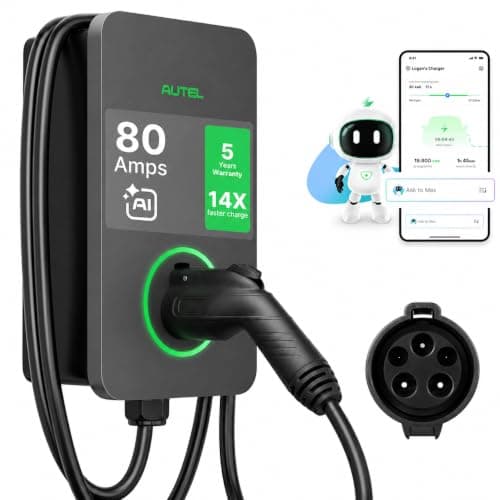
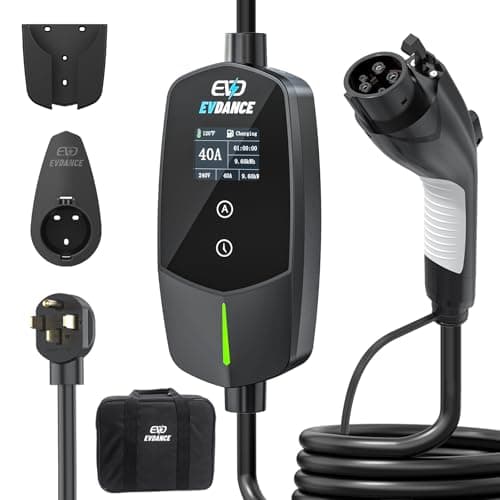
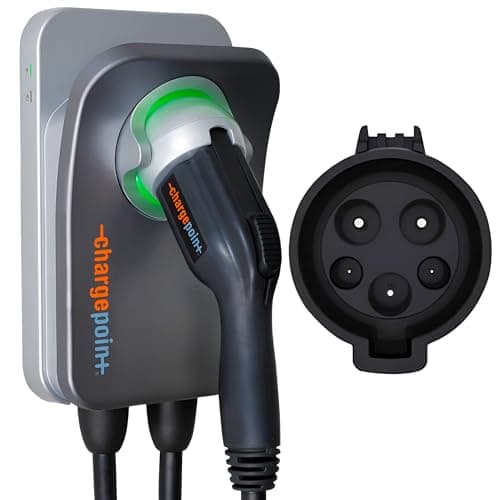
The best home charger for a Cadillac Lyriq is the ChargePoint Home Flex, and it is for the owner of a standard car: it can run at 48 amps hardwired, which is exactly the 11.5 kW the Lyriq's standard onboard charging module accepts, and it can also be installed on a NEMA 14-50 plug if that is what the garage already has. The budget pick is the Lectron Level 2 (40A) — a plain ETL-listed plug-in box that gives up roughly a fifth of the car's AC speed for a fraction of the money. And if your Lyriq was ordered with the optional 19.2 kW onboard charging module, the Autel MaxiCharger 80A (AC Pro)is the only charger on this page that can feed it — at a price, and on a circuit most houses do not have.
Every price here is read from the live Amazon feed and stamped with its own date, so the ranking reflects what things cost today rather than what they cost when this page was written. We compile published manufacturer specs and safety listings, read the live listing, and do the circuit arithmetic; we have not bench-tested these units and we do not claim to have. Our research method sets out exactly what our scores are and are not. Where a maker does not publish a figure, we say so instead of filling it in. We may earn a commission.
First: which Lyriq do you have?
This is the whole page in one question, and almost nobody asks it before buying. Cadillac publishes two AC charging rates for the LYRIQ. An 11.5 kW onboard charging module is standard, and a 19.2 kW module is available— Cadillac lists it on Dual Motor AWD trims, including Signature Sport, and on the LYRIQ-V Premium. On Cadillac's own figures, the standard module adds up to 31 miles of range per hour on a rear-drive LYRIQ and the optional one up to 50; on the LYRIQ-V the same two modules are quoted at 27 and 44 miles per hour.
Cadillac is also explicit about the catch, and it is the single most useful sentence in their charging material: the 19.2 kW rate requires both the optional module anda wall charger that supports it, and the car charges at the lower of the two rates. That cuts both ways. An 80-amp charger on a standard 11.5 kW Lyriq charges at 11.5 kW, and you paid for nothing. A 40-amp charger on a 19.2 kW Lyriq charges at 9.6 kW, and you left half the car's capability in the box.
If you do not know which module your car has, the build sheet or window sticker says so, and your dealer can look it up from the VIN. It is worth five minutes before you spend several hundred dollars.
The arithmetic that decides your charger
AC charging is volts times amps, and every number below is 240 volts with the National Electrical Code's 80% continuous-load rule already applied — a charger is allowed to draw 80% of its breaker, continuously, which is why the breaker is always bigger than the charger.
- 9.6 kW = 40 amps, on a 50-amp circuit.This is the ceiling for anything on a NEMA 14-50 plug. Plug-in chargers are limited to 40 amps by code, so a plug-in unit can never deliver the standard Lyriq's full 11.5 kW no matter what the box says.
- 11.5 kW = 48 amps, on a 60-amp circuit, hardwired. This is the exact match for the standard Lyriq. It is the sweet spot for this car and the reason four of the seven picks below are 48-amp-capable units.
- 19.2 kW = 80 amps, on a 100-amp circuit, hardwired.This is the match for the optional module. A 100-amp branch circuit is a serious piece of residential electrical work — many houses have a 100-amp or 150-amp service in total — so get a load calculation before you order the charger, not after.
The gap between the first and second bullet is the single decision most Lyriq owners get wrong. Going from 9.6 kW to 11.5 kW is about a 20% speed gain, and it costs a hardwired install on a 60-amp circuit instead of plugging into a 14-50 outlet you may already own. If your car sits in the garage for ten hours a night, that difference is invisible: both finish long before morning. If you are adding 150 miles between a commute and an evening out, it is the difference between making it and not. Our what amp EV charger do I need guide walks the same math for other cars, and wire size and breaker sizing has the gauge tables your electrician will quote from.
The connector: J1772 today, NACS from 2027
The LYRIQ has used the CCS1 charge port since launch, which means J1772 for AC charging at home— the same connector on every charger ranked here, and the same connector on GM's own dealer-sold home charger. Cadillac states that a North American Charging System (NACS) port is standard on the 2026 OPTIQ and on all 2027 model-year Cadillac EVs, so a LYRIQ bought up to the 2026 model year is a J1772 car and a 2027 one is not.
That does not mean a J1772 charger is a dead end if you later buy a NACS Cadillac. A certified J1772-to-NACS adapter is inexpensive, carries the full AC current, and turns any charger here into a NACS charger — our J1772-to-Tesla adapter roundup ranks them on the UL 2251 listing rather than the price. It does mean the reverse is a mistake: do not buy a NACS wall unit for a 2023–2026 LYRIQ expecting an adapter to bridge it, because hanging an adapter off a fixed wall connector is awkward and the combination is not what either maker tested. If you want the whole NACS field for a future car, that is best NACS home chargers.
How the field compares
| Charger | Best for | Key specs (manufacturer) | Price |
|---|
| ChargePoint Home Flex | Buyers who want the established brand and app | Adjustable to 50A · J1772 · NEMA 14-50 plug · Energy Star | $599.00·Amazon |
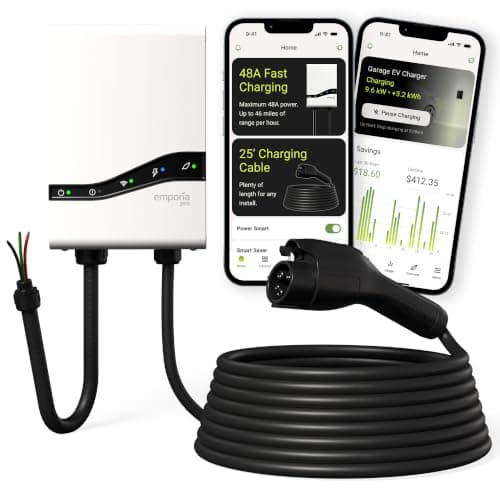
| Emporia Pro (48A, PowerSmart) | A 100-amp service you would rather not upgrade | Up to 48A hardwired · J1772 · PowerSmart + Vue monitor · UL · ENERGY STAR · NEMA 4 | $599.00·Amazon |
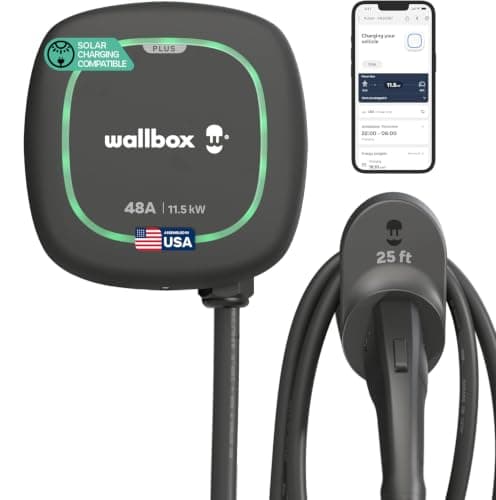
| Wallbox Pulsar Plus (48A) | A compact, fast, hardwired install | Hardwired 48A / 11.5kW · J1772 · 25ft cable · Energy Star + UL | $594.99·Amazon |
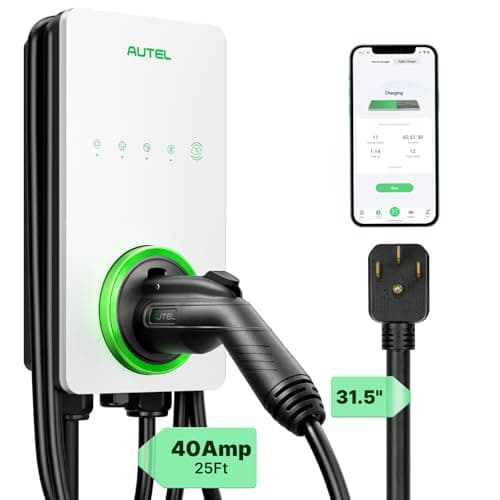
| Autel MaxiCharger (40A) | Feature-maximalists who want a tidy install | 40A / 9.6kW · J1772 · 25ft cable + holster · Wi-Fi + Bluetooth | $357.19·Amazon |
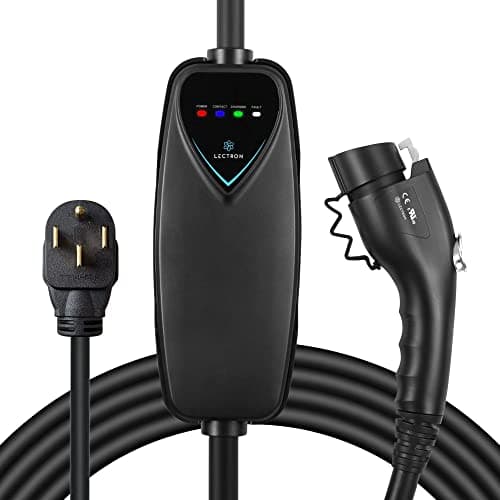
| Lectron Level 2 (40A) | A simple, inexpensive plug-in charger | 40A / 9.6kW · J1772 · NEMA 14-50 plug · ETL · 16ft extension | $246.49·Amazon |
| Autel MaxiCharger 80A (AC Pro) | J1772 cars with a 19.2 kW onboard charger | Up to 80A / 19.2 kW · J1772 · Hardwired · 100A circuit · Wi-Fi + app, 25ft | $908.65·Amazon |
| EVDANCE 40A Portable | Off-peak charging without an app | 40A / 9.6kW · J1772 · NEMA 14-50 plug · 25ft, timer | $199.98·Amazon |
#ad · Prices read live from the Amazon Product API as of November 21, 2026, and they move. Specs are the manufacturer's published claims from the live listing — we have not bench-measured them. Where we have no verified price we print none rather than a number that has gone stale. We may earn a commission.
What we would actually buy, by situation
Standard Lyriq, new install, want the car's full AC speed. A 48-amp unit hardwired on a 60-amp circuit: the ChargePoint Home Flex, the Emporia Pro or the Wallbox Pulsar Plus. All three publish a 48-amp capability and all three are listed by a named safety body. Pick on the app you can live with and the enclosure rating your wall needs.
Standard Lyriq, 14-50 outlet already in the garage.Buy a 40-amp plug-in unit and stop. The Autel MaxiCharger 40A and the Lectron Level 2 both do this, the Lectron for much less money, and you will charge at 9.6 kW instead of 11.5 — roughly 25 miles of range per hour on Cadillac's own scale rather than 31. Do not pay an electrician to replace a perfectly good outlet with a hardwired 60-amp run to recover that. The charger versus 240-volt outlet comparison is the full version of that argument.
Tight electrical panel. The Emporia Pro is the one to look at, because its load-management feature measures what the rest of the house is drawing and backs the charger off instead of tripping the main. On a 100-amp service, that can be the difference between charging at 48 amps most of the time and not being allowed to install 48 amps at all. Our 100-amp panel roundup is the whole category, and load management explains the mechanism.
19.2 kW Lyriq.The Autel MaxiCharger 80A (AC Pro) is the only J1772 unit in our registry rated to 80 amps with a live listing, and it is the most expensive thing on this page by a wide margin — before the 100-amp circuit it needs. Buy it if you genuinely turn the car around twice a day; the maths in best 80-amp EV chargers is unsentimental about how rarely that is true.
Renting, or the car moves between houses. The EVDANCE 40A Portable is a cord, not a wall box: it plugs into a 14-50 outlet, coils into the frunk, and comes with you when you move. It gives up the app and the holster and nothing else that matters. See best portable EV chargers and chargers for renters.
On any budget at all. Start with the under-$300 band, which is where the cheapest genuinely usable wall box and the 40-amp cords both live.
What the Lyriq does not need
A few things get sold to Lyriq owners that the car cannot use. A charger rated above 48 amps does nothing for a standard car. A longer cable is worth more than extra amperage for most installs, because the LYRIQ's port is on the driver's-side front fender and the charger usually has to live where the breaker panel is — measure the real path, not the straight line, and read EV charger cable lengthbefore you choose. And no home charger, at any amperage, affects DC fast charging on a road trip: that is the car's own DC curve and has nothing to do with the box on your wall.
One honest note on the dealer route: Cadillac sells a J1772 home charger through its own accessories channel, and GM has run promotions on it. It is a legitimate option and sometimes a competitive one. We do not rank it here because we rank what we can price from a live retail feed, and a dealer-installed accessory is quoted, not listed. If the dealer quote beats the units above, take the dealer quote — this page is here to tell you what the car needs, not to steer you to one checkout.
The criteria we ranked on
1. Does the charger match the car's onboard module? This outranks everything else, because the lower of the two rates wins. A 48-amp unit is the ceiling worth paying for on a standard Lyriq; 80 amps is only rational on a car with the 19.2 kW option and a 100-amp circuit to feed it. We ranked a 48-amp charger first and put the 80-amp unit sixth on purpose: it is the right answer for a minority and the wrong answer for most.
2. Plug-in or hardwired, and can it do both? A NEMA 14-50 plug caps you at 40 amps. Units that can be plugged in now and hardwired later — the ChargePoint Home Flex is the clearest example — scored above units that force the choice at purchase, because the install is the expensive half of this decision and most people change their mind about it once.
3. A named third-party safety listing. Every unit here names a UL, cUL or ETL listing on its live retail listing; several name the specific standard. We treat this as a gate rather than a score. A 48-amp continuous load in an attached garage is not the place to save thirty dollars on an unlisted enclosure, which is why the UL-listed roundup exists as its own page.
4. Cable length against where a Lyriq parks. The port is at the front left. If you nose in, the charger wants to be on the left wall; if you reverse in, on the right. The Wallbox, both Autels and the EVDANCE cord publish 25-foot cables and the budget Lectron is shorter; for the ChargePoint and the Emporia Pro, read the published length on the listing before you commit, because neither maker puts it in the spec block we work from. Published length is what we weighted — not cable thickness or cold-weather flexibility claims we cannot verify.
5. Enclosure rating, if any part of the install is outside. A published NEMA 4 or IP66 rating covers hose-directed water; NEMA 3R covers falling rain. Both are fine under an eave, only the first is fine on an exposed wall. The enclosure-ranked list is the most durable EV chargers.
6. Whether the smart features earn their money. Scheduling matters if your utility has time-of-use rates and you would rather not use the car's own scheduler. Load management matters if your panel is tight. Energy reporting is pleasant and changes nothing. We did not treat Wi-Fi as automatically good, and do I need a smart charger argues both sides.
What we did not score. We did not measure charge rates, cold-weather cable stiffness or long-term reliability ourselves. Those are manufacturer claims and owner reports, sourced below. Cadillac's figures for the car are Cadillac's, cited as such, and where they conflict with a third-party figure we use Cadillac's.