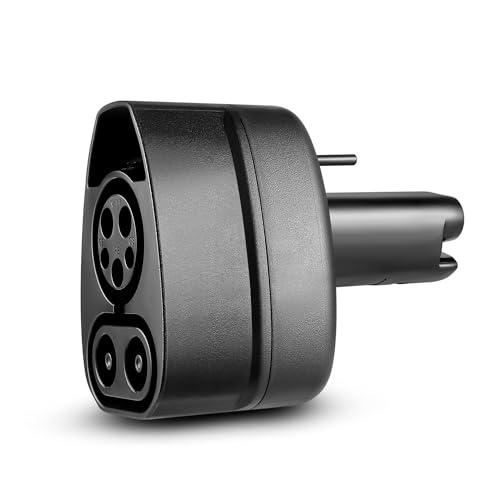
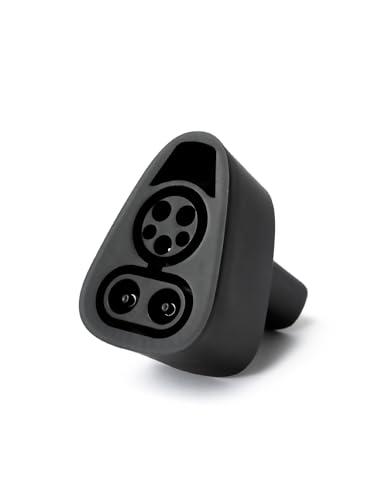
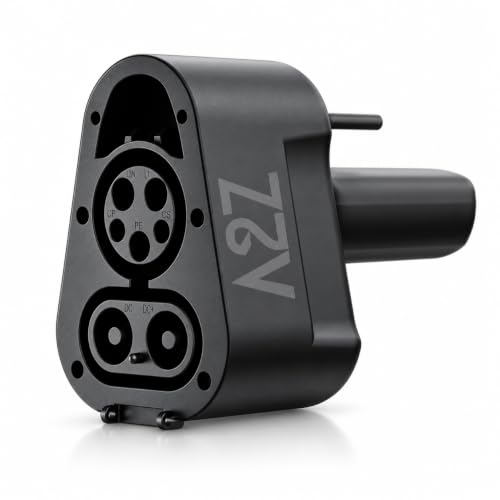
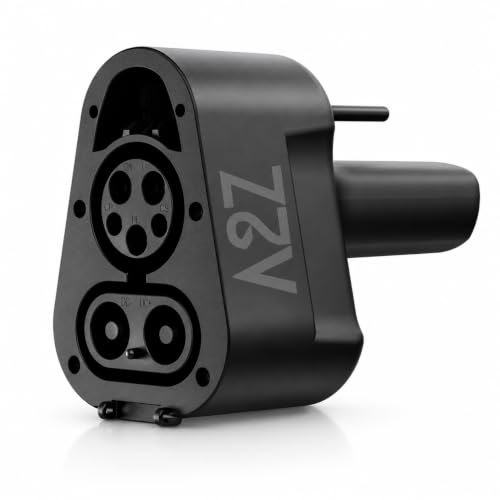
The best CCS-to-Tesla adapter is the A2Z EV Thunderstorm: it is the only one here whose listing claims two independent certifications (UL 2252 and CSA), it publishes dual temperature sensors and a mechanical interlock, and it ships in a hard case. The budget pick is the LENZ CCS1-to-NACS, which is certified to the same UL 2252 standard for well under half the money and adds an IP54 rating neither pricier adapter states. If you drive a Cybertruck, none of those fit — every one of them excludes it by name — and the adapter you need is the A2Z Thunderstorm Max. And before anything else: this is a DC part for fast charging on the road. It has nothing to do with charging at home.
Every price on this page is read from the live Amazon feed and stamped with its own date, so the ranking reflects what things cost today rather than what they cost when this page was written. We compile published manufacturer specs and safety listings, read the live listing, and do the circuit arithmetic; we have not bench-tested these units and we do not claim to have. Our research method sets out exactly what our scores are and are not. Where a maker does not publish a figure, we say so instead of filling it in. We may earn a commission.
First: make sure this is the part you want
This is the most-confused corner of EV charging, so here is the whole map in four lines.
- CCS1 to NACS (this page).A DC adapter that lets a NACS-port car — a Tesla, or a 2025-plus EV with the Tesla-style port — use a CCS1 DC fast charger on a road trip.
- NACS to CCS1 (the opposite direction). A DC adapter that lets a CCS1 car use a Tesla Supercharger. Different part, different page: NACS-to-CCS adapters explained.
- J1772 to NACS. An AC adapter, for Level 2 charging at home or at a public Level 2 station. Far simpler and far cheaper. That is our J1772-to-Tesla adapter roundup.
- NACS to J1772. The AC adapter that goes the other way, for a J1772 car at a Tesla destination charger: NACS-to-J1772 adapters.
If you are trying to charge in your own garage, you want one of the AC adapters, not anything on this page. Our which adapter do I need guide walks the decision in one page, and CCS vs NACS covers why the two standards exist at all.
Why certification is the first criterion, not the third
A DC fast charger can push several hundred amps at up to 1,000 volts. Every one of those amps passes through the adapter's two mating interfaces, and the person holding it is standing in a parking lot in the weather. That is a different risk profile from an AC adapter handling 40 amps at 240 volts.
UL 2252 is the standard written for EV coupler adapters, and it is the claim to look for. Our own CCS-to-Tesla explainer has told readers for months to avoid DC adapters with no stated rating, and this page holds the same line: we searched the category and only ranked adapters whose listing states a DC safety certification. Several in-stock CCS1-to-Tesla adapters were excluded for stating none — including cheaper ones, and including two “2-in-1” CCS-plus-J1772 units that would otherwise look like good value. A roundup that ranked them would contradict the advice this site already gives.
Two more specifications are worth more than their marketing suggests. Temperature sensing matters because the adapter interface is where heat accumulates during a 150 kW session; an adapter that can sense its own temperature is better placed than one that cannot. An interlock holds the adapter to the station connector so the joint cannot work loose mid-session. The A2Z units claim both.
The picks, with live prices
| CCS-to-Tesla adapter | Best for | Key specs (manufacturer) | Price |
|---|
| A2Z EV Thunderstorm CCS1-to-NACS | Model 3 / Y / S / X and NACS EVs, excluding Cybertruck | CCS1 in · NACS out · 500A / 1000V · UL 2252 + CSA certified · Dual temp sensors | $139.00·Amazon |
| Lectron CCS-to-NACS Adapter | Buyers who want a brand with a track record | CCS1 in · NACS out · 500A / 1000V · UL 2252 certified · Not for Cybertruck | $161.49·Amazon |
| LENZ CCS1-to-NACS Adapter | The cheapest certified way onto CCS stations | CCS1 in · NACS out · Up to 250 kW · UL 2252 · SGS tested · IP54 rated | $59.49·Amazon |
| A2Z EV Thunderstorm Max (Cybertruck) | A Tesla Cybertruck, and nothing else | Cybertruck only · CCS1 in · NACS out · 500A / 1000V · UL 2252 + CSA certified | $149.00·Amazon |
#ad · Prices read live from the Amazon Product API as of November 24, 2026, and they move. Specs are the manufacturer's published claims from the live listing — we have not bench-measured them. Where we have no verified price we print none rather than a number that has gone stale. We may earn a commission.
How we ranked them
Stated certification first.UL 2252 is the entry requirement. A second independent mark — CSA on both A2Z units, SGS testing on the LENZ — is a tiebreaker in the buyer's favor.
Protective hardware second. Temperature sensors, an interlock, an ingress rating. These are the features that separate adapters whose specifications are otherwise identical.
Compatibility clarity third.We rate an adapter higher for stating its exclusions on the product title rather than burying them. All four of these do; a great many listings in this category do not, and a “universal” DC adapter claim is a reason for suspicion rather than confidence.
Published power envelope fourth, then live price. We weight the envelope below certification deliberately: the LENZ states 500 volts against the A2Z's 1,000, but on the CCS1 stations and cars actually on US roads that ceiling is rarely the binding constraint, and a certified 500-volt adapter beats an uncertified 1,000-volt one every time.
We have not bench-tested any of these adapters and we do not have a DC test rig. Our research method states exactly what our scores are: judgments from published specifications and safety listings, not measurements.
The compatibility catch, stated plainly
An adapter being well made does not mean your car will use it. Support for CCS DC charging via an adapter depends on the model, the model year, the region and sometimes a one-time in-car retrofit, and the manufacturer of the adapter is not in a position to promise any of it.
The clearest example is the one every listing on this page carries: the Tesla Cybertruck. The A2Z Thunderstorm, the Lectron and the LENZ all exclude it by name in their own product titles, and A2Z sells a separate Cybertruck-only version precisely because the generic part does not fit. That is the behavior to look for in this category — a maker publishing a model-specific line-up rather than one adapter claiming to fit everything.
So: confirm your own car before you order. Check the manufacturer's own charging documentation for your model year, and treat an adapter listing's compatibility bullets as the maker's claim rather than a guarantee about your vehicle.
Is a CCS adapter still worth buying as NACS takes over?
For a Tesla or a NACS-port EV, yes, and for a reason that is easy to miss: the connector transition is running the other way from the one you might expect. Tesla's port is becoming the standard, but the installed base of DC fast chargersin the United States is overwhelmingly CCS1 — Electrify America, EVgo, ChargePoint, and nearly every highway site that is not a Supercharger. An adapter is what lets a NACS car use all of them.
That argument gets weaker over time as new stations ship with NACS cables, and it is weakest if you road-trip rarely and your Supercharger coverage is good. It is strongest if you drive a route where the reliable fast chargers are not Tesla's. Our road-trip planning guide and networks explained are the two pages to read before deciding, and DC fast charging explained covers how the session itself works.
What this adapter does not change
It does not affect home charging. Home is AC. Nothing on this page plugs into a wall charger, and if the aim is a faster garage, NACS home chargers is the page you want instead.
It does not make your car charge faster than its own limit.The car's DC acceptance curve sets the speed, not the adapter. See why fast charging slows down after 80 percent.
It does not slow you down either.A correctly rated adapter is not the bottleneck — do charging adapters slow down charging works through why, and are charging adapters safe covers the handling habits that keep one in good condition.
It does not get you onto a Supercharger. That is the opposite direction and a different adapter, and whether it works at all depends on the site. Start with using a Supercharger with a non-Tesla EV.
Buying and living with one
Keep it in a case, not loose in the trunk; both A2Z units ship with one for a reason. Look at the contacts occasionally — pitting or discoloration on a DC interface is a reason to retire a part, not to keep using it. Do not force a fit: if an adapter does not seat cleanly on a station's connector, the answer is a different station, not more hand pressure. And do not leave it hanging off a station connector when you drive away, which is how most of these get lost.
One last expectation to set: some stations will refuse a session with an adapter in the path even when everything is rated correctly, usually because the station's own software is particular. That is a station problem rather than an adapter fault, and why won't my EV charge at a public station covers what to try before you decide the adapter is broken.