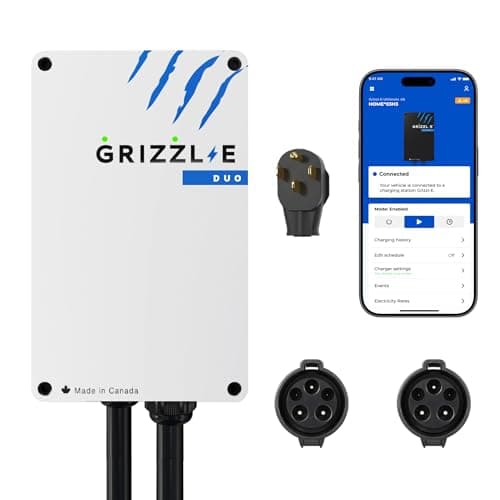
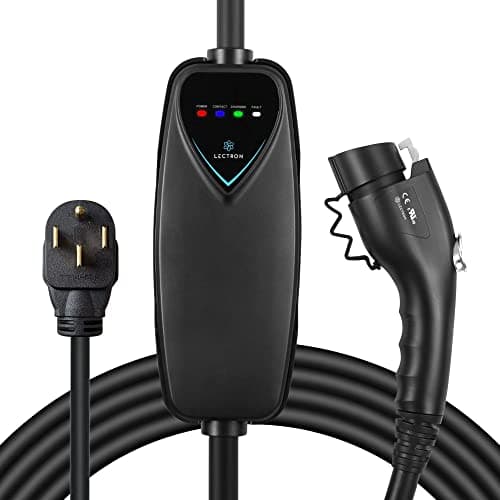
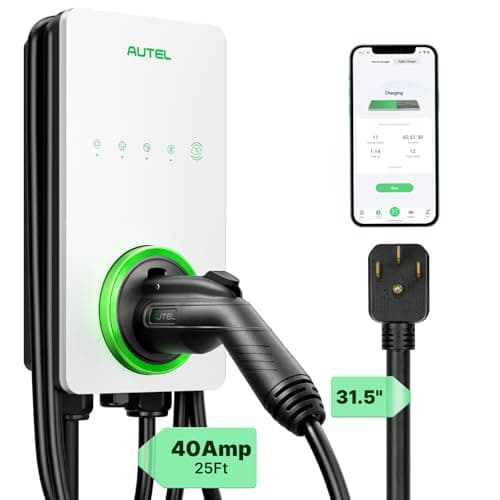
The best plug-in EV charger is the Autel MaxiCharger (40A), and it is for the owner of a garage that already has, or is about to get, a NEMA 14-50 outlet: it draws the full 40 amps that outlet allows, ships with its own holster so the cable has somewhere to live, and carries both Wi-Fi and Bluetooth so app control survives weak garage Wi-Fi. The budget pick is the Lectron Level 2 (40A)— the cheapest unit here that still pulls 40 amps through a 14-50 plug, with an ETL listing and no app at all. If your car has a Tesla-style port, the Lectron Nexus NACS (40A) is the plug-in to buy instead, and if two cars share the driveway the Grizzl-E Duo Connect is the only plug-in here with two cables.
Every price on this page is read from the live Amazon feed and stamped with its own date, so the ranking reflects what things cost today rather than what they cost when this page was written. We compile published manufacturer specs and safety listings, read the live listing, and do the circuit arithmetic; we have not bench-tested these units and we do not claim to have. Our research method sets out exactly what our scores are and are not. Where a maker does not publish a figure, we say so instead of filling it in. We may earn a commission.
What “plug-in” buys you, and what it costs you
A plug-in charger ends in a plug — almost always a NEMA 14-50 — and goes into an outlet an electrician installed. A hardwired charger is spliced directly into the circuit, so the charger and the wiring become one job. That single difference drives four things buyers actually care about.
It is a tenant's install. Nothing is permanent, nothing needs undoing, and when you move the charger comes with you while the outlet stays behind. It is a ten-minute swap: if the unit fails inside its warranty you unplug it and plug in the replacement rather than booking an electrician twice. It is usually a cheaper first install, because a 14-50 outlet is a part number an electrician fits every week. And the same outlet serves a welder, an RV or a dryer later, which a hardwired charger cannot.
The cost is amps. A 14-50 outlet lives on a 50-amp breaker, and the National Electrical Code treats EV charging as a continuous load, which means a charger may draw no more than 80 percent of its circuit rating. Eighty percent of 50 is 40. Everyplug-in charger on this page is therefore capped at 40 amps, or about 9.6 kW, no matter what the box on the wall is rated for internally. If you want 48 amps and 11.5 kW you need a 60-amp circuit and a hardwired unit — there is no plug in common residential use that legally carries it.
The field, with live prices
| Plug-in charger | Best for | Key specs (manufacturer) | Price |
|---|
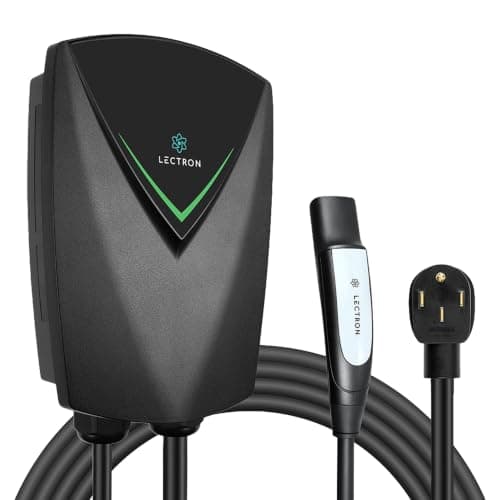
| Lectron Level 2 (40A) | A simple, inexpensive plug-in charger | 40A / 9.6kW · J1772 · NEMA 14-50 plug · ETL · 16ft extension | $246.49·Amazon |
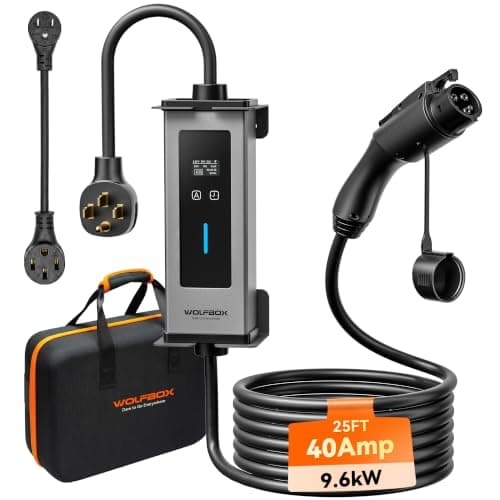
| WOLFBOX Portable (Level 1/2) | One charger for home and travel | 6–40A · 9.6kW · J1772 · Level 1/2 · NEMA 14-50 + 5-15 · ETL · IP66 · 25ft | $254.99·Amazon |
| Autel MaxiCharger (40A) | Feature-maximalists who want a tidy install | 40A / 9.6kW · J1772 · 25ft cable + holster · Wi-Fi + Bluetooth | $357.19·Amazon |
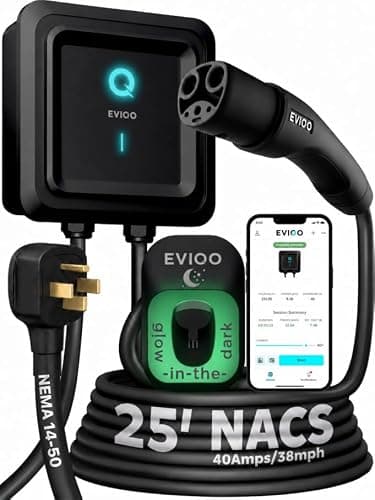
| EVIQO NACS (40A) | An outdoor wall on a budget | 40A / 9.6kW · NACS (J3400) · IP66 / NEMA 4 · UL + ETL | $429.99·Amazon |
| Lectron Nexus NACS (40A) | A plug-in NACS charger with a named safety standard | 40A / 240V · NACS (J3400) · NEMA 14-50 plug · UL 2594 (ETL listed) | $449.99·Amazon |
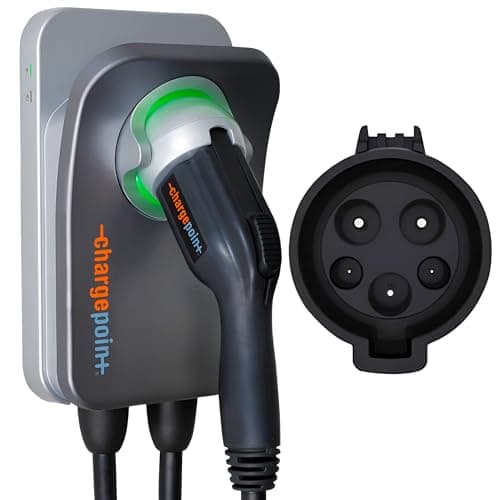
| ChargePoint Home Flex | Buyers who want the established brand and app | Adjustable to 50A · J1772 · NEMA 14-50 plug · Energy Star | $599.00·Amazon |
| Grizzl-E Duo Connect (dual 40A) | Two EVs on one circuit | Dual J1772 · Up to 40A shared · Two 25ft cables · NEMA 14-50 plug | $599.99·Amazon |
#ad · Prices read live from the Amazon Product API as of November 24, 2026, and they move. Specs are the manufacturer's published claims from the live listing — we have not bench-measured them. Where we have no verified price we print none rather than a number that has gone stale. We may earn a commission.
Is 40 amps enough?
For nearly everyone, yes, and the arithmetic is worth doing once. Forty amps at 240 volts is 9.6 kW, which puts roughly 30 miles of range into a typical EV every hour. Forty-eight amps is 11.5 kW and roughly 36 miles an hour. The average American drives a little under 40 miles a day. A 40-amp plug-in charger replaces that in about an hour and a quarter; a 48-amp hardwired charger replaces it in about an hour. Overnight, both are finished and asleep long before you wake up.
The 48-amp case is real but narrow: a long commute plus a big battery, a household that shares one charger between two cars on the same evening, or a utility tariff whose cheap window is only a few hours wide. If that is you, read the hardwired roundup instead — it is the same decision from the other side.
Two plug-in details that catch people out
The outlet is the weak link, not the charger.A plug-in charger pulls 40 amps continuously for hours, which is a duty cycle household receptacles were never designed for. Cheap residential-grade 14-50 outlets are the most common failure point in a home charging setup — they loosen, they heat, and they discolour around the pins. Specify an industrial-grade receptacle and have the terminals torqued to the printed specification. Our page on 14-50 outlets covers what to ask for.
Some plug-in units convert.The ChargePoint Home Flex is the clearest example in this field: it is sold with a 14-50 plug but is also installable hardwired, where its adjustable output reaches higher than any plug allows. If you think you may upgrade the circuit in a couple of years, buying a unit that can be converted is cheaper than buying twice. A plug-only unit is not worse — it is simply a decision you have made for the life of the charger.
How we ranked them
First on whether the plug and the published amperage agree: a unit advertised at 48 amps that ships with a 14-50 plug is a 40-amp charger in your garage, and we rank it as one. Then on the safety listing printed on the box, because a plug-in charger lives at the end of a flexible cord in a space with cars moving in it. Then on cable length and whether a holster comes in the box, which is what decides whether the cable ends up on the floor. Then on price, read live. We do not rank on app polish: a plug-in charger is bought by people who want the install to be simple, and the cheapest unit here has no app at all.