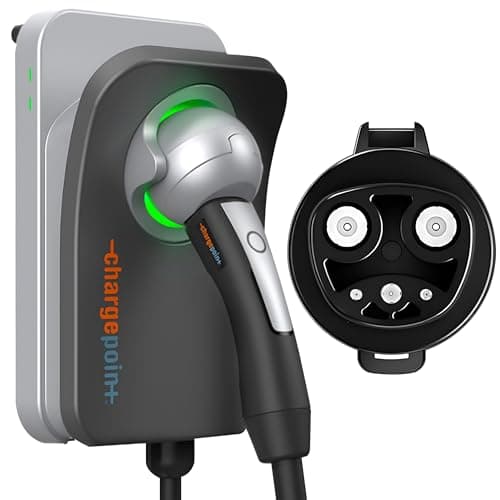
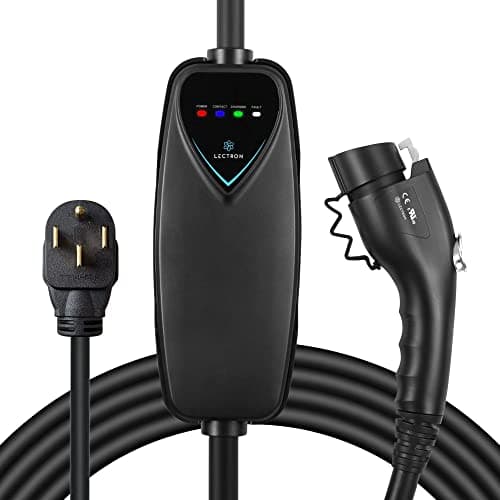
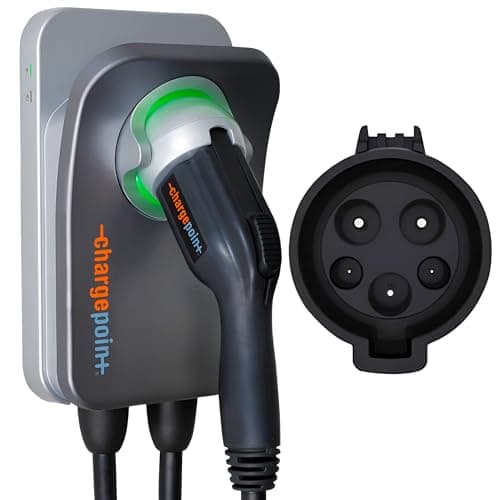
The best EV charger under $1,000 is the ChargePoint Home Flex, and it is for the buyer who wants one charger that fits whatever circuit they end up with: its published output is adjustable up to 50 amps, it installs on a NEMA 14-50 plug or hardwired, and it is Energy Star certified. The budget pick is the Lectron Level 2 (40A)— the cheapest unit in this band, with an ETL listing, a 14-50 plug and no app, which is all a great many households need. At the top of the band, the Grizzl-E Ultimate 80A and Autel MaxiCharger 80A are the only two chargers here that reach 19.2 kW, and they are the wrong purchase for almost everyone reading this.
Live band check · 8 of the 9 chargers on this page carried a verified live price under $1000 as of November 24, 2026. Prices move, and this line is recounted every time the page is served — if it ever reads differently from the table below, trust the table.
Every price on this page is read from the live Amazon feed and stamped with its own date, so the ranking reflects what things cost today rather than what they cost when this page was written. We compile published manufacturer specs and safety listings, read the live listing, and do the circuit arithmetic; we have not bench-tested these units and we do not claim to have. Our research method sets out exactly what our scores are and are not. Where a maker does not publish a figure, we say so instead of filling it in. We may earn a commission.
Why a $1,000 ceiling is effectively no ceiling
This is the band that reveals how the home charging market is actually shaped. Below $500 you are choosing between 40-amp plug-in boxes. Between $500 and $1,000 you find everything else there is: the hardwired 48-amp flagships, the dual-cable units for two cars, the native NACS wall boxes from established brands, and both of the 19.2 kW chargers in this registry. Above $1,000, for a home charger, there is essentially nothing you would want.
That is why this page exists alongside the tighter bands. The under-$500 and under-$300 pages cannot show you the $500-to-$1,000 tier at all, and that tier is where the whole 48-amp and 80-amp conversation lives.
The band, with live prices
| Charger (under $1,000) | Best for | Key specs (manufacturer) | Price |
|---|
| ChargePoint Home Flex | Buyers who want the established brand and app | Adjustable to 50A · J1772 · NEMA 14-50 plug · Energy Star | $599.00·Amazon |
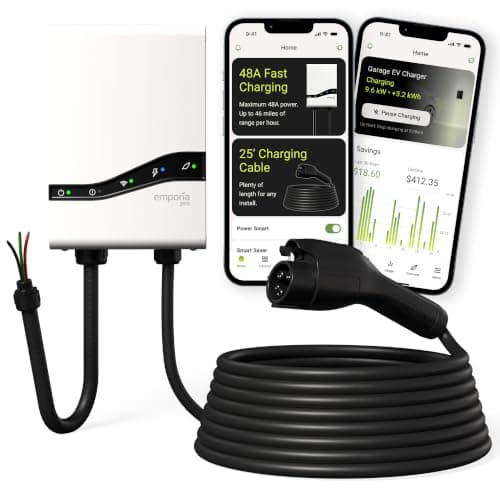
| Emporia Pro (48A, PowerSmart) | A 100-amp service you would rather not upgrade | Up to 48A hardwired · J1772 · PowerSmart + Vue monitor · UL · ENERGY STAR · NEMA 4 | Check price·Amazon |
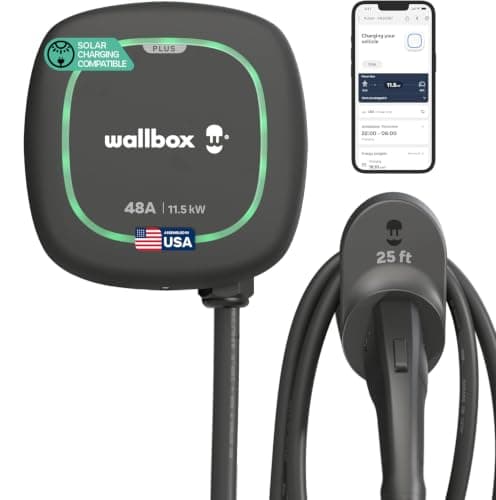
| Wallbox Pulsar Plus (48A) | A compact, fast, hardwired install | Hardwired 48A / 11.5kW · J1772 · 25ft cable · Energy Star + UL | $689.99·Amazon |
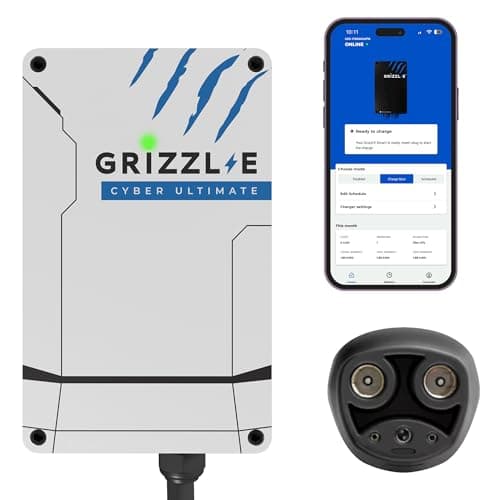
| Grizzl-E Ultimate 80A (NACS) | NACS / Tesla cars that can take 19.2 kW | Up to 80A / 19.2 kW · NACS (Tesla-style) · Hardwired · 100A circuit · UL Type 4, works offline | $599.99·Amazon |
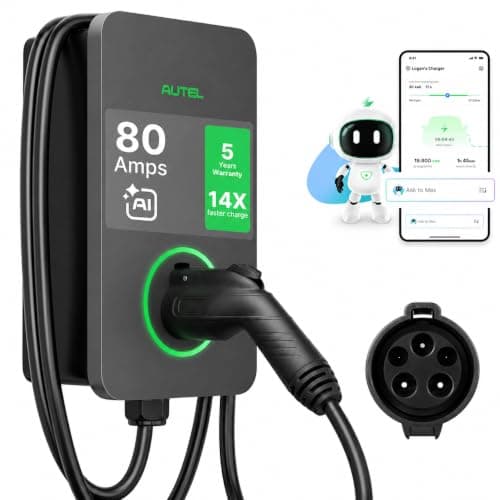
| Autel MaxiCharger 80A (AC Pro) | J1772 cars with a 19.2 kW onboard charger | Up to 80A / 19.2 kW · J1772 · Hardwired · 100A circuit · Wi-Fi + app, 25ft | $908.65·Amazon |
| ChargePoint Home Flex NACS (hardwired) | Buyers who want the mature brand and app | 16–50A adjustable · NACS (J3400) · Hardwired · NEMA 3R outdoor | $549.00·Amazon |
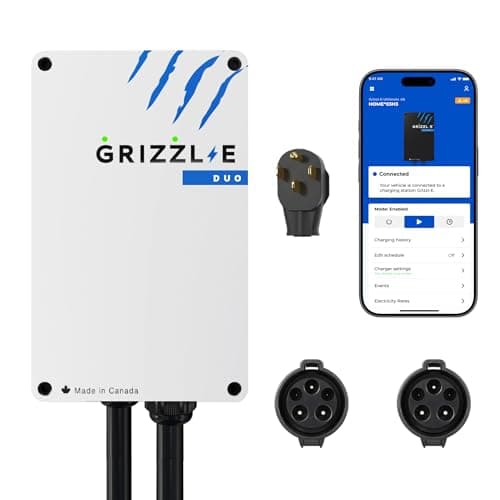
| Grizzl-E Duo Connect (dual 40A) | Two EVs on one circuit | Dual J1772 · Up to 40A shared · Two 25ft cables · NEMA 14-50 plug | $599.99·Amazon |
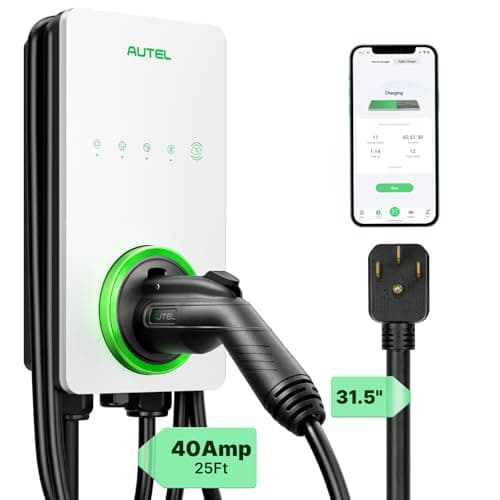
| Autel MaxiCharger (40A) | Feature-maximalists who want a tidy install | 40A / 9.6kW · J1772 · 25ft cable + holster · Wi-Fi + Bluetooth | $357.19·Amazon |
| Lectron Level 2 (40A) | A simple, inexpensive plug-in charger | 40A / 9.6kW · J1772 · NEMA 14-50 plug · ETL · 16ft extension | $246.49·Amazon |
#ad · Prices read live from the Amazon Product API as of November 24, 2026, and they move. Specs are the manufacturer's published claims from the live listing — we have not bench-measured them. Where we have no verified price we print none rather than a number that has gone stale. We may earn a commission.
The 19.2 kW trap
Two chargers in this band deliver 80 amps and 19.2 kW, and they are both genuinely good hardware. They are also the single most common expensive mistake in home charging, for three compounding reasons.
First, your car has to accept it. The onboard charger in most EVs tops out at 11.5 kW, and the car charges at the lower of the two figures — so a 19.2 kW wall box feeding an 11.5 kW car is an 11.5 kW setup that cost twice as much. Only a short list of vehicles, usually as a factory option, accept the full rate.
Second, your house has to carry it. Eighty amps continuous requires a 100-amp circuit under the 80-percent rule, which in most homes means a service upgrade, not just a breaker. The install frequently costs more than the charger.
Third, the benefit is smaller than it sounds. Going from 11.5 kW to 19.2 kW takes an overnight charge from roughly 36 miles of range an hour to roughly 60. If you plug in at 10pm and leave at 7am, both finished the job and went to sleep. The 19.2 kW case is real for a household that genuinely needs to refill a very large pack in two or three hours — and for nobody else. If that is you, read the 80-amp roundup first, and get a load calculation before you buy anything.
Where the money actually goes in this band
Not into speed, mostly. Between $500 and $1,000 the extra money buys a hardwired 48-amp output instead of a plug-limited 40, a weather-rated enclosure you can bolt to an outdoor wall, a 25-foot cable instead of a short one, load management for a tight panel, a second cable for a second car, and an established brand with a real warranty department. Those are all worth paying for in the right house. Twelve extra miles of range per hour, on its own, rarely is.
One specific case does justify spending up: two EVs sharing one circuit. The dual-cable unit in this band costs less than two chargers and far less than two circuits, and it is the cleanest answer to a two-car driveway; our two-EV roundup covers the trade-offs.
How we ranked them
A charger is in this band because the live price feed put it under $1,000 at render time, and the band line at the top recounts that on every request. Within the band we rank on how well the unit fits a realistic American house: published amperage against the circuit it needs, install flexibility, enclosure rating, cable length, safety listing, then live price. The two 80-amp units are ranked below cheaper chargers deliberately — they are better hardware and a worse purchase. We have not bench-tested any of these units and no rating here comes from anything other than published specifications and the circuit arithmetic.