Skip to content
Volt & Cable

HUB 01 · Level 2 Home Chargers

The Best EV Chargers With a Timer

If your utility charges less after midnight, the schedule is worth more than the amps. These are the chargers that can delay a charge on their own, ranked by how the delay is actually set.

By Stephen V.Updated How we research
#ad

We earn a commission when you buy through our Amazon links, at no extra cost to you. It never affects our rankings, and we say so when the cheaper product is the better buy. How this works.

The short answer

Quick picks

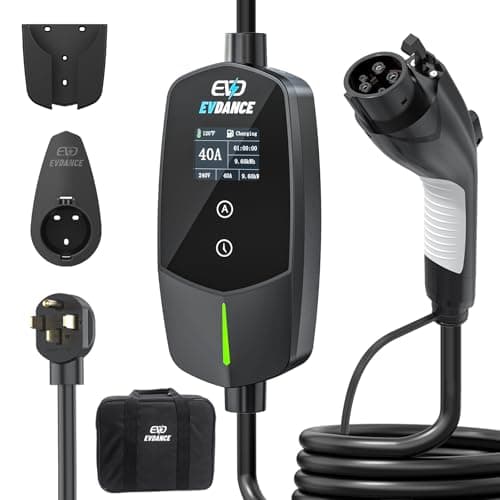
  • EVDANCE EVDANCE 40A Portable
    01 EVDANCE 40A Portable
    8.2

    A 40-amp portable with adjustable current and a charge-delay timer, on a long 25-foot cable — flexible for off-peak charging.

    Best for: Off-peak charging without an app

    $199.98Amazon
  • Autel Autel MaxiCharger (40A)
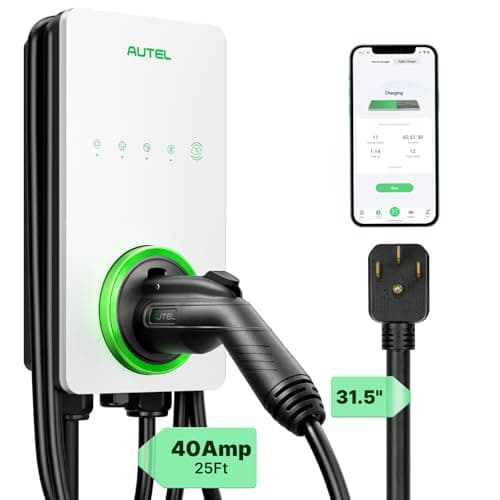
    02 Autel MaxiCharger (40A)
    8.6

    A feature-dense smart unit with Wi-Fi, Bluetooth and a separate holster in the box — strong if you want everything and a clean install.

    Best for: Feature-maximalists who want a tidy install

    $357.19Amazon
  • ChargePoint ChargePoint Home Flex
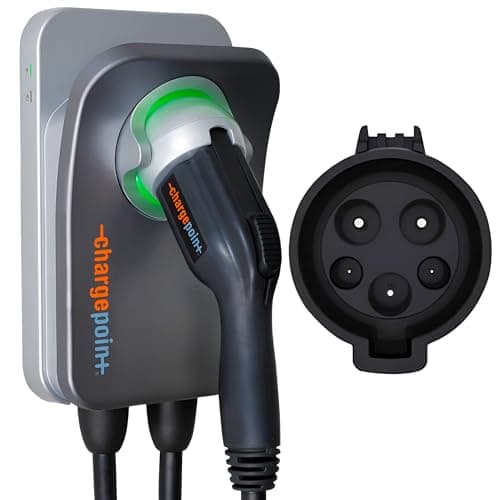
    03 ChargePoint Home Flex
    8.2

    The polished, well-supported option — adjustable up to 50 amps and tied into the largest public charging app in North America.

    Best for: Buyers who want the established brand and app

    $599.00Amazon
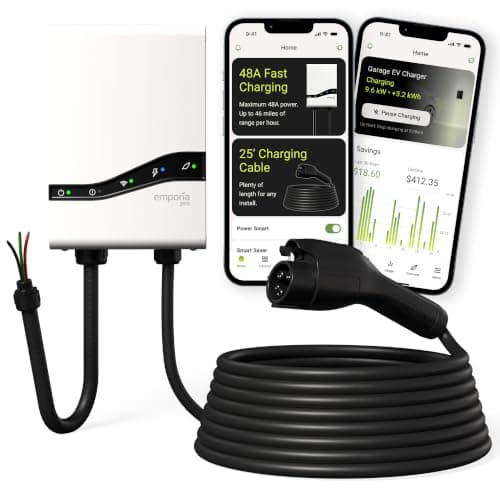
  • Emporia Emporia Pro (48A, PowerSmart)
    04 Emporia Pro (48A, PowerSmart)
    8.8

    The one charger that changes the electrical answer rather than working around it — it watches the whole panel and backs off instead of tripping the main.

    Best for: A 100-amp service you would rather not upgrade

    Check priceAmazon
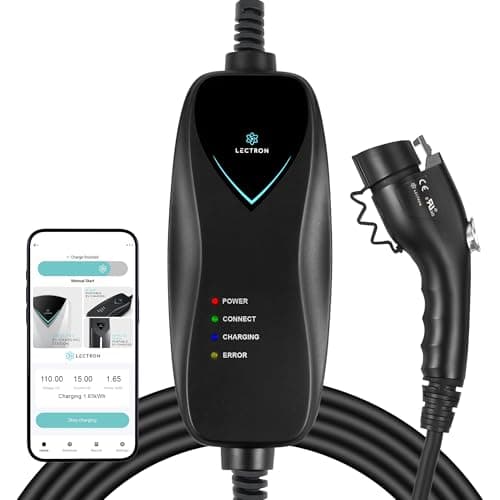
  • Lectron Lectron Level 1 WiFi (120V, 15A)
    05 Lectron Level 1 WiFi (120V, 15A)
    6.4

    The only connected charger here — Wi-Fi scheduling and monitoring bolted onto a 15-amp Level 1 cord, which is a lot of money for software on a slow charger.

    Best for: Scheduling and monitoring on 110V

    $169.99Amazon
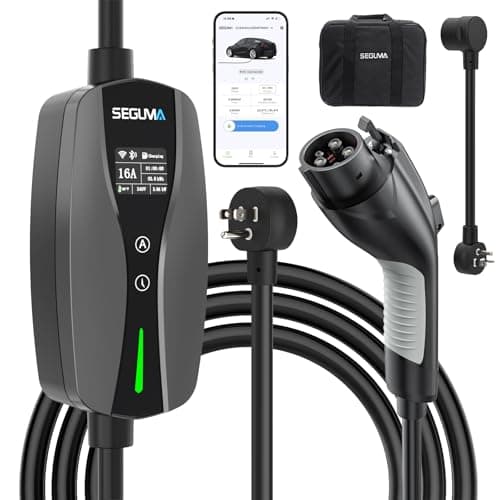
  • SEGUMA SEGUMA Wi-Fi Level 1/2 (12A/16A)
    06 SEGUMA Wi-Fi Level 1/2 (12A/16A)
    7.8

    A 120-volt cord that plugs into any household outlet and lives in the trunk — with app scheduling, a live display, and 16 amps on 240 volts if you have the outlet.

    Best for: A 120V backup that is not dumb

    $129.99Amazon

#ad · Live prices from the Amazon Product API, as of November 24, 2026. Where we have no verified live price, we show none — we would rather leave a gap than print a number that has gone stale.

The best EV charger with a timer is the EVDANCE 40A Portable, and it is for the driver on a time-of-use tariff who does not want the schedule to depend on a working Wi-Fi connection: the listing's own feature set includes a delay timer on the unit, so the charge starts late whether or not your router is up. The budget pick is the SEGUMA Wi-Fi Level 1/2 cord— the cheapest unit here that can be told to start later. If you want a wall box rather than a cord, the Autel MaxiCharger (40A) carries both Wi-Fi and Bluetooth, so the app can still reach it when the garage Wi-Fi cannot, and the ChargePoint Home Flex is the pick for anyone who wants one account covering home and public charging.

Every price on this page is read from the live Amazon feed and stamped with its own date, so the ranking reflects what things cost today rather than what they cost when this page was written. We compile published manufacturer specs and safety listings, read the live listing, and do the circuit arithmetic; we have not bench-tested these units and we do not claim to have. Our research method sets out exactly what our scores are and are not. Where a maker does not publish a figure, we say so instead of filling it in. We may earn a commission.

Why the timer is worth more than the amps

Most of the money in home charging is made or lost on when, not how fast. A great many US utilities now offer a time-of-use rate where overnight power costs a fraction of the afternoon rate, and the gap between the peak and off-peak price is frequently larger than the gap between a cheap charger and an expensive one over a year of driving. A charger that cannot wait is a charger that bills you at whatever rate applies when you walk in the door.

That is the whole reason this page exists separately from the smart charger roundup. Smart is a feature list: Wi-Fi, an app, energy reporting, firmware updates. A timer is one specific behaviour, and some of the cheapest hardware on this site does it while some expensive hardware does it only through an app that has to be online.

The field, with live prices

Charger with a scheduleBest forKey specs (manufacturer)Price
SEGUMA Wi-Fi Level 1/2 (12A/16A)A 120V backup that is not dumb12A @ 120V / 16A @ 240V · J1772 · NEMA 5-15 + 6-20 adapter · ETL certified · 25ft$129.99Amazon
Lectron Level 1 WiFi (120V, 15A)Scheduling and monitoring on 110V15A @ 120V · J1772 · NEMA 5-15 plug · Wi-Fi · 16ft$169.99Amazon
EVDANCE 40A PortableOff-peak charging without an app40A / 9.6kW · J1772 · NEMA 14-50 plug · 25ft, timer$199.98Amazon
Autel MaxiCharger (40A)Feature-maximalists who want a tidy install40A / 9.6kW · J1772 · 25ft cable + holster · Wi-Fi + Bluetooth$357.19Amazon
ChargePoint Home FlexBuyers who want the established brand and appAdjustable to 50A · J1772 · NEMA 14-50 plug · Energy Star$599.00Amazon
Emporia Pro (48A, PowerSmart)A 100-amp service you would rather not upgradeUp to 48A hardwired · J1772 · PowerSmart + Vue monitor · UL · ENERGY STAR · NEMA 4Check priceAmazon

#ad · Prices read live from the Amazon Product API as of November 24, 2026, and they move. Specs are the manufacturer's published claims from the live listing — we have not bench-measured them. Where we have no verified price we print none rather than a number that has gone stale. We may earn a commission.

Three ways a charge gets delayed, in order of reliability

In the car.Almost every EV sold in the last decade can be told to start charging at a set time from its own screen or app, and this is the most reliable method available to you because it does not depend on anything in the garage. If your car does it well, you may not need a charger-side timer at all — buy on amps, build and price instead. The catch is that car-side schedules are per-car, so a two-car household configures two of them, and some cars forget the setting when you charge somewhere else.

On the unit. A delay set with a button or a dial on the charger itself keeps working when the internet does not. This is the quietest, most dependable charger-side option, and it is why the EVDANCE 40A Portable leads this page: a timer that lives in the hardware cannot be broken by a firmware update, a router swap or an app that has been rewritten.

In an app.The most flexible and the most fragile. App schedules can follow a tariff, cap a session, or start and stop around a solar surplus. They also depend on garage Wi-Fi, which is the worst Wi-Fi in most houses — a concrete wall and a steel car door away from the router. Our page on charger Wi-Fi problems is one of the most-read guides on this site for a reason. If you buy an app-scheduled charger, prefer one that also speaks Bluetooth.

Set the schedule once, then check the bill

Two mistakes undo the saving. The first is scheduling the charge to start exactly when the cheap window opens, which in a neighbourhood full of EVs puts every car on the street onto the transformer at the same second; staggering by a random few minutes is kinder and costs you nothing. The second is forgetting that some tariffs end the cheap window before a big battery has finished. If your car needs six hours and the window is five, you want the charger to stop rather than roll into peak rate — which is a capability only the app-scheduled units on this page have.

Before you buy anything, read your own tariff. Our guide to saving money charging an EV and the cost-to-charge page both work through the arithmetic with real rate structures. If your utility has a flat rate, a timer buys you nothing and you should ignore this page entirely.

How we ranked them

On where the schedule lives first, because that decides whether it still works in two years: hardware delay beats app delay, and an app that also has Bluetooth beats one that is Wi-Fi-only. Then on whether the unit can stop as well as start, which is what protects you at the end of a short cheap window. Then on the usual hardware questions — published amperage, safety listing, cable length. Then on live price. We do not score app design, and we do not claim to have measured how well any of these schedules keep time.
In detail

The picks, in full

01
EVDANCE EVDANCE 40A Portable

Off-peak charging without an app

EVDANCE 40A Portable

40A / 9.6kWJ1772NEMA 14-50 plug25ft, timer
8.2/10

A 40-amp portable with adjustable current and a charge-delay timer, on a long 25-foot cable — flexible for off-peak charging.

Charge speed
8
Portability
9
Build & weather
7
Cable & connector
8
Value
9

Pros

  • Built-in delay timer lets you start on cheaper overnight rates without any app
  • Adjustable current adapts it to different circuits
  • Long 25-foot cable

Cons

  • No smart-app monitoring — the timer is the extent of the scheduling
  • Value brand with a shorter track record

Don't buy this if…

…you want full energy monitoring and remote control. This is a capable manual charger; a wall unit like the Emporia is the one to buy for app-based tracking.

$199.98View on Amazon

Price as of November 24, 2026. Prices change — Amazon's is the one that counts.

#ad · we may earn a commission from this link to EVDANCE 40A Portable

02
Autel Autel MaxiCharger (40A)

Feature-maximalists who want a tidy install

Autel MaxiCharger (40A)

40A / 9.6kWJ177225ft cable + holsterWi-Fi + Bluetooth
8.6/10

A feature-dense smart unit with Wi-Fi, Bluetooth and a separate holster in the box — strong if you want everything and a clean install.

Charge speed
8
Build & weather
9
Smart features
9
Cable & connector
9
Value
8

Pros

  • Ships with a separate holster, so you get tidy cable management out of the box
  • Both Wi-Fi and Bluetooth, so app control still works if your garage Wi-Fi is weak
  • Weather-rated enclosure for indoor or outdoor mounting

Cons

  • 40-amp ceiling means it is not the fastest option if your panel could support 48A
  • The feature set is more than a set-and-forget charger buyer needs

Don't buy this if…

…your electrical panel can support a 48-amp circuit and you want the fastest home charging. The 48A Emporia will add range quicker; the Autel's strength is features and the in-box holster, not top speed.

$357.19View on Amazon

$470.0024% off

Price as of November 24, 2026. Prices change — Amazon's is the one that counts.

#ad · we may earn a commission from this link to Autel MaxiCharger (40A)

03
ChargePoint ChargePoint Home Flex

Buyers who want the established brand and app

ChargePoint Home Flex

Adjustable to 50AJ1772NEMA 14-50 plugEnergy Star
8.2/10

The polished, well-supported option — adjustable up to 50 amps and tied into the largest public charging app in North America.

Charge speed
9
Build & weather
8
Smart features
9
Cable & connector
8
Value
7

Pros

  • Amperage is adjustable in the app to match whatever breaker you install, up to 50A
  • Integrates with ChargePoint's large public-network app — one app for home and away
  • Long track record and responsive support, which budget brands cannot match

Cons

  • Costs more than equally capable chargers from newer brands
  • The experience leans hard on the ChargePoint account and app

Don't buy this if…

…price is your first priority. The Emporia matches most of what this does for meaningfully less — you are paying here for brand maturity and the unified app, which are real but not free.

$599.00View on Amazon

$657.999% off

Price as of November 24, 2026. Prices change — Amazon's is the one that counts.

#ad · we may earn a commission from this link to ChargePoint Home Flex

04
Emporia Emporia Pro (48A, PowerSmart)

A 100-amp service you would rather not upgrade

Emporia Pro (48A, PowerSmart)

Up to 48A hardwiredJ1772PowerSmart + Vue monitorUL · ENERGY STAR · NEMA 4
8.8/10

The one charger that changes the electrical answer rather than working around it — it watches the whole panel and backs off instead of tripping the main.

Charge speed
10
Build & weather
8
Smart features
10
Cable & connector
9
Value
7

Pros

  • PowerSmart reads the whole panel through the bundled Vue energy monitor and throttles the charger when the house draws hard, so a tight service is a setting rather than a rebuild
  • Full 48 amps — about 11.5 kW — when hardwired on a 60-amp circuit, so you are not trading speed for the load management
  • UL listed, ENERGY STAR certified and NEMA 4 rated, on a 25-foot cable, with the J1772 connector most non-Tesla EVs use

Cons

  • The most expensive charger in this group, and the premium buys panel headroom rather than charging speed
  • The Vue monitor has to go inside your electrical panel, so this is licensed-electrician work — there is no version of this you install yourself in an afternoon
  • Whether load management is accepted in place of a service upgrade is your local inspector's call, not the manufacturer's

Don't buy this if…

…your panel already has room for the circuit you want. If the load calculation passes without help, PowerSmart solves a problem you do not have — the standard Emporia Level 2 charges at exactly the same rate for meaningfully less.

Check price on Amazon →

We don't have a verified live price for this right now, so we aren't showing one.

#ad · we may earn a commission from this link to Emporia Pro (48A, PowerSmart)

05
Lectron Lectron Level 1 WiFi (120V, 15A)

Scheduling and monitoring on 110V

Lectron Level 1 WiFi (120V, 15A)

15A @ 120VJ1772NEMA 5-15 plugWi-Fi · 16ft
6.4/10

The only connected charger here — Wi-Fi scheduling and monitoring bolted onto a 15-amp Level 1 cord, which is a lot of money for software on a slow charger.

Charge speed
5
Portability
9
Build & weather
8
Cable & connector
6
Value
4

Pros

  • Wi-Fi connectivity brings start/stop scheduling and session tracking to a category that is almost entirely dumb cords
  • Useful if you are on a time-of-use electricity plan and want charging to begin after the off-peak rate kicks in without setting an alarm
  • Same Lectron hardware and 15-amp rate as the non-Wi-Fi model above

Cons

  • The most expensive charger on this list, and the extra money buys an app rather than any additional charging speed
  • Carries the same two limitations as its non-Wi-Fi sibling: a 16-foot cable and a 15-amp draw that really wants a 20-amp receptacle
  • A connected charger depends on the manufacturer keeping its servers and app alive — a dumb cord has nothing to stop working

Don't buy this if…

…your car already schedules its own charging, which nearly every EV sold in the last several years does. In that case you are paying twice for the same timer.

$169.99View on Amazon

$179.996% off

Price as of November 24, 2026. Prices change — Amazon's is the one that counts.

#ad · we may earn a commission from this link to Lectron Level 1 WiFi (120V, 15A)

06
SEGUMA SEGUMA Wi-Fi Level 1/2 (12A/16A)

A 120V backup that is not dumb

SEGUMA Wi-Fi Level 1/2 (12A/16A)

12A @ 120V / 16A @ 240VJ1772NEMA 5-15 + 6-20 adapterETL certified · 25ft
7.8/10

A 120-volt cord that plugs into any household outlet and lives in the trunk — with app scheduling, a live display, and 16 amps on 240 volts if you have the outlet.

Charge speed
4
Portability
10
Build & weather
8
Cable & connector
9
Value
8

Pros

  • The NEMA 5-15 plug is on the cord itself, so it goes straight into an ordinary household outlet with no adapter in the chain — exactly what you want from a charger that lives in the trunk
  • ETL and FCC certified, and the listing names the UL 2594, UL 2231-2 and CSA C22.2 criteria it was built to — far more specific than the vague 'certified' most cords in this price band claim
  • Current adjusts from 6 to 16 amps with app scheduling over Wi-Fi, and a 1.77-inch display on the unit reads out amps, volts, kWh and elapsed time without reaching for a phone
  • 25-foot cable, an IP66-rated body specified down to 22 degrees below zero, and a storage bag in the box

Cons

  • On a standard household outlet it is a Level 1 charger — roughly 3 to 5 miles of range per hour, which will not replace a day's commute overnight
  • The 16-amp Level 2 mode needs a NEMA 6-20 outlet, which most garages do not have, and the listing states it will not work on 6-15, 10-30 or 14-30 outlets
  • A one-year warranty where several rivals give two, and the scheduling runs through SEGUMA's own app rather than anything you already have

Don't buy this if…

…you drive a full EV daily and this would be your only charger. Level 1 from a household outlet cannot keep up with a real commute — buy a 240-volt Level 2 portable and keep a cord like this as the spare.

$129.99View on Amazon

Price as of November 24, 2026. Prices change — Amazon's is the one that counts.

#ad · we may earn a commission from this link to SEGUMA Wi-Fi Level 1/2 (12A/16A)

How we picked

We do not run a testing lab

We compiled published specifications from manufacturer manuals and spec sheets, verified the safety listings (UL / ETL), computed the real running and installation costs, checked the wiring math against the NEC continuous-load rule, and read aggregated owner reviews — then scored each product against a published rubric. The scores are judgments from documented research — they are not bench measurements, because we do not have a test lab and we are not going to pretend we do. Every spec and cost figure is cited in Sources.

Questions

Frequently asked

Should I schedule in the car or in the charger?

In the car, if the car does it reliably — it is one less thing to depend on. Use the charger's timer when the car's schedule is awkward, when two cars share the charger, or when you want the limit enforced at the wall regardless of which car is plugged in.

Can a plain outlet timer do this instead?

No. A mechanical or smart plug timer in series with an EV charger switches a 30- to 50-amp continuous load it was not built for, and cutting power mid-session is not how a charger is designed to stop. Use the car, the charger or a utility programme — never a socket timer.

Does delaying the charge hurt the battery?

The opposite, usually. Leaving a pack sitting at a high state of charge is harder on it than finishing the charge shortly before you drive, which is what a late-start schedule does. See should I charge to 100 percent.

Are the prices on this page current?

They are read from the Amazon Product API and stamped with the date of the last successful refresh, printed on every button and table. If the feed goes stale the numbers disappear and the buttons fall back to “Check price on Amazon” — we would rather show a gap than a figure that has moved.

Keep reading

Receipts

Sources

We do not run a testing lab, and we do not pretend to. Where a measured number came from someone else's lab, we name them and link them. Where we could not verify something, we say so on the page rather than quietly leaving it out. Read our full method.