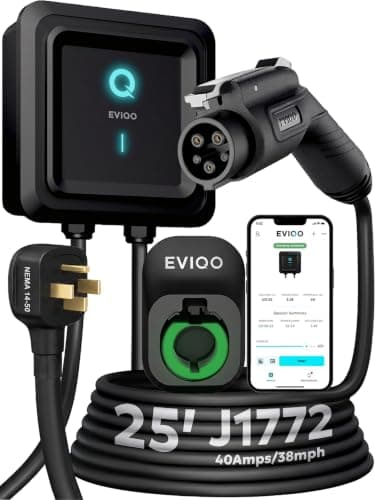
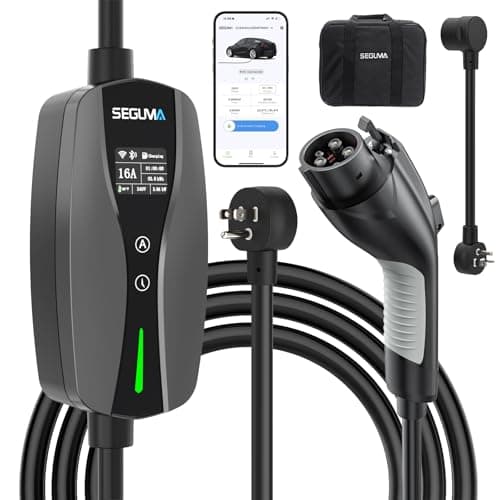
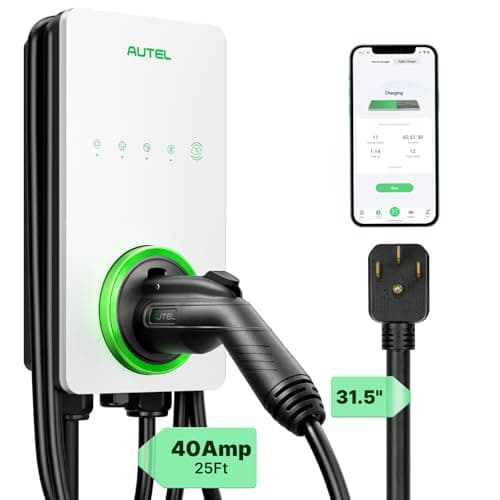
The best smart EV charger under $500 is the Autel MaxiCharger (40A), and it is for the owner of a garage where Wi-Fi is unreliable: it carries Bluetooth as well as Wi-Fi, so the app still reaches the charger when the router cannot, and it ships with its own holster. The budget pick is the SEGUMA Wi-Fi Level 1/2 cord— by a wide margin the cheapest connected charger in this registry, and the right buy if what you want from “smart” is a late-start schedule rather than a dashboard. If you want a weather-rated wall box and do not care about Bluetooth, the EVIQO Level 2 (40A) is the alternative, and for a Tesla-style port look at NACS chargers under $500 instead.
Live band check · 4 of the 4 smart chargers on this page carried a verified live price under $500 as of November 24, 2026. Prices move, and this line is recounted every time the page is served — if it ever reads differently from the table below, trust the table.
Every price on this page is read from the live Amazon feed and stamped with its own date, so the ranking reflects what things cost today rather than what they cost when this page was written. We compile published manufacturer specs and safety listings, read the live listing, and do the circuit arithmetic; we have not bench-tested these units and we do not claim to have. Our research method sets out exactly what our scores are and are not. Where a maker does not publish a figure, we say so instead of filling it in. We may earn a commission.
What you are actually buying under $500
Three or four years ago, “smart” and “cheap” did not appear in the same sentence about EV chargers. They do now, and the result is that under $500 the feature lists have converged: essentially every connected charger in this band offers Wi-Fi, a phone app, scheduling, a session history and a kilowatt-hour total. Paying more inside the band buys build quality, amperage headroom and a weather rating — not more software.
That is worth saying plainly because the industry sells it the other way round. The features that genuinely differ between units in this band are: whether there is a Bluetooth fallback when Wi-Fi drops; whether the enclosure is rated for an outdoor wall; the published cable length; and whether the amperage can be adjusted. Those are hardware facts, and they are what we rank on.
The band, with live prices
| Smart charger (under $500) | Best for | Key specs (manufacturer) | Price |
|---|
| Autel MaxiCharger (40A) | Feature-maximalists who want a tidy install | 40A / 9.6kW · J1772 · 25ft cable + holster · Wi-Fi + Bluetooth | $357.19·Amazon |
| EVIQO Level 2 (40A) | Budget-conscious buyers who still want smart features | 40A / 9.6kW · J1772 · 25ft cable · UL & ETL, IP66/NEMA 4 | $427.48·Amazon |
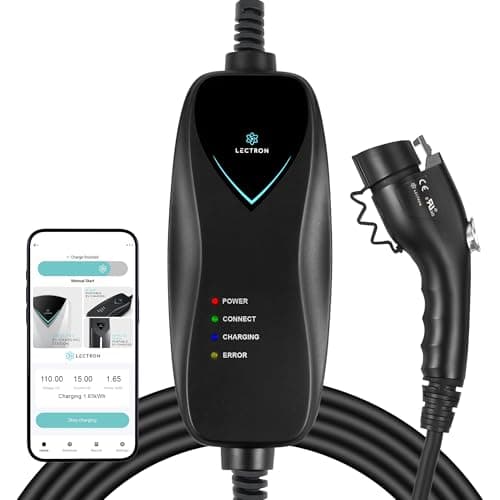
| Lectron Level 1 WiFi (120V, 15A) | Scheduling and monitoring on 110V | 15A @ 120V · J1772 · NEMA 5-15 plug · Wi-Fi · 16ft | $169.99·Amazon |
| SEGUMA Wi-Fi Level 1/2 (12A/16A) | A 120V backup that is not dumb | 12A @ 120V / 16A @ 240V · J1772 · NEMA 5-15 + 6-20 adapter · ETL certified · 25ft | $129.99·Amazon |
#ad · Prices read live from the Amazon Product API as of November 24, 2026, and they move. Specs are the manufacturer's published claims from the live listing — we have not bench-measured them. Where we have no verified price we print none rather than a number that has gone stale. We may earn a commission.
The one smart feature that pays for itself
Scheduling. If your utility has a time-of-use rate, the difference between charging at 6pm and charging at 1am is frequently larger over a year than the entire price difference between the cheapest and the most expensive charger in this band. Everything else on a charger's feature list — the kilowatt-hour dashboard, the monthly email, the push notification when the session ends — is interesting once and then ignored.
If scheduling is the only feature you want, buy the cheapest unit here that does it and spend nothing more; and check your car first, because almost every EV can schedule its own charging without any help from the wall. Our roundup of chargers with a timer covers that decision properly, including why a hardware delay is more dependable than an app one.
Where the $500 ceiling bites
At 48 amps. Nothing in this band is a 48-amp hardwired unit with a live price today, and that is not an accident: 11.5 kW chargers from the established brands sit above the ceiling. If you have a 60-amp circuit and want to use all of it, you are shopping in the under-$1,000 band, and the honest comparison is 30 miles of range per hour against 36 — a difference that almost never changes a morning.
The ceiling also bites on enclosure ratings and cable length at the very bottom of the band. A connected cord at the cheap end is a cord: it is not designed to be bolted to an outdoor wall and left in the weather for five years. If the charger will live outside, pay up inside the band for a published IP or NEMA enclosure rating rather than buying the cheapest connected thing; our outdoor roundup has the detail.
How we ranked them
A charger is in this band because the live price feed put it under $500 at render time, not because we remembered a price — the band line at the top of the page recounts that every time the page is served, and if the feed goes stale the claim disappears rather than going stale with it. Within the band we rank on connectivity resilience (Bluetooth as well as Wi-Fi), then enclosure rating, then published amperage and cable length, then live price. We do not score app design, we have not bench-tested these units, and no rating here comes from anything other than published specifications and the circuit arithmetic.