Skip to content
Volt & Cable

HUB 01 · Level 2 Home Chargers

The Best Adjustable-Amperage EV Chargers

An adjustable charger is the only one that fits a circuit you have not built yet. These are the units whose published amperage range is wide enough to matter, ranked on the range itself.

By Stephen V.Updated How we research
#ad

We earn a commission when you buy through our Amazon links, at no extra cost to you. It never affects our rankings, and we say so when the cheaper product is the better buy. How this works.

The short answer

Quick picks

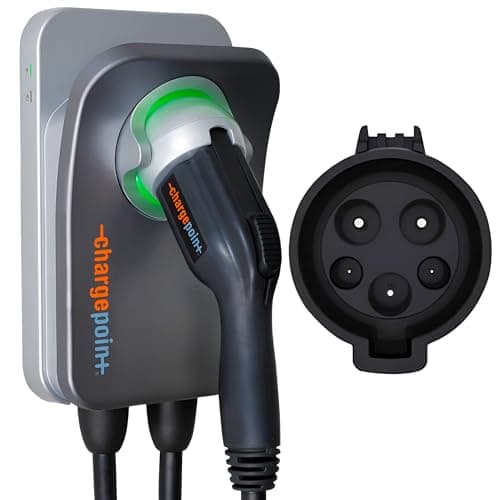
  • ChargePoint ChargePoint Home Flex
    01 ChargePoint Home Flex
    8.2

    The polished, well-supported option — adjustable up to 50 amps and tied into the largest public charging app in North America.

    Best for: Buyers who want the established brand and app

    $599.00Amazon
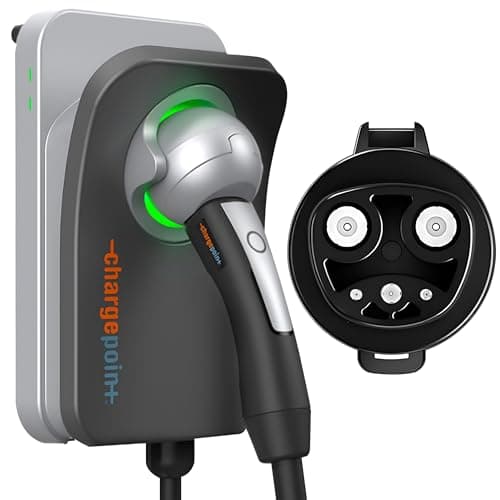
  • ChargePoint ChargePoint Home Flex NACS (hardwired)
    02 ChargePoint Home Flex NACS (hardwired)
    8.6

    The established-brand pick: amperage selectable from 16 all the way to 50, so one unit fits whatever breaker your panel can actually spare.

    Best for: Buyers who want the mature brand and app

    $549.00Amazon
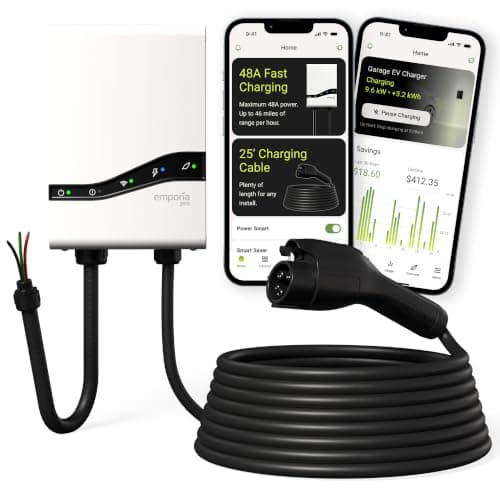
  • Emporia Emporia Pro (48A, PowerSmart)
    03 Emporia Pro (48A, PowerSmart)
    8.8

    The one charger that changes the electrical answer rather than working around it — it watches the whole panel and backs off instead of tripping the main.

    Best for: A 100-amp service you would rather not upgrade

    Check priceAmazon
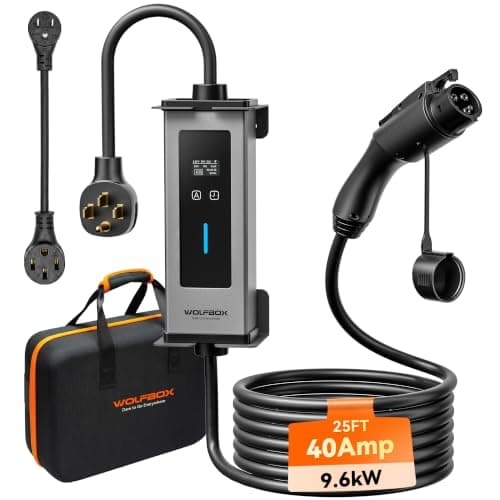
  • WOLFBOX WOLFBOX Portable (Level 1/2)
    04 WOLFBOX Portable (Level 1/2)
    8.6

    A dual-level portable that charges on both 120V and 240V, ships with both plug adapters, and adds a delay timer for off-peak charging — a genuine take-anywhere charger.

    Best for: One charger for home and travel

    $254.99Amazon

#ad · Live prices from the Amazon Product API, as of November 24, 2026. Where we have no verified live price, we show none — we would rather leave a gap than print a number that has gone stale.

The best adjustable-amperage EV charger is the ChargePoint Home Flex, and it is for the buyer who does not yet know what circuit the charger will end up on: its published range runs up to 50 amps, it installs on a NEMA 14-50 plug or hardwired, and it is Energy Star certified. The budget pick is the WOLFBOX Portable (Level 1/2), whose published range is 6 to 40 amps — the lowest floor of anything here, which is what makes it the one to buy if the circuit you are plugging into is small or borrowed. For a Tesla-style port, the ChargePoint Home Flex NACS publishes a 16-to-50-amp range, and if the reason you want adjustability is a tight electrical panel rather than a small circuit, the Emporia Pro adds load management on top of the dial.

Every price on this page is read from the live Amazon feed and stamped with its own date, so the ranking reflects what things cost today rather than what they cost when this page was written. We compile published manufacturer specs and safety listings, read the live listing, and do the circuit arithmetic; we have not bench-tested these units and we do not claim to have. Our research method sets out exactly what our scores are and are not. Where a maker does not publish a figure, we say so instead of filling it in. We may earn a commission.

Why the range matters more than the maximum

Most charger marketing talks about the top of the range: 40 amps, 48 amps, 50 amps. The number that decides whether a charger fits your house is the bottom. A charger must be set to no more than 80 percent of its circuit rating, so a 60-amp circuit allows 48 amps, a 50-amp circuit allows 40, a 40-amp circuit allows 32 and a 30-amp dryer circuit allows 24. If the charger cannot be set that low, it does not belong on that circuit at all.

This is the whole case for adjustability, and it shows up in three real situations. You are charging from an existing circuit that is smaller than 50 amps — a dryer outlet, a welder outlet, an old 40-amp range circuit. Your panel is full and the electrician can give you a 40-amp breaker but not a 60. Or you are buying now and rewiring later, and you want the charger to grow into the new circuit rather than being replaced by it.

There is a fourth case that catches people: a shared or borrowed circuit at someone else's house. A charger with a 6-amp floor can be dialled down to something a host's garage circuit will tolerate; a fixed 40-amp unit cannot.

The field, with live prices

Adjustable chargerBest forKey specs (manufacturer)Price
WOLFBOX Portable (Level 1/2)One charger for home and travel6–40A · 9.6kW · J1772 · Level 1/2 · NEMA 14-50 + 5-15 · ETL · IP66 · 25ft$254.99Amazon
ChargePoint Home Flex NACS (hardwired)Buyers who want the mature brand and app16–50A adjustable · NACS (J3400) · Hardwired · NEMA 3R outdoor$549.00Amazon
ChargePoint Home FlexBuyers who want the established brand and appAdjustable to 50A · J1772 · NEMA 14-50 plug · Energy Star$599.00Amazon
Emporia Pro (48A, PowerSmart)A 100-amp service you would rather not upgradeUp to 48A hardwired · J1772 · PowerSmart + Vue monitor · UL · ENERGY STAR · NEMA 4Check priceAmazon

#ad · Prices read live from the Amazon Product API as of November 24, 2026, and they move. Specs are the manufacturer's published claims from the live listing — we have not bench-measured them. Where we have no verified price we print none rather than a number that has gone stale. We may earn a commission.

How the setting is made, and why it matters

There are three mechanisms, and they are not equally good. A dip switch or rotary selector inside the unit is set once at install and cannot be changed by accident, by a firmware update or by anyone with the app. An installer menu reached from a button or a short press sequence is almost as good. An app setting is the most convenient and the least permanent: it is also the only one that can be changed by a household member who thinks higher is better.

For a charger that will live on a circuit smaller than its maximum, prefer the setting that is hard to undo, and write the circuit rating on the inside of the charger's cover with a marker. This is the single cheapest piece of electrical safety on this site. Our page on setting the amps on your EV charger walks through the common units.

Adjustable is not the same as load-managed

Two features get confused and they solve different problems. Adjustable amperage is a fixed ceiling you choose: 24 amps means 24 amps, all night, every night. Load management is dynamic — the charger watches the rest of the house and backs off when the oven and the dryer are both running, then goes back up when they stop.

If your constraint is the circuit, adjustability is the right and cheaper answer. If your constraint is the service— a 100-amp panel, or a calculated load that does not leave room for a 48-amp charger — you want load management, because a fixed setting low enough to be safe at dinner time will be needlessly slow at 3am. The Emporia Pro on this page does both; see the load-management roundup and our 100-amp panel page if that is you.

How we ranked them

Only on published ranges. A charger is on this page because its manufacturer or its live listing states an adjustable range — we have not inferred adjustability from a feature list or assumed that an app “probably” exposes a current limit, and several chargers we like are absent for exactly that reason. Within the page we rank on how low the floor goes and how high the ceiling reaches, then on whether the setting is made in hardware or in software, then on install flexibility (plug, hardwired or both), then on live price.
In detail

The picks, in full

01
ChargePoint ChargePoint Home Flex

Buyers who want the established brand and app

ChargePoint Home Flex

Adjustable to 50AJ1772NEMA 14-50 plugEnergy Star
8.2/10

The polished, well-supported option — adjustable up to 50 amps and tied into the largest public charging app in North America.

Charge speed
9
Build & weather
8
Smart features
9
Cable & connector
8
Value
7

Pros

  • Amperage is adjustable in the app to match whatever breaker you install, up to 50A
  • Integrates with ChargePoint's large public-network app — one app for home and away
  • Long track record and responsive support, which budget brands cannot match

Cons

  • Costs more than equally capable chargers from newer brands
  • The experience leans hard on the ChargePoint account and app

Don't buy this if…

…price is your first priority. The Emporia matches most of what this does for meaningfully less — you are paying here for brand maturity and the unified app, which are real but not free.

$599.00View on Amazon

$657.999% off

Price as of November 24, 2026. Prices change — Amazon's is the one that counts.

#ad · we may earn a commission from this link to ChargePoint Home Flex

02
ChargePoint ChargePoint Home Flex NACS (hardwired)

Buyers who want the mature brand and app

ChargePoint Home Flex NACS (hardwired)

16–50A adjustableNACS (J3400)HardwiredNEMA 3R outdoor
8.6/10

The established-brand pick: amperage selectable from 16 all the way to 50, so one unit fits whatever breaker your panel can actually spare.

Charge speed
10
Build & weather
9
Smart features
9
Cable & connector
8
Value
7

Pros

  • Amperage is set in the app — 16, 24, 32, 40, 48 or 50 amps — so the charger adapts to the circuit instead of the other way round
  • Hardwired at up to 50 amps, the fastest configuration in this roundup
  • NEMA 3R outdoor-rated enclosure, and one ChargePoint account covers home charging and the largest public network in North America

Cons

  • Hardwired only — there is no unplugging this one and taking it with you, and the install is licensed work
  • Costs more than equally capable NACS chargers from newer brands

Don't buy this if…

…you rent or you might move. A hardwired charger stays with the house — the plug-in Lectron Nexus or the Lectron NACS portable is the one that leaves with you.

$549.00View on Amazon

Price as of November 24, 2026. Prices change — Amazon's is the one that counts.

#ad · we may earn a commission from this link to ChargePoint Home Flex NACS (hardwired)

03
Emporia Emporia Pro (48A, PowerSmart)

A 100-amp service you would rather not upgrade

Emporia Pro (48A, PowerSmart)

Up to 48A hardwiredJ1772PowerSmart + Vue monitorUL · ENERGY STAR · NEMA 4
8.8/10

The one charger that changes the electrical answer rather than working around it — it watches the whole panel and backs off instead of tripping the main.

Charge speed
10
Build & weather
8
Smart features
10
Cable & connector
9
Value
7

Pros

  • PowerSmart reads the whole panel through the bundled Vue energy monitor and throttles the charger when the house draws hard, so a tight service is a setting rather than a rebuild
  • Full 48 amps — about 11.5 kW — when hardwired on a 60-amp circuit, so you are not trading speed for the load management
  • UL listed, ENERGY STAR certified and NEMA 4 rated, on a 25-foot cable, with the J1772 connector most non-Tesla EVs use

Cons

  • The most expensive charger in this group, and the premium buys panel headroom rather than charging speed
  • The Vue monitor has to go inside your electrical panel, so this is licensed-electrician work — there is no version of this you install yourself in an afternoon
  • Whether load management is accepted in place of a service upgrade is your local inspector's call, not the manufacturer's

Don't buy this if…

…your panel already has room for the circuit you want. If the load calculation passes without help, PowerSmart solves a problem you do not have — the standard Emporia Level 2 charges at exactly the same rate for meaningfully less.

Check price on Amazon →

We don't have a verified live price for this right now, so we aren't showing one.

#ad · we may earn a commission from this link to Emporia Pro (48A, PowerSmart)

04
WOLFBOX WOLFBOX Portable (Level 1/2)

One charger for home and travel

WOLFBOX Portable (Level 1/2)

6–40A · 9.6kWJ1772 · Level 1/2NEMA 14-50 + 5-15ETL · IP66 · 25ft
8.6/10

A dual-level portable that charges on both 120V and 240V, ships with both plug adapters, and adds a delay timer for off-peak charging — a genuine take-anywhere charger.

Charge speed
8
Portability
10
Build & weather
8
Cable & connector
8
Value
9

Pros

  • Charges on both 120V (Level 1) and 240V (Level 2), and ships with both the NEMA 5-15 and NEMA 14-50 plug adapters — one charger for home and the road
  • Adjustable current (6–40A) plus a built-in delay timer, so you can dial it down for a weaker circuit and start on cheaper overnight rates without an app
  • ETL certified with an IP66 weather rating and a 25-foot cable — a genuine take-anywhere travel charger

Cons

  • A portable brick that lives on the floor or a hook, not a tidy mounted wall unit
  • 40-amp draw needs a properly rated 14-50 outlet — do not run it flat-out on a worn receptacle

Don't buy this if…

…you want a permanent, tidy wall installation with per-charge energy data in an app. A portable trades the mounted look and the app for the ability to come with you.

$254.99View on Amazon

$299.9915% off

Price as of November 24, 2026. Prices change — Amazon's is the one that counts.

#ad · we may earn a commission from this link to WOLFBOX Portable (Level 1/2)

How we picked

We do not run a testing lab

We compiled published specifications from manufacturer manuals and spec sheets, verified the safety listings (UL / ETL), computed the real running and installation costs, checked the wiring math against the NEC continuous-load rule, and read aggregated owner reviews — then scored each product against a published rubric. The scores are judgments from documented research — they are not bench measurements, because we do not have a test lab and we are not going to pretend we do. Every spec and cost figure is cited in Sources.

Questions

Frequently asked

Does running a charger at a lower amperage waste electricity?

Marginally, and not enough to matter. Charging slower means the car's own electronics run for longer, so a slightly larger share of the energy goes to overhead rather than the pack. The effect is small at 240 volts; it is only pronounced down at 120 volts.

Can I set a 48-amp charger to 24 amps and use it on a dryer circuit?

Only if the manufacturer publishes 24 amps as a supported setting and the plug matches the outlet through a rated adapter. Many 48-amp units do not go that low. See our dryer-outlet adapter roundup for the hardware side.

Who sets the amperage — me or the electrician?

The electrician, at install, to match the circuit they just built, and it should be recorded on the permit or the invoice. Change it yourself only downwards, and only if you know the circuit rating.

Are the prices on this page current?

They are read from the Amazon Product API and stamped with the date of the last successful refresh, printed on every button and table. If the feed goes stale the numbers disappear and the buttons fall back to “Check price on Amazon” — we would rather show a gap than a figure that has moved.

Keep reading

Receipts

Sources

We do not run a testing lab, and we do not pretend to. Where a measured number came from someone else's lab, we name them and link them. Where we could not verify something, we say so on the page rather than quietly leaving it out. Read our full method.